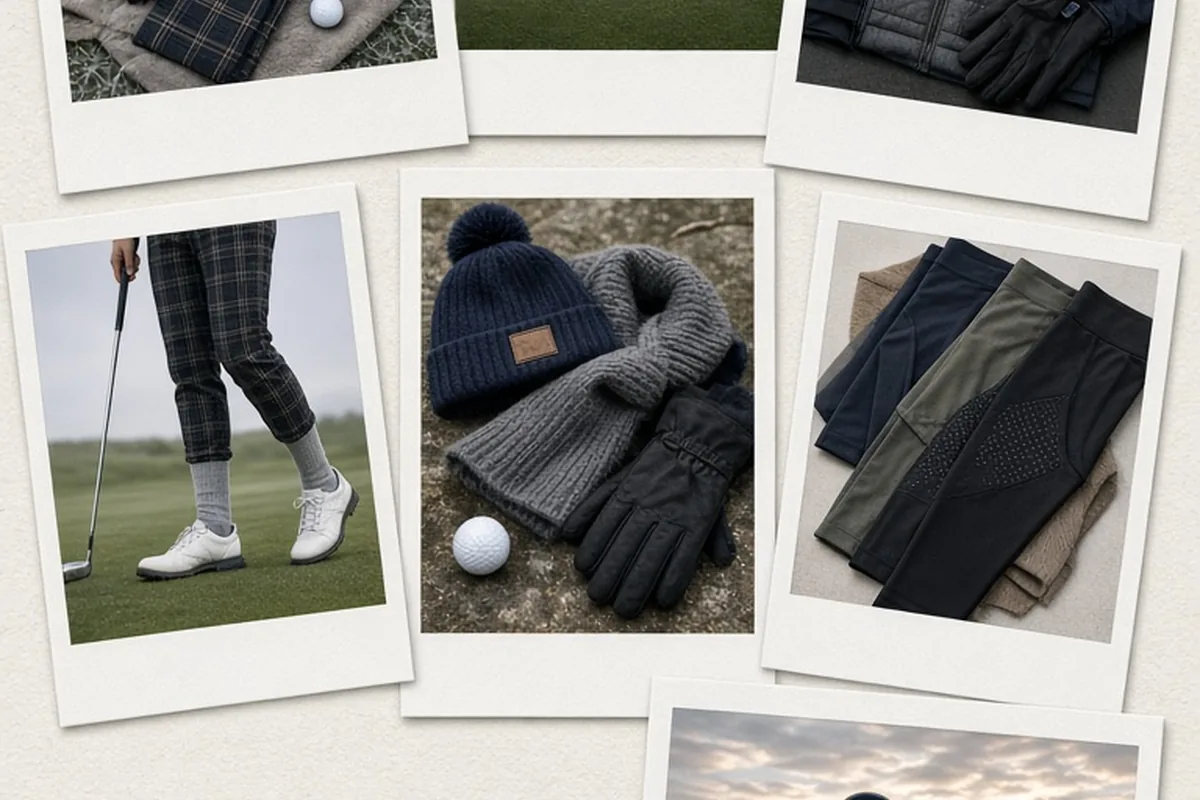
When golfing in cold weather, women should wear a three-layer system: a moisture-wicking synthetic or merino wool base top and thermal leggings, an insulating fleece or lightweight down vest mid-layer, and a quiet, windproof water-resistant jacket. Pair these with fleece-lined golf pants, thermal golf socks, winter golf gloves, and a fleece headband or beanie to maintain core warmth and full rotational mobility throughout your round.
Stepping onto a frosty first tee when temperatures hover in the low forties brings a distinct challenge for any golfer: staying warm enough to remain comfortable across four hours outdoors without piling on so much bulk that your torso cannot rotate properly.
The Core Layering Strategy: Balancing Warmth and Swing Freedom
The primary challenge of cool-weather golf is regulating body temperature during alternating cycles of exertion and stillness. Walking briskly uphill with a bag or pushcart elevates your heart rate and generates body heat, whereas waiting on a tee box while a group ahead clears invites biting wind to chill damp skin. Rather than relying on a single heavy coat, a thoughtful three-layer approach allows you to adapt instantly to fluctuating course conditions. Each layer serves a discrete functional role: moisture management against the skin, insulation around the torso, and environmental protection from wind and mist.
The trade-off in cold-weather apparel centers on thermal bulk versus athletic range of motion. A garment that feels warm while standing stationary in a pro shop can severely bind your shoulders at the top of your backswing or bunch across your chest during follow-through. To ensure your outfit accommodates a full turn, test every combination at home by making ten practice swings with a mid-iron before heading to the course. If a sleeve tugs at your lead elbow or your hips feel restricted when clearing through impact, adjust your layer thickness immediately rather than struggling through eighteen holes of compromised mechanics.
Base Layers: Regulating Temperature and Managing Moisture
A successful cold-weather round starts with the fabric resting directly against your skin. The primary job of a base layer is not necessarily to provide heavy insulation, but to pull perspiration away from your body before cold drafts can convert that dampness into a lingering chill. For this reason, cotton undershirts and traditional cotton camisoles should be completely avoided on the course. Once cotton absorbs moisture, it retains that liquid against your skin, conducting cold directly into your core during lulls in play.
Instead, choose athletic base tops and thermal tights crafted from technical polyester blends, nylon-spandex weaves, or fine merino wool. A compression-style or form-fitting long-sleeve mock neck creates an unbroken thermal envelope that slides seamlessly under outer garments without bunching. When choosing base bottoms, ensure the fabric features four-way stretch so that knee flexion and hip rotation remain effortless whether you are reading putts or executing a driver swing from an uneven lie.
Mid-Layers and Vests: Trapping Core Heat Without Sleeve Bulk
The intermediate layer functions as your primary thermal engine, trapping air warmed by your body to create an insulating barrier against falling temperatures. High-performance waffle-knit fleeces, brushed thermal quarter-zips, and lightweight synthetic down garments excel in this position. The material should feel soft, stretch dynamically with your torso, and breathe well enough to allow vapor from your base layer to escape toward the exterior without becoming trapped.
One of the most effective pieces for women golfers in cold weather is an insulated vest. Because the core organs receive the majority of your body's thermal protection naturally, keeping your chest and upper back warm helps maintain healthy circulation outward to your fingers and toes. A vest delivers concentrated core warmth while leaving your arms completely unencumbered by extra fabric. Look for vests with low-profile collars that will not brush annoyingly against your chin or jawline during your swing rotation.
Pants and Bottoms: Fleece Lining, Wind Resistance, and Dress Codes
Selecting the right lower-body garment requires balancing thermal comfort, mobility, and golf course etiquette. While traditional summer golf ankle pants or skirts with bare legs quickly become uncomfortable when temperatures drop below fifty degrees, standard winter lounge pants or generic sweatpants are generally barred by most club dress codes. The ideal solution is a pair of tailored, fleece-lined golf trousers designed specifically for chilly conditions.
These pants look like crisp, traditional golf slacks on the exterior but feature a brushed microfleece interior that feels cozy against the legs without requiring separate long underwear. When temperatures plunge lower, another popular approach is pairing thick, opaque thermal golf leggings beneath an insulated golf skirt or technical winter shorts, provided the pairing complies with your local facility guidelines. Always check that the waistband has sufficient stretch and grip to keep shirts securely tucked in against drafts as you bend over to place your tee or retrieve golf balls.
Outerwear: Selecting Windproof, Flexible Shells for Changing Conditions
Wind is frequently the harshest element on a golf course, turning a manageable forty-five-degree afternoon into a bone-chilling test of endurance. A windproof outer shell prevents chilly gusts from penetrating through your insulating layers, drastically reducing wind chill. However, conventional raincoats or heavy alpine shells are often loud, crinkly, and stiff, creating auditory and physical distractions that disrupt your swing tempo.
Look for golf-specific softshell jackets constructed from quiet stretch-laminate fabrics. These garments shed light showers, block blustery crosswinds, and incorporate gusseted underarms and articulated shoulders that extend naturally throughout your swing path. Full-zip jackets offer the greatest versatility for quick removal if afternoon sun warms the fairways, while half-zip anoraks often present a sleeker, less bulky front profile when addressing the ball over putts.
Essential Cold-Weather Golf Accessories: Hands, Head, and Feet
No matter how warm your torso remains, cold hands and feet can ruin your touch on the greens and make gripping a club painful. Standard cabretta leather gloves provide zero insulation and stiffen in freezing conditions. Investing in a pair of dedicated winter golf gloves, which feature fleece backs and synthetic suede palms that grip even better in damp conditions, ensures you maintain tactile control throughout each shot.
To protect your extremities between shots, keep oversized fleece-lined cart mitts in your bag or cart basket, slipping them over your hands as you walk the fairway or drive to the next hole. Tucking a chemical hand warmer inside each mitt provides immediate relief for stiff fingers. For your head and feet, wear a fleece headband or tight-knit beanie that covers your ears without blocking your peripheral vision, and pair waterproof golf shoes with moisture-wicking merino wool socks to keep your feet warm, dry, and anchored on soft, slippery turf.
Navigating Clubhouse Etiquette and Cold-Weather Course Logistics
Cold-weather golf apparel must frequently navigate club dress codes that may not have updated their written rules for modern technical activewear. Many private and semi-private facilities require collared shirts, forbid denim, and prohibit plain workout leggings without an overskirt or dress. When assembling an outfit, choosing pieces with structured collars, clean seams, and subtle neutral colors helps ensure you maintain a professional, respectful appearance on the grounds.
Logistics also shift when the mercury drops. Temperatures often rise eight to twelve degrees between your initial morning tee time and your finish on the eighteenth green. Choose outer pieces that fold compactly into the apparel pocket of your golf bag so that shedding layers as the day warms does not clutter your cart or weigh down your shoulder. Being prepared with easy-to-stash layers keeps your attention focused on club selection and ball flight rather than lingering discomfort.
Illustrative Scenarios
Transitioning from Heavy Bulk to Modular Movement
For an early November scramble in forty-degree drizzle, Amanda layered a thick ski jacket over a cotton sweatshirt and basic leggings. Within three holes, the cotton absorbed sweat from walking, the bulky sleeves snagged against her chest during her backswing, and her stiff fingers caused multiple mishit iron shots. Realizing her outfit was fighting her swing, Amanda adapted before her next cold round. She swapped to a fitted thermal mock neck, an insulated core vest, and a lightweight stretch windbreaker, complemented by fleece-lined golf trousers and cart mitts with pocket warmers. The new configuration kept her comfortably warm while restoring full shoulder rotation, allowing her to swing naturally and finish eighteen holes without shivering.
Key point: Bulk does not equal warmth on the golf course; selecting wind-blocking fabrics and sleeveless core insulation preserves natural swing mechanics while maintaining comfort.
Meeting Dress Standards Without Sacrificing Warmth
Preparing for an autumn tournament at a conservative country club, Lauren worried that wearing athletic leggings or cold-weather activewear might violate the facility's traditional dress code. To avoid a potential reprimand, she initially contemplated wearing her thin summer slacks with no underlayer on a blustery forty-four-degree morning. Instead of risking hypothermia or discomfort, she reviewed the club handbook and opted for tailored, fleece-lined golf trousers paired with a tailored thermal polo and a structured fleece quarter-zip pullover. The ensemble presented a sharp, polished appearance that fully met clubhouse expectations while shielding her lower body from biting winds throughout the four-hour event.
Key point: Tailored thermal garments designed specifically for golf provide warmth and wind resistance while easily complying with strict traditional club dress codes.
Frequently asked questions
Can I wear athletic leggings to play golf when it is cold?
At many public and municipal courses, high-quality dark athletic leggings are widely accepted. However, private and resort clubs often require golf skirts, insulated shorts, or tailored pants over leggings, so reviewing the club dress code in advance is recommended.
How do I keep my hands warm without losing grip on the club?
Wear specialized winter golf gloves featuring thermal backing and water-resistant synthetic palms on both hands. In between shots, slip your hands into oversized fleece cart mitts containing disposable warmers to maintain finger dexterity.
Should I wear a winter beanie or an ear-warmer headband on the golf course?
Both options work well depending on personal comfort and hair styling. A low-profile fleece headband keeps ears protected while accommodating high ponytails or visors, whereas a soft knit beanie offers full scalp coverage on windy, sub-forty-degree days.
Are waterproof golf shoes necessary for cold-weather rounds?
Yes, waterproof shoes are essential because cold-weather courses frequently feature heavy morning dew, frost melt, or muddy rough. Keeping moisture from penetrating your socks ensures your feet remain warm and prevents painful blisters.
Your next step
For your next chilly tee time, pack a windproof stretch jacket, a thermal base layer, and fleece cart mitts in your bag, then test your complete outfit with five practice swings at home to confirm complete freedom of movement.