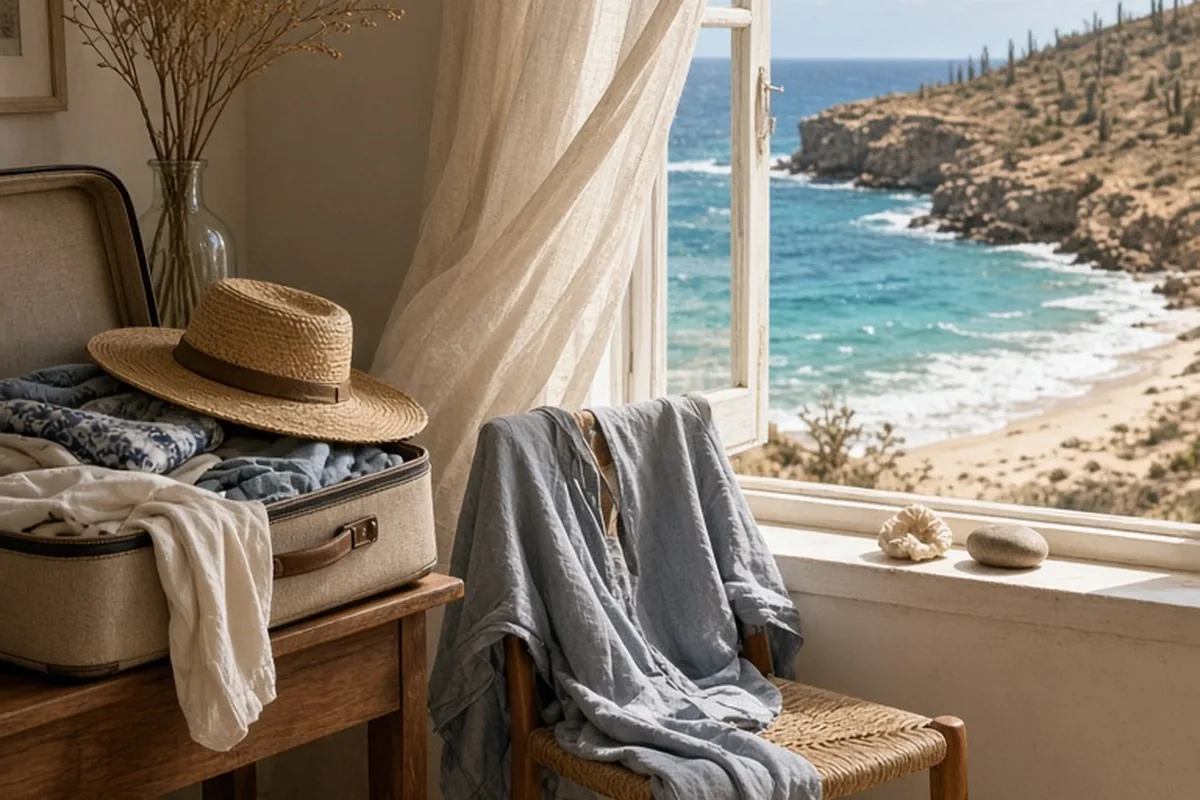
In Aruba, women should prioritize breathable, lightweight fabrics like linen, modal, and cotton blends paired with secure, wind-resistant silhouettes. Because constant trade winds blow at fifteen to twenty miles per hour alongside strong tropical sunshine, the most functional wardrobe includes fitted midi dresses, tailored shorts, UV-protective swimwear, sturdy flat sandals, and light layers for air-conditioned indoor spaces.
Packing for the southern Caribbean requires balancing vibrant resort aesthetics with distinct microclimates, where intense equatorial heat meets persistent coastal breezes and rugged desert terrain.
Navigating the Island Climate: Trade Winds and Solar Heat
Aruba sits just twelve degrees north of the equator, producing consistent year-round daytime temperatures in the mid-to-upper eighties. Unlike lush rainforest destinations, Aruba is semi-arid and characterized by open desert plains, cacti, and relentless coastal breezes. The defining environmental factor for your wardrobe is the reliable trade wind system, which regularly averages fifteen to twenty-five miles per hour. While these steady breezes make the heat feel much more manageable, they also present specific wardrobe challenges that catch many first-time visitors off guard.
When choosing garments, fabric composition and weight matter just as much as aesthetic appeal. Lightweight natural fibers like linen, open-weave cotton, bamboo, and rayon allow heat to escape your body efficiently, preventing moisture buildup during humid afternoons. However, ultra-lightweight, loose-flowing fabrics can easily lift and billow in sudden gusts. Choosing garments with structured hems, interior linings, or heavier draping ensures you remain comfortable and secure when walking along breezy beachfronts, outdoor promenades, or open-air hotel lobbies.
Daytime Beach and Poolside Essentials
Beach culture in Aruba centers around world-renowned stretches of sand like Eagle Beach and Palm Beach, where turquoise waters invite swimming, paddleboarding, and snorkeling. For daytime lounging, select swimwear that provides both comfort and support against active surf. Two-piece bikinis, supportive one-pieces, and athletic swimsuits all work well, but you will want secure fastenings that stay in place when encountering shore waves or boarding catamaran excursions. If you plan to spend prolonged periods in the water, consider packing a stylish long-sleeve rash guard with built-in ultraviolet protection.
Your beach cover-up should serve as a versatile transition piece that allows you to move seamlessly from the lounger to a seaside cafe or open-air bar. Button-down linen shirts, oversized tunic dresses, and knit crochet pull-overs are ideal because they slide on easily over damp suits while offering modest coverage. For sun protection, a wide-brimmed straw hat is helpful, but ensure it features an adjustable chin cord or inner drawstring so the trade winds do not sweep it into the sea. Alternatively, a low-profile cotton baseball cap or a tied silk scarf provides secure head coverage without catching the wind.
- Two to three versatile swimsuits featuring supportive straps and durable hardware
- One long-sleeve UV-blocking rash guard for snorkeling tours or active water sports
- Two lightweight cover-ups, such as an oversized linen button-down and a crochet midi dress
- A secure sun hat with an interior drawcord or chin tie to withstand ocean gusts
- Polarized sunglasses with strong UV protection to cut intense water glare
Dressing for Rugged Exploration in Arikok National Park
Nearly twenty percent of Aruba comprises Arikok National Park, a protected expanse of dramatic limestone cliffs, desert trails, abandoned gold mines, and secluded tide pools like the Natural Pool. Exploring this side of the island requires a distinct departure from resort wear. Many guided excursions involve open-air utility vehicles, all-terrain vehicles, or rocky hiking paths where you will encounter significant dust, rough volcanic stone, and direct sun exposure without natural shade canopy.
For adventure excursions, opt for high-performance activewear over delicate resort clothing. Moisture-wicking athletic shorts, breathable bike shorts, and lightweight performance tank tops or technical sun shirts will keep you cool while shielding your skin from abrasive dust and intense solar radiation. Avoid wearing your favorite light-colored garments on these tours, as the reddish-brown desert dust can easily settle into woven fabrics and leave stubborn stains. A bandana or seamless neck gaiter is also helpful for covering your nose and mouth during dusty off-road rides.
Evening Dining and Nightlife Wardrobe
Evenings in Aruba are energetic yet relaxed, spanning candlelit dinners directly on the sand, sophisticated fine-dining venues in Oranjestad, and lively open-air cocktail lounges in Palm Beach. The prevailing evening dress code across the island is upscale resort casual. Women typically wear midi-length sundresses, coordinated linen two-piece sets, wide-leg trousers paired with silk camisoles, or elegant jumpsuits. Ultra-formal gowns are rarely seen, but polished styling with statement jewelry and refined sandals will make you feel right at home at top-tier restaurants.
When planning dinner outfits, consider the physics of coastal dining. Long, flowy maxi skirts with excessive volume can whip uncontrollably around table legs on windy beachside patios. In contrast, column-style midis, wrap dresses with secure closures, or tailored culottes allow you to dine peacefully without having to constantly manage your hemline. Additionally, keep a lightweight layer handy in your evening bag. High-end indoor restaurants, casinos, and hotel lounges frequently maintain vigorous air conditioning that creates a sharp contrast with the outdoor heat.
- Fitted or column-style midi dresses that maintain their shape in coastal breezes
- Tailored wide-leg linen trousers paired with structured sleeveless tops
- Chic jumpsuits or rompers made from breathable blends like modal or cotton jersey
- A lightweight pashmina, linen blazer, or soft cardigan for air-conditioned dining rooms
Footwear Selection: Sand, Cobblestones, and Coastal Terrain
Choosing footwear for Aruba requires a realistic understanding of local walking surfaces. Between deep sand dunes, wooden pier walkways, uneven resort pavers, and historic brick streets in downtown Oranjestad, high stilettos and narrow heels are both impractical and uncomfortable. Thin heels sink immediately into sand, get caught in wooden deck slats, and make walking on windy oceanfront piers hazardous.
Instead, build your shoe capsule around supportive, versatile flats and sturdy elevated options. A pair of cushioned slide sandals or quality leather flip-flops handles beach and poolside duty. For daytime walking and shopping excursions, supportive walking sandals or clean, breathable white sneakers prevent fatigue on hard pavements. When dressing up for dinner, choose stable espadrille wedges, block heels, or metallic flat sandals that provide height and polish without sacrificing stability on natural surfaces.
Smart Accessories and Everyday Island Practicalities
The right accessories will significantly elevate your comfort and streamline daily transitions across the island. Because winds are constant, keeping your hair secured is an essential styling consideration. Packing a selection of durable claw clips, silk scrunchies, wide fabric headbands, and texture sprays will save you time and keep your hair from constantly blowing across your face and lip gloss during outdoor meals and boat tours.
Bag selection also warrants thoughtful planning. A spacious canvas tote or woven straw bag works well for carrying beach towels, reef-safe sunscreen, and water bottles down to the shore. For sightseeing and evening dining, switch to a compact crossbody bag with secure zipper closures. A crossbody design leaves your hands free to navigate catamaran boarding or rocky paths while keeping your wallet, phone, and hotel room key cards safely tucked away in bustling shopping districts.
Illustrative Scenarios
Managing Wardrobe Choices on a Sunset Sail
Rachel planned a romantic sunset catamaran excursion along the Palm Beach coastline. Expecting gentle evening breezes, she wore a tiered, voluminous chiffon maxi dress with thin shoulder straps and open-back styling. Once the boat cleared the sheltered bay and entered open water, the gusting trade winds caught the loose fabric, forcing her to spend the entire two-hour cruise holding her skirt down with both hands while struggling to enjoy the appetizers and scenic views. For her subsequent dinner on the beach, Rachel adjusted her approach, choosing a fitted modal midi dress paired with flat metallic sandals and a secured linen wrap, allowing her to relax and move freely without worrying about sudden gusts.
Key point: Opting for streamlined silhouettes and wind-resistant garment construction eliminates self-consciousness in breezy coastal environments.
Adapting Apparel for an Off-Road Desert Tour
During a vacation with her partner, Maya scheduled a full-day guided utility vehicle tour through Arikok National Park to visit the Natural Pool and remote coastal bluffs. She initially planned to wear white denim cutoff shorts, a delicate cotton crop top, and slide sandals. Recognizing the rugged nature of the itinerary, she switched into olive-green athletic bike shorts, a dark moisture-wicking sun shirt, secure water shoes with rubber grip soles, and polarized sunglasses with an attachment strap. As the vehicle kicked up heavy dust clouds and required hiking over slick limestone rocks, Maya remained comfortable, well-protected, and confident throughout the entire rugged excursion.
Key point: Selecting functional, dark-colored activewear and enclosed footwear prevents discomfort and clothing damage during adventure excursions.
Frequently asked questions
Are there specific dress codes required when visiting religious sites or government buildings in Aruba?
While Aruba is generally relaxed, visiting historic churches like the Alto Vista Chapel requires respectful coverage of shoulders and knees. Swimwear and sheer beach cover-ups are not permitted inside religious spaces, municipal buildings, or banks.
Do I need to pack warm clothing for nighttime in Aruba?
You do not need heavy coats or thick sweaters because nighttime outdoor temperatures rarely drop below the high seventies. However, a lightweight cardigan, denim jacket, or woven pashmina is highly recommended to stay comfortable in heavily air-conditioned indoor restaurants and casinos.
Can I wear heels for evening dinners in Palm Beach?
Thin stiletto heels are difficult to manage on Aruba's sandy beach dining areas, wooden pier paths, and uneven pavers. Sturdy block heels, espadrille wedges, or dressy flat sandals offer a polished look while providing necessary stability.
What kind of water shoes should I bring for island swimming spots?
While main tourist beaches have soft sand, remote spots like the Natural Pool and Baby Beach have sharp coral and volcanic rock entries. Pack flexible, quick-drying water shoes with thick rubber soles to protect your feet when swimming off rocky shores.
Your next step
Begin by auditing your travel wardrobe for breathable natural fabrics and wind-friendly cuts, then assemble a versatile capsule combining structured midis, supportive footwear, and protective sun essentials.