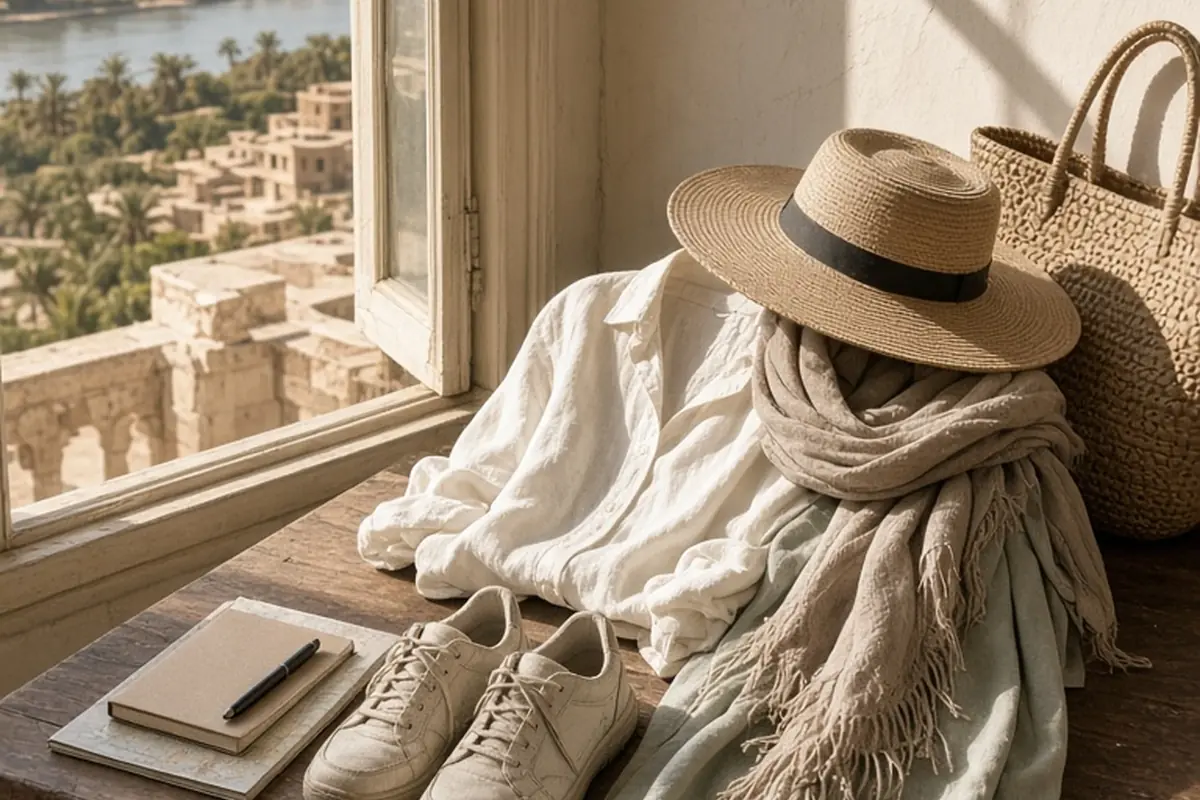
Women traveling in Egypt should prioritize lightweight, breathable, and modest clothing that covers shoulders, cleavage, and knees. Loose linen or cotton trousers, midi or maxi skirts, breathable tunics, and short- or long-sleeve shirts offer comfort in the heat while respecting local cultural norms. Pack a lightweight scarf to cover your head in active mosques, sturdy walking shoes for dusty archaeological sites, and standard swimwear reserved specifically for private resort areas.
Packing for a trip to Egypt requires finding a practical balance between handling high desert temperatures and honoring conservative cultural norms. Preparing the right wardrobe ensures you stay cool during long days of sightseeing while moving through cities, markets, and sacred monuments with confidence and ease.
Understanding the Cultural Baseline for Daily Outfits
Egypt is a predominantly conservative Muslim country with a substantial Coptic Christian minority. While female visitors are not legally required to adhere to a strict religious dress code, local customs heavily favor modest presentation. In major urban centers such as Cairo and Alexandria, as well as working agricultural towns along the Nile, local women typically dress in styles that obscure the shape of the body and cover the chest, shoulders, upper arms, and legs down to the ankles or mid-calf.
Adopting a similar standard of modesty serves two practical functions for travelers. First, it demonstrates cultural respect, which often leads to warmer and more welcoming interactions with locals in markets, neighborhood eateries, and transit hubs. Second, dressing conservatively helps reduce unwanted stares and persistent street attention. Choosing outfits that cover your collarbones down past your knees allows you to focus on the historical and architectural beauty around you rather than feeling self-conscious in crowded public areas.
Choosing the Right Fabrics and Silhouettes for Desert Heat
Summer temperatures across Egypt frequently climb well above one hundred degrees Fahrenheit, while spring and autumn remain intensely warm and dry. Synthetic materials such as polyester, nylon, and heavy spandex trap sweat against your skin, leading to chafing, overheating, and noticeable discomfort. Instead, build your travel wardrobe around natural, breathable textiles such as medium-weight linen, loose-weave cotton, chambray, and lightweight rayon or bamboo blends.
The most effective approach to beating the heat while staying covered is to wear loose, flowing silhouettes rather than tight-fitting garments. Wide-leg linen culottes, tiered midi skirts, breezy palazzo pants, and relaxed poplin tunics create an insulating air gap between your skin and the outer fabric. This air circulation accelerates sweat evaporation and shields your skin from direct ultraviolet radiation, keeping you significantly cooler than tight shorts or form-fitting tank tops would in direct sunlight.
- Linen or cotton wide-leg trousers with an elastic or drawstring waistband
- Loose-fitting, button-up collared shirts worn open over a high-neck camisole
- Breathable midi and maxi dresses with sleeves that extend past the shoulders
- Oversized tunics or long-line cotton blouses paired with cropped trousers
What to Wear at Ancient Monuments and Outdoor Temples
Visiting archaeological complexes like the Giza Plateau, the Valley of the Kings, and Karnak Temple involves hours of walking over uneven terrain with minimal shade. These sites demand clothing that withstands windblown sand, intense solar glare, and physical exertion while maintaining modesty. Ankle-length or mid-calf lightweight pants paired with a breathable, elbow-length cotton top provide ideal protection against both sunburn and abrasive dust.
Color choice is equally important when exploring desert ruins. Bright white fabrics can produce an overwhelming glare under unshaded desert sun, while dark navy and black absorb thermal heat rapidly. Earth tones, soft khakis, sage greens, light terracotta, and dusty pastels reflect ambient sunlight effectively and blend naturally with the surrounding stone without showing immediate dust or sand stains from exploring narrow tomb passages.
Dress Codes for Active Mosques and Religious Landmarks
Active places of worship, such as the Mosque of Muhammad Ali or Al-Azhar Mosque in Cairo, require strict adherence to modest dress guidelines for entry. Women must ensure their ankles, wrists, and collarbones are fully covered, and tight or sheer clothing is strictly prohibited. You will also be required to cover your hair with a scarf before stepping inside the prayer halls.
Carrying a designated, non-slip cotton or pashmina scarf in your day bag prevents the need to rent or borrow communal coverings at mosque entrances. You will also need to remove your footwear before walking onto the carpeted prayer areas. Wearing slip-on shoes or carrying clean socks makes this transition smooth, hygienic, and convenient during a busy day of touring religious landmarks.
Navigating Coastal Resorts versus Traditional Cities
Egypt presents distinct regional variations in dress expectations, especially when comparing inland cities to Red Sea resort towns like Sharm El Sheikh, Hurghada, and El Gouna. Within enclosed private resorts, gated beach clubs, and liveaboard dive boats, standard Western beach attire—including bikinis, one-piece swimsuits, denim shorts, and sundresses—is fully accepted by staff and fellow travelers.
However, that relaxed atmosphere ends as soon as you step outside the resort perimeter into local towns, residential neighborhoods, or public transportation hubs. When leaving the pool area to explore a marina, visit a local fish restaurant, or browse a traditional souk, you should slip into an opaque cover-up, a loose summer dress with sleeves, or a pair of lightweight pants and a shirt to maintain appropriate public decorum.
Footwear Essentials for Cobblestones, Sand, and Dust
Touring Egyptian cities and historic ruins requires durable, protective footwear. Streets in historic quarters often feature broken pavement, uneven cobblestones, and dusty gravel, while archaeological sites require walking across loose sand, stone steps, and steep ramps inside underground tombs. Thin flip-flops or open-toe flat sandals leave your feet vulnerable to sharp rocks, stubbed toes, and thick coats of dirt.
The best option for everyday sightseeing is a pair of well-cushioned, breathable walking sneakers with solid traction. If you prefer sandals, choose supportive sport or hiking sandals with secure ankle straps, contoured arch support, and thick rubber soles. Consider bringing a second pair of lightweight slip-on shoes for evening meals or casual strolls around your hotel to give your primary walking shoes time to air out.
Practical Accessories for Sun Protection and Daily Travel
Accessories in Egypt serve vital functional purposes beyond styling your outfits. A wide-brimmed straw or UPF-rated packable hat protects your scalp, face, and neck from persistent sun exposure during midday tours. Polarized sunglasses with high UV filtration are essential for cutting through the harsh glare reflected off desert limestone and pale sandy paths.
A secure crossbody bag with zippered compartments keeps your daily essentials safe while navigating crowded bazaars like Khan el-Khalili. Keep a small pack of wet wipes, travel-sized hand sanitizer, and a packet of tissues in your bag, as public restrooms near remote historical sites often lack running water or toilet paper. Finally, ensure your chosen day bag has enough room to hold a refillable insulated water bottle and your headscarf.
Illustrative Scenarios
Balancing Comfort and Modesty at the Giza Plateau
During an afternoon tour of the Pyramids of Giza, Maya initially chose a sleeveless tank top and running shorts because the temperature was climbing past ninety-five degrees. Once on site, she felt unprotected under the intense desert sun and noticed lingering stares from surrounding crowds that made her uncomfortable. Rather than cutting her visit short, she retrieved a lightweight, oversized cotton button-down shirt and a wide woven scarf from her backpack. She slipped the shirt over her tank top and wrapped the scarf around her waist like an ankle-length sarong over her shorts. The change immediately shielded her skin from direct sun exposure and allowed her to explore the monument grounds with confidence.
Key point: Packing lightweight, versatile layers in your daypack lets you adapt instantly to changing environments and maintain comfort under intense sun.
Transitioning Between a Coastal Resort and Downtown Luxor
Rachel spent several days at a beach resort in Hurghada wearing swimwear and casual sundresses by the pool, where Western resort attire is standard. When transferring to Luxor for a self-guided walking tour of local markets, she initially considered wearing a low-cut sundress to stay cool. Recognizing the shift from a private resort bubble to a working regional city, she changed into a breathable, high-neck linen maxi dress with elbow-length sleeves and closed-toe walking shoes. This adjustment kept her comfortable in the afternoon heat while allowing her to engage respectfully with shopkeepers without awkward misunderstandings.
Key point: Recognizing the social boundary between private resort properties and working residential towns ensures comfortable, hassle-free interactions.
Frequently asked questions
Do female tourists have to wear a headscarf everywhere in Egypt?
No, foreign women are not expected to cover their hair in regular public spaces such as streets, restaurants, or archaeological ruins. A headscarf is only required when entering active mosques, where covering your hair, shoulders, and legs is a mandatory religious custom.
Can women wear shorts when traveling in Egypt?
Shorts are acceptable inside private beach resorts, hotel pool grounds, and on cruise ship sundecks. However, wearing short shorts in cities, historic monuments, and public streets is generally discouraged because it draws unwanted attention and conflicts with local modesty expectations.
What is the best swimwear to pack for Egyptian beach destinations?
Standard one-piece swimsuits and bikinis are completely acceptable at private hotel beaches, resort pools, and on boat excursions along the Red Sea. For public beaches where local families swim, modest swimwear or a lightweight swim shirt and boardshorts is more appropriate.
How do I check if my lightweight summer clothes are too transparent for Egypt?
Hold your linen or cotton garments up against a window or bright light source before packing them to ensure underwear and body contours remain hidden. If a fabric is sheer in bright sunlight, pair it with a lightweight slip, camisole, or skin-toned undergarments.
Your next step
Before packing your suitcase, hold your lightweight cotton and linen garments up to a bright window to confirm they are opaque in direct sunlight, ensuring you stay cool, protected, and culturally comfortable throughout your trip.