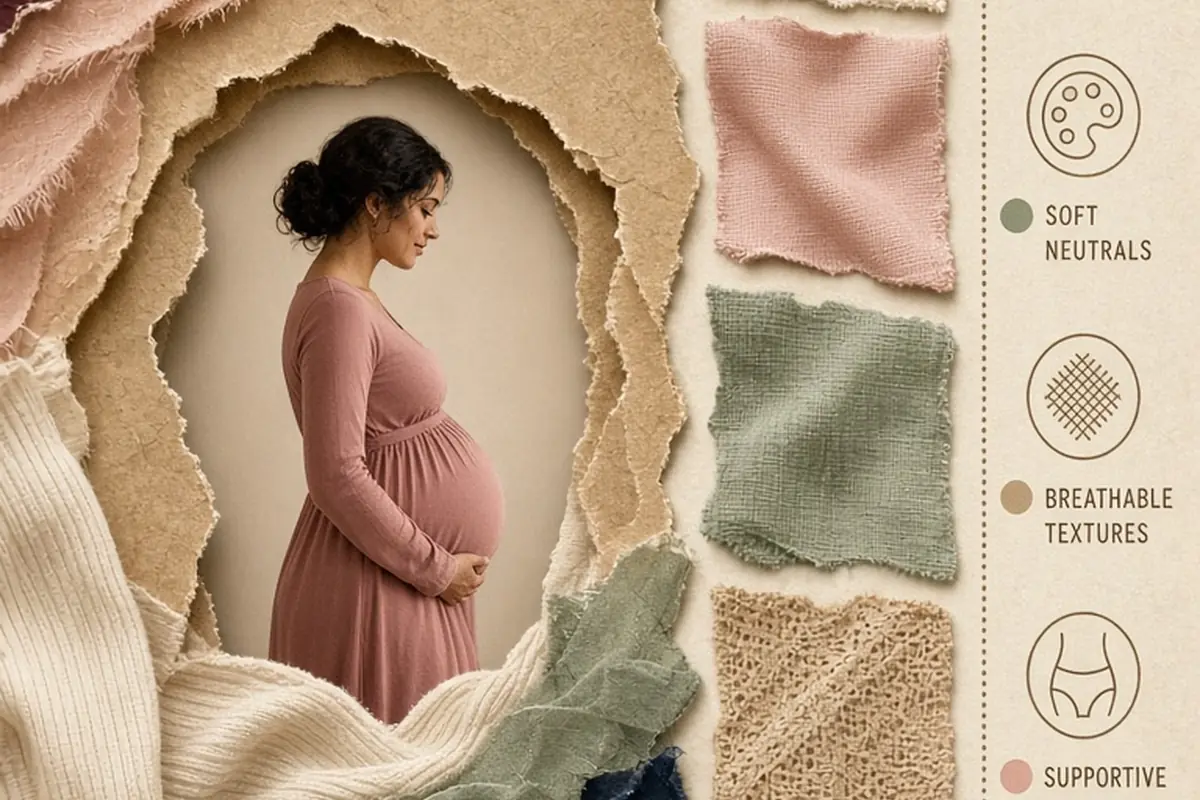
For a maternity photoshoot, choose clothing that emphasizes your bump while keeping you comfortable. Fitted bodycon dresses, empire-waist maxi gowns, and textured ribbed knits highlight your shape cleanly. Solid, soft neutral tones like cream, blush, sage, or earth tones photograph best. Avoid tight waistbands, busy graphic prints, and unsupportive footwear to ensure effortless movement and enduring portrait aesthetics.
Preparing for a maternity portrait session involves balancing physical comfort with timeless visual appeal. Choosing the right wardrobe ensures you feel confident, supported, and relaxed throughout your session.
Fitted Silhouette Styles Versus Flowing Maxi Dresses
Fitted silhouettes, such as ribbed knit midis, stretch-jersey bodycons, and tailored wrap dresses, clearly showcase the curve of your belly. These designs eliminate excess fabric that might otherwise obscure your shape, making them ideal for minimalist studio portraits, clean architectural backdrops, or indoor lifestyle sessions. A dress with side ruching or stretchy modal fabric gently hugs your changing proportions without pinching, allowing the photographer to capture crisp profiles and silhouette lighting.
Flowing maxi dresses, particularly those featuring an empire waist or an A-line cut, introduce romance, texture, and movement. Lightweight fabrics like chiffon, tulle, and tiered cotton catch the breeze during outdoor sunset sessions, adding dynamic energy to wide-angle landscape shots. When wearing a looser gown, define your shape by gently cupping your hands above and below your bump or choosing a cut that cinches directly beneath the bust. Completely shapeless shifts or oversized babydoll dresses often drape straight down from the chest, hiding the bump and creating unintended bulk in two-dimensional images.
Selecting Color Palettes and Managing Bold Patterns
Color choices set the visual tone of your maternity gallery. Soft neutrals—such as warm ivory, oatmeal, taupe, and muted slate—reflect light softly and keep the emotional focus on facial expressions and your growing belly. Muted pastels like dusty rose, sage green, and soft sky blue work seamlessly in garden or beach settings, while earthy tones like terracotta, camel, and deep olive add warmth in golden hour fields or wooded locations.
Highly saturated neon shades and stark pure blacks present specific photographic challenges. Vibrant neons can cast unnatural color reflections onto your neck, jawline, and skin in direct or bounce lighting. Solid black, while slimming in everyday life, can flatten depth in photographs, making it difficult to distinguish the contours of your bump without specialized studio lighting. If you prefer patterns, select delicate micro-florals, subtle pinstripes, or tonal textures rather than high-contrast geometric prints or oversized graphics that distract the viewer.
Fabric Selection, Breathability, and Visual Texture
The tactile quality of your clothing translates directly into photographic depth. Chunky cable knits, eyelet embroidery, raw linen, soft lace overlays, and waffle weaves introduce visual interest without needing bright colors or prints. Natural fibers such as cotton, modal, and linen offer superior breathability, which is essential for regulating body temperature during warm outdoor shoots or heated indoor studios.
Pay close attention to fabric weight, opacity, and cling. Thin, synthetic jersey fabrics can cling uncomfortably to support garments, bunch around the hips, or become semi-transparent when backlit by the sun or strong studio strobes. To check opacity, hold your chosen garment up to a bright window before shoot day. If you plan to wear a sheer chiffon robe or open gown, pair it intentionally with a solid bodysuit, slip, or bandeau set to achieve an intentional, polished finish.
Supportive Foundation Garments and Seamless Underwear
The foundation garments you wear beneath your maternity outfit dictate how smoothly the outer fabric drapes. Seamless, high-waisted maternity briefs or smoothing mid-thigh shorts prevent visible panty lines and eliminate chafing between the thighs during outdoor walking. Ensure waistbands and leg openings do not dig into your skin, as tight elastic bands can create visible indentations through lightweight fabrics and cause physical discomfort.
Always match your undergarments to your skin tone rather than the color of your dress. Wearing a white bra beneath a white linen or lace dress often creates a noticeable contrast under bright camera flashes; a nude bra matched to your skin tone remains completely invisible. If your gown features an open back, off-the-shoulder neckline, or thin straps, invest in a supportive strapless maternity bra, silicone nipple covers, or gentle adhesive lift tape tested beforehand to ensure your skin does not react.
Coordinating Family, Partner, and Sibling Outfits
When including a partner or older children in your session, aim for cohesive harmony rather than exact matching. Selecting two or three coordinating hues from a shared color palette—such as cream, dusty blue, and tan—creates visual unity without looking overly staged. For example, if you wear a textured cream maxi dress, your partner might wear a soft stone-colored button-down shirt with olive or khaki chinos, creating subtle contrast without visual conflict.
Keep sibling outfits simple, comfortable, and functional. Avoid stiff collars, scratchy synthetics, large commercial logos, and graphic tees that detract from tender, candid interactions. Rompers, simple pinafores, or soft cotton shirts in muted tones allow children to play, cuddle, and sit naturally. Dressing the family in similar levels of formality is equally important; a partner in formal tailoring next to a mother in a casual sundress creates an unintended visual mismatch.
Footwear and Practical Accessories for Location Shoots
Footwear should balance personal style with safety and stability. Pregnancy alters your center of gravity and can cause fluid retention in the feet and ankles, making high stilettos impractical and uncomfortable. Opt for flat leather slides, low chunky block heels, woven espadrilles, or minimalist clean sneakers. In beach or field environments, going barefoot adds an organic, grounded aesthetic while keeping you stable on uneven ground.
Keep accessories refined and intentional. Minimalist jewelry—such as delicate gold layering chains, classic hoop earrings, or a simple watch—draws subtle attention toward your collarbones and hands without snagging on delicate fabrics. Bring a spacious tote bag to the shoot containing slip-on sandals or walking sneakers, allowing you to walk comfortably between shooting spots before switching into photo shoes.
Session Timing, Outfit Changes, and Weather Prep
Most portrait photographers suggest booking your maternity session between the 28th and 34th weeks of pregnancy. During this window, your belly is round and prominently defined, yet you are generally less prone to the intense fatigue, pelvic pressure, and swelling common in the final month. If you are expecting twins or triplets, scheduling earlier—between 24 and 28 weeks—ensures greater physical ease.
Planning for two distinct looks provides great gallery variety. A common approach includes one elevated, flowing gown for golden hour portraiture and one relaxed look, such as unbuttoned maternity denim paired with a cozy knit bralette or tailored white linen shirt. Pack a portable changing robe or pop-up tent if changing on location, along with blotting papers, drinking water, high-protein snacks, and a light cardigan to stay warm between takes.
Frequently asked questions
What is the best week to schedule a maternity photoshoot?
The ideal timeframe is between 28 and 34 weeks of pregnancy. Your bump is round and prominent, while mobility and energy levels remain manageable. If you are expecting multiples, plan for 24 to 28 weeks instead.
Should I wear tight or loose clothing for maternity portraits?
Both work well when chosen deliberately. Form-fitting knit or bodycon dresses cleanly outline your silhouette, while flowing empire-waist maxis create romantic motion when gathered or cupped with your hands. Avoid overly boxy garments that hang straight down.
What colors should be avoided in maternity photos?
Avoid neon shades, high-contrast graphic patterns, and heavy solid black. Neon colors cast unnatural hues across your skin in daylight, while solid black can flatten lighting and conceal belly definition in low-contrast environments.
How many outfit changes should I bring to a session?
Two outfits are ideal for a standard one-hour session. Bringing one formal or flowing dress alongside one casual or intimate look offers gallery variety without wasting valuable shooting time on frequent clothing changes.
Your next step
Select two outfits in complementary neutral or earthy tones—one fitted and one flowing—and test your complete wardrobe with seamless, skin-toned undergarments in natural daylight several days before your session.