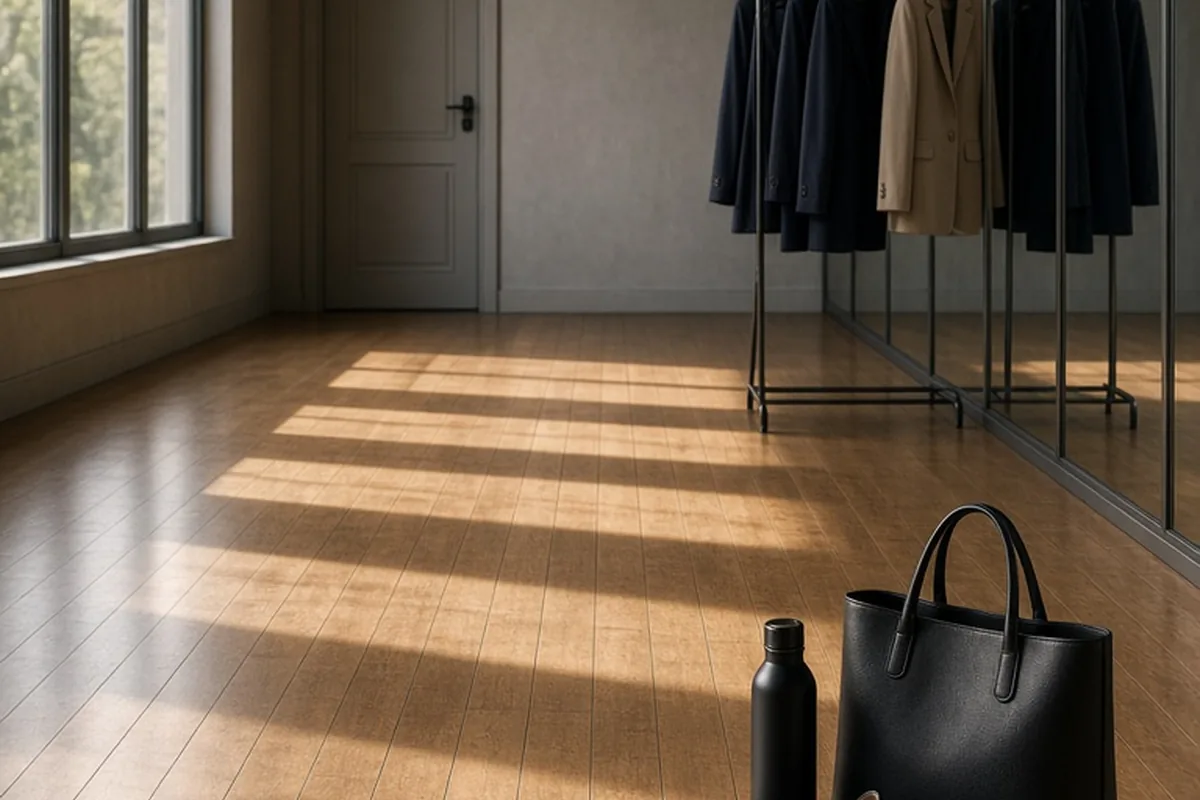
Women dressing for court should aim for conservative business or business-casual attire that demonstrates respect for the legal process. Reliable choices include a tailored pantsuit, a dark blazer paired with slacks or a knee-length skirt, or a modest dress with sleeves. Neutral tones like navy, charcoal, black, beige, and soft white work best. Avoid athletic wear, revealing cuts, loud patterns, open-toe sandals, and casual denim.
Stepping into a courthouse can feel intimidating regardless of your role in the proceedings, but choosing the right outfit removes unnecessary anxiety and establishes quiet confidence before you speak a single word.
Understanding the Courtroom Dress Standard
Courthouses operate under formal decorum where judges, bailiffs, and clerks expect decorous behavior and traditional presentation. The general standard for court appearances is conservative business or elevated business-casual attire. The objective is not to showcase trend-forward personal styling, but rather to communicate seriousness, responsibility, and deference to the gravity of the legal environment. When judges or juries evaluate testimony, an outfit that distracts can inadvertently weaken credibility or project nonchalance toward the proceeding.
While individual jurisdictions vary regarding strictness, erring on the side of formality is always safer than underdressing. In federal, superior, or district courts, full business attire such as a suit or structured blazer is standard practice. Municipal or traffic hearings often see slightly more relaxed interpretations, yet treating every proceeding with the same degree of polish protects you against arbitrary local rules or a particularly strict judge. A helpful benchmark is dressing as though you are interviewing for a professional position at a conservative financial institution or law firm.
Reliable Outfit Formulas for Court Appearances
Selecting an outfit becomes much simpler when relying on proven, structured combinations that satisfy standard court decorum. One classic option is a matching pantsuit or skirt suit in a neutral hue like navy, slate gray, or black, layered over a modest silk, chiffon, or cotton blouse. If a full suit feels inaccessible or overly formal for a minor hearing, a structured blazer worn over tailored trousers or ankle-length slacks creates an equally respectable silhouette without requiring a matching set.
Another dependable choice is an understated sheath dress or A-line midi dress that hits at or below the knee, paired with a fitted cardigan or tailored blazer. Ensure that any dress has an appropriate neckline, such as a crew, boat, or modest V-neck, and that shoulders remain covered throughout the day. If temperatures inside the building fluctuate, a coordinated outer layer ensures you stay warm while maintaining an orderly, composed aesthetic at the counsel table or gallery bench.
- Tailored blazer paired with matching straight-leg trousers and a high-neck shell blouse
- Knee-length navy or charcoal sheath dress layered beneath a structured single-button jacket
- High-waisted pleated slacks paired with a tucked-in collared button-down and lightweight cardigan
- A-line knee-length skirt combined with a dark knit top and tailored neutral blazer
Fabric Selection, Color Palette, and Proportions
The fabrics and colors you choose significantly influence how your clothing holds up during long hours in court. Crisp, wrinkle-resistant materials such as wool blends, ponte knits, high-grade cotton, and structured gabardine hold their shape far better than flimsy synthetics, sheer chiffon, or easily rumpled linen. Courtrooms frequently involve extended periods of sitting, waiting in hallways, and standing before a bench, meaning clothes that maintain clean lines without creasing will preserve your composure from morning docket to afternoon recess.
Color palettes should center on muted neutrals and subdued earth tones. Navy blue, charcoal gray, deep forest green, camel, black, cream, and soft taupe convey reliability and calm restraint. Bright neon shades, chaotic animal prints, high-contrast geometric graphics, and shimmering metallic threads can feel disruptive or performative under harsh fluorescent courtroom lighting. Consider your proportions carefully as well: trousers should break naturally over your shoes without dragging on the floor, and skirts must remain comfortable and modest when seated in low witness or gallery chairs.
Footwear and Accessory Guidelines That Balance Discretion and Comfort
Courthouse flooring is typically terrazzo, tile, or polished stone, which magnifies the click of hard heels and exposes unstable footwear. The ideal shoes are closed-toe options such as polished leather loafers, pointed or rounded-toe ballet flats, low block heels, or conservative pumps with a heel height under two and a half inches. Stiletto heels, platform pumps, running sneakers, flip-flops, open-toe sandals, and casual canvas slip-ons are widely viewed as inappropriate and can generate noisy distractions when approaching the podium.
Accessories should remain minimal and functional rather than decorative. A classic wristwatch, small stud earrings, and a simple pendant necklace add refinement without attracting undue attention. Avoid jangling bangles, loud layered chains, or oversized novelty items that clatter against desks or catch on clothing. For bags, choose a structured leather or faux-leather tote or satchel in black or brown that easily accommodates necessary legal documents, pens, and personal essentials while fitting neatly beneath your chair.
Grooming, Security Screening, and Outerwear Considerations
Personal grooming forms an integral part of your courtroom presentation. Hair should be neat, clean, and styled away from the face so your expressions and eyes remain clearly visible to the bench, attorneys, and jury. Makeup should be understated and natural, focusing on even skin, soft neutral eyeshadows, and muted lip tones. Courthouses are crowded, enclosed indoor public spaces, so heavy perfumes, scented body lotions, and colognes should be omitted entirely to avoid aggravating allergies or causing discomfort to others in close quarters.
Keep the courthouse security screening checkpoint in mind when dressing in the morning. Courthouses require passing through metal detectors and bag inspection stations, often with lines extending into the street. Avoid clothing featuring heavy metal hardware, decorative grommets, or complicated multi-buckle belts that slow down the screening process. Layer with an all-weather trench coat, tailored wool overcoat, or sleek pea coat that can be easily removed and hung on designated gallery racks or held across your arm without creating clutter.
Adapting Attire for Specific Types of Court Appearances
Different courtroom situations bring subtle distinctions in expectation, though formality remains your baseline. In family court hearings, including divorce or child custody proceedings, the objective is to communicate parental stability, calm temperament, and emotional groundedness. Soft neutral tones like soft blue, beige, and warm gray are particularly effective because they project approachable composure rather than stark severity, helping signal cooperation and responsibility to judges and family evaluators.
For jury duty or minor civil and small claims hearings, a neat business-casual approach is typically welcomed. Slacks paired with a pressed button-down shirt or fine-gauge knit sweater provide an appropriate balance between everyday comfort and courthouse decorum. However, if you are a defendant in a criminal case or a key witness in a high-stakes civil dispute, full business dress—specifically a dark tailored suit—is strongly recommended to visually underscore the gravity with which you treat the judicial process and legal allegations.
Critical Wardrobe Pitfalls to Avoid in the Courthouse
Knowing what not to wear is just as crucial as knowing what works. Casual garments designed for recreation or lounging have no place in a legal setting. This includes denim jeans of any cut or wash, leggings worn as pants, athletic sweatpants, cropped tops, hooded sweatshirts, tank tops, and visible lingerie straps. Even high-end designer streetwear often reads as disrespectful or flippant when viewed from the judicial bench, risking reprimands from court marshals or delays in your hearing.
Pay careful attention to messaging and visual symbols on your clothing. T-shirts with slogans, political graphics, corporate logos, or provocative jokes can cause immediate conflict or result in bailiffs denying you entry to the courtroom entirely. Furthermore, check the fit of your garments under natural light before leaving home; fabrics that appear opaque indoors may turn semi-sheer under bright sunlight or courthouse spotlights. Ensuring that skirts do not ride up uncomfortably when seated saves you from awkward adjustments while on the witness stand.
Illustrative Scenarios
Navigating Custody Court Attire Under High Stress
Elena was preparing for an emotionally charged custody review hearing in family court. Her initial impulse was to wear her everyday casual wardrobe of distressed jeans, an oversized bohemian sweater, and combat boots, believing that dressing differently would feel dishonest or staged. However, her attorney reminded her that first impressions in domestic relations court carry weight regarding stability and attention to detail. Elena chose instead to wear charcoal tailored trousers, an ivory silk blouse, a navy knit cardigan, and low black leather loafers. She kept her hair in a neat low chignon and left jewelry at home except for small pearl stud earrings. The calm, structured outfit helped her feel composed despite her inner anxiety, and she felt respected and attentive throughout her testimony.
Key point: Dressing conservatively for family court does not compromise your authenticity; it demonstrates emotional discipline, focus, and deep respect for the outcome of the proceeding.
Balancing Work Schedules with a Small Claims Hearing
Marcus and his partner Tasha were scheduled for an afternoon small claims dispute regarding a security deposit. Tasha worked at a creative design studio with an informal dress policy featuring t-shirts, distressed denim, and sneakers. Rather than rushing straight from her studio to the courthouse in her work clothes, she brought a change of clothes to her office. During her lunch break, she changed into a knee-length black ponte sheath dress, a tailored camel blazer, and black pointed-toe leather flats. She organized their receipts and lease documents into a clean leather folio rather than a casual canvas backpack. When they arrived, the clerk processed their case smoothly, and the judge complimented both parties on their organized presentation.
Key point: Planning a dedicated court outfit ahead of time prevents the stress of appearing in casual workplace attire that might undermine your credibility before the bench.
Frequently asked questions
Can I wear jeans or denim if they are dark and have no holes?
It is best to avoid jeans altogether, even dark or designer denim. While some rural or municipal courts occasionally permit dark denim, many judges view any jeans as overly casual, and certain jurisdictions forbid them explicitly. Opting for tailored slacks, chinos, or a modest skirt ensures you will not face dress-code issues.
Are flat shoes acceptable for women in court, or are heels required?
Clean, closed-toe flat shoes like polished leather loafers, oxfords, or dressy ballet flats are completely acceptable and often preferred over heels. Comfort and silent footing on stone floors are practical advantages during long court days. Avoid casual canvas slip-ons, athletic sneakers, and open-toe sandals.
How should I handle visible tattoos or facial piercings when attending court?
Whenever practical, cover visible arm, neck, or chest tattoos with long sleeves, collared shirts, or high necklines to maintain a conservative presentation. For facial piercings, consider replacing prominent metal jewelry with subtle, clear retainers or removing them for the duration of your appearance to keep the focus entirely on your testimony.
Can I bring my purse and phone inside the courtroom?
Most courthouses permit a small or medium-sized professional purse or tote, though it must pass through X-ray screening at the entrance. Phones are often allowed into the building but must be turned completely off or placed on silent inside the courtroom, as any ringing or notification can result in a fine or confiscation by the bailiff.
Your next step
Inspect and try on your complete court outfit—including footwear, undergarments, and an outer layer—at least forty-eight hours before your scheduled appearance while sitting and standing before a mirror to ensure comfort, modesty, and fit.