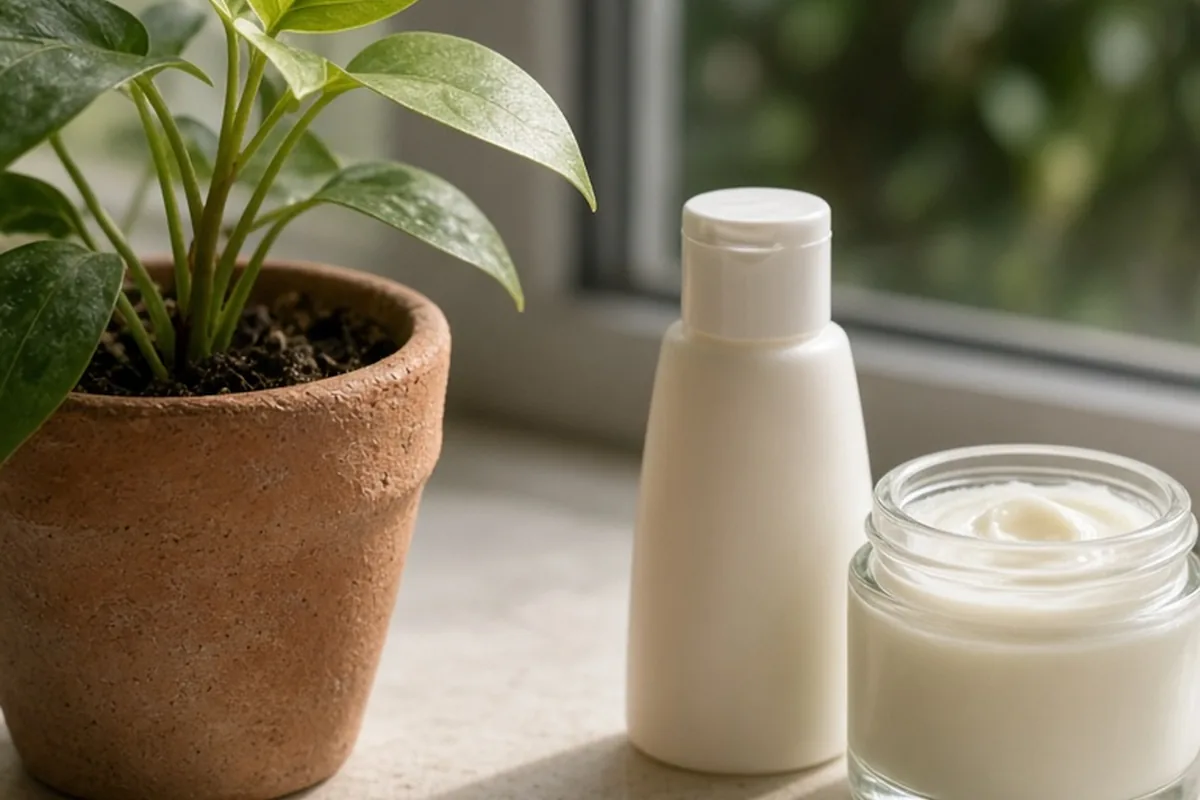
Moisturizer is an overarching skincare category that includes any product designed to hydrate skin and protect its barrier, such as creams, ointments, gels, and lotions. Lotion is a specific subcategory characterized by a higher water content, a lighter emulsion of oil and water, and rapid absorption. While every lotion functions as a moisturizer, heavier moisturizers like rich creams provide far more occlusive protection for very dry skin.
Standing in the personal care aisle can feel overwhelming when shelves display dozens of bottles labeled as hydrating lotions, barrier creams, soothing balms, and daily moisturizers without clear guidance on how they differ.
The Umbrella Concept: Why Every Lotion Is a Moisturizer
In skincare terminology, 'moisturizer' functions as a broad classification rather than a single distinct formula. A moisturizer refers to any topical formulation created to increase the water content of the stratum corneum—the outermost layer of the skin—while softening the tissue and reinforcing the protective lipid barrier. This comprehensive category encompasses lightweight gels, fluid lotions, dense creams, buttery balms, and heavy petrolatum-based ointments. Because the term describes what the product achieves rather than its physical consistency, calling something a moisturizer simply identifies its general objective: delivering and retaining moisture.
A lotion, by contrast, refers specifically to a physical formulation style defined by its texture, weight, and delivery vehicle. Lotions represent a specific branch under the larger moisturizer umbrella, created through an emulsion where a relatively small amount of oil is dispersed throughout a larger volume of water. When you buy a lotion, you are purchasing a moisturizer tailored for easy spreadability, rapid skin absorption, and minimal residue. Misunderstandings arise when consumers treat lotion and moisturizer as two rival product types, leading people to wonder whether they should use both simultaneously or purchase separate bottles for identical daily tasks.
Formulation Mechanics: Comparing Water-to-Oil Ratios
The practical difference between a light lotion and a heavier moisturizer like a traditional cream comes down to the balance of water and lipids in the emulsion. Lotions are engineered with high water content, which allows the product to glide effortlessly across expansive areas of skin. This fluid consistency means lotions penetrate the upper epidermal layers quickly without leaving an oily or greasy tactile film. The high water ratio makes them especially pleasant after a warm shower or during hot weather, when heavy products might feel sticky, suffocating, or overly slick on active skin.
Heavier moisturizers, such as creams and balms, reverse or significantly balance this ratio by incorporating higher concentrations of oils, waxes, and fatty alcohols. While a lotion might contain roughly seventy to eighty percent water, a rich barrier cream contains far more lipid compounds designed to stay closer to the surface. The trade-off is tactile: denser moisturizers take longer to massage in and leave a noticeable protective film, but that tangible barrier is precisely what slows down evaporation. If skin lacks natural sebum or endures harsh wind, a lightweight lotion may evaporate too rapidly to provide sustained comfort, making the richer lipid profile of a cream necessary.
Matching Product Consistency to Your Skin Type
Determining whether a standard lotion or a more substantial moisturizer suits your routine depends fundamentally on your individual skin characteristics and natural sebum production. Individuals with oily or acne-prone skin typically benefit most from fluid lotions or oil-free gel formulations. These lighter vehicles deliver necessary hydration via water-binding agents without overloading follicles with heavy occlusive lipids that could exacerbate congestion. Because oily skin produces adequate natural sebum to trap moisture, it rarely requires the dense wax-and-oil shield supplied by heavy creams.
Conversely, individuals dealing with dry, mature, or barrier-compromised skin usually discover that traditional lotions provide only temporary relief before tightness returns. Dry skin fundamentally lacks natural lipids, meaning water introduced by a light lotion can quickly disperse into dry air through transepidermal water loss. In such circumstances, choosing a moisturizer formulated as an emollient-rich cream or ceramide-infused ointment creates a resilient seal that mimics the skin's depleted natural protective barrier. While a lotion offers a refreshing initial burst of moisture, it often lacks the sustained staying power required to repair persistent flaking or rough patches.
Facial Formulations Versus Body Hydration Needs
The anatomical differences between the skin on your face and the skin across the rest of your body should guide where and how you apply different moisturizers. Facial skin features a higher concentration of sebaceous glands and a thinner stratum corneum, rendering it substantially more prone to pore blockages and sensitivity from heavy waxes or synthetic fragrances. Consequently, facial moisturizers—even when styled as lotions—are typically formulated with non-comedogenic emollients, specialized cellular communicators, and refined humectants that respect facial physiology without triggering breakouts.
Body skin, particularly over the arms, legs, elbows, and heels, contains significantly fewer oil-producing glands and a thicker epidermal layer, making it much more vulnerable to dry air and friction from clothing. Standard body lotions excel at covering these larger surface areas smoothly and economically without demanding endless rubbing. However, applying a fragrant, thick body lotion directly to your face can easily result in localized irritation or milia, while applying a delicate facial lotion to chronically rough knees will rarely deliver enough restorative lipid density to soften the area effectively.
Navigating Seasonal Climates and Environmental Stress
Your skin's hydration requirements rarely remain constant throughout the calendar year, making seasonal transitions an ideal time to adjust your moisturizer texture. During summer months or in humid coastal climates, high ambient moisture reduces the rate at which skin loses water to the atmosphere. In these conditions, lightweight lotions or gel-based moisturizers are often sufficient to maintain equilibrium. They supply necessary barrier support while letting the skin breathe naturally, avoiding the heavy, suffocating sensation that often accompanies dense creams on warm, humid days.
Winter brings a dual environmental challenge: cold outdoor air holds significantly less moisture, and indoor forced-air heating actively draws hydration away from exposed skin. In this dry environment, water-dominant lotions can sometimes evaporate before their humectants successfully bind water into the stratum corneum, occasionally leaving the skin feeling tighter than before application. Switching to a richer cream moisturizer—or layering a barrier-sealing oil directly over a hydrating lotion—creates the physical resistance necessary to withstand dry indoor environments and biting winter winds.
Decoding the Ingredient Triangle: Humectants, Emollients, and Occlusives
Every effective moisturizing product, regardless of whether it calls itself a lotion, cream, or fluid, relies on a strategic balance among three core classes of ingredients: humectants, emollients, and occlusives. Humectants, such as glycerin, hyaluronic acid, and panthenol, act like molecular sponges that draw water from deeper dermal layers and humid air into the surface cells. Emollients, including squalane, jojoba oil, and fatty acids, slip into microscopic crevices between desquamating skin cells to soften texture and improve skin flexibility. Occlusives, such as petrolatum, beeswax, shea butter, and dimethicone, form a protective physical shield that prevents water from evaporating into thin air.
The foundational difference between a typical lotion and a richer moisturizing cream lies in which of these three ingredient categories dominates the ingredient deck. Lotions prioritize high proportions of purified water and humectants, blended with just enough light emollient to impart smoothness without greasiness. Creams and restorative ointments incorporate substantial percentages of occlusive agents to reinforce the skin's surface envelope. By reading the back of any container and noting whether water and glycerin appear at the top versus heavy plant butters and petrolatum, you can instantly predict how the product will perform regardless of front-label marketing claims.
Illustrative Scenarios
Adjusting Daily Hydration for an Arid Climate
Jordan relocated from a humid coastal city to a high-altitude mountain town and noticed that a favorite lightweight body lotion no longer prevented ashiness on the shins and arms. Despite applying the familiar lotion twice daily, skin felt tight and uncomfortable within an hour of stepping away from the sink. Rather than abandoning the product entirely, Jordan retained the lightweight lotion for facial use after morning cleansing and transitioned to a dense, shea-butter-based cream applied immediately after showering to lock in surface moisture.
Key point: When a lightweight lotion fails to resolve dryness, the issue is often a lack of occlusive barrier protection rather than insufficient application frequency.
Frequently asked questions
Can I use both a lotion and a heavier moisturizer at the same time?
Yes, layering can be effective if your skin feels exceptionally dry or dehydrated. Apply the lighter lotion first to infuse the skin with water-soluble humectants, then smooth a small amount of richer cream or oil on top to lock those hydrating elements into place.
Is lotion or cream better for someone dealing with active acne?
A lightweight lotion or fluid gel-moisturizer is usually preferable for acne-prone skin because it supplies essential water without heavy, pore-clogging waxes. Look for labels marked oil-free or non-comedogenic to minimize the risk of congestion.
Does applying body lotion on the face cause skin problems?
It frequently can, because body lotions often contain heavier emulsifiers, synthetic fragrances, and thick waxes that facial pores may struggle to tolerate. While an occasional emergency application will not ruin your skin, a dedicated facial moisturizer is safer for everyday use.
Why does my skin feel dry shortly after applying a light lotion?
This sensation typically happens because the lotion has a high water content without sufficient occlusive ingredients to keep that moisture from evaporating. In dry or heated environments, that moisture quickly dissipates unless sealed with a richer emollient or cream.
Your next step
Take an honest look at your skin thirty minutes after your usual post-cleansing routine: if it feels tight, consider stepping up to a denser cream, but if it feels comfortable and balanced, your current lotion is doing its job.