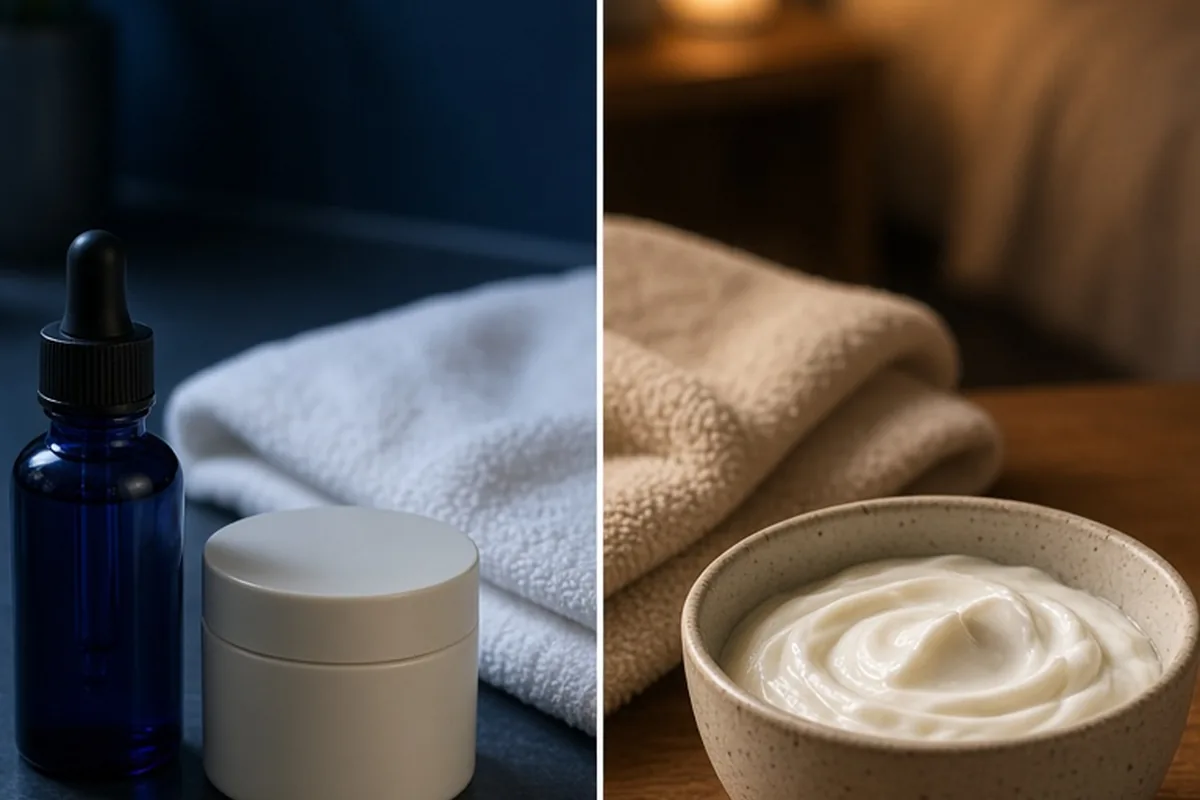
Apply moisturizer roughly ten to twenty minutes after retinol if your skin tolerates active ingredients well, allowing the product to absorb into completely dry skin. If you experience dryness, flaking, or stinging, apply moisturizer immediately without waiting, or use the sandwich technique by applying a thin layer of moisturizer both before and after your retinol to cushion your skin barrier.
Retinol remains one of the most widely used ingredients for improving skin texture and tone, yet finding the proper timing between your active serum and your hydrating cream can determine whether your routine builds a resilient barrier or causes uncomfortable irritation.
The Standard Wait Time Between Retinol and Moisturizer
Skincare specialists commonly recommend waiting ten to twenty minutes after applying retinol before smoothing on your moisturizer. This pause allows the active vitamin A formulation to absorb into the upper layers of the skin without being immediately diluted or moved around by a heavier cream. When retinol settles onto dry skin undisturbed, it works at its intended concentration, which suits experienced users who want the full potency of their product.
A strict twenty-minute wait is not mandatory for everyone. If you are short on time before bed, waiting three to five minutes until the retinol serum or emulsion feels completely dry to the touch is often sufficient. The key factor is avoiding the application of heavy occlusives over wet serum, which can sometimes trap moisture unevenly and cause concentrated patches of irritation on sensitive areas like the corners of the nose or mouth.
The Sandwich Technique for Sensitive or Reactive Skin
If you are new to retinol or prone to redness, the sandwich method is an effective way to introduce the active ingredient gently. This approach involves cleansing your face, applying a light layer of hydrating moisturizer, allowing it to dry, applying your retinol, and finishing with a second layer of moisturizer on top. By placing a base layer underneath, you slow the rate of absorption and minimize direct contact shocks to your lipid barrier.
While buffering retinol with a base moisturizer may slightly moderate the speed at which you see visible changes in fine lines or tone, it drastically increases your ability to use the product consistently. Consistency over several months yields far better results than applying a strong active directly to bare skin, experiencing burning or peeling, and having to pause your routine for weeks to recover.
To practice this method cleanly at home, follow these sequential steps:
- Cleanse with a gentle, non-foaming face wash and pat your skin completely dry.
- Apply a lightweight, ceramide-rich lotion and wait five minutes for it to settle.
- Smooth a pea-sized amount of retinol evenly across your forehead, cheeks, and chin.
- Seal the application with a richer cream or another thin layer of your base moisturizer.
Applying Moisturizer Immediately Versus Waiting
Deciding whether to wait twenty minutes or moisturize immediately comes down to your individual skin tolerance and daily schedule. Applying moisturizer right away essentially blends the two formulas directly on the skin surface. This softens the concentration of the retinol and helps trap hydration, making it an excellent choice for individuals dealing with mild dryness, cold winter weather, or busy evening routines that do not allow for multiple waiting intervals.
Waiting a full ten to fifteen minutes is generally reserved for people using targeted treatments who have already built up strong tolerance over several months. If you are using prescription-strength retinoids or liquid formulas designed for rapid absorption, giving the product time alone on dry skin helps ensure even delivery. However, if waiting leaves your skin feeling uncomfortably tight, parched, or stinging, you should abandon the wait time immediately and apply your nourishing cream right away.
Selecting the Best Moisturizers to Layer with Retinol
The formula of your moisturizer plays a massive role in how well your skin tolerates retinol. You want creams that replenish essential lipids, soothe inflammation, and prevent transepidermal water loss. Look for ingredients that reinforce your natural defense systems without adding unnecessary stress or chemical exfoliation while your skin is in a sensitive state.
Certain ingredients should be kept separate from your evening retinol step to avoid overwhelming your barrier. Formulas containing strong chemical exfoliants or high-potency antioxidants are best reserved for alternate nights or morning application, allowing your evening cream to focus entirely on calm hydration and repair.
- Beneficial companion ingredients: ceramides, hyaluronic acid, glycerin, squalane, panthenol (vitamin B5), and colloidal oatmeal.
- Ingredients to avoid layering simultaneously: alpha hydroxy acids (like glycolic or lactic acid), beta hydroxy acids (salicylic acid), pure ascorbic acid, and alcohol-heavy astringent toners.
Tailoring Application Timing to Your Skin Type
Oily and resilient skin types often produce enough natural sebum to withstand direct retinol application with minimal wait times and lightweight hydration. If you have oily skin, you might apply retinol to clean, dry skin, wait five to ten minutes, and follow with an oil-free gel moisturizer. This prevents excess heaviness while still ensuring your skin barrier retains sufficient water overnight.
Dry and mature skin types require a much more protective strategy. Because natural lipid production is lower, leaving retinol on bare dry skin for extended wait times can rapidly trigger flaking and superficial tightness. Those with dry skin benefit from applying a hydrating toner or light essence first, letting it dry thoroughly, applying retinol, and finishing with a lipid-dense barrier cream within five minutes.
Troubleshooting Stinging, Flaking, and Barrier Distress
It is common to mistake severe barrier impairment for normal retinization. While mild dryness during the first two to three weeks is relatively standard, intense burning when applying a simple moisturizer is a clear signal that your moisture barrier is damaged. If your skin feels hot, looks visibly raw, or stings upon contact with bland water-based lotions, continuing your regular retinol schedule will only worsen the condition.
When barrier distress happens, immediately suspend all retinol applications for five to seven days. Focus exclusively on a non-stripping cleanser, plain soothing moisturizers rich in fatty acids, and daily sun protection. Once your skin feels completely comfortable and no longer stings during basic cleansing and moisturizing, you can reintroduce retinol using the sandwich method once or twice a week, gradually rebuilding frequency as comfort allows.
Putting Together a Balanced Nighttime Skincare Order
A successful evening routine balances effective treatment with restorative hydration. Begin by removing makeup, sunscreen, and daily grime with a gentle double cleanse or a single mild cleanser, then pat your face dry with a clean towel. Wait two full minutes to ensure your skin is not damp, as damp skin absorbs topical actives more rapidly, which can spike irritation levels unexpectedly.
Dispense a single pea-sized drop of retinol and distribute it across your face, taking care to avoid the sensitive skin around the immediate eye contour, nostrils, and lip borders. Decide on your wait time based on tolerance—whether zero minutes, five minutes, or fifteen minutes—and finish with a generous layer of moisturizer. In the morning, always follow with a broad-spectrum sunscreen with at least SPF 30, as retinol increases your skin's vulnerability to ultraviolet light.
Illustrative Scenarios
Adjusting Routine Timing to Stop Retinoid Flaking
An individual starting an over-the-counter retinol serum noticed significant flaking around their chin and cheeks after applying the active directly to damp skin and waiting twenty minutes without moisturizer. To resolve the discomfort, they shifted their routine: after cleansing, they waited until skin was completely dry, applied a soothing ceramide lotion first, smoothed on the retinol five minutes later, and immediately sealed it with a second thin layer of lotion.
Key point: Buffering with a moisturizer before and after retinol cushions penetration and reduces irritation without stopping the ingredient from working over time.
Frequently asked questions
Does applying moisturizer immediately after retinol make it stop working?
Applying moisturizer immediately does not stop retinol from working, though it slightly dilutes the concentration on the skin surface. This is often beneficial for beginners because it reduces the likelihood of redness and flaking while still delivering the active ingredient over time.
Can I mix my retinol serum directly into my moisturizer in my palm?
While some people mix drops of retinol into cream to save time, it can lead to uneven distribution across your face. It is generally better to apply a thin layer of moisturizer first and then layer your pea-sized amount of retinol evenly over top.
What should I do if my skin burns when I apply moisturizer after retinol?
If simple moisturizing lotions cause a burning sensation, your skin barrier is compromised. Stop using retinol immediately, switch to a bland barrier repair balm for several days, and only resume retinol once your skin tolerates daily washing and moisturizing without any stinging.
Your next step
Assess how your skin feels tonight: if you experience any tightness or dryness, apply your moisturizer immediately over your retinol or sandwich it between two thin layers of cream, and always wear broad-spectrum sunscreen the following morning.