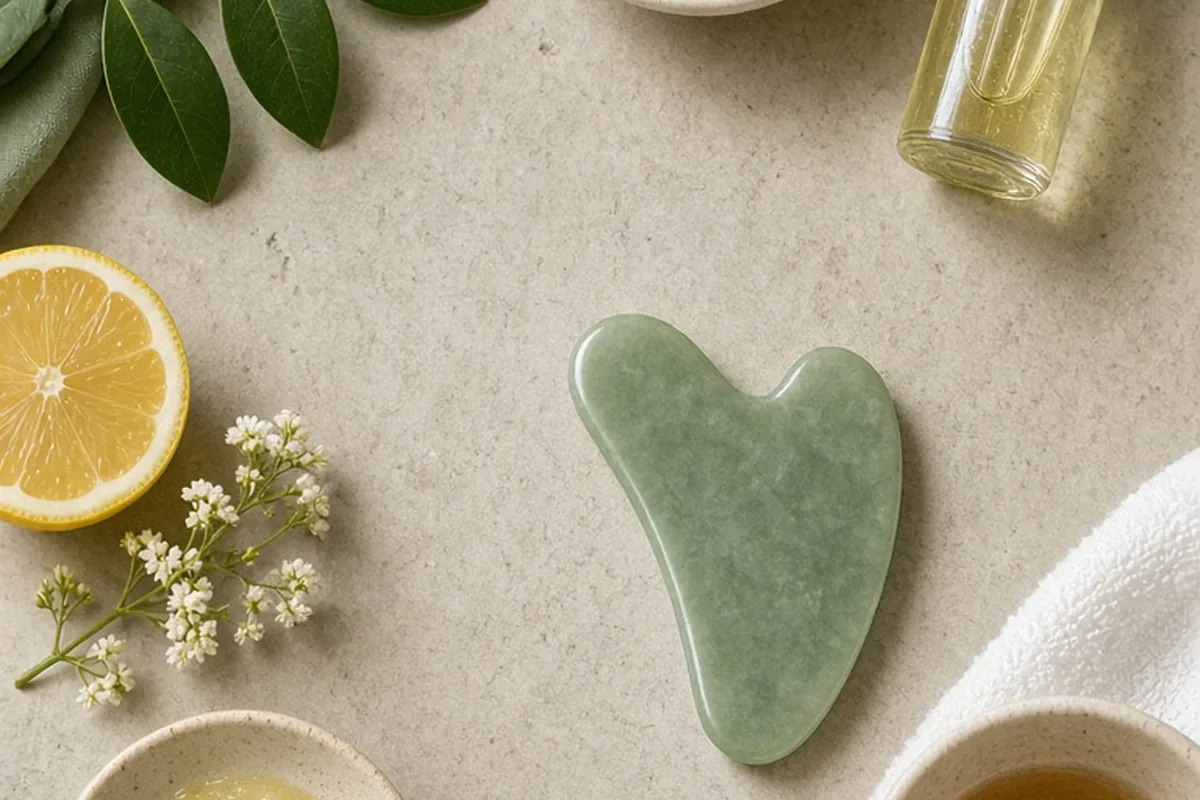
Use your gua sha after applying a facial oil, balm, or rich moisturizer as one of the final steps in your skincare routine. Never use a gua sha on bare skin. Applying your tool over a slippery product prevents drag and surface friction, allowing the smooth stone edges to glide evenly across the face to support circulation and ease muscle tension.
Integrating a traditional East Asian massage tool into a modern skincare routine often raises practical questions about product sequencing. Determining whether the tool belongs before moisturizer, after facial oil, or around specialized treatments makes a noticeable difference in comfort and routine consistency.
The Exact Step-by-Step Order in Your Skincare Sequence
Skincare layering universally follows a thinnest-to-thickest rule, meaning water-based, fast-absorbing liquids go onto clean skin first, while rich occlusives go last. Gua sha belongs near the very end of this sequence, immediately following your facial oil or an emollient moisturizer. If you massage too early in the routine—such as immediately after a watery toner or lightweight essence—the stone will drag against damp, unlubricated skin, creating unwanted friction and potential micro-tears in the moisture barrier.
A reliable sequence begins with a gentle cleanser, followed by hydrating toners, essences, and water-based serums like hyaluronic acid or niacinamide. Next, smooth a generous layer of moisturizer or facial oil over your face and neck. Perform your gua sha routine while this top layer is fresh and slick. Once you finish, you can either gently pat any residual oil into your skin or follow with your daily broad-spectrum sunscreen if you are completing your regimen in the morning.
Morning Versus Evening: Matching Technique to Your Daily Needs
Deciding between a morning or nighttime session depends largely on what you want to achieve with your facial massage. Morning sessions are particularly popular for addressing overnight fluid buildup, puffiness around the eyes, and general morning facial sluggishness. Working with light pressure from the center of the face outward toward the lymph nodes along the jawline and neck can help encourage natural lymphatic drainage and create a refreshed canvas before applying makeup.
Evening routines, by contrast, serve as an effective way to relieve muscle tension accumulated throughout the day. If you tend to clench your jaw during stressful working hours or furrow your brow while reading screens, a dedicated nighttime massage allows for slightly firmer, intentional pressure on the masseter muscles and temple area. An evening session also lets richer facial oils sit on the skin overnight without the risk of interfering with daytime cosmetics or sunscreen adherence.
Pairing Gua Sha Safely with Active Ingredients and Exfoliants
Potent active ingredients—such as chemical exfoliants, retinoids, and high-strength vitamin C serums—temporarily increase skin vulnerability. Combining the physical friction of a stone tool with active exfoliating acids like glycolic, lactic, or salicylic acid can easily lead to barrier irritation, redness, or stinging. When planning a gua sha session, it is best to simplify your underlying product stack to gentle, barrier-supporting formulas.
If your nightly routine includes a strong retinoid or a resurfacing acid, consider alternating nights rather than stacking treatments. For instance, designate two to three evenings a week for your active treatment serums without facial massage, and reserve your other evenings for hydrating serums, nourishing oils, and thorough gua sha practice. If you prefer daily massage alongside active topicals, apply your active ingredient first, wait several minutes for it to absorb fully, and then apply a dedicated facial oil over top to create an insulating buffer before using your tool.
Choosing the Best Medium for Safe Tool Glide
The primary purpose of your medium is to provide slip, which eliminates traction between the smooth stone and the surface of your skin. Facial oils are the standard medium because they do not absorb immediately, maintaining a uniform slickness throughout a three-to-five-minute massage. Squalane, jojoba, and rosehip seed oils are versatile options that offer lightweight glide without feeling excessively heavy on combination skin types.
If your skin tends to break out from plant-based oils, you can substitute a rich cream, a sleeping mask, or a rinse-off gel mask that contains glycerin or aloe vera. The critical rule is never allowing the surface to dry down mid-massage. If you feel the stone start to tug, catch, or pull at the skin, immediately dispense an additional drop of oil or mist your face with water to restore fluid movement across the skin surface.
Adjusting Technique for Breakouts and Sensitive Skin
Using a mechanical massage tool directly over active, inflamed acne lesions, open blemishes, or rosacea flare-ups can spread surface bacteria and aggravate localized inflammation. When dealing with active breakouts, you do not necessarily have to abandon your routine entirely, but you must redirect your tool placement away from sensitized areas.
Instead of sweeping across pustules or inflamed patches on the cheeks, focus your strokes entirely on the neck, chest, and along the lower border of the jaw. Working down the sides of the neck still supports lymphatic drainage and eases physical tension without disrupting compromised skin tissue on the face. Keep tool angles flat—roughly fifteen degrees relative to the skin—rather than dragging the sharp edge perpendicular to delicate facial tissue.
Optimal Frequency, Duration, and Pressure Guidelines
Consistency provides far better results than excessive force or overly long sessions. A sustainable routine generally spans three to five minutes per session, practiced two to four times per week. Daily practice is also acceptable if your skin tolerates it well and you maintain a featherlight touch. Each directional stroke should be repeated three to five times before moving to the next facial zone.
Pressure should remain light to moderate across the entire face. Lymphatic vessels sit directly beneath the surface of the skin, meaning heavy pressure is completely unnecessary and can even cause bruising or broken capillaries on thinner skin areas like the undereyes. Save firmer pressure strictly for the back of the neck and the fleshy junction of the jaw where larger muscles reside, always listening to your skin's comfort level.
Proper Tool Hygiene and Safe Storage
Because gua sha tools collect residual facial oils, dead skin cells, and surface debris during use, cleaning them properly after every single session is essential for preventing congested pores. Natural stones such as jade, rose quartz, and stainless steel can be washed thoroughly using warm water and a gentle antibacterial soap or facial cleanser.
After washing, dry the tool completely with a clean towel and store it in a dry, protected container or soft fabric pouch. Avoid leaving moist tools in humid bathroom environments where airborne moisture can foster bacterial growth on the surface. If you enjoy a cooling effect to soothe morning puffiness, you may place the clean tool in the refrigerator for ten minutes prior to use, but avoid freezing it, as extreme cold can make natural stone brittle and uncomfortably shock sensitive skin.
Frequently asked questions
Should I wash my face after using a gua sha?
You do not need to wash your face if you used a clean, non-comedogenic facial oil or moisturizer that your skin tolerates well. However, if you used a thick rinse-off massage gel or an oil that feels too heavy to leave on, you can gently tissue off the excess or rinse with lukewarm water before continuing your routine.
Can I use a gua sha before applying sheet masks?
Using your gua sha over a sheet mask or immediately after removing one is a popular technique because the excess essence provides excellent slip. Ensure the essence is slippery enough to prevent catching, and switch to a drop of facial oil if the liquid begins to absorb and dry out during your massage.
Is it normal for my skin to turn red during gua sha?
A mild, temporary pink flush is normal due to increased surface circulation and warmth from the massage strokes. However, deep redness, petechiae, or tenderness indicates that you are pressing too firmly or dragging the tool at too steep an angle across delicate tissue.
Can I apply sunscreen right after using gua sha in the morning?
Yes, but you should wait two to three minutes for your facial oil or moisturizer to settle slightly before applying your broad-spectrum sunscreen. Applying sunscreen as the final step ensures your UV protection forms an even, undisturbed shield over the skin after all massage manipulation is complete.
Your next step
For your next skincare session, complete your cleansing and hydration steps, apply three drops of facial oil to create a smooth surface, and spend three minutes using light, upward strokes from your neck to your jawline.