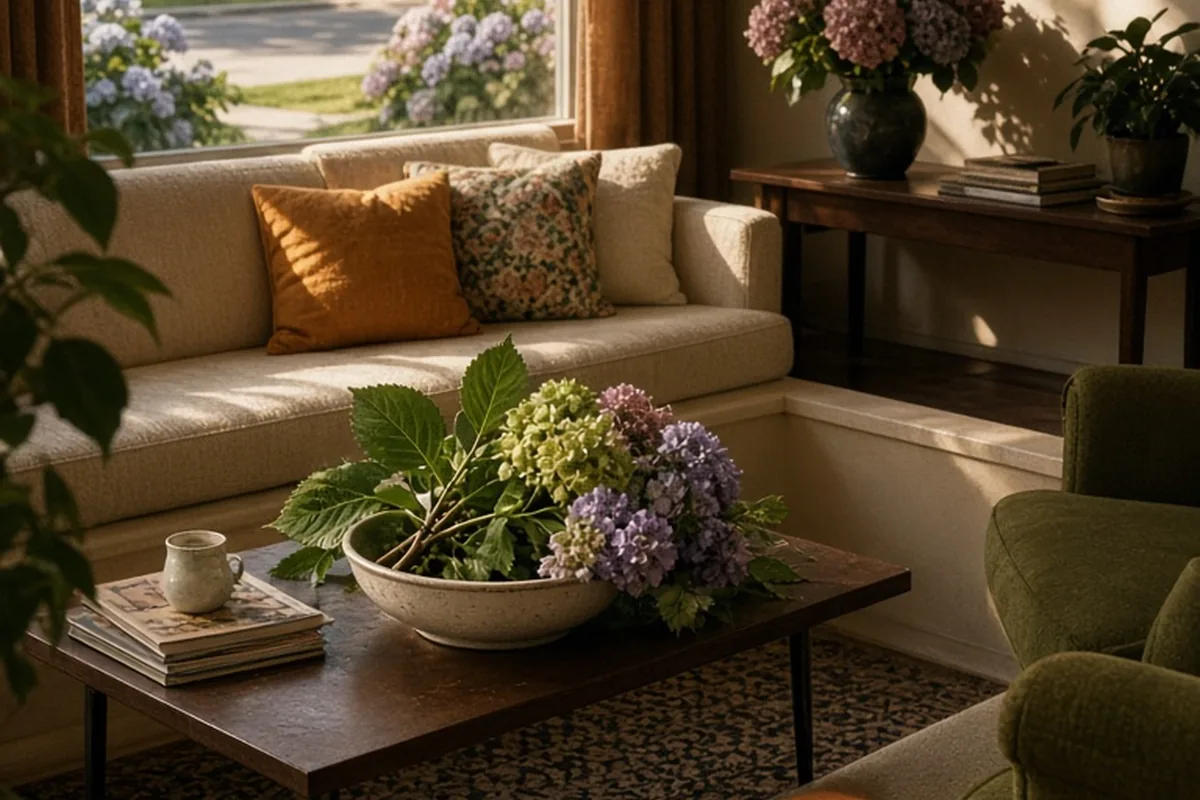
Women in the 1950s planted hydrangeas primarily because they provided fast, dramatic curb appeal for newly built suburban homes, required minimal fuss, and produced abundant blooms for home decorating. Hydrangeas easily filled bare foundation borders around post-war ranch houses, thrived in varied climates, and could be shared freely through neighborhood stem cuttings, making them an affordable, vibrant symbol of mid-century domestic hospitality and neighborhood pride.
Postwar suburban neighborhoods transformed American landscapes in the 1950s, bringing sweeping lawns, fresh foundation beds, and a renewed cultural focus on the home. For millions of homemakers navigating new neighborhoods, the hydrangea became an iconic fixture along porch rails and front walkways.
Postwar Suburban Architecture and Foundation Landscaping
The post-World War II housing boom sparked a massive migration from dense urban centers to newly developed suburban tracts. Neighborhoods filled with modest ranch-style houses, split-levels, and Cape Cod cottages constructed on concrete slabs or cinder block foundations. These brand-new buildings often sat on raw, bare plots of land scraped clean by bulldozers. Homemakers faced the immediate visual challenge of softening harsh masonry lines, concealing raised foundation walls, and giving sterile construction an immediate sense of warmth and permanence.
Hydrangeas, particularly bigleaf varieties known as mopheads, offered the perfect structural solution. Their expansive, broad-leafed foliage and rounded growth habits grew quickly, filling several feet of horizontal and vertical space within two or three seasons. Planting two or three shrubs beneath front picture windows or beside concrete entry steps grounded the house into its surrounding lawn. Unlike delicate annuals that disappeared after the first frost or slow-growing evergreens that took years to mature, hydrangeas delivered substantial visual volume and lush summer greenery with minimal initial planting effort.
Budget-Friendly Gardening and the Culture of Sharing Cuttings
Setting up a new household in the 1950s placed distinct demands on family finances, as young couples prioritized mortgages, household appliances, and furnishing living spaces. Professional landscaping services and upscale retail nursery stock were luxuries outside the average family budget. Women looked for practical ways to cultivate lush, flourishing yards without draining household funds. Hydrangeas fit this economic reality perfectly because they propagate easily from simple softwood stem cuttings.
A thriving community culture developed around garden sharing. Women exchanged snipped branches wrapped in damp newspaper during front-porch visits, church functions, and neighborhood social gatherings. A single healthy hydrangea bush in an established yard could supply dozens of new starts for neighboring homes down the street. Homemakers rooted these cuttings in glass jars of water on kitchen windowsills or directly in shaded sand beds before transplanting them outdoors. This informal network allowed entire subdivisions to flourish uniformly while fostering genuine interpersonal connections among neighbors who were building communities from scratch.
The Novelty of Soil Chemistry and Shifting Flower Colors
Mid-century culture celebrated modern science, household experimentation, and practical chemistry, and the hydrangea offered a visible demonstration of natural science right outside the front door. Many bigleaf hydrangeas change their floral pigments based on the availability of aluminum ions in the soil, which correlates directly with soil acidity or alkalinity. Homemakers discovered that a bush producing soft pink flowers could gradually shift to deep sky blue or lavender depending on what was added to the earth.
This botanical quirk turned gardening into an engaging domestic hobby and a friendly neighborhood talking point. Women exchanged home remedies to deliberately manipulate their flower colors, burying rusty iron nails, spreading coffee grounds, or scattering pine needles around the root zone to acidify the soil for rich blue blooms. Conversely, applying agricultural lime or crushed eggshells raised soil pH to yield dusty pinks and rosy reds. Achieving a specific shade was a quiet point of personal pride and a creative outlet that made home gardening feel interactive and gratifying.
Home Hospitality, Cut Arrangements, and Winter Crafting
Entertaining at home was central to social life in the 1950s. Whether hosting weekly bridge clubs, Sunday afternoon family dinners, church committee meetings, or neighborhood cocktail hours, homemakers took pride in presenting a welcoming interior. Fresh flowers were an essential component of mid-century table settings, yet purchasing floral arrangements from commercial florists on a weekly basis was impractical for most households.
A single mature hydrangea shrub yielded dozens of massive, dramatic flower heads throughout the summer months. Just two or three stems placed in a ceramic pitcher or glass vase could anchor a dining room table or brighten an entryway credenza. Furthermore, hydrangeas retained their value well into autumn and winter because the blooms dried exceptionally well. By hanging mature flower heads upside down in cool utility rooms or attics, women preserved the blooms to create elegant dried arrangements, wreaths, and holiday mantel displays that added texture and warmth through the colder months.
A Shift from Wartime Utility to Ornamental Abundance
During the 1940s, home gardening had been defined largely by civic duty, rationing, and utilitarian necessity. Millions of families cultivated Victory Gardens, dedicating their backyards, flowerbeds, and spare hours to growing potatoes, tomatoes, and beans to support the wartime food supply. When peacetime arrived in the 1950s, homeowners felt a collective desire to move away from purely functional, work-heavy vegetable plots toward decorative, joyful, and visually generous landscape design.
Hydrangeas symbolized this cultural pivot toward comfort, peace, and abundance. Their oversized floral globes, generous foliage, and long blooming season from early summer to early autumn provided pure aesthetic pleasure. Planting ornamental shrubs signaled that the household had achieved stability, comfort, and the freedom to cultivate beauty for its own sake. The front yard became an extension of the living room, reflecting domestic hospitality, safety, and a shared pride in suburban community life.
Applying 1950s Landscaping Principles to Modern Gardens
The reasons hydrangeas captured the mid-century imagination remain entirely relevant for modern homeowners, renters, and gardening enthusiasts today. In an era where landscape projects can quickly become overly complex and expensive, the hydrangea provides a dependable blueprint for achieving reliable curb appeal, seasonal color, and classic architectural balance with manageable effort.
To successfully integrate these vintage principles into a contemporary yard, keep practical growing conditions in mind:
Choosing site-appropriate cultivars and establishing rich soil conditions ensures your garden delivers the same welcoming, dependable beauty that defined front yards decades ago.
- Light exposure: Position large-leafed varieties where they receive gentle morning sun and protection from intense afternoon heat to prevent foliage scorching.
- Moisture balance: Maintain consistent soil hydration with organic mulch, as hydrangeas feature shallow, thirsty root systems that wilt quickly during dry spells.
- Pruning timing: Understand whether your specific variety blooms on old wood or new growth before trimming stems to avoid accidentally removing next season's flower buds.
Illustrative Scenarios
Establishing Front Yard Charm on a Strict Renovation Budget
After purchasing a 1954 ranch home with a bare, exposed concrete foundation, Daniel and his partner felt overwhelmed by expensive landscape contractor estimates. Daniel initially considered putting down plain gravel to save money, but the front walkway felt cold and uninviting. An older neighbor noticed their dilemma and offered three cuttings from her established oakleaf and mophead hydrangeas, explaining how to root them in shaded potting soil. Daniel rooted the cuttings along the east-facing foundation wall, mulched them heavily, and added a layer of compost. Within two summers, the shrubs formed a lush, blooming border that softened the concrete and created classic curb appeal.
Key point: Traditional, low-cost propagation methods and neighborly plant sharing can produce mature, enduring landscape beauty without high commercial expenses.
Creating Sustainable Seasonal Decor from Backyard Shrubs
Sarah frequently hosted dinners and family gatherings but felt frustrated by the recurring expense of buying fragile cut flowers that wilted within three days. Remembering her grandmother's perennial garden, she planted two panicle hydrangeas along her sunny side fence. By midsummer, the bushes produced dozens of large ivory blossoms that she harvested weekly for dining room centerpieces. In late September, rather than composting the fading blooms, Sarah cut the papery heads and hung them in her garage to dry, creating long-lasting winter table displays that lasted until spring.
Key point: Planting multi-purpose ornamental perennials provides continuous indoor decor throughout both the growing season and winter months.
Frequently asked questions
Which hydrangea varieties were most popular during the 1950s?
Bigleaf hydrangeas, commonly called mopheads or French hydrangeas, were the most popular choice due to their large rounded blooms and vibrant color shifts. Smooth hydrangeas like the classic Annabelle and native oakleaf varieties were also widely planted across eastern and southern suburban developments.
Can any hydrangea change color based on the soil?
No, only certain bigleaf and mountain hydrangea varieties contain the pigments that interact with soil aluminum and pH levels. White hydrangeas and panicle varieties stay true to their natural white, cream, or blush tones regardless of soil composition.
How did 1950s gardeners dry hydrangeas for winter displays?
Homemakers typically harvested mature flower heads in late summer when the petals began feeling slightly papery rather than soft. They stripped off the leaves and hung the stems upside down in a dark, dry, well-ventilated space for two to three weeks to preserve their structure and subtle antique tones.
Your next step
Inspect your home's foundation or garden border this weekend to identify an east-facing or morning-sun location where a classic hydrangea can provide easy curb appeal and seasonal cut flowers.