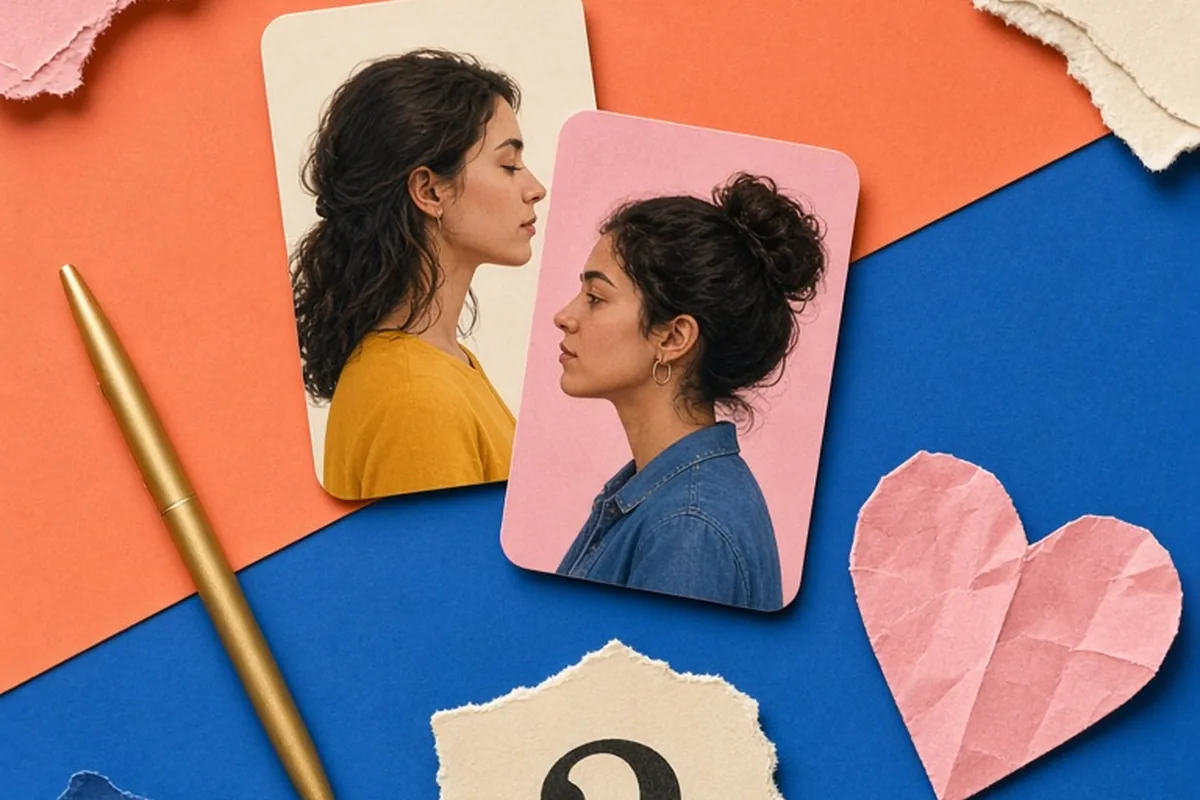
Women identify as lesbians because their genuine emotional, romantic, and physical attractions are directed toward other women. Sexual orientation is a fundamental aspect of human diversity shaped by a complex interplay of innate personal traits, emotional resonance, and psychological development, rather than a conscious lifestyle switch or a reaction to disappointing interactions with men. For many, embracing this identity represents a natural alignment with who they have always been.
Questions about why individuals love who they love often arise from a desire to understand human nature, make sense of a partner's changing identity, or unpack one's own evolving feelings. Approaching female sexual orientation with open curiosity makes it easier to cut through persistent cultural myths and recognize the genuine emotional and romantic realities involved.
The Underlying Foundations of Sexual Orientation
Sexual orientation is not an arbitrary decision or a phase that someone enters lightly. It reflects deep-seated patterns of emotional, romantic, and physical attraction that develop naturally over a person's life. Scientific consensus across psychology and sociology recognizes that sexual identity is rooted in an intricate mix of biological predispositions, individual psychological development, and social context. Women who are lesbians feel authentic, compelling attraction toward other women in the exact same manner heterosexual individuals feel drawn to partners of the opposite gender.
Attempting to isolate a single cause for lesbian identity misunderstands the complexity of human sexuality. Attraction encompasses who makes someone feel understood, who evokes romantic longing, and where a person envisions building a shared life. When a woman identifies as a lesbian, she is articulating where her genuine capacity for intimacy and emotional safety resides, rather than executing a deliberate philosophical stance.
Debunking Common Myths and Misunderstandings
A widespread misconception is that women become lesbians as a defensive response to painful breakups, mistreatment, or negative experiences with men. While interpersonal trauma can certainly shape how someone navigates boundaries or approaches dating, it does not manufacture romantic and sexual attraction toward women out of nowhere. Lesbian attraction is a positive pull toward women, not an avoidance tactic driven by disappointment with men.
Another persistent narrative suggests that a woman identifies as gay simply because she has not met the right male partner. This perspective reduces genuine sexual orientation to a lack of romantic experience. In reality, romantic fulfillment depends on underlying compatibility and orientation. Just as a heterosexual man would not become romantically fulfilled with another man regardless of how wonderful that person might be, a lesbian experiences connection through her authentic orientation toward women.
Recognizing these misunderstandings is crucial because assumptions of convenience or bitterness minimize the depth of a person's identity. Viewing orientation through a lens of authenticity replaces unhelpful stereotypes with a clearer, more respectful understanding of personal attraction.
Sexual Fluidity and Discoveries Later in Life
Human sexual self-realization does not always follow a rigid, linear timeline from early adolescence. Many women experience what researchers and psychologists describe as sexual fluidity, where attractions become clearer or shift in visibility across different life stages. A woman might date men for years, enter a traditional marriage, or conform to cultural expectations before fully recognizing or acknowledging her attraction to women.
This delayed realization often stems from heteronormative social conditioning, where heterosexual relationships are presented as the default path. When someone grows up in an environment where alternative orientations are rarely discussed or normalized, it can take significant emotional maturity, self-reflection, or a specific meaningful connection to realize that past patterns did not reflect true romantic fulfillment. Realizing one's orientation at thirty, forty, or fifty is a process of uncovering self-knowledge rather than an abrupt transformation.
Emotional Connection and Relationship Dynamics
Attraction among lesbian couples is built on the same foundations of mutual respect, emotional intimacy, shared values, and physical chemistry found in any healthy partnership. Many women describe feeling a distinct sense of emotional resonance and mutual understanding in relationships with other women. These partnerships offer an environment where communication styles, emotional validation, and shared lived experiences align naturally.
Understanding this dynamic clarifies that lesbian relationships are complete romantic partnerships rather than mere friendships or political choices. They involve shared life goals, domestic partnerships, vulnerability, and long-term commitment. Recognizing the full emotional breadth of these relationships helps dispel trivializing views that frame female same-sex attraction solely around novelty or aesthetics.
Navigating Changing Realities in Existing Relationships
When a woman realizes she is a lesbian while already in a heterosexual relationship, the experience can bring profound confusion, grief, and disorientation for both partners. The male partner often wonders what went wrong, whether past affection was real, or if he could have done something differently. It is essential to recognize that her realization is about her fundamental identity, not a reflection of her partner's adequacy, worth, or masculinity.
Holding space for honest communication during such transitions prevents resentment from defining the separation. Acknowledging that past affection may have been sincere within the limits of what was understood at the time allows both individuals to move forward with closure. Attempting to persuade someone out of their orientation or viewing the situation as a personal failure only prolongs distress for everyone involved.
Cultivating Respectful Communication and Empathy
Whether you are supporting a friend, speaking with a family member, or processing a partner coming out, the way you respond sets the tone for future trust. Helpful communication relies on listening without interrogating, avoiding dismissive comments like suggesting it is just a phase, and respecting personal boundaries. Genuine curiosity should never feel like a demand for someone to justify their basic identity.
Demonstrating mature allyship involves accepting what someone shares about themselves at face value. When individuals feel safe to express who they are without facing ridicule, defensive skepticism, or inappropriate questions, it fosters healthier, more authentic relationships across all social and personal circles.
Illustrative Scenarios
Navigating an Unexpected Separation with Clarity
David was stunned when his girlfriend of four years sat him down to explain that she had realized she was a lesbian and wanted to end their relationship. His immediate reaction was a mix of hurt, self-doubt, and confusion, wondering if his behavior had driven her away or if their entire history had been a lie. Instead of lashing out or demanding that they try couples therapy to fix attraction, David asked open questions about what she was experiencing. Through honest conversation, he understood that her realization had been an internal struggle spanning years, unrelated to his qualities as a partner. Accepting this distinction allowed David to process the breakup as an incompatibility of core identity rather than a personal failure.
Key point: Recognizing that someone's sexual orientation is about their innate truth, rather than your performance as a partner, helps you process grief without damaging your self-esteem.
Acknowledging Authentic Feelings After Years of Conformity
Rachel spent her twenties and early thirties dating men because it was the expected path within her family and social circle. While her relationships were amicable, she consistently felt an emotional disconnect and a lack of genuine romantic passion. After developing a deep, mutual connection with a female colleague, Rachel finally confronted feelings she had minimized for over a decade. Her initial fear was that people would view her realization as sudden or erratic. By consulting a supportive counselor, she learned to articulate her truth clearly to her close friends without apologizing for the timing of her self-discovery.
Key point: Self-discovery often unfolds over time, and acknowledging your authentic attraction at any age is a healthy step toward personal integrity.
Frequently asked questions
Is being a lesbian a conscious lifestyle choice?
No, sexual orientation is an inherent aspect of identity rather than an arbitrary choice. While a person consciously decides whether to disclose their orientation or enter specific relationships, the underlying romantic and physical attractions exist naturally.
Can a woman realize she is a lesbian after being married to a man?
Yes, many women realize their orientation later in life after fulfilling social or familial expectations. Gaining clarity about one's genuine attraction often happens gradually as emotional awareness and personal circumstances evolve.
Does having a bad relationship with a man cause someone to become a lesbian?
No, difficult relationships do not create same-sex romantic attraction. While negative experiences may lead someone to re-evaluate what they want in a partner, lesbian orientation is defined by an authentic emotional and physical pull toward women.
How should someone respond when a friend or partner comes out to them?
The most constructive response is to listen with calm empathy, avoid taking the news as a personal slight, and respect their vulnerability. Validating their experience and maintaining clear personal boundaries ensures a healthy, respectful dynamic.
Your next step
Focus on listening with an open mind and separating someone's inherent orientation from personal insecurities, allowing honest understanding to guide your interactions.