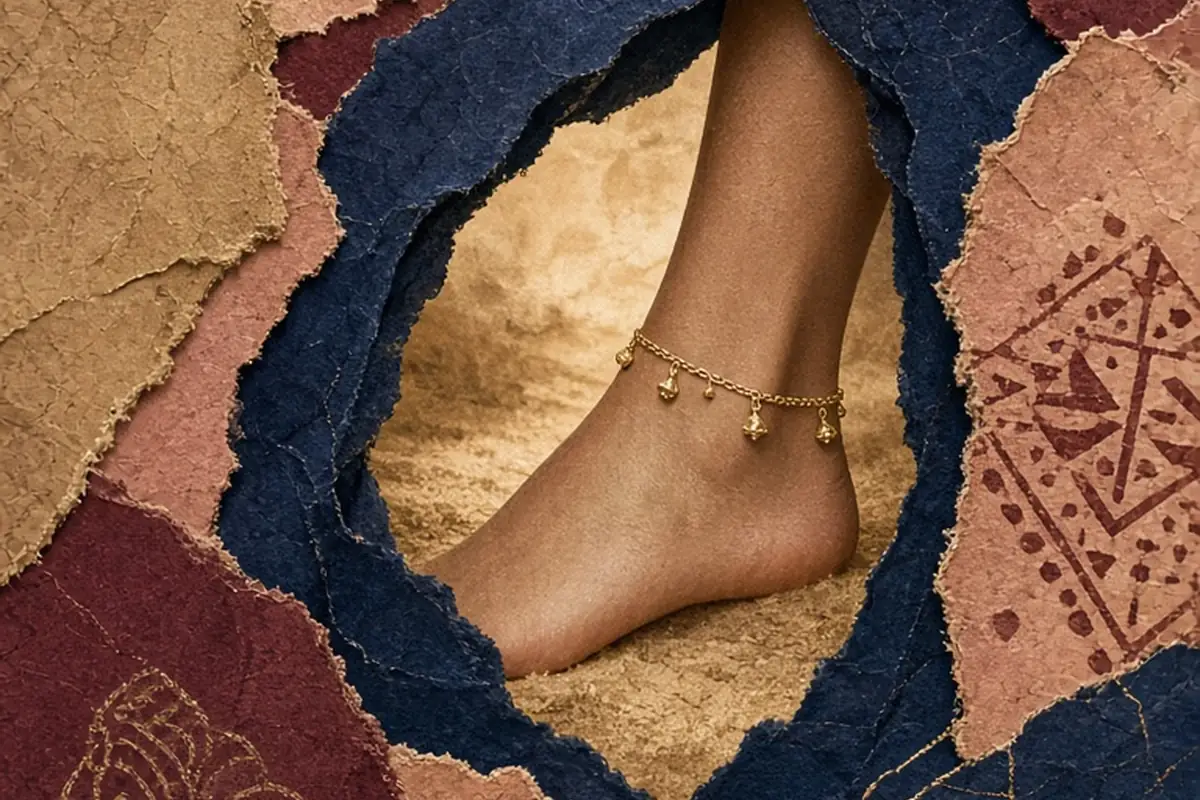
Women wear anklets primarily as personal fashion accessories to elevate an outfit, celebrate warm-weather aesthetics, and express individuality. Historically and culturally, anklets carry diverse traditions ranging from marital status in South Asia to protective amulets in ancient Egypt. Today, while niche subcultures occasionally attach specific meanings to how they are worn, the vast majority of women wear them simply because they appreciate the subtle visual accent.
Few everyday jewelry pieces generate as much quiet fascination and lingering internet speculation as the ankle bracelet. Whether spotted on a beach, at a casual brunch, or during an evening date, an anklet often draws attention because it sits in an unconventional spot compared to standard rings or necklaces.
Personal Fashion and Aesthetic Self-Expression
The primary reason most women wear an anklet today comes down to personal style and visual balance. Ankle jewelry acts as an intentional finishing touch, drawing the eye downward and complementing footwear like strappy sandals, crisp white sneakers, or bare feet during warm seasons. For many, wearing an anklet is an extension of their wardrobe curated around warm weather, beach vacations, or bohemian aesthetics where exposed ankles invite a touch of shine.
Jewelry often serves as an expression of personal identity rather than a coded broadcast. A delicate gold chain can lend an understated, polished look to a simple linen dress, whereas a beaded or woven band might reflect an active, outdoorsy, or artistic lifestyle. The choice to put on an anklet usually begins in front of the mirror with a desire to feel put-together, rather than an intent to communicate a secret message to onlookers.
However, styling an anklet requires attention to context and proportion. A thin metal chain can easily get caught on knit fabrics or tall boots, making it an impractical choice for colder months or formal corporate environments with conservative dress codes. Recognizing this practical boundary helps explain why anklets often appear seasonally, peaking in summer when low-cut shoes and cropped trousers provide the right visual canvas.
Cultural Heritage and Historical Traditions
Long before anklets became contemporary fashion staples, they held deep cultural, economic, and social significance across diverse global civilizations. In ancient South Asia, particularly in Indian tradition, ankle chains known as payals or paizebs have been worn by women for centuries. Historically crafted from silver and adorned with small chime bells, payals signaled a woman's presence in a household, symbolized marital status, and celebrated feminine grace during weddings and traditional dance forms.
In ancient Egypt, ankle jewelry made from precious metals and gemstones indicated wealth, social standing, and civic importance, while simpler woven amulets were worn for daily spiritual protection. Similarly, various African and Middle Eastern communities used ankle bands as bridal gifts, ornamental wealth, or markers of matrilineal lineage. Understanding this rich global background highlights that ankle ornamentation is not a recent novelty, but an ancient art form with varied historical roots.
When modern women wear anklets inspired by these heritage styles, the meaning may be rooted in honoring family roots, celebrating ancestral art, or simply appreciating cross-cultural craftsmanship. It is helpful to remember that an object with thousands of years of ritual history cannot be reduced to a single Western stereotype.
Left Ankle Versus Right Ankle: Sorting Fact From Folklore
One of the most persistent topics surrounding ankle bracelets is whether wearing one on the left or right foot conveys a specific romantic or sexual availability. Over the decades, urban legends have claimed that an anklet on the left foot signifies that a woman is in a committed relationship, while an anklet on the right foot signals that she is single and seeking a partner. Other folklore suggests the exact reverse, illustrating how inconsistent these rules truly are.
In daily life, the placement of an anklet is almost always a matter of physical comfort, habit, or dominant handedness. A right-handed person might naturally fasten a clasp on the right side simply because it is easier to reach, or choose whichever ankle has less friction against their favorite shoes, watches, or activity trackers. Attaching rigid symbolic rules to ankle placement usually creates confusion rather than clarity.
Assuming that a woman's choice of ankle reveals her relationship status is an unreliable shortcut. If you are curious about someone's availability or personal life, looking at jewelry placement will never substitute for respectful, open conversation.
Relationship Signals, Subcultures, and Modern Myths
In certain contemporary adult subcultures, specific types of anklets—such as those featuring a charm with a playing card spade or specific charms—are occasionally used as discreet symbols within consensual non-monogamous or lifestyle communities. Because these subcultural codes are discussed in online forums, some people mistakenly project those meanings onto every woman wearing an ankle chain.
In reality, conflating a niche community signal with everyday fashion is a widespread misinterpretation. The overwhelming majority of women wearing an anklet purchased it from a mainstream jeweler, received it as a vacation souvenir, or picked it out simply because it looked attractive in the store. Treating a common accessory as an automatic invitation or an erotic signal is both inaccurate and socially awkward.
A healthy approach to modern dating requires recognizing context. If someone is attending a themed private event where specific dress codes apply, symbols may have intentional meaning. In ordinary daily life—at a coffee shop, gym, office, or public venue—an anklet is simply jewelry. Relying on mutual, verbal communication prevents misreading everyday style choices as covert signals.
Materials, Sizing, and Practical Wearability
Choosing to wear an anklet also involves practical considerations that influence how and when it is worn. Unlike rings or bracelets, anklets experience significant tension and movement with every step. As a result, the materials used must balance durability against skin comfort to avoid irritation, pinching, or accidental breakage throughout the day.
Common materials each offer distinct benefits and drawbacks based on lifestyle:
Choosing the right size is equally essential. An anklet that is too tight can restrict circulation or dig into the skin when walking or sitting, while one that is too loose can slip under the heel and snap. Women who wear them regularly often seek out adjustable extension chains to accommodate natural foot swelling that occurs during warm weather or long periods of standing.
- Solid gold and sterling silver offer timeless elegance and resist tarnishing, though fine chains can snap under sudden stress.
- Stainless steel and titanium provide maximum durability and water resistance for daily wear, swimming, or workouts.
- Waterproof cord, leather, and beads suit casual, beach-oriented settings, though organic fibers may wear down over time.
How to Compliment or Ask Without Making It Awkward
Noticing an interesting accessory on someone you are dating or talking with is a natural conversation starter, but commenting on lower-body jewelry can sometimes feel intrusive if handled poorly. Because ankles are physically lower down, staring or making suggestive remarks can quickly make an interaction uncomfortable.
If you genuinely appreciate the piece, keep the observation light, casual, and focused on design or craftsmanship. Framing your comment around style rather than hidden meanings keeps the dialogue natural and comfortable for both parties.
Pay attention to how she responds. If she shares an enthusiastic story about where she got it or how much she enjoys the piece, you have found an easy, organic connection point. If she gives a brief, polite acknowledgment, simply accept it and smoothly move the conversation forward to another topic without overanalyzing the interaction.
- Good approach: 'That is a really unique ankle bracelet—did you find it while traveling?'
- Avoid: 'Doesn't wearing an anklet on that side mean you are single?'
- Focus on the artistry, color, or material rather than projecting assumptions about her personality or availability.
Illustrative Scenarios
Navigating Online Myths on a First Date
Marcus was on a casual dinner date with Elena when he noticed a delicate silver anklet on her right foot. Having recently read an internet thread claiming that right-ankle bracelets signal casual dating availability, he found himself distracted and wondering if she was hinting at her expectations. Instead of making an awkward assumption or dropping suggestive jokes, Marcus simply mentioned that he liked the design and asked if she had a favorite jewelry style. Elena laughed and explained she bought it at an artisan fair during a trip to Portugal because it reminded her of the coast. Marcus realized the online rumor had zero connection to her reality.
Key point: Never substitute internet folklore for direct, respectful conversation; an accessory is usually just an expression of personal taste.
Selecting a Thoughtful Gift Without Overthinking
David wanted to buy a meaningful birthday gift for his partner, Maya, who often wore minimalist jewelry and enjoyed outdoor summer concerts. He considered an ankle bracelet but worried whether giving one carried hidden connotations or might feel too informal compared to a traditional bracelet. Instead of guessing, he paid attention to the metals she already wore and chose a durable, adjustable gold chain with a subtle leaf charm. When Maya opened the gift, she loved the aesthetic detail and the fact that it suited her summer wardrobe. David saw that understanding her actual style mattered far more than worrying about abstract symbolism.
Key point: Focus on personal comfort, quality, and individual taste rather than searching for symbolic baggage when picking out jewelry.
Frequently asked questions
Does wearing an anklet mean a woman is married or single?
In modern Western culture, an anklet does not indicate whether someone is married, single, or dating. While traditional Indian payals are associated with marriage and cultural festivals, everyday anklet wear in most countries is solely a matter of personal fashion and comfort.
Can you wear an anklet on both ankles at the same time?
Yes, wearing an anklet on both ankles is common, especially in cultural traditions like South Asian dance or in bohemian fashion layered with sandals. Doing so is simply a visual styling choice rather than a coded statement.
Is it inappropriate to wear an anklet in a professional setting?
In conservative corporate environments, noticeable or jingling anklets may be viewed as overly casual for traditional business attire. However, in creative or relaxed workplaces, a discreet, silent metal chain can be worn without issue.
Your next step
Take a look at your own accessories or those of people you interact with, and practice appreciating them purely for their aesthetic design and craftsmanship rather than searching for hidden meanings.