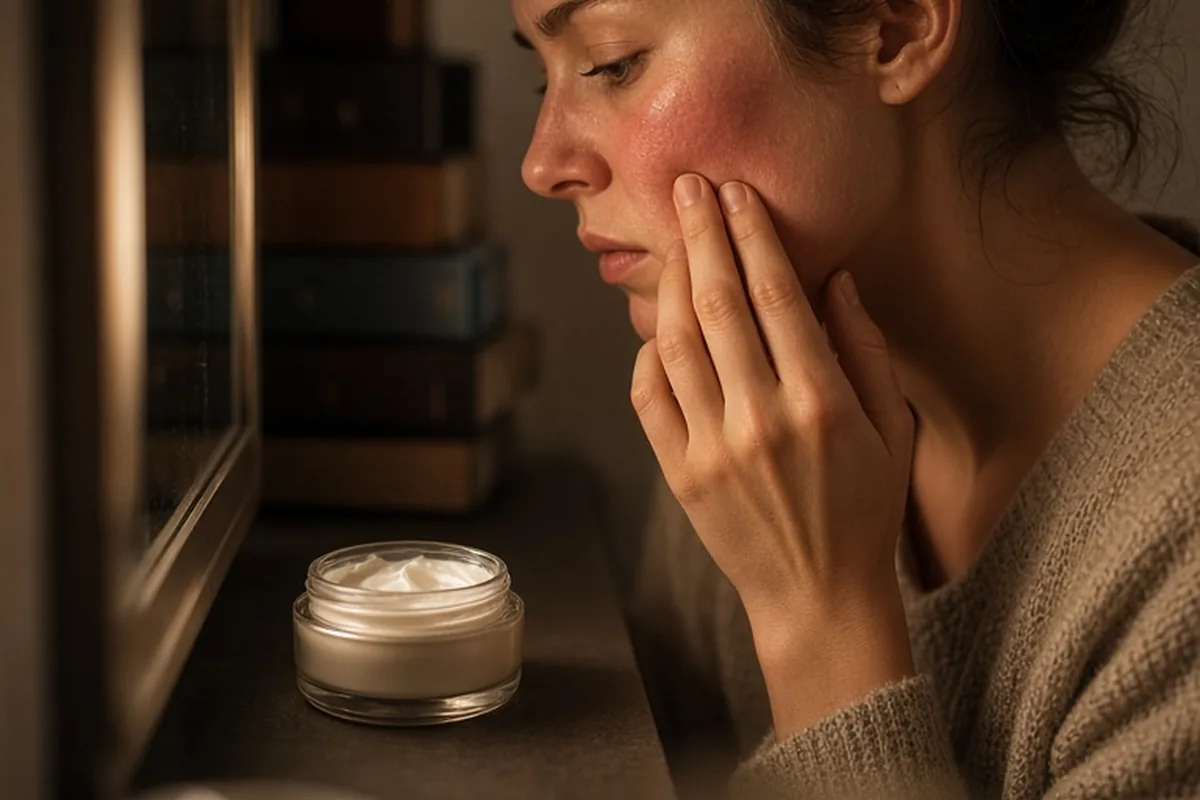
Moisturizer typically burns your face because your skin's protective barrier is compromised, allowing hydrating ingredients to penetrate raw skin and stimulate sensitive nerve endings. It can also happen if the formula contains irritating ingredients like synthetic fragrance, drying alcohols, or active exfoliants, or if you are experiencing an allergic contact reaction to a specific preservative or botanical extract.
Experiencing a sharp, stinging sensation right after smoothing on a facial cream can feel confusing and uncomfortable. Moisturizers are designed to comfort and hydrate your complexion, so when they trigger redness, heat, or burning, it is an unmistakable sign that your skin barrier needs immediate attention.
Understanding How a Compromised Skin Barrier Triggers Stinging
The outermost layer of your skin, known as the stratum corneum, functions much like a brick wall. Skin cells serve as the bricks, while natural lipids, ceramides, and fatty acids act as the mortar holding everything together. When this barrier is healthy and intact, it locks essential moisture inside and shields delicate underlying tissues from environmental pollutants, friction, and microbes. However, when the lipid mortar becomes depleted or cracked, microscopic fissures open across the surface of the skin.
When you apply moisturizer over these microscopic fissures, ingredients that are normally soothing can flood directly into deeper skin layers. Humectants like glycerin, hyaluronic acid, or propylene glycol work by rapidly attracting and binding water. On compromised skin, this sudden shift in moisture and pH creates an osmotic rush that directly stimulates exposed nerve endings, resulting in an immediate burning or prickly feeling. Even completely benign formulas can sting severely until the outer lipid structure is rebuilt.
Common Formulation Ingredients That Provoke Burning Sensations
While a weakened barrier is the most frequent reason for burning, the problem can also originate within the moisturizer formula itself. Many commercial face creams contain volatile aromatic compounds to create a pleasant sensory experience. Synthetic perfumes, essential oils like eucalyptus, peppermint, lavender, or citrus extracts, and simple denatured alcohols can easily irritate facial skin. Denatured alcohol is frequently added to give creams a fast-drying, weightless finish, but it can strip away residual natural oils and provoke an instant burn on reactive skin types.
Another common issue is the presence of unannounced active ingredients in daily hydrators. Many multi-tasking lotions marketed for daily brightening or smoothing include low concentrations of chemical exfoliants such as glycolic acid, lactic acid, salicylic acid, or gentle retinoids. If your skin is already sensitive or if you are layering these creams over other potent serums, the cumulative concentration of active ingredients can overwhelm your skin, causing visible redness and a burning sensation within seconds.
Distinguishing Barrier Damage from Allergic Contact Dermatitis
It is helpful to distinguish whether your moisturizer is stinging due to general barrier irritation or an allergic reaction. Barrier damage usually causes generalized stinging across the driest areas of the face, such as around the nose, cheeks, and mouth. The burning sensation typically peaks within thirty to sixty seconds of application and gradually fades over the next ten to fifteen minutes, leaving behind a sensation of tight, dry, or flaky skin.
In contrast, allergic contact dermatitis involves an immune response to a specific ingredient, such as a preservative like methylisothiazolinone, an emulsifier, or a botanical oil. Signs of an allergic reaction often include intense itching rather than just burning, raised hives, distinct swelling around the eyes or lips, or red patches that worsen hours after application. If you notice swelling, severe itching, or persistent hives, rinse the product off immediately and avoid using that specific formula again.
Immediate Steps to Take When Your Face Starts Burning
If a moisturizer begins to burn intensely upon contact, do not try to endure the discomfort in hopes that your skin will adapt. Head straight to the sink and gently rinse your face with cool or lukewarm water to dilute and remove the product. Avoid using hot water, which dilates blood vessels and worsens inflammation, and do not use a foaming cleanser or washcloth, as mechanical friction will aggravate the vulnerable tissue further.
Once your skin is rinsed and gently patted dry with a clean, soft towel, resist the urge to apply a multitude of calming serums, sheet masks, or toners. When skin is in an acute state of irritation, every additional product increases the risk of further stinging. Instead, apply a thin layer of a pure, single-ingredient occlusive like white petrolatum or pure squalane oil. These inert substances sit on top of the skin to prevent moisture loss without penetrating deeply enough to trigger nerve endings.
Implementing a Minimalist Routine to Support Barrier Recovery
Restoring an irritated skin barrier requires stripping your daily regimen down to the bare essentials for two to four weeks. During this recovery period, pause the use of all leave-on chemical exfoliants, physical facial scrubs, vitamin C serums, benzoyl peroxide, and retinoids. These products accelerate cell turnover or alter skin pH, which delays the natural lipid replenishment process when your barrier is already fragile.
Limit your routine to three straightforward steps: a gentle, non-foaming lotion or cream cleanser, a bland, fragrance-free barrier repair moisturizer, and a mineral-based sunscreen during daylight hours. Zinc oxide, the primary active ingredient in many physical sunscreens, offers natural skin-soothing properties while protecting sensitive skin from UV exposure, which can otherwise impede tissue healing. Give your skin time to stabilize before introducing any complexity back into your routine.
Ingredients to Look for in a Soothing Repair Cream
When shopping for a moisturizer to heal stinging skin, look for formulations built around barrier-identical lipids and anti-inflammatory agents. Ceramides are structural lipids that help re-seal the spaces between your surface skin cells. Formulas that combine ceramides with cholesterol and free fatty acids mimic the natural composition of your skin, speeding up moisture retention and reducing sensitivity.
Other beneficial ingredients include colloidal oatmeal, panthenol (provitamin B5), allantoin, and madecassoside (derived from Centella asiatica). These compounds help soothe visible redness, calm surface heat, and support natural repair mechanisms. Ensure the product has a short ingredient list with no added fragrance, plant extracts, or harsh preservatives. Testing a dime-sized amount on your jawline for forty-eight hours before full-face application is an easy way to verify comfort.
How to Safely Reintroduce Active Ingredients Later
Once your moisturizer no longer causes any stinging and your skin feels soft, pliable, and comfortable for at least two consecutive weeks, you can slowly begin reintroducing active treatments. Rushing this step is a common mistake that often restarts the cycle of irritation. Choose just one active ingredient to bring back first, such as your evening retinoid or a gentle exfoliating acid, and avoid using it every night right away.
Start by applying the active product once or twice a week, gradually building frequency over several weeks as your skin demonstrates tolerance. You can also utilize the buffering technique, which involves applying a thin layer of your gentle moisturizer prior to your active product to slow down penetration and cushion the skin. Never reintroduce multiple potent treatments simultaneously, so you can clearly track how your skin responds to each formulation.
Illustrative Scenarios
Resolving Barrier Damage from Over-Exfoliation
Jordan incorporated a daily glycolic acid toner alongside a nightly retinol cream to clear minor congestion. Within two weeks, Jordan's regular soothing gel moisturizer began causing an intense, fiery sting upon application, accompanied by persistent redness and flaking around the cheeks and nose. By pausing all active treatments, switching to a bland ceramide cream, and washing only with lukewarm water and a gentle lotion cleanser, Jordan allowed the skin barrier to recover over three weeks without further irritation.
Key point: Stinging from a previously well-tolerated moisturizer often signals that your active treatments have thinned your moisture barrier rather than an issue with the moisturizer itself.
Frequently asked questions
Is it normal for a facial moisturizer to tingle when applied?
A slight, momentary tingle can occasionally happen with specific active ingredients like mild acids or cooling botanicals, but everyday hydrating moisturizers should never burn or sting. A burning sensation is an indicator of barrier irritation, extreme dryness, or an ingredient sensitivity that needs to be addressed.
Can applying moisturizer to damp skin make the burning worse?
Yes, applying skincare products to wet or damp skin enhances ingredient penetration. When your moisture barrier is already cracked or compromised, damp application can cause humectants and preservatives to penetrate more rapidly, intensifying the burning sensation.
Should I throw away a moisturizer that burns my face?
Not necessarily, especially if the formula is fragrance-free and formulated for sensitive skin. The stinging is frequently a sign of temporary barrier damage rather than a flaw in the product. Set the moisturizer aside, focus on healing your barrier with an inert balm, and test the cream again once your skin has fully settled.
How long does it take for a damaged skin barrier to stop stinging?
With a gentle, minimalist routine and the elimination of all harsh actives, mild barrier irritation often improves within five to seven days. More significant barrier damage or over-exfoliation typically takes two to four weeks of consistent care to fully repair.
Your next step
Switch to a gentle, fragrance-free barrier cream, pause all exfoliating actives and retinoids for two to three weeks, and always patch-test products on your jawline before full application.