Proper hair care for relaxed hair centers on replenishing moisture, preserving structural elasticity, and minimizing mechanical stress. Because chemical relaxers permanently break internal disulfide bonds to straighten the strand, relaxed hair is naturally more porous and fragile. A successful routine requires gentle cleansing with sulfate-free shampoos, regular deep conditioning with alternating moisture and protein treatments, disciplined heat moderation, careful spacing between chemical touch-ups to prevent overlapping, and nightly protection using silk or satin coverings.
Chemical relaxers alter the natural curl pattern of hair by modifying its protein structure, resulting in smooth, straight textures. While this chemical transformation offers styling versatility and reduced detangling time, it also strips the hair fiber of natural lipids and compromises its outer cuticle layer. Maintaining vibrant, resilient relaxed hair requires shifting away from aggressive styling habits and embracing a consistent regimen focused on gentle handling, targeted conditioning, and continuous moisture retention.
Balancing Moisture and Hydrolyzed Protein in Chemically Altered Hair
Chemically relaxed hair exists in an inherently vulnerable state because the alkaline process used to break disulfide bonds also removes the protective 18-methyleicosanoic acid lipid layer on the cuticle. This structural change leaves the cortex exposed and increases porosity, meaning the strand absorbs water quickly but loses it just as fast. To keep relaxed hair pliable and prevent snapping, you must establish an intentional balance between deep hydration and structural reinforcement.
Moisture gives relaxed hair its flexibility, softness, and bounce, while protein provides the tensile strength required to resist everyday manipulation. If your hair feels dry, brittle, sounds crunchy when handled, or breaks without stretching, it requires deep moisture rich in humectants like glycerin, aloe vera, and fatty alcohols. Conversely, if your strands feel mushy, overly soft when wet, or stretch excessively before snapping, the hair is over-moisturized and needs a hydrolyzed protein treatment to temporarily patch structural gaps along the damaged cuticle.
A reliable maintenance rule is to apply a hydrating deep conditioner after every weekly wash and integrate a light-to-medium hydrolyzed protein mask every three to four weeks. Heavy reconstructors should generally be reserved for emergencies or applied a week prior to chemical touch-ups. Always follow any dedicated protein application with a moisturizing conditioner to restore softness and prevent the hair shaft from becoming stiff and prone to tension breakage.
A Step-by-Step Wash Day System for Maximum Hydration
Wash day sets the foundation for how well relaxed hair retains moisture throughout the week. Beginning with a pre-shampoo treatment—often called a pre-poo—creates a protective buffer against the swelling and cuticle lifting caused by water and surfactants. Applying a penetrating plant oil such as coconut oil, sunflower seed oil, or a rich conditioner to dry sections before washing helps reduce hygral fatigue and preserves the hair fiber's internal lipid balance.
When cleansing, choose a gentle, sulfate-free shampoo formulated with conditioning agents to clean the scalp without stripping delicate relaxed lengths. Focus the shampoo lather on your scalp, letting the suds rinse down the strands rather than scrubbing the ends directly. Once a month, swap your gentle cleanser for a chelating or clarifying shampoo to remove stubborn mineral buildup, hard water deposits, and silicone residues that block moisture from entering the shaft.
After cleansing, gently squeeze out excess water with a soft microfiber towel or cotton T-shirt before applying deep conditioner. Working the product through clean, damp hair in distinct quadrants ensures even distribution from mid-lengths to ends. Incorporating mild heat from a hooded dryer or a warm thermal cap for fifteen to twenty minutes opens the hair cuticles slightly, allowing conditioning emollients and cationic surfactants to adhere firmly to the cortex.
Mid-Week Maintenance and Nighttime Protection Practices
Because relaxed hair loses moisture rapidly between wash days, relying solely on weekly deep conditioning is rarely sufficient. A daily or alternate-day moisturizing routine prevents mid-length snaps and split ends. The liquid-oil-cream or liquid-cream-oil method works well for relaxed textures: apply a water-based leave-in moisturizer first to introduce hydration, followed by a light cream or pure plant oil like jojoba, argan, or sweet almond oil to seal that moisture into the cuticle layer.
Pay special attention to your ends, which are the oldest and most chemically processed parts of your hair. Sealing the ends daily and tucking them away in low-manipulation styles—such as loose chignons, flat twists, or pinned buns—shields them from friction against clothing fabrics like wool and cotton that pull moisture from the fiber.
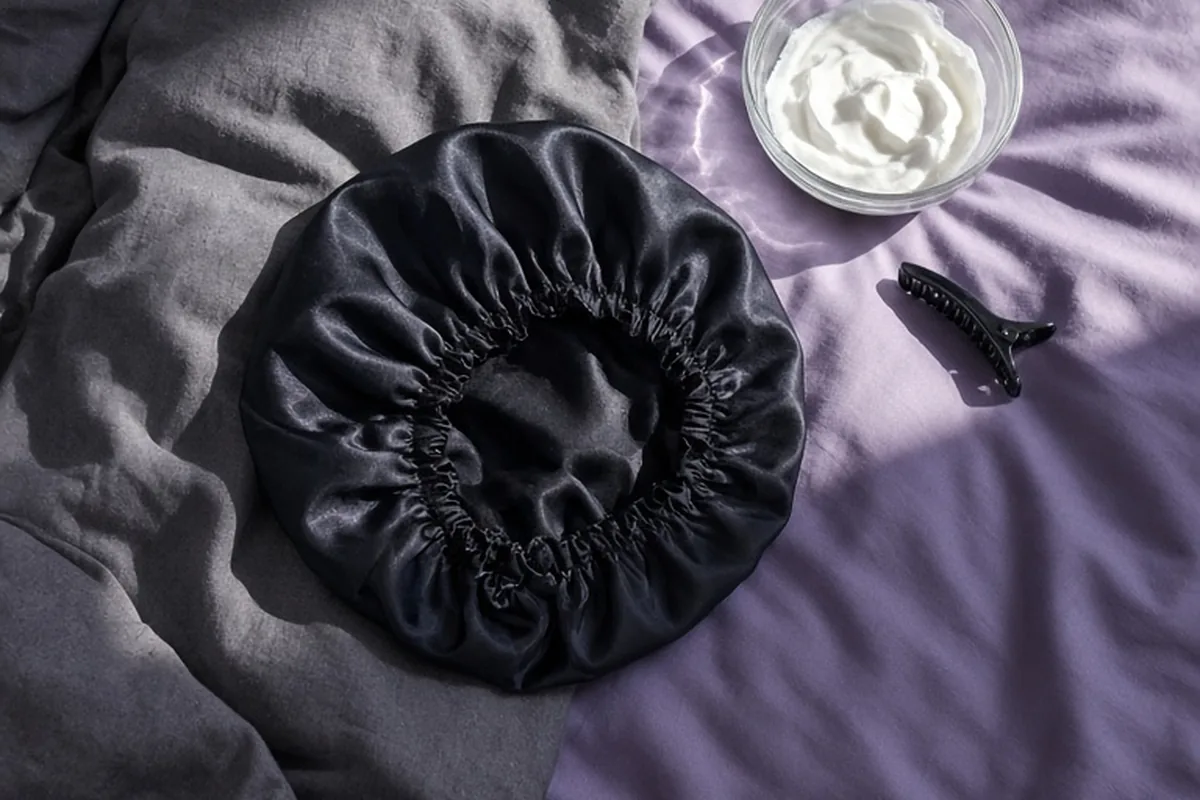
Nighttime care is equally critical for preserving relaxed hair integrity. Standard cotton pillowcases create rough friction against the hair cuticle and absorb essential surface oils during sleep. Protect your hair by wrapping it smoothly around the head or gathering it into a loose pineapple shape, secured with a silk or satin bonnet, scarf, or high-grade satin pillowcase. This preserves your style, prevents morning tangling, and minimizes mechanical breakage caused by tossing and turning.
Navigating Touch-Up Intervals to Avoid Over-Processing
One of the primary causes of severe breakage in relaxed hair is overlapping chemical relaxer onto previously processed strands. When relaxer is repeatedly applied to the same hair fiber, the cortex degrades beyond repair, leading to thinning, brittleness, and breakage near the root. Chemical touch-ups should strictly be applied to virgin new growth only, which requires sufficient space and patience between salon appointments.
Spacing relaxer applications between eight to twelve weeks is standard for most relaxed routines, as this window typically yields roughly an inch to an inch and a half of visible new growth. Attempting to relax new growth earlier—such as at four to six weeks—makes it nearly impossible for an applicator to avoid overlapping onto the previously straightened base. If you have fine or slow-growing hair, stretching touch-ups to ten or twelve weeks allows a clearer boundary between textures.
During a touch-up, protect the scalp with a petroleum-based soothing base and coat the previously relaxed lengths with a heavy oil or thick conditioner to create a physical barrier against accidental overlap. Always monitor processing time strictly according to the product guidelines, and follow immediately with a neutralizing shampoo. Wash with the neutralizing shampoo multiple times until the color-indicating lather shows that all alkaline residues are thoroughly removed and the hair has returned to its natural acidic pH.
Thermal Styling Limits and Heat Defense Strategies
Direct heat styling can easily compound chemical damage on relaxed hair if temperature controls and frequency are not carefully managed. Because the hair's protective cuticle is already thinned by chemical processing, high heat breaks down remaining keratin structures, causing irreversible heat damage, localized blistering along the hair shaft, and severe split ends.
To protect relaxed strands, minimize the use of direct hot tools such as flat irons and curling wands to no more than once per week, ideally relying on heat-free styling methods like roller sets, flexi-rods, or silk wraps between washes. When you do blow-dry, use a concentrator nozzle, keep the heat on a medium or cool setting, and maintain steady tension with a paddle brush rather than pulling aggressively with high heat.
Whenever applying hot tools, use a professional-grade thermal protectant formulated with dimethicone, cyclomethicone, or hydrolyzed polymers. These ingredients create a temporary barrier that slows heat transfer and reduces surface friction. Keep hot tool temperatures moderate—typically between 300°F and 350°F (150°C to 175°C)—and pass the iron through each small section only once in a smooth, continuous motion to prevent concentrated hot spots.
Managing the Line of Demarcation and Strategic Trimming
As new growth emerges after a relaxer treatment, two distinct textures coexist on the same strand: the natural, coiled or wavy pattern at the roots and the straight, chemically altered hair along the lengths. The boundary where these two textures meet is known as the line of demarcation. This junction is structurally weak and susceptible to snapping if subjected to harsh detangling or tight styling tension.
To navigate the line of demarcation smoothly during longer stretches between touch-ups, always detangle damp hair saturated with a slippery leave-in conditioner using a wide-tooth comb or flexible detangling brush, working methodically from the ends upward toward the roots. Avoid rough handling, tight ponytails, or small rubber bands that place localized stress on this fragile junction.
Regular trimming is essential for maintaining the overall health of relaxed hair and preventing splits from traveling up the shaft. Scheduling a trim or light dusting every eight to twelve weeks—often coinciding with touch-ups or seasonal transitions—removes frayed, weathered ends. Keeping your ends blunt and well-maintained creates a fuller appearance and prevents single split fibers from catching on adjacent hairs and causing widespread tangling.
Addressing Sudden Breakage, Excessive Shedding, and Scalp Care
Distinguishing between hair shedding and hair breakage is critical when troubleshooting unexpected hair loss. Shedding is a natural physiological process where hairs complete their telogen resting cycle and fall out from the follicle, identifiable by a small white bulb at the root of the strand. Breakage, on the other hand, produces shorter, jagged hair fragments without a white bulb, indicating mechanical, chemical, or moisture failure along the shaft.
If you notice sudden breakage, pause all direct heat styling, evaluate whether you have recently over-processed or overlapped your relaxer, and perform a gentle strand assessment to determine if your hair needs deep hydration or a structural protein boost. Simplifying your routine down to a gentle cleanser, rich moisturizing deep conditioner, leave-in cream, and low-tension protective styling allows the hair shaft time to recover.
A healthy scalp is the foundation of resilient hair growth. Relaxer chemicals can occasionally irritate or dry out the scalp, leading to flaking, itching, or inflammation. Avoid scratching the scalp with nails or sharp combs, particularly in the days leading up to a chemical application. Keep the scalp clean with regular washing, and if you experience dry scalp between washes, apply light, non-comedogenic oils or soothing water-based scalp serums directly to the skin rather than suffocating follicles with heavy greases.
Frequently asked questions
How often should you wash relaxed hair?
Most relaxed hair thrives when washed once every 7 to 10 days. Washing on this schedule prevents product and mineral buildup on the scalp while allowing natural oils and deep conditioning treatments to maintain moisture without drying out the fiber through excessive water exposure.
Can you color or bleach relaxed hair safely?
Combining permanent hair color or bleach with chemical relaxers introduces significant double processing, which drastically weakens the hair cuticle and cortex. If you want color, it is generally safer to choose semi-permanent or demi-permanent glosses that deposit pigment without lifting the cuticle with high-volume peroxides.
What is the difference between lye and no-lye relaxers for hair health?
Lye relaxers (sodium hydroxide) process quickly and rinse out cleanly, but can be harsher on the scalp if left too long. No-lye relaxers (calcium hydroxide) are gentler on sensitive scalps but often leave behind mineral calcium deposits that make strands dry and dull unless paired regularly with clarifying or chelating shampoos.
How do you know if your relaxed hair needs protein or moisture?
If hair feels stiff, dry, or brittle and snaps immediately when pulled, it is moisture-deficient and needs a hydrating deep conditioner. If strands feel gummy, mushy when wet, or stretch excessively without bouncing back, the internal structure lacks protein and requires a strengthening hydrolyzed protein treatment.
Your next step
Inspect your hair strands today when wet: perform a gentle stretch test on a single shed strand to assess whether your hair requires an immediate moisture infusion or a light protein treatment.