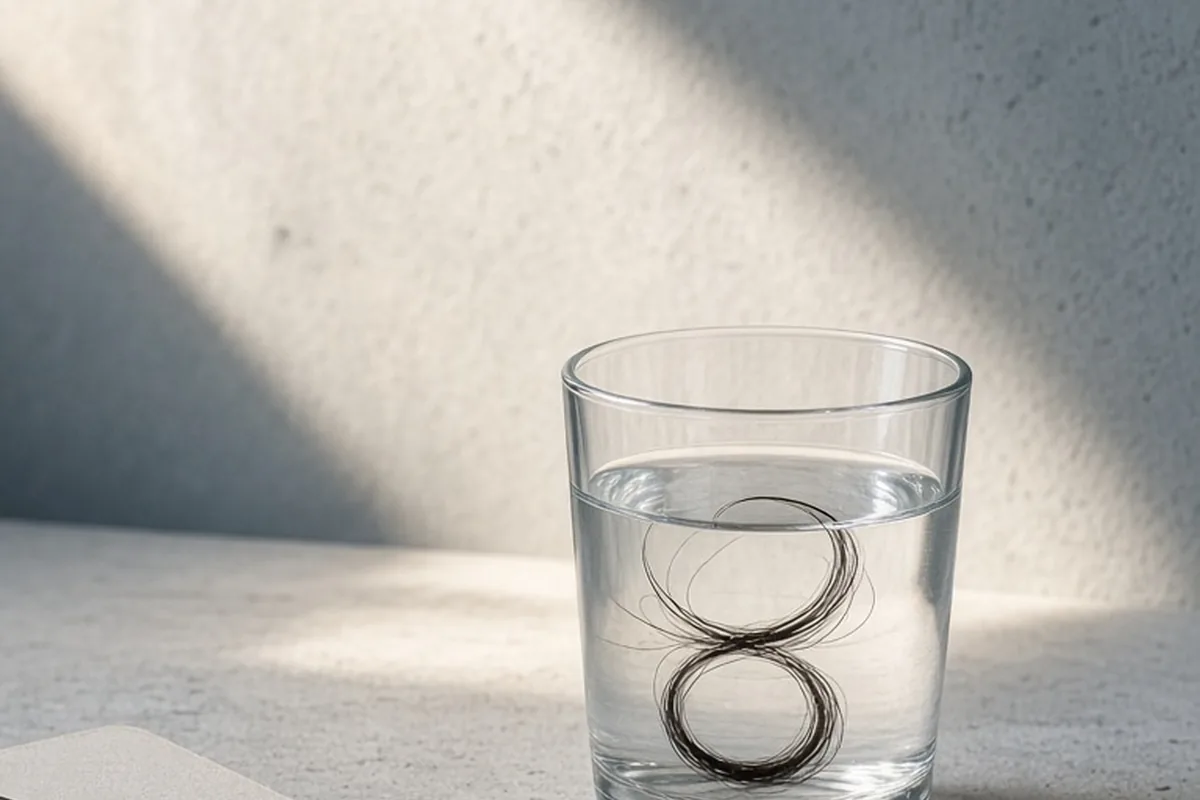
A hair porosity test measures how easily your hair strand absorbs and retains moisture, determined by the condition of its outer cuticle layer. You can test your porosity at home using clarified, shed hair through the float test in a glass of room-temperature water, the spray bottle mist test, or the strand slide test. Low porosity hair repels water and floats, medium porosity hair slowly suspends, and high porosity hair absorbs water quickly and sinks.
Knowing your curl pattern or strand thickness provides only half the picture when building an effective hair care routine. Understanding hair porosity reveals how your hair behaves when wet, how long it takes to dry, and why certain heavy conditioners or light serums leave your strands either greasy or parched.
Three Reliable At-Home Hair Porosity Tests and How to Run Them
The most widespread method for evaluating porosity is the float test. To perform this test properly, take a shed strand of hair from your brush or comb rather than plucking a live strand from your scalp. Wash the strand gently with a drop of clarifying shampoo to remove lingering leave-in conditioners, sebum, and silicone serums, then allow it to air-dry completely. Fill a clean, clear glass with room-temperature water and drop the strand onto the surface. Observe the hair over two to four minutes without agitating the glass. If the strand remains floating on top, it indicates low porosity; if it drifts slowly toward the middle, it reflects medium or normal porosity; if it absorbs water and sinks to the bottom quickly, it points toward high porosity.
Another dependable method is the spray bottle or mist test, which evaluates hair behavior while still on your head. Take a small, dry section of clean, product-free hair and mist it lightly with water from a fine-spray bottle. Watch how the droplets interact with the surface of your strands. If the water beads up into tight, persistent droplets that sit on the outside of the hair shaft for several minutes without soaking in, your hair exhibits low porosity. If the droplets absorb gradually after a short pause, your hair has medium porosity. If the moisture vanishes almost instantaneously into the strand like water onto a dry sponge, your hair is high porosity.
The third assessment is the slide or texture test, which tactilely measures the raised or flat state of your hair cuticles. Take a single, dry strand between your thumb and index finger, grasping the strand near the tip. Gently slide your fingers upward toward the root, moving against the natural direction of growth. If your fingers glide smoothly without resistance or friction, your cuticle scales lie flat and compact, characteristic of low porosity hair. If you feel slight friction, ridges, or roughness along the shaft, the cuticle scales are raised or broken, which indicates high porosity.
Interpreting Low, Medium, and High Porosity Cuticle Characteristics
Hair porosity is governed by the structural integrity and alignment of the cuticle, the shingle-like outer protective layer of the hair shaft. In low porosity hair, these cuticle scales are tightly packed, flat, and overlapping with minimal gaps between them. This tight formation creates a natural hydrophobic barrier that prevents external moisture, conditioning agents, and chemical treatments from easily entering the hair cortex. While low porosity hair is exceptionally durable and resistant to environmental wear, it is equally prone to surface product accumulation, as heavy oils and butters sit on top of the strand rather than penetrating it.
Medium or normal porosity hair features cuticles that are loosely aligned with enough space to allow moisture to enter consistently while still closing tightly enough to trap hydration inside. This balance requires minimal intervention because the hair readily absorbs water, responds predictably to standard conditioners, holds styles well, and maintains moisture for days without drying out or feeling gummy. It represents a healthy, resilient hair shaft that can tolerate moderate styling without rapid degradation.
High porosity hair possesses an open, elevated, or damaged cuticle structure characterized by missing scales, fissures, and enlarged pores along the shaft. This condition can be genetic, but it frequently results from cumulative damage caused by bleach, permanent hair dye, relaxers, mechanical friction, and excessive heat styling. Because the protective cuticle barrier is compromised, high porosity hair absorbs water almost instantly when exposed to humidity or wet washing. However, it loses that moisture just as quickly because there is no intact outer barrier to lock hydration into the inner cortex, leaving the strands vulnerable to chronic dryness, frizz, and breakage.
Why the Water Float Test Often Gives Inaccurate Results
Although the water float test remains the most popular at-home method shown online, it frequently yields false readings if performed without controlling basic physical variables. The primary culprit behind inaccurate float tests is water surface tension. Water molecules naturally cling together at the surface, creating an invisible elastic membrane that can support lightweight objects. A clean, shed strand of hair is exceptionally light, meaning that surface tension alone can keep high porosity hair floating indefinitely on the water surface unless the surface barrier is gently disturbed.
A second common error involves product residue and natural scalp sebum. If you pluck or comb out a strand that has not been thoroughly clarified, residual styling products—especially silicones, heavy waxes, and natural oils—coat the cuticle. These hydrophobic substances artificially repel water, causing an inherently high porosity strand to float like low porosity hair. Similarly, using hot water can prematurely expand the cuticle during the test, while cold water causes cuticles to contract. For this reason, the float test should never be relied upon as the sole diagnostic tool; combining it with the mist test and tactile observations provides a far more accurate assessment.
Building an Effective Product Routine for Low Porosity Strands
Managing low porosity hair requires techniques that actively encourage the stubborn cuticle layer to open up and receive moisture. The most effective lever for low porosity hair is indirect heat. When applying deep conditioners, using a thermal heat cap, a warm damp towel wrapped in a shower cap, or a hooded dryer creates gentle warmth that causes the tight cuticle scales to lift slightly. This thermal expansion allows hydrating ingredients to enter the cortex instead of merely sitting on the surface. Rinsing your hair with warm water during the washing phase also helps open the cuticles, though finishing with lukewarm rather than icy cold water prevents shock while maintaining softness.
Product formulation selection is equally critical for low porosity types. Heavy, occlusive emollients like raw shea butter, castor oil, and thick petroleum-based waxes readily coat low porosity cuticles, leading to rapid buildup, stiffness, and dullness. Instead, prioritize lightweight, water-based leave-in conditioners and humectants such as aloe vera juice, vegetable glycerin, and panthenol. When incorporating oils for sealing, choose thin, penetrative lipids with smaller molecular sizes, such as argan oil, jojoba oil, or sweet almond oil. Regular use of a gentle clarifying shampoo every two to three weeks is essential to clear stubborn surface deposits and restore the hair's ability to receive hydration.
Managing High Porosity Hair with Protein and Moisture Sealants
Because high porosity hair loses moisture rapidly through open cuticles, care routines must focus on patching structural gaps and creating an artificial protective barrier. Incorporating hydrolyzed proteins is one of the most effective ways to fortify high porosity strands. Hydrolyzed wheat protein, silk amino acids, keratin, and hydrolyzed collagen are broken down into microscopic fragments small enough to temporarily adhere to the damaged cuticle fissures. This process, often referred to as a protein treatment, reinforces structural integrity, reduces breakage, and helps the strand retain water longer.
Layering moisture through structured techniques like the Liquid-Oil-Cream (LOC) or Liquid-Cream-Oil (LCO) method works particularly well for high porosity hair. Start with a water-based leave-in conditioner to saturate the cortex, follow with a rich moisturizing cream, and finish with a heavier occlusive oil or butter—such as shea butter, castor oil, or avocado oil—to physically seal the surface and lock the moisture inside. Additionally, incorporating slightly acidic post-wash rinses, such as diluted apple cider vinegar or pH-balanced conditioning sealers, helps lower the hair's pH, encouraging raised cuticle scales to lie flatter against the shaft.
Medium Porosity Hair Care and Factors That Shift Porosity Over Time
Medium porosity hair is often considered the most manageable because its cuticle architecture naturally regulates moisture absorption and retention without extreme measures. An effective regimen for medium porosity hair focuses on preservation rather than corrective repair. A standard balance of moisturizing leave-in conditioners, occasional protein-rich treatments once a month, and moderate hydration masks will keep the cuticle layer intact. The primary objective is preventing unnecessary shifts toward high porosity caused by aggressive styling practices.
It is important to recognize that hair porosity is dynamic along the length of a single strand and can shift over time. While the new growth near your roots might be low or medium porosity, the older ends may have developed high porosity due to years of mechanical combing, sun exposure, and washing friction. Furthermore, chemical interventions like bleaching, oxidative hair coloring, permanent waving, and chemical relaxers aggressively strip the cuticle's protective fatty acid layer (known as 18-MEA), causing permanent structural porosity shifts. Heat tools operated at excessive temperatures can cause moisture within the cortex to boil and rupture the cuticle wall, permanently altering the porosity of affected sections until they are trimmed away.
Choosing Ingredients and Formulations Tailored to Your Specific Porosity
Selecting hair products based on ingredient lists rather than front-label marketing claims saves both time and money. For low porosity hair, examine the ingredient deck for water as the primary component, paired with film-forming humectants such as flaxseed extract, marshmallow root, hydroxyethylcellulose, and agave nectar. These ingredients draw ambient moisture to the hair without creating an impenetrable film. Avoid leave-in formulas overloaded with hydrolyzed proteins, as low porosity hair already has an abundance of structural protein and little space to house extra deposits, which can lead to a brittle, straw-like texture known as protein overload.
For high porosity hair, seek out rich conditioning agents, fatty alcohols (such as cetyl and stearyl alcohol), ceramides, and reconstructive complexes. Ceramides are natural lipid components found in hair cuticles that act as mortar between the cellular bricks; synthetic or plant-derived ceramides in deep conditioners help restore cohesion to fragile strands. When selecting cleansers, low porosity hair benefits from periodic clarifying surfactants like sodium C14-16 olefin sulfonate to remove buildup, whereas high porosity hair thrives on sulfate-free, conditioning cleansers or cleansing conditioners that do not strip away the delicate residual lipid layer.
Frequently asked questions
Can your hair have multiple porosity levels at the same time?
Yes, it is common to experience mixed porosity across your head. The roots and mid-lengths are typically lower or medium porosity because they are newer, while the ends frequently exhibit high porosity from cumulative weathering, heat styling, and friction.
Does hair porosity change naturally as you get older?
Hair porosity can change over time as hormone levels fluctuate and natural sebum production decreases with age. Additionally, gray hair often emerges with a coarser, more compact cuticle structure that behaves as low porosity, making it resistant to moisture and dye absorption.
How often should you test your hair porosity?
Testing your porosity once or twice a year is generally sufficient unless you alter your routine with chemical processing, permanent hair color, or frequent heat styling. Re-test whenever you notice significant changes in how your hair absorbs water or responds to familiar products.
Can you permanently change low porosity hair into medium porosity?
You cannot permanently change naturally low porosity hair into medium porosity without causing controlled structural damage to the cuticles, such as through chemical lifting. The safest approach is working with your natural cuticle structure using heat and lightweight hydrators rather than trying to alter it permanently.
Your next step
Collect two naturally shed hair strands, wash them with a drop of clarifying dish soap or clarifying shampoo to strip all styling residues, let them air dry completely, and test one in a glass of room-temperature water while misting the other to confirm your porosity baseline before purchasing new products.