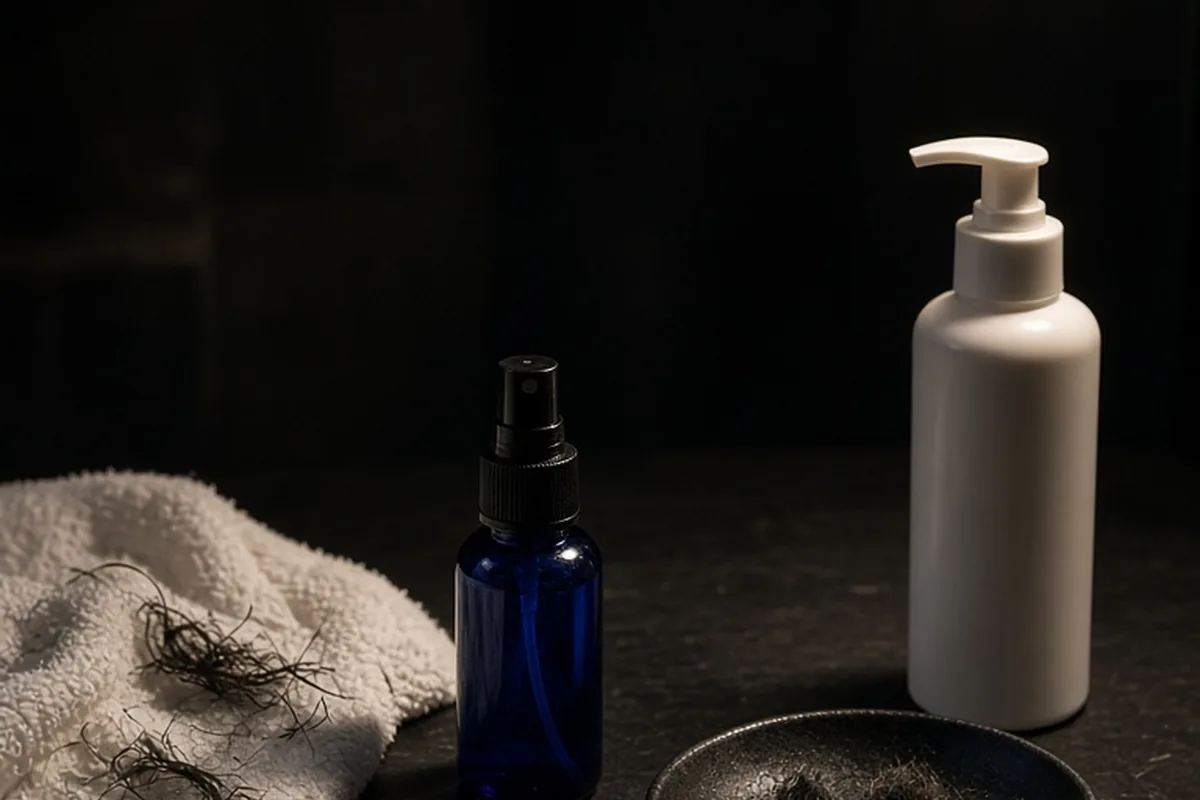
Most people need to moisturize hair between one and three times a week, but the exact schedule depends on strand texture, porosity, and styling habits. Fine or straight hair often thrives with light conditioning once or twice weekly during washing, whereas coarse, curly, or coily patterns usually require hydration every two to three days or daily light misting. If strands feel brittle, dull, or stiff, increase frequency; if hair feels limp, mushy, or gummy, scale back to avoid moisture overload.
Establishing a healthy hair routine often comes down to timing rather than product quantity. When you hydrate your strands too infrequently, they lose elasticity, split at the ends, and break under minimal tension. Conversely, saturating hair with heavy products daily can lead to limp strands and scalp congestion. Finding your ideal schedule requires understanding how your individual hair fiber behaves in different environments.
Evaluating Hair Porosity and Its Impact on Moisture Retention
Hair porosity describes your hair cuticles' ability to absorb and hold onto water. Because the cuticle is the outermost protective layer of the hair shaft, its structure dictates whether moisture enters easily and whether it escapes quickly. Individuals with low porosity have tightly overlapping, flat cuticles that resemble roof shingles laying flush against one another. This compact barrier makes it difficult for water and moisturizing formulas to penetrate the inner cortex. If you have low porosity hair, wetting your hair in the shower may take several minutes before strands feel thoroughly saturated. Because products tend to sit on top of tightly bound cuticles rather than sinking in, moisturizing low porosity hair every day frequently results in product buildup, leaving strands stiff and dull.
High porosity hair sits at the opposite end of the spectrum. The cuticles on high porosity hair are raised, chipped, or naturally spaced apart, which allows liquid to rush in immediately. However, those same gaps allow water to evaporate almost as quickly as it enters, leaving the hair feeling dry again within hours. Medium or normal porosity hair features cuticles that open easily enough to let hydration in and close firmly enough to retain it for days. If you have high porosity hair, you will likely need to moisturize every two to three days using rich creams and sealing oils to physically plug cuticle gaps. If you have low porosity hair, moisturizing once or twice a week with warm water, lightweight humectants, and gentle heat usually proves far more effective than daily reapplication.
Tailoring Moisture Frequency to Natural Curl Patterns and Hair Density
Your natural curl pattern plays a massive role in how natural oils distribute across each strand. The sebaceous glands on your scalp produce sebum, an emollient lipid mixture designed to protect the hair fiber. On straight or slightly wavy hair (often categorized as Type 1 and Type 2), sebum travels down the smooth, linear shaft with relative ease. Gravity, daily brushing, and natural head movement allow this oil to coat mid-lengths and ends without much assistance. Consequently, straight and fine hair types rarely require leave-in creams between washes; moisturizing once or twice a week through standard rinse-out conditioners during a normal wash cycle is usually plenty. Adding daily leave-in products to straight hair often weighs it down and makes the scalp greasy.
In contrast, curly, coily, and kinky hair types (Types 3 and 4) possess complex spiral structures, sharp turns, and bends along each strand. Scalp sebum cannot easily navigate these winding paths, which leaves the mid-lengths and ends chronically starved of natural lubrication. Coarse strands also have a larger diameter, requiring more hydration to remain pliable. For tightly coiled and dense textures, moisture must be manually reapplied every two to three days, or even daily in the form of a light water-based mist. Without this frequent replenishment, textured strands become vulnerable to friction, shedding, and mechanical breakage during detangling and daily wear.
Distinguishing True Moisture from Sealants and Heavy Oils
A common misstep in hair care is confusing lubrication with actual hydration. True moisture comes exclusively from water or water-based solutions. When a product lists water, aloe vera leaf juice, or herbal infusions as the primary ingredient, alongside humectants like vegetable glycerin or panthenol, it functions as a hydrator. Humectants work by attracting water molecules to the hair cortex, making the fiber flexible and supple. If your strands are dehydrated, reaching directly for a pure oil or thick butter will not solve the underlying dryness.
Pure oils and plant butters, such as argan oil, jojoba oil, shea butter, and castor oil, act primarily as emollients and occlusives. They lack water content and cannot hydrate dry hair by themselves. Instead, their molecular structure allows them to coat the hair shaft, smoothing down raised cuticles and trapping previously applied water inside. Applying oil directly to parched hair creates a hydrophobic seal that keeps future water out, worsening brittleness over time. To moisturize effectively, always apply your water-based hydrator first, followed by a small amount of oil or cream to lock that hydration into the strand.
Recognizing the Warning Signs of Over-Moisturized Hair and Hygral Fatigue
While dry hair receives significant attention, over-moisturizing hair is an equally disruptive condition known as hygral fatigue. Hygral fatigue occurs when the inner cortex of the hair swells excessively with water and then shrinks repeatedly as it dries. Over time, this constant expansion and contraction weakens the hair cuticles and degrades the internal protein bonds that give hair its strength and spring. If you consistently apply heavy conditioning treatments, leave deep conditioners on overnight, or keep your hair perpetually wet under tight styles, you risk pushing your strands into moisture overload.
You can identify over-moisturized hair by examining how it behaves when wet. Hair experiencing hygral fatigue feels unusually mushy, gummy, or excessively soft to the touch. When gently stretched, a healthy strand will expand slightly and snap back into its original shape. A strand suffering from moisture overload will stretch far beyond its normal limit without bouncing back, eventually tearing weakly like wet paper. In curly hair, this manifests as a complete loss of curl definition and an inability to hold a style. If you spot these symptoms, halt all deep conditioning and leave-in products immediately, clarify your hair to remove residue, and introduce protein-containing formulas to rebuild structural integrity.
Adjusting Moisture Cycles for Weather, Heat, and Chemical Processing
Your moisture calendar cannot remain static throughout the year because ambient humidity and environmental stressors constantly alter hair behavior. During cold winter months, outdoor air is typically dry, while indoor heating systems further deplete indoor humidity. In these conditions, moisture evaporates from your hair fiber at an accelerated pace, requiring you to increase leave-in conditioning frequency or switch to richer creams. Conversely, in hot, humid summers, humectants can pull excess moisture out of humid air and into the hair shaft, causing unmanaged swelling and frizz. During humid months, you may need lighter leave-in sprays paired with anti-humectant smoothing serums.
Chemical treatments and thermal styling tools drastically alter your hair's baseline requirements. Chemical services such as bleaching, high-lift coloring, permanent waving, and relaxing disrupt the disulfide bonds inside the cortex and blast open the protective cuticle layer. Chemically treated hair acts like high-porosity hair, regardless of its original genetic texture. If you regularly use flat irons, blow dryers, or chemical lighteners, you will need to deep condition once a week without exception, use leave-in hydrators every two days, and prioritize heat protectants containing conditioning polymers before applying any thermal tools.
Building a Practical Day-by-Day Hair Hydration Routine
Creating a workable schedule starts on wash day, which establishes your moisture foundation. Begin by cleansing your scalp thoroughly with a sulfate-free shampoo to remove environmental dirt, excess sebum, and old product buildup. Follow with an appropriate rinse-out conditioner or a ten-to-fifteen-minute deep conditioning treatment. While hair is still damp, apply a water-based leave-in conditioner evenly from mid-lengths to ends, using your fingers or a wide-tooth comb to ensure distribution. For medium to high porosity or textured hair, follow the leave-in with a lightweight oil or styling cream to seal the shaft before styling.
In the days following wash day, monitor your ends rather than your roots to determine when to refresh. On non-wash days, you do not need to soak your head completely. Instead, use a fine-mist spray bottle filled with plain water or a diluted water-and-aloe mixture to lightly dampen dry sections, then smooth a dime-sized amount of leave-in cream or serum over the ends. Protect your hair overnight by sleeping on a silk or satin pillowcase or wrapping your hair in a satin bonnet. Unlike standard cotton, which acts like a sponge and wicks moisture away while you sleep, satin reduces friction and preserves your hair's internal moisture balance throughout the night.
Frequently asked questions
Can you moisturize your hair every single day?
Yes, but daily moisturizing is best suited for coarse, highly porous, or tightly coiled textures that lose water rapidly. For fine, straight, or low-porosity hair, moisturizing daily can cause greasy buildup and hygral fatigue. If your hair feels dry daily, stick to a light water-based mist on the ends rather than heavy creams.
Should leave-in conditioner be applied to wet or dry hair?
Leave-in conditioners perform best when applied to clean, damp hair immediately after washing because the cuticles are receptive and the product can trap existing water inside the strand. You can apply small amounts to dry hair between washes to smooth flyaways, but damp application provides the most thorough hydration.
How do you tell if your hair needs moisture or protein?
Dry hair that needs moisture feels stiff, rough, and tangles easily, snapping off when manipulated because it lacks pliability. Hair that needs protein feels mushy, excessively stretchy when wet, limp, and lacks curl pattern or structural bounce.
Does drinking more water improve hair moisture?
Adequate internal hydration supports healthy hair growth at the follicular level in the scalp, but it cannot moisturize the dead keratinized fiber that forms the visible hair shaft. External moisture from water and conditioning products is necessary to keep existing lengths flexible and prevent breakage.
Your next step
Inspect your dry ends today by gently pinching and bending a single strand; if it feels brittle or stiff, apply a light water-based leave-in mist to the mid-lengths and ends before bed tonight.