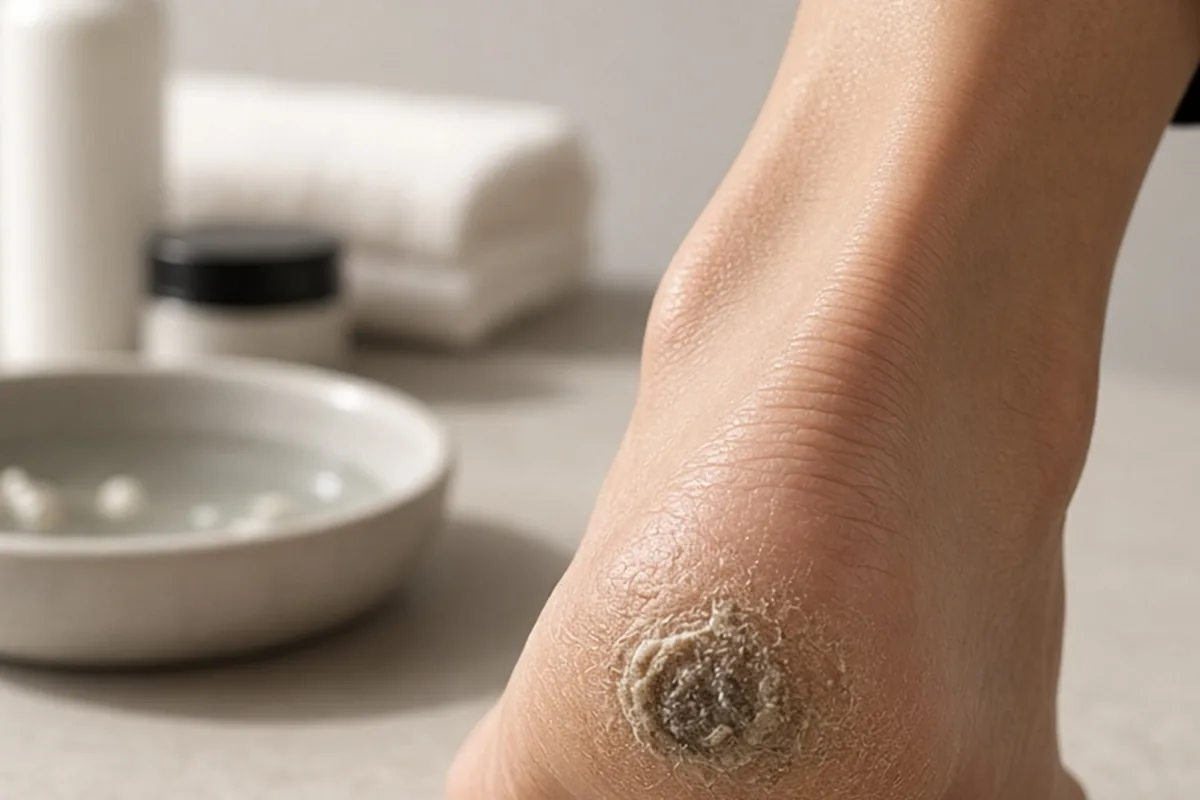
You should avoid getting a professional salon pedicure while you have an active plantar wart. Because plantar warts stem from a contagious viral strain, salon footbaths, pumice stones, and exfoliating tools can easily spread the virus across your own foot or transmit it to other people. Reschedule your salon appointment until the lesion completely clears, or switch to a waterless, at-home nail routine using dedicated tools.
Discovering a rough, tender bump on the bottom of your foot right before a scheduled nail appointment can disrupt your self-care plans. Understanding the hygiene realities of salon services helps you protect your skin barrier while managing foot aesthetics safely.
Why Professional Pedicures Pose Risks with Active Warts
Plantar warts develop on the soles of the feet after the human papillomavirus enters through tiny abrasions or weakened areas in the skin. During a traditional salon pedicure, your feet soak in warm water for extended periods, softening the outer epidermal layer and making the surrounding tissue far more susceptible to micro-trauma. When a technician scrubs your soles with a pumice bar, foot file, or exfoliating grit, viral particles shed from the lesion and spread across the newly softened skin, dramatically increasing the odds of developing satellite warts on your arches, heels, or toes.
The risk also extends beyond your own feet to the salon environment. Even when reputable establishments sanitize their equipment, whirlpool footbaths, non-autoclaved abrasive tools, and shared towels can occasionally harbor viral particles if protocols fall short. Furthermore, vigorous manipulation of an active wart can aggravate inflammation, tear surrounding tissue, and cause localized bleeding, which complicates your existing treatment regimen and prolongs total recovery time.
Salon Policies and Cosmetology Boundaries
Licensed nail technicians work under state cosmetology board regulations that strictly dictate sanitary standards and scope of practice. These regulations generally prohibit technicians from performing services on clients with visible, contagious skin conditions, open wounds, or undiagnosed lesions. Because technicians are beauty professionals rather than healthcare providers, they cannot evaluate, diagnose, or treat viral skin growths, and turning away a client with an active wart is a standard safety protocol designed to protect both the staff and the public.
Attempting to conceal a plantar wart under a bandage or coat of liquid skin sealant rarely solves the problem in a salon setting. Warm, soapy water easily loosens adhesive bandages during a ten-minute soak, exposing the active virus mid-service and putting the technician in an awkward position. Respecting these professional boundaries prevents uncomfortable interactions and upholds the baseline hygiene standards that keep salon environments safe for everyone.
Navigating Upcoming Salon Appointments with Confidence
If you discover a wart shortly before an upcoming appointment, contacting the salon to adjust your booking is the most considerate approach. You do not need to share exhaustive personal details; simply explain that you have a minor skin irritation on your foot and need to either cancel or reschedule. Most salons appreciate the courtesy of advance notice and will gladly transfer your deposit or shift your appointment forward several weeks without penalty.
If you need well-groomed toenails for an immediate special event, consider asking whether the salon can perform a dry polish change strictly above the ankle. In this modified setup, your feet never touch a shared basin, no abrasive files touch your skin, and the technician focuses solely on shaping the toenails and applying polish while wearing fresh gloves. However, if the wart sits anywhere near your toes or nail folds, deferring all professional foot services remains the most prudent choice.
Safe At-Home Pedicure Alternatives During Treatment
Maintaining your personal grooming routine while treating a plantar wart is entirely possible if you modify your technique to prevent spreading the virus. The primary goal of an at-home pedicure during this period is basic maintenance without aggressive abrasion. Avoid prolonged foot soaks that saturate and soften the wart tissue, and skip harsh physical scrubs, callus rasps, or chemical peel booties that can disperse viral particles across unaffected areas of your foot.
Establish a clean, dedicated workspace and assemble a personal kit that remains separate from tools used by other household members. Follow these practical steps to safely groom your feet at home:
- Wipe your feet with a gentle cleansing cloth or wash them quickly under running shower water rather than soaking them in a stationary basin.
- Trim toenails straight across using clean clippers, taking care not to nick the surrounding cuticle or skin folds.
- Use single-use disposable cardboard emery boards for light shaping, and discard them immediately after finishing your nails.
- Apply nail lacquer carefully while avoiding direct contact between the brush and any compromised skin on the sole.
- Disinfect metal clippers and personal implements in rubbing alcohol for at least twenty minutes after every use.
Recognizing When Your Skin Is Ready for the Salon
Returning to the salon requires confirming that the plantar wart is completely eliminated rather than merely reduced in size. Warts frequently appear gone on the surface while lingering deep within the thicker skin layers of the sole. If you stop treatment prematurely and schedule a pedicure, the friction from professional scrubbing can reactivate the infection and reverse your progress.
A wart is typically resolved when the natural skin striations and fingerprint-like lines on your sole cross uninterrupted over the previously affected spot. You should no longer see tiny black dots, which represent clotted capillary vessels that feed the growth, and the area should feel pliable and pain-free under direct pressure. Once your skin reaches this baseline, waiting an additional two to three weeks ensures the local tissue has fully rebuilt its protective barrier before facing salon-grade exfoliation.
Smart Hygiene Practices for Future Salon Visits
Once your foot has healed and you feel ready to book a professional service, selecting the right establishment minimizes your risk of encountering viral pathogens in the future. Look for salons that utilize pipeless footbaths with single-use disposable plastic liners, or those that specialize in waterless dry pedicures. Observe whether technicians open fresh, autoclaved pouches containing sterilized metal tools for each client and discard single-use items like pumice blocks, wooden sticks, and buffers after every session.
You can also protect your skin by keeping your feet well-hydrated between visits, as intact, supple skin provides a robust natural defense against microscopic viral entry. Bringing your own personal set of sanitized tools to the appointment is another widely accepted strategy that adds an extra layer of reassurance, allowing you to enjoy the pampering experience without worrying about compromised foot health.
Illustrative Scenarios
Adjusting Grooming Plans for a Summer Event
Prior to attending an outdoor wedding, Jordan noticed a small, tender plantar wart near the base of the heel. Rather than proceeding with an appointment for an intensive spa pedicure that included pumice exfoliation, Jordan called the salon to reschedule the foot soak and scrub. Jordan then completed a gentle dry polish routine at home using dedicated clippers, keeping the wart covered and isolated until professional medical treatment fully resolved the lesion several weeks later.
Key point: Separating aesthetic nail care from intensive skin exfoliation prevents accidental viral spread while keeping your feet neat and comfortable.
Frequently asked questions
Can a nail technician tell the difference between a callus and a plantar wart?
Experienced technicians often recognize the visual differences, such as interrupted skin lines or tiny dark specks common in warts versus uniform thickening in calluses. However, technicians cannot legally diagnose conditions, and ethical professionals will decline to file or scrub any suspicious growth to protect your safety.
Is it safe to get a pedicure if I cover the wart with a waterproof bandage?
Covering the wart is generally not recommended for a traditional salon service because warm footbaths often loosen adhesive edges within minutes. Once water seeps beneath the bandage, viral particles can escape into the basin and spread across your softened skin.
How long should I wait after wart treatment before booking a pedicure?
You should wait until the wart is entirely gone, the skin lines have fully re-formed across the area, and no tenderness remains. Waiting an extra two to three weeks after visible clearance ensures the skin barrier is resilient enough to handle salon-grade exfoliation.
Can pumice stones spread a plantar wart to other parts of the same foot?
Yes, abrasive tools like pumice stones and foot files can dislodge viral particles and create micro-tears across healthy skin on your sole. Using the same tool across your entire foot significantly increases the risk of creating a cluster or mosaic wart pattern.
Your next step
Inspect your feet thoroughly under good lighting, reschedule any upcoming salon soaking services until the skin fully heals, and focus on gentle, waterless home grooming while completing an appropriate wart treatment.