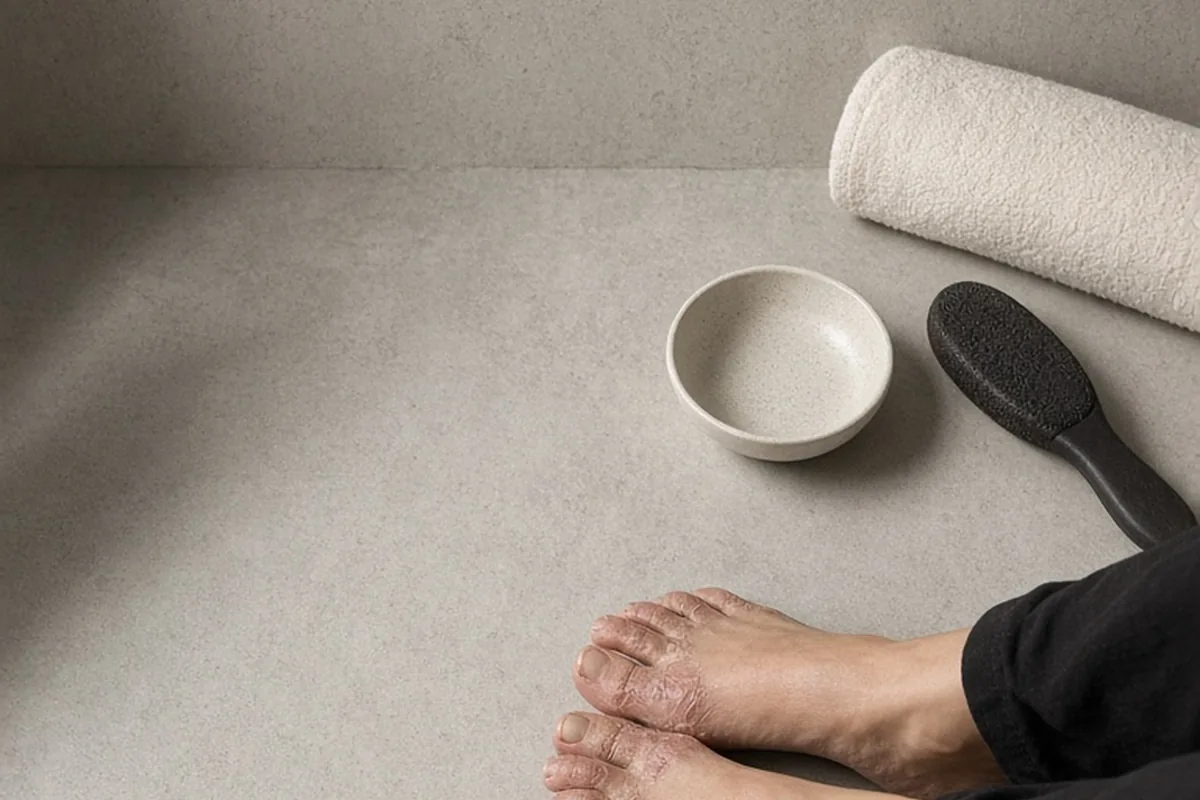
You should not get a professional pedicure while experiencing an active case of athlete's foot. Because the fungal infection spreads easily through shared water basins, foot files, and towels, visiting a salon risks transferring the fungus to technicians and other patrons. Wait until the infection has completely cleared, skin has healed, and all peeling or itching stops before scheduling your next salon appointment.
Booking a pedicure is often a relaxing ritual, but noticing peeling skin, redness, or itching between your toes can disrupt those plans. Navigating salon etiquette and personal hygiene during a foot flare-up requires understanding how fungal conditions spread and how to protect both your skin and your community.
Why Salons Must Refuse Service for Active Fungal Conditions
State cosmetology boards and health departments establish strict operational guidelines that prohibit nail technicians from performing services on clients with visible, contagious skin conditions. Athlete's foot, known clinically as tinea pedis, is caused by dermatophytes that thrive in damp environments and transfer readily across surfaces. When a technician notices signs of an active fungal infection, professional licensing standards typically obligate them to decline the service to protect themselves, the workspace, and subsequent clients from unintentional exposure.
Even when salons adhere to rigorous sanitation protocols, fungal spores present distinct sanitation challenges. Whirlpool foot baths, piped jets, pumice stones, and abrasive buffers can harbor microscopic spores if an item is porous or if disinfectant contact times are cut short during a busy shift. Technicians are trained in aesthetic maintenance rather than clinical diagnosis, meaning they cannot safely assess whether an infection is mild enough to work around. Declining service is neither personal nor judgmental; it is a regulatory safeguard designed to prevent commercial establishments from becoming vectors of fungal transmission.
Recognizing Athlete's Foot Versus Ordinary Dry Skin
It is common to confuse standard calluses and seasonal dryness with athlete's foot, leading some people to seek a pedicure specifically to buff away what they assume is benign dead skin. Standard dryness typically manifests as generalized flaking on the heel or the balls of the feet, often accompanied by thickened, non-inflamed skin that feels rough to the touch. This type of dryness usually responds quickly to rich emollients and does not itch or sting.
In contrast, athlete's foot often presents with distinct localized patterns and sensory discomfort that regular moisturizers do not resolve. You might notice soft, white, breaking-down skin between the fourth and fifth toes, accompanied by persistent itching, stinging, or a burning sensation. Another presentation, often called the moccasin pattern, creates fine, powdery scaling across the soles and sides of the foot with an underlying reddish tint. If your peeling skin is paired with inflammation, tiny fluid-filled blisters, or sudden cracked fissures that burn when exposed to water, treat it as a potential infection rather than simple dryness.
- Dry skin: Rough, thickened texture on heels and pressure points without redness or itching.
- Interdigital athlete's foot: Peeling, moisture, and macerated white tissue between the toes with sharp itching.
- Moccasin-type athlete's foot: Chronic, fine scaling along the bottom and edges of the foot with pink or red irritation.
The Direct Risks of Getting a Pedicure While Infected
Attempting to push through a pedicure while your skin is compromised carries genuine risks for your own recovery. The standard pedicure process begins with prolonged soaking in warm water, which softens the skin's protective outer barrier. For an active fungal infection, this excess moisture can cause the skin to macerate further, allowing the fungus to penetrate deeper tissue layers and worsening localized irritation.
Mechanical exfoliation poses an even greater concern. When a technician uses foot files, scrubs, or cuticle nippers on infected tissue, micro-abrasions are created across the epidermis. These tiny tears open pathways for secondary bacterial infections, such as cellulitis, especially if bacteria enter the compromised barrier. Furthermore, vigorously scrubbing an infected foot can drag fungal spores across the skin to your nail beds, significantly increasing the likelihood of developing onychomycosis, a stubborn toenail fungus that is far more difficult and time-consuming to clear than surface skin infections.
How to Reschedule Your Appointment Professionally
Discovering skin irritation shortly before a scheduled salon visit can feel inconvenient, but handling the situation with prompt transparency is the best approach. Calling the salon as soon as you suspect a problem allows the front desk to fill your time slot and spares you an uncomfortable conversation in the technician's chair. You do not need to share exhaustive clinical details; a straightforward explanation is entirely sufficient.
A simple, polite script works best: explain that you have developed a temporary skin irritation on your foot and need to push your appointment back by a few weeks until it has fully resolved. Most reputable salons appreciate this honesty because it protects their staff and clients. Ask about their cancellation window and request that any deposit be applied to a future booking once your skin has fully recovered. Technicians encounter skin conditions regularly and respect clients who prioritize hygiene.
Managing Foot Grooming Safely at Home During Treatment
While your feet are healing, you can still maintain basic comfort and cleanliness at home without compromising your recovery. Start by establishing a clean, controlled environment for your daily foot care. Wash your feet daily with gentle soap and water, then pat them completely dry using a separate towel or disposable paper towels, paying meticulous attention to the spaces between your toes. Keep over-the-counter antifungal creams, sprays, or powders nearby to apply according to their package instructions.
If your toenails require trimming while you treat the skin, handle them with dedicated tools that are not shared with anyone else in your household. Disinfect your clippers before and after every use by soaking them in rubbing alcohol or a bleach solution. Avoid aggressive scraping, pumice stones, or peeling masks during this phase, as mechanical irritation will only aggravate inflamed tissue. Wear breathable cotton or moisture-wicking socks, change them immediately if they become damp, and rotate your footwear daily to give shoes ample time to air out.
- Use dedicated clippers and sanitize them in rubbing alcohol before and after each trim.
- Dry thoroughly with paper towels rather than shared bath towels to avoid cross-contamination.
- Skip harsh manual files and foot peels until the skin barrier has completely re-established itself.
- Wear clean, breathable socks and alternate shoes to prevent damp environments that promote fungal growth.
Criteria for Safely Returning to the Nail Salon
Deciding when to return to the salon requires patience beyond the moment your symptoms begin to subside. Athlete's foot is notorious for recurring when treatment stops prematurely. Even after the acute itching and visible peeling disappear, fungal spores can remain dormant in the superficial skin layers. Cosmetologists suggest waiting until all clinical signs have vanished and you have completed the full recommended course of your chosen topical treatment.
A practical rule of thumb is to allow a full buffer week of completely clear, symptom-free skin before scheduling your return visit. The skin between your toes should be intact, dry, and free of redness or flaking, and the soles of your feet should display no active scaling. When you do rebook, consider scheduling with salons that utilize single-use disposable tub liners or modern pipeless foot basins, which are easier to disinfect thoroughly between clients. You may also bring your own sanitized nail tools if that provides extra peace of mind.
Illustrative Scenarios
Navigating a Pre-Event Pedicure Cancellation
A client named Jordan booked a pedicure two days before a weekend beach wedding, intending to smooth dry skin and apply fresh polish. The evening prior, Jordan noticed sharp itching and moist, peeling skin between the outer toes that resisted standard moisturizer. Rather than covering the area with a bandage or hoping the technician would overlook it, Jordan called the salon first thing the next morning, explained that a sudden skin irritation had cropped up, and rescheduled the appointment for three weeks out.
Key point: Pausing the service prevented potential cross-contamination in the salon, spared the client embarrassment at the basin, and avoided irritating delicate tissue right before walking on hot sand.
Frequently asked questions
Can I get a pedicure if I ask the technician to skip the foot soak?
Skipping the soak does not remove the risk of cross-contamination or secondary irritation. Handling the foot, filing the skin, and trimming nails still disperses fungal particles onto tools, towels, and the technician's hands. It is safest to postpone all salon foot services until the infection has cleared.
Will applying nail polish hide athlete's foot so I can attend my appointment?
Nail polish only covers the surface of the nail plate, whereas athlete's foot resides on the skin, between toes, and around nail folds. Furthermore, applying polish over an active fungal environment traps moisture and can encourage the fungus to spread directly into the nail bed, resulting in a persistent nail infection.
What should I do if a technician turns me away during a pedicure?
If a technician declines service due to suspected athlete's foot, respond with calm understanding rather than frustration. They are complying with state sanitation laws designed to keep everyone safe. Thank them for their vigilance, settle any modest fee if applicable, and focus on treating your feet at home before rebooking.
Your next step
Inspect your feet in natural light today; if you spot localized redness, peeling between your toes, or persistent itching, cancel upcoming salon visits and begin an appropriate topical treatment routine.