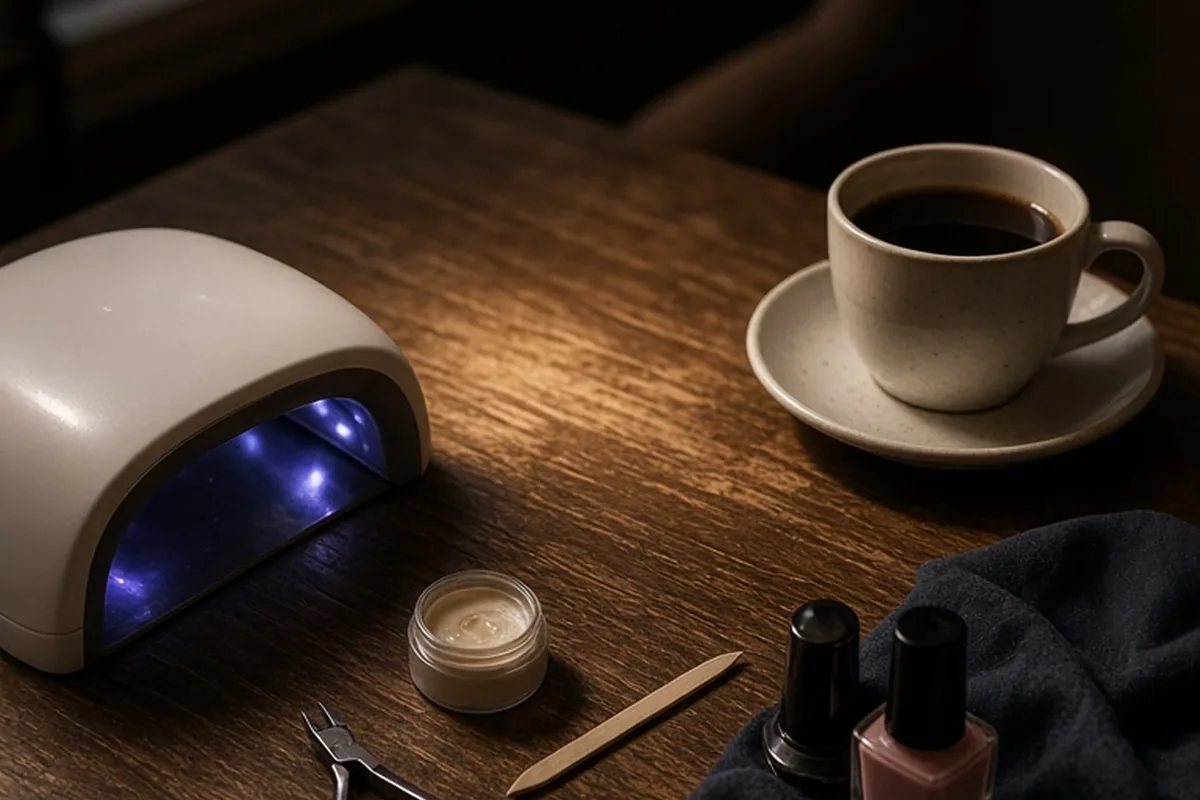
A standard gel manicure typically takes between 45 and 60 minutes from start to finish. If your appointment includes the removal of an existing gel set, intricate nail art, extensive cuticle repair, or nail extensions, the total service time usually extends to 75 or even 90 minutes. Simple, single-color applications on natural nails stay closest to the 45-minute mark.
Fitting a beauty appointment into a tight workday or a busy weekend requires knowing exactly how much time you need to block out on your calendar. While traditional manicures require prolonged air-drying, gel manicures cure instantly under specialized light, shifting the majority of the appointment time to careful nail preparation and precise application.
The Step-by-Step Timeline of a Basic Gel Manicure
A standard gel manicure on bare, natural nails follows a strict mechanical sequence designed to ensure the product bonds securely to the keratin plate. The first 15 to 20 minutes are dedicated entirely to physical preparation. Your nail technician begins by sanitizing your hands, clipping and filing the free edge to your desired shape, pushing back the eponychium, and carefully trimming any loose dead cuticle tissue. They will then gently buff the surface shine off your natural nail using a high-grit buffer and wipe the plate with an alcohol or acetone-based dehydrator. Skipping or rushing this foundational phase often leads to premature lifting within days, which is why skilled technicians invest significant time here.
The remaining 25 to 35 minutes center on the chemical application and light curing cycles. The technician applies a thin bonding base coat, which cures under an LED light for roughly 30 to 60 seconds (or up to two minutes if the salon uses older UV tube lamps). Next, two to three coats of colored gel polish are applied, with each individual coat curing under the lamp for 30 to 60 seconds per hand. Finally, a durable top coat is applied and cured, followed by an alcohol wipe to remove any sticky inhibition layer if a non-wipe formula is not used. A light hand massage with cuticle oil completes the service, allowing you to walk out immediately without worrying about smudging your fresh polish.
How Removal of Old Gel or Enhancements Adds Time
If you arrive at the salon with an existing set of gel polish, hard gel, dip powder, or acrylics, expect your appointment to run significantly longer. Gel polish cannot simply be wiped away with standard non-acetone remover; it requires intentional breakdown. Technicians usually file down the hard top seal with a manual file or an electronic file (e-file) to allow acetone penetration, then wrap each fingertip in acetone-soaked cotton and aluminum foil for 10 to 15 minutes. Once softened, the loosened gel is gently pushed off with an orangewood stick or cuticle pusher.
This soaking and cleanup process universally adds 15 to 25 minutes to your total visit. Attempting to speed up removal by aggressively scraping or pulling at unsoftened gel can strip away layers of natural nail plate, leaving the nail bed thin, sensitive, and prone to breakage. If you have thicker products like dip powder or builder gel on your nails, the breakdown time may take up to 30 minutes, pushing a basic appointment past the 75-minute threshold. When scheduling, always let the salon know in advance that you require removal so they can allocate appropriate buffer time.
The Time Investment Required for Nail Art and Specialty Finishes
Customizing your nails with visual designs is the most common reason a gel manicure extends beyond the one-hour mark. Even seemingly minimal accents require precise, steady handiwork and multiple intermittent cure cycles between design layers to prevent colors from bleeding together. For example, a classic French manicure or simple chrome powder burnished over a base shade generally adds 10 to 15 minutes. Conversely, multi-colored abstract swirls, hand-painted floral motifs, geometric lines, or 3D embellishments can easily add 30 to 45 minutes to your appointment.
Technicians often work on one finger at a time during complex art applications, requiring frequent 'flash curing' where you place your hand under the light for 5 to 10 seconds to freeze a line before continuing. If you plan on requesting intricate designs or bringing an inspirational photo from social media, it is wise to send the image to your technician beforehand. This allows them to estimate the exact time needed and prevents the stylist from feeling rushed, ensuring your design turns out clean and balanced.
Salon Variables: Technician Experience, Lamp Types, and Salon Pace
The overall environment and tooling of the salon play a major role in how quickly you move through your service. Master nail technicians who have performed hundreds of manicures have developed refined muscle memory, allowing them to shape, clean cuticles, and paint with minimal corrective wiping, often finishing a full set in 40 to 45 minutes. An apprentice or junior technician, while equally capable of delivering great results, may take 60 to 75 minutes as they work more methodically to maintain clean edges and consistent thickness.
The equipment used also introduces measurable time differences. Modern professional LED lamps cure most gel formulas in 30 to 60 seconds per layer, whereas traditional UV lamps require a full 120 seconds per cure cycle. Across a four-coat application (base, two color coats, top coat), that difference alone accounts for several extra minutes of sitting with your hands immobilized. Furthermore, high-volume walk-in salons designed for rapid turnover often work faster than boutique appointment-only private studios where technicians provide comprehensive spa treatments, extended massages, and meticulous dry manicuring techniques.
Why Doing a DIY Gel Manicure at Home Takes Longer
Performing a gel manicure on yourself at home usually takes between 60 and 90 minutes, even if you are aiming for a simple single-color look. The primary reason is that you can generally only work on one hand at a time. In a salon, a technician works across both of your hands simultaneously, prepping one while curing the other, which creates an efficient assembly-line flow. At home, you must prepare, paint, and cure your dominant hand using your non-dominant hand, which naturally slows down precision and control.
Home equipment can also impact your pace. Many consumer-grade LED lamps sold in retail starter kits feature lower wattage or compact footprints that only fit four fingers at a time, requiring you to cure your thumbs in separate cycles. When you factor in the setup of your tools, careful clean-up of any polish that touches your skin before curing, and the natural learning curve of application, DIY sessions require patience and a realistic time commitment.
Practical Tips to Streamline Your Next Salon Visit
If you are short on time and need to keep your appointment as close to the 45-minute minimum as possible, a few intentional choices before and during your visit can save substantial time. Arriving with a clear vision and avoiding prolonged indecision at the color swatch display keeps the technician working on schedule. Choosing a solid cream polish rather than sheer formulas (which may require three or four coats) or glitters (which take extra smoothing) keeps the paint cycle brief.
You can also reduce your time in the chair by handling minor prep beforehand and practicing active cooperation during the service. Consider the following practical adjustments:
- Select your color palette or browse the salon's swatch wheel immediately upon arrival rather than waiting until the prep phase is finished.
- Come to your appointment with bare nails if possible, or book a dedicated soak-off ahead of time so the schedule accommodates it smoothly.
- Keep your phone put away and avoid digging into your bag, which prevents lint from sticking to uncured polish and avoids accidental smudges before the lamp cycle.
- Relax your hands and fingers so the technician can maneuver your nails easily without resistance, ensuring steady, rapid strokes.
Comparing Time Invested: Gel Manicures Versus Traditional Polish
When evaluating whether a gel manicure is worth the time commitment, it helps to look at the total lifecycle of the service rather than just the minutes spent in the salon chair. A classic regular polish manicure might only take 30 to 35 minutes of hands-on work, but it requires an additional 20 to 30 minutes of stationary air-drying time to become touch-dry, and several hours before it reaches full hardness. A single accidental bump into your car keys can ruin a traditional manicure immediately after leaving.
Gel polish, by contrast, emerges completely cured and resilient the second the final top coat finishes under the lamp. Because a properly applied gel manicure lasts between two and three weeks without chipping, peeling, or dulling, the 45 to 60 minutes invested yields significantly more wear-time per minute spent compared to regular lacquer, which typically shows tip wear or chips within three to five days. For most regular salon visitors, the guaranteed durability more than compensates for the slightly longer prep and application routine.
Frequently asked questions
Can I speed up my gel manicure by curing for less time under the lamp?
No, shortening your cure time prevents the gel photo-initiators from fully polymerizing, leaving the lower layers soft and undercured. This can lead to rapid peeling, bubbling, and an increased risk of developing contact sensitivities to uncured acrylates.
How long does a French gel manicure take compared to a solid color?
A French gel manicure usually takes about 60 to 75 minutes. The technician must apply an even nude or pink base, cure it, and then hand-paint symmetrical smile lines on every tip before sealing with top coat.
How long should I wait between gel manicure appointments?
Most people return for a fresh gel manicure every two to three weeks, depending on natural nail growth rate and retention. Taking an occasional break or ensuring gentle removal protects the underlying nail plate over time.
Your next step
When scheduling your next gel manicure, block out a full 60 minutes for a standard single color, or 75 to 90 minutes if you need old polish removed or plan on nail art.