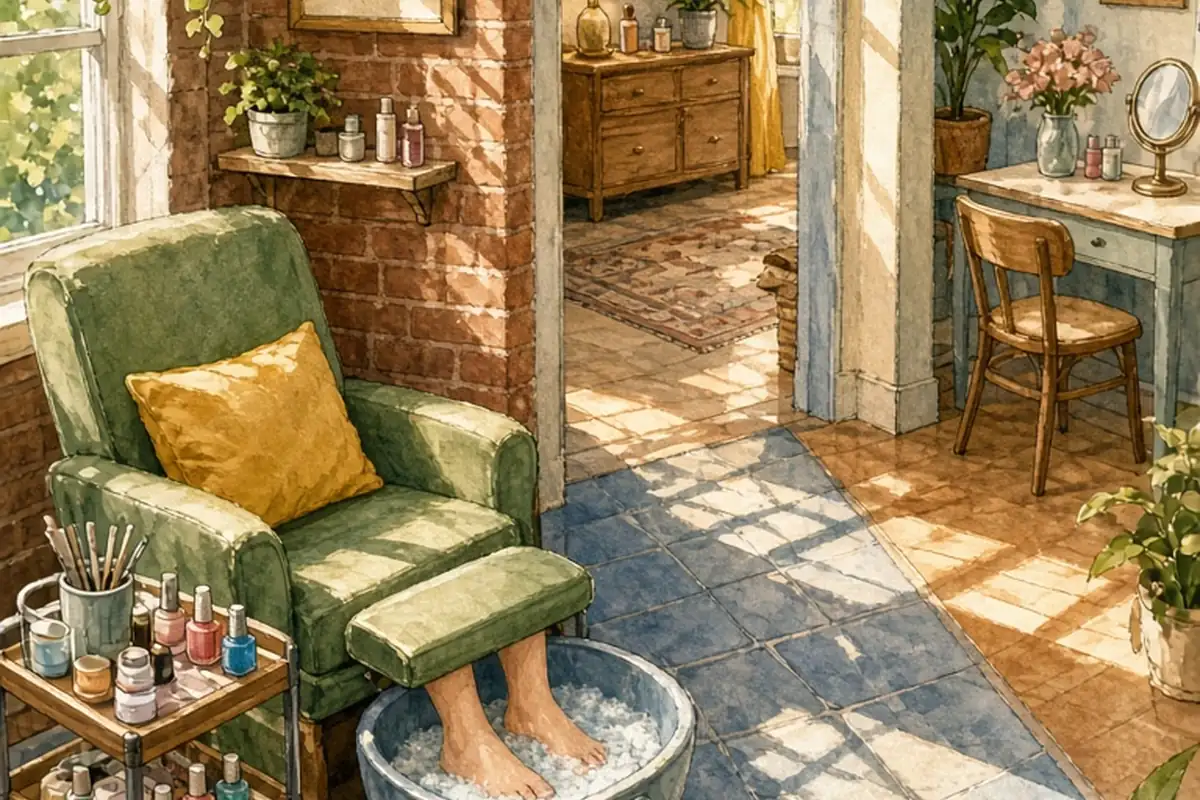
During a standard pedicure, a technician cleanses, trims, shapes, and buffs your toenails, cares for your cuticles, exfoliates dead skin from your feet, and massages your calves and feet with moisturizing lotion. The service typically begins with a warm foot soak and concludes with nail prep and your choice of regular polish, gel polish, or a clean natural shine.
Walking into a nail salon for the first time can feel slightly intimidating if you are unfamiliar with the sequence of treatments, salon etiquette, or how to communicate your personal preferences to a technician.
The Welcome, Color Selection, and Warm Foot Soak
Your appointment begins the moment you check in at the reception desk, where you will usually be directed to a color display wall to choose your nail lacquer. If you opted for a traditional polish, you will pick a bottle to bring to your station; if you chose a gel pedicure, you will select a swatch from a sample ring. Once you have made your selection, the technician will escort you to a specialized pedicure station, which typically features an elevated massage chair equipped with a built-in foot basin.
After you settle into the chair and adjust the mechanical massage settings to your liking, the technician fills the basin with warm, circulating water infused with bath salts, essential oils, or sanitizing cleansing solutions. You will place both feet into the water to soak for five to fifteen minutes. This step is designed to cleanse your skin, soften tough calluses, relax tense foot muscles, and prepare the toenails for safe trimming and filing. While your feet soak, take a moment to confirm that the water temperature feels comfortable, as your technician can easily adjust it warmer or cooler upon request.
Toenail Trimming, Shaping, and Surface Buffing
Once your skin and nails have sufficiently softened, the technician will lift one foot out of the basin, rest it on an adjustable padded footrest, and pat it dry with a clean towel while the other foot continues soaking. The technician then uses sanitized nail clippers to shorten your toenails according to your preferred length. Standard salon practice involves trimming the nails straight across rather than rounding deep into the corners, which helps prevent painful ingrown toenails as the nail plate grows outward.
After clipping, an emery board or glass nail file is used to smooth any jagged edges and refine the overall shape, typically creating a soft squoval or straight-edged finish. Next, a multi-sided buffer is gently worked across the surface of each nail plate to remove minor ridges, smooth natural texture, and create an even foundation for polish adhesion. If you prefer to keep your nails at their existing length and only want them filed and reshaped, letting your technician know before they start clipping ensures they tailor the step to your goals.
Cuticle Care and Gentle Edge Maintenance
With the nails shaped, the technician applies a specialized cuticle-softening cream or liquid around the base of each toenail. After allowing the product to sit for a minute, they use a sanitized stainless steel cuticle pusher or an orangewood stick to carefully push back the thin layer of non-living tissue that adheres to the nail plate. This step elongates the appearance of the nail bed and creates a neat border for polish application.
A skilled technician may use small cuticle nippers to gently trim away loose hangnails or dead skin tags around the nail perimeter. Healthy living skin should never be aggressively cut or sliced away, as the cuticle serves as a natural physical barrier that protects the nail matrix from environmental bacteria and fungi. If you experience any pinching or tenderness during this stage, speak up immediately so the technician can adjust their pressure or skip additional trimming.
Exfoliation, Heel Smoothing, and Callus Reduction
After returning the first foot to the basin to rinse, the technician switches to the other foot to complete the shaping and cuticle steps before beginning full exfoliation. For this phase, a granular scrub containing sea salt, sugar, or natural pumice beads is applied to your lower legs, ankles, and feet. The technician massages the scrub in firm, circular motions to slough off dry surface skin cells, boost local surface circulation, and leave your skin feeling notably softer.
Next, attention shifts to the heels, balls of the feet, and outer edges of the big toes where thickened skin naturally accumulates. The technician utilizes a sanitized foot file, ceramic rasp, or pumice stone to gently buff away hardened calluses using smooth, continuous strokes. Note that reputable salons avoid using sharp metal razor blades (sometimes called Credo blades) to slice calluses off, as cutting deeply into living skin creates an unnecessary risk of cuts and infections. The goal of salon callus work is gradual reduction and smoothing rather than complete, aggressive removal in a single session.
Hydrating Treatment, Steamed Towels, and Massage
Once both feet are thoroughly exfoliated and rinsed clean of all scrub granules, the service transitions into the deeply relaxing massage portion. The technician applies a rich moisturizing cream, body butter, or massage oil to your feet and lower legs, working from the calves down to the toes. This hands-on massage helps relieve everyday muscular tension, improves lymphatic flow, and deeply hydrates the newly exfoliated skin.
In many standard and deluxe pedicure packages, this step also includes wrapping your lower legs and feet in steaming, warm terrycloth towels. The trapped heat helps open pores, allows the moisturizing emollients to penetrate more effectively, and provides a soothing sensory finish to the physical treatment. If you are naturally ticklish on the soles of your feet or prefer firmer or lighter pressure on your calves, sharing that preference allows the technician to adapt their touch so you remain comfortable throughout.
Nail Plate Dehydration and Polish Application
Before any color can be applied, the technician must thoroughly remove all residual oils and lotions from the surface of your toenails. They will use a lint-free wipe saturated with rubbing alcohol or acetone to dehydrate and clean each nail plate, ensuring the base coat adheres securely without peeling prematurely. Foam toe separators or rolled paper towels are then placed between your toes to keep them neatly spaced and prevent wet polish from smudging against neighboring digits.
The technician applies polish in systematic layers: first a clear base coat to protect the natural nail from staining, followed by two thin, even coats of your chosen lacquer, and finished with a high-shine, protective top coat. If you opted for a gel pedicure, each individual coat is cured under an LED or UV lamp for thirty to sixty seconds before the next layer is painted. If you chose traditional lacquer, your nails will air-dry or be set under small tabletop fans, often finished with quick-dry drops and a dab of nourishing cuticle oil.
Salon Hygiene Standards and First-Time Preparation Tips
Knowing what to look for regarding salon cleanliness helps ensure your visit is safe and relaxing. Professional salons should use hospital-grade autoclaves or sealed sterilization pouches for reusable metal tools, discard single-use items like wooden sticks and buffer blocks after each client, and use pipe-free basins or single-use disposable plastic liners in the pedicure tubs. If you notice tools being taken directly from an open drawer without sanitization packaging, you have every right to ask for a freshly sterilized set.
To prepare for your appointment, avoid shaving your legs for twenty-four to forty-eight hours beforehand, as microscopic nicks from razors can provide entry points for bacteria during the foot soak. Wear loose-fitting pants that can easily be rolled up past your calves without cutting off circulation, and bring open-toed sandals or flip-flops if you are getting regular polish so you do not smudge your fresh pedicure when leaving the salon.
Frequently asked questions
How long does a typical pedicure appointment take?
A standard professional pedicure usually takes between 35 and 60 minutes from start to finish. Deluxe services that incorporate extended massages, paraffin wax dips, or intricate nail art may take up to 75 minutes.
Should I cut or file my toenails before going to a salon?
No, you do not need to trim or shape your toenails prior to your appointment. Technicians prefer working with your natural nail length so they can properly align, shape, and balance the nails safely.
How much should you tip for a pedicure service?
In the United States, a standard tip for a nail technician is typically 15 to 20 percent of the total service cost before taxes or discounts. You can adjust this amount upward for exceptional service or intricate custom work.
Can I get a pedicure if I have ticklish feet?
Yes, having ticklish feet is very common among salon clients. Simply inform your technician at the beginning of the service so they can use firmer, broader strokes rather than light, featherweight touches during filing and massage.
Your next step
Choose a reputable, clean salon and arrive wearing loose pants and open-toed footwear to ensure a relaxing, comfortable pedicure experience from start to finish.