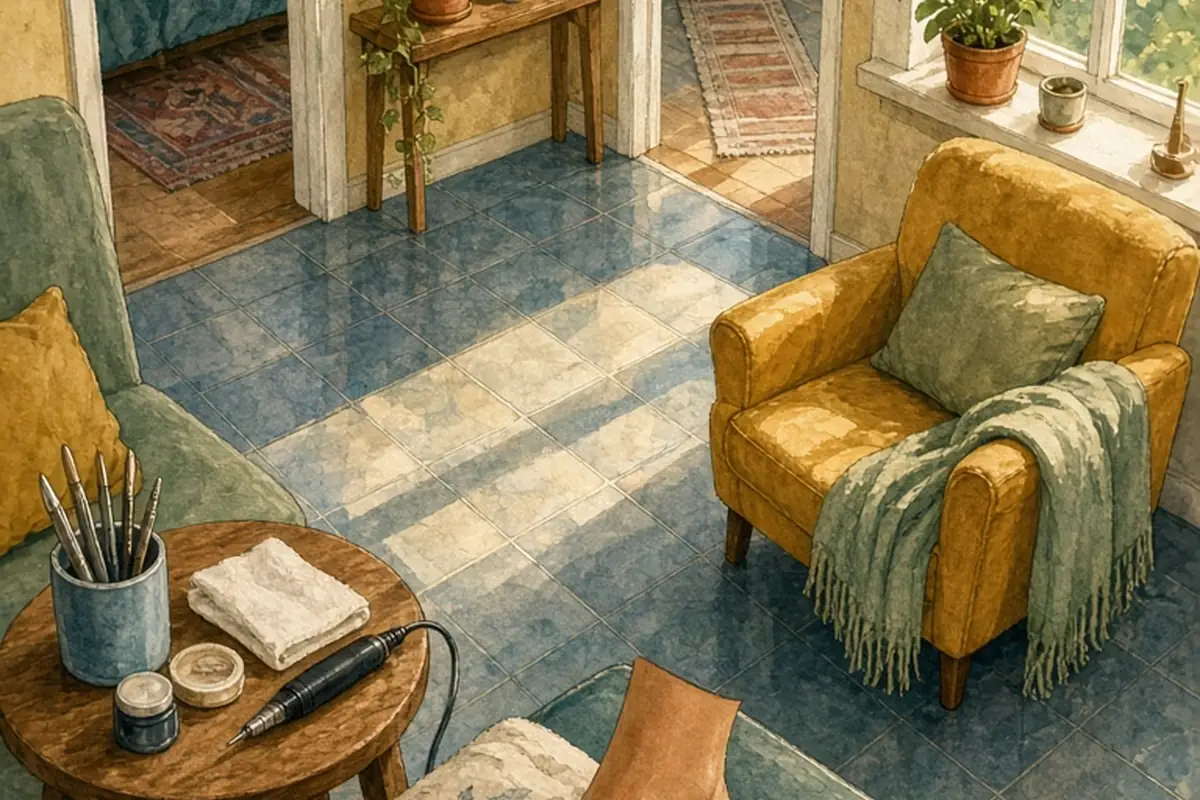
A Russian pedicure is a specialized dry pedicure technique that uses an electric file with fine diamond-coated bits to meticulously clean, exfoliate, and shape toenails and surrounding skin without water soaking. By working on dry skin, technicians achieve precise cuticle work, remove stubborn dead skin around the nail bed, and apply polish seamlessly close to the skin line, delivering a smooth finish that often lasts four to six weeks.
While standard salon pedicures rely on warm foot baths, foot scrubs, and manual clippers, dry electric-file methods prioritize clinical precision and long-term skin health. Exploring how this dry method functions, what separates it from standard foot treatments, and how to verify technician training will help you determine whether this service suits your lifestyle and personal nail care preferences.
The Step-by-Step Process of an E-File Dry Pedicure
A Russian pedicure begins completely dry, without the warm water soak common in conventional salons. The technician first sanitizes the feet and inspects the overall condition of the skin, toenails, and cuticles. Using an electric filing machine equipped with specialized diamond and ceramic bits running at controlled speeds, the practitioner gently lifts the proximal nail fold and clears dead cuticle tissue adhering to the nail plate. Different bit shapes, such as flame, ball, and drop bits, allow the specialist to navigate tight nail grooves and contours with meticulous accuracy without cutting into live tissue.
After clearing the nail plate and refining the cuticle zone, the technician addresses the rest of the foot using larger abrasive discs or sanding caps. Because the skin remains dry, the technician can easily differentiate between healthy, living epidermal layers and dry, dead calluses. Keratinized skin along the heels and balls of the feet is gently exfoliated until the texture is uniform and soft. Toenails are then trimmed straight across, shaped, and buffed to ensure smooth edges that prevent friction inside footwear.
The final phase focuses on nail prep and optional coating. The nail plate is dehydrated and thoroughly cleaned to remove micro-dust particles before applying a strengthening base coat, gel color, or natural buffing oil. Because the cuticle area has been cleared back cleanly without irritation, polish can be applied flush against the eponychium. The service typically finishes with a deeply penetrating foot foam or conditioning oil massaged into the skin, locking in moisture without leaving greasy residues.
Key Differences Between Russian and Traditional Wet Pedicures
The foundational difference between a Russian pedicure and a traditional pedicure lies in the absence of water. Soaking feet in water causes the skin and nail plate to absorb moisture and swell like a sponge. When nail technicians cut or file water-logged skin, it is difficult to judge true boundaries between dead tissue and living tissue, which often leads to uneven trimming, fraying edges, or over-exfoliation. Furthermore, as saturated toenails dry over the following hours, they contract back to their normal size, causing conventional polish or gel coatings to lift and chip prematurely.
In contrast, the dry method preserves the natural structure of the skin and nail plate throughout the entire appointment. By working on dry skin, the abrasive bits buff away only loose, dead keratinized cells, leaving the protective living skin intact. This dry approach minimizes the risk of micro-tears that can develop when wet cuticles are aggressively cut with nippers. Additionally, eliminating shared foot basins significantly reduces the potential transmission of waterborne fungal and bacterial organisms, providing a cleaner, more controlled environment for foot care.
Notable Benefits for Foot Texture and Polish Longevity
One of the primary benefits of a Russian pedicure is the extended durability of the results. Because the nail surface is completely dry and cleared of even microscopic cuticle debris during preparation, gel polish adheres with exceptional strength. Polish applied right up to the smoothed cuticle margin grows out evenly without catching on rough edges or lifting at the base. Many individuals find that their pedicure looks fresh for four to six weeks, making it particularly convenient for travel, active lifestyles, or busy schedules where frequent salon visits are impractical.
Beyond aesthetics, the dry electric-file technique provides superior foot skin smoothing. Traditional pumice stones and manual foot graters often create jagged micro-grooves on dry heels that can snag on socks and cause rough skin to return quickly. High-precision e-file discs buff calluses in circular motions, effectively polishing the skin surface to a silky texture. Over time, regular dry treatments help normalize skin turnover, preventing thick calluses from reforming rapidly and reducing the tendency for dry heels to crack under pressure.
Safety Standards, Risks, and Red Flags to Watch For
Because Russian pedicures involve high-speed rotary tools close to delicate nail folds, the technique requires advanced professional training and strict adherence to hygiene protocols. An inexperienced or rushed practitioner can over-file the nail plate, causing nail thinning, friction heat burns, or skin irritation around the eponychium. It is vital to understand that this service should never feel painful. While you may feel light vibration and gentle tickling sensations during e-file work, any sharp stinging or burning indicates improper technique or excessive pressure.
Sterilization standards must be non-negotiable when selecting a salon or independent technician. Every metal and diamond bit, cuticle tool, and metal disc base must undergo medical-grade processing, ideally cleaned in an ultrasonic bath and sterilized in a certified autoclave pouch opened in front of you. Disposable sanding discs and single-use buffers must be discarded after every client. If a salon uses unsealed bits, skips autoclave sterilization, or rushes through the preparation steps, you should seek a more qualified provider to safeguard your foot health.
Maintenance Schedules and Daily Home Care Practices
To maintain the benefits of a Russian pedicure between appointments, establishing a simple and consistent home care routine is essential. Daily hydration prevents the smooth cuticle line and polished heels from drying out. Applying a rich urea-based foot cream containing five to ten percent urea helps attract moisture and gently dissolve dead surface cells without manual scrubbing. Massaging a drop of lightweight cuticle oil around each toenail daily also preserves the flexibility of the surrounding skin and keeps the proximal fold soft.
Most technicians recommend scheduling maintenance appointments every four to six weeks. Toenails grow slower than fingernails, so waiting about a month gives the natural nail plate sufficient time to grow without allowing calluses to rebuild excessively. Between appointments, avoid using manual razor blades, metal cheese-grater style rasps, or harsh peeling foot masks at home. These aggressive DIY tools can damage healthy skin layers, cause uneven regrowth, and interfere with the smooth baseline created during your professional dry pedicure.
Determining If a Russian Pedicure Is Right for You
A Russian pedicure is an excellent choice for individuals dealing with stubborn dry skin, thick calluses, overgrown cuticles, or those who want a long-lasting, immaculate gel finish on their toes. It is especially beneficial for people who wear closed-toe athletic footwear or work boots, as the clean nail contouring reduces friction and pressure against the front of the shoes. The meticulous attention to detail makes it a popular option for special events, warm-weather seasons, or anyone seeking a clean, minimalist foot aesthetic.
However, there are circumstances where an alternative approach is necessary. Individuals with compromised circulation, diabetes, active foot neuropathy, or open skin fissures should consult a medical podiatrist rather than receiving aesthetic e-file services. Podiatric medical pedicures prioritize clinical management under physician oversight. Additionally, if you have active nail fungus, bacterial infections, or severe ingrown toenails, professional medical treatment should always precede cosmetic nail enhancements to ensure safe healing.
Frequently asked questions
How long does a Russian pedicure appointment take?
A standard Russian pedicure appointment generally takes between seventy-five minutes and two hours. The extended time reflects the meticulous dry cuticle refinement, thorough callus buffing, and detailed gel polish application required for precision results.
Does a Russian pedicure hurt during or after the service?
A properly performed Russian pedicure should never cause pain or bleeding. You will experience mild vibration and gentle tickling from the electric file, but if you feel heat or stinging, alert your technician immediately so they can adjust their speed and pressure.
Can I get a Russian pedicure without applying gel polish?
Yes, you can easily request a natural finish without any polish. The technician will perform the complete e-file cuticle care and skin exfoliation, followed by buffing the bare toenails to a healthy shine or applying a nourishing treatment oil.
Why is a Russian pedicure more expensive than a traditional pedicure?
The higher price reflects the advanced technical certification required to use electric files safely, the extended appointment duration, and the cost of medical-grade autoclave sterilization equipment and specialized diamond bits.
Your next step
To try a Russian pedicure safely, research local certified dry-manicure specialists, confirm that they use autoclave-sterilized bits from sealed pouches, and book a consultation to evaluate your foot care needs.