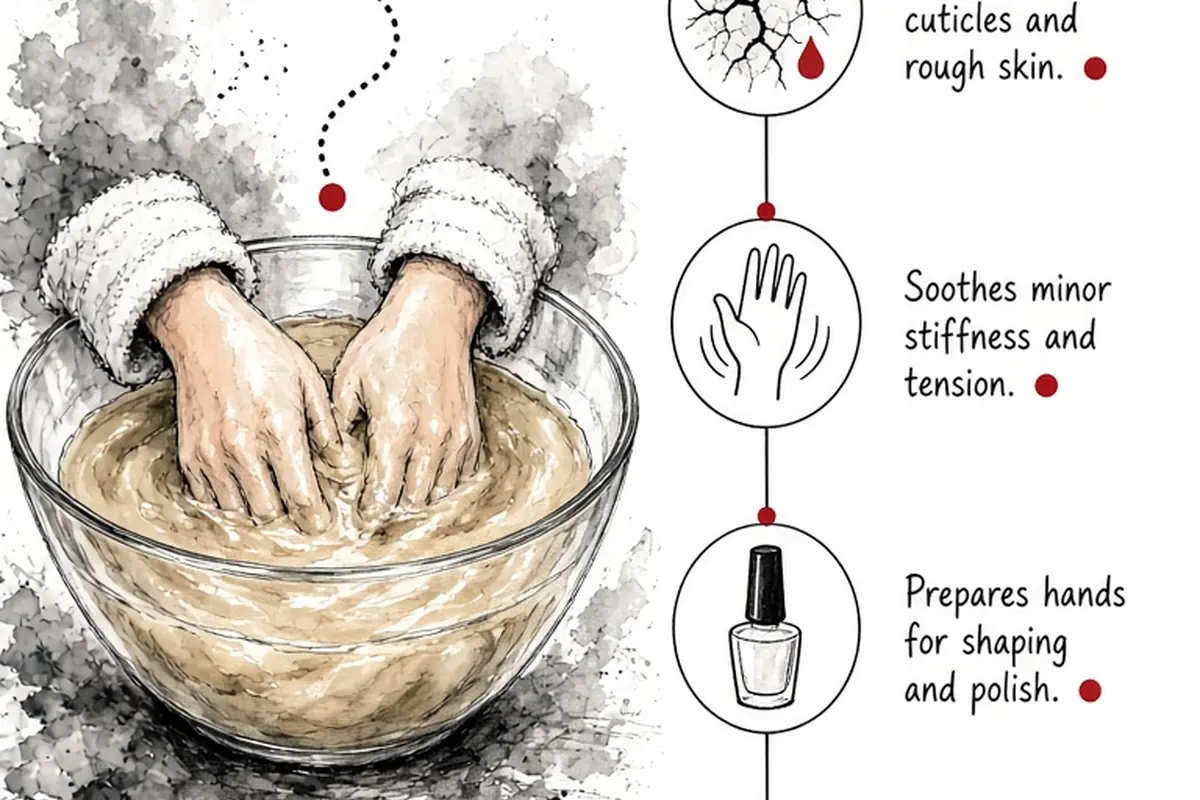
A paraffin wax manicure is a specialized beauty and wellness treatment that coats your hands in warm, melted paraffin wax infused with mineral oils and emollients. The wax creates a gentle barrier that traps heat and moisture, deeply softening dry cuticles and rough skin while temporarily soothing minor joint stiffness before traditional nail shaping, trimming, and polishing take place.
Many people encounter paraffin treatments on salon menus without fully understanding how the warm wax works or why it differs from standard moisturizing lotions. Exploring the complete process helps you decide whether adding this restorative step makes sense for your personal hand care routine.
The Core Process of a Paraffin Wax Manicure
A paraffin manicure combines standard nail grooming with a targeted thermal skin treatment. The process generally begins like any classic manicure: a technician cleans your hands, removes existing polish, shapes the free edge of your nails, and gently pushes back your cuticles. Before applying regular polish or performing vigorous exfoliation, the technician applies a hydrating lotion or rich nourishing oil to your hands and wrists. This initial layer serves as a barrier cream that allows the wax to peel away smoothly later while providing concentrated moisture beneath the heat.
Once your hands are prepped, you dip them several times into a temperature-controlled bath containing cosmetic-grade paraffin wax. The wax is heated to a comfortable, skin-safe liquid state, typically hovering around one hundred and twenty to one hundred and twenty-five degrees Fahrenheit. With each dip, a thin layer of wax solidifies against your skin until a thick, protective glove forms. Your hands are then enclosed in plastic liners and wrapped in warm terry cloth mitts or heated electric booties for roughly ten to fifteen minutes, allowing the trapped thermal energy to open pores and soften hardened tissue.
After the resting period, the technician gently slides the cooled, solidified wax off your hands, usually removing it in a single clean piece. Any remaining oil or serum is massaged thoroughly into your palms, fingers, and cuticles. Finally, the technician wipes the nail plates clean with an alcohol solution to remove all oily residue before applying a base coat, color polish, and top coat, ensuring the polish adheres properly without lifting.
How Warm Wax Restores Moisture and Comfort
Paraffin wax works primarily through physical occlusion and gentle heat transfer rather than chemical absorption. Because paraffin molecules are too large to penetrate the skin surface directly, the wax functions as a temporary sealing mask. When liquid paraffin covers your hands, it locks in your skin's natural moisture alongside any topical creams applied beforehand. This occlusive layer prevents transepidermal water loss, forcing hydration back into the outermost layer of the epidermis known as the stratum corneum.
Simultaneously, the mild heat stimulates local blood circulation in your fingers and hands. Increased superficial blood flow can help relieve everyday joint stiffness, making paraffin manicures particularly appealing to individuals who work with their hands, experience mild muscle tension, or suffer from cold extremities during winter months. The prolonged warmth also softens stubborn calluses on the palms and loosens hardened skin around the nail folds, allowing hydrating oils to deliver maximum cosmetic smoothing.
Comparing Paraffin Manicures to Standard Salon Options
Traditional manicures focus primarily on aesthetics and surface grooming, including nail filing, cuticle maintenance, light hand massage, and polish application. While standard treatments frequently incorporate scented hand creams or brief soaks in warm soapy water, their moisturizing effects tend to remain superficial. The moisture from a regular water soak evaporates quickly, sometimes leaving delicate cuticles feeling drier within hours if not sealed with an oil.
In contrast, a paraffin manicure is an intensive conditioning service that adds noticeable time and specialized care to your salon visit. Gel or acrylic manicures focus heavily on long-lasting artificial overlays, often using drying UV curing lights and acetone cleansers. Adding a paraffin treatment to your appointment—or booking it as a standalone conditioning therapy between gel sets—counteracts the drying impact of regular nail enhancements and harsh environmental elements like frequent handwashing.
Who Benefits Most and When to Avoid Treatment
Paraffin manicures provide excellent relief for people dealing with seasonal dryness, rough knuckles, cracked heels, and ragged cuticles that resist ordinary moisturizers. Office workers typing all day, healthcare providers who wash their hands continuously, and outdoor enthusiasts exposed to biting winds frequently notice immediate improvements in skin flexibility and softness following a single session. The soothing warmth also provides relaxing sensory comfort during stressful weeks.
However, paraffin treatments are not appropriate for every skin type or health condition. You should avoid dipping your hands into warm wax if you have open cuts, active fungal infections, warts, rashes, or broken blisters, as the heat and trapped moisture can aggravate irritation. Individuals with poor blood circulation, numbness from diabetic neuropathy, or significant varicose veins should consult a healthcare provider beforehand, because diminished heat sensitivity increases the risk of accidental burns. If you experience chronic eczema or active inflammatory skin flares, pure heat treatments may trigger redness.
Salon Hygiene Standards and At-Home Alternatives
Cleanliness is a critical consideration whenever communal wax baths are involved. In reputable salons, technicians follow strict sanitary protocols to prevent cross-contamination between clients. Rather than having clients dip hands directly into a shared communal tank, modern sanitary salons ladle single-use portions of melted wax into individual plastic bags or disposable mitts before inserting the client's hands. Never hesitate to ask a salon about their sanitizing procedures or request individual single-use wax sleeves.
If you prefer pampering your hands in the comfort of your home, personal paraffin warmers are readily available for domestic use. When performing at-home treatments, always test a small drop of melted wax on the inside of your wrist to verify that the temperature is pleasantly warm rather than scalding. Cleanse and thoroughly dry your hands before dipping, apply a rich fragrance-free hand balm, and never reuse wax that has already touched your skin to ensure your personal warmer remains hygienic over time.
Practical Steps to Maintain Softness After Your Appointment
While a paraffin manicure delivers immediate cosmetic results, maintaining that level of softness requires consistent daily care. The intense hydration provided by the wax creates a healthy baseline, but routine exposure to dish detergents, cold weather, and alcohol-based hand sanitizers will gradually strip away moisture over the following days.
To extend your manicure results for several weeks, consider adopting these simple home maintenance habits:
Apply a dedicated cuticle oil containing jojoba or sweet almond oil to your nail beds twice daily.
Wear protective rubber gloves when washing dishes, cleaning with household chemicals, or working in the garden.
Apply a heavy ointment or ceramide-rich hand cream immediately after washing your hands while the skin is still slightly damp.
Sleep with cotton moisturizing gloves over a generous coat of hand balm once or twice a week to replicate the occlusive sealing effect.
- Apply a dedicated cuticle oil containing jojoba or sweet almond oil to your nail beds twice daily.
- Wear protective rubber gloves when washing dishes, cleaning with household chemicals, or working in the garden.
- Apply a heavy ointment or ceramide-rich hand cream immediately after washing your hands while the skin is still slightly damp.
- Sleep with cotton moisturizing gloves over a generous coat of hand balm once or twice a week to replicate the occlusive sealing effect.
Polish Compatibility and Scheduling Considerations
A common concern among manicure enthusiasts is whether rich wax oils interfere with nail polish longevity. Natural nail lacquers, gel polishes, and dipping powders require a completely dehydrated, oil-free nail surface to bond effectively. If residual paraffin wax remains on the nail bed, polish may chip or peel within a day or two. Skilled manicurists address this by thoroughly wiping each nail plate with pure isopropyl alcohol or acetone after removing the wax and before painting.
If you regularly wear gel polish, you can also ask your nail technician to perform the paraffin bath at the very end of your service after the gel has fully cured. Because gel polish is impervious to oil once cured under an LED lamp, finishing your service with warm wax infuses moisture into your cuticles without threatening the durability of your fresh manicure. Planning your appointments every three to four weeks provides consistent nourishment without over-exfoliating your hands.
Frequently asked questions
How often should you get a paraffin wax manicure?
For most people with normal to dry skin, scheduling a paraffin treatment every three to four weeks keeps hands soft and cuticles manageable. If your hands are severely dry from winter weather or frequent washing, you can safely enjoy treatments every two weeks provided your skin is free of cuts or inflammation.
Does a paraffin manicure hurt or feel uncomfortably hot?
The treatment should never cause pain or burning sensations. Cosmetic paraffin melts at a low temperature, so the wax feels soothingly warm rather than hot. If the temperature feels uncomfortable at any point, inform your technician immediately so they can allow the wax to cool.
Can you combine paraffin wax with gel or regular nail polish?
Yes, paraffin treatments work well alongside both regular and gel polish. Technicians either clean the nail plates thoroughly with an alcohol cleanser before applying regular lacquer or apply the warm wax after a gel manicure has finished curing.
Your next step
Inspect your hands for any minor cuts or irritation, and then book a paraffin manicure or set up an at-home warm wax bath to give rough skin an intensive boost of lasting hydration.