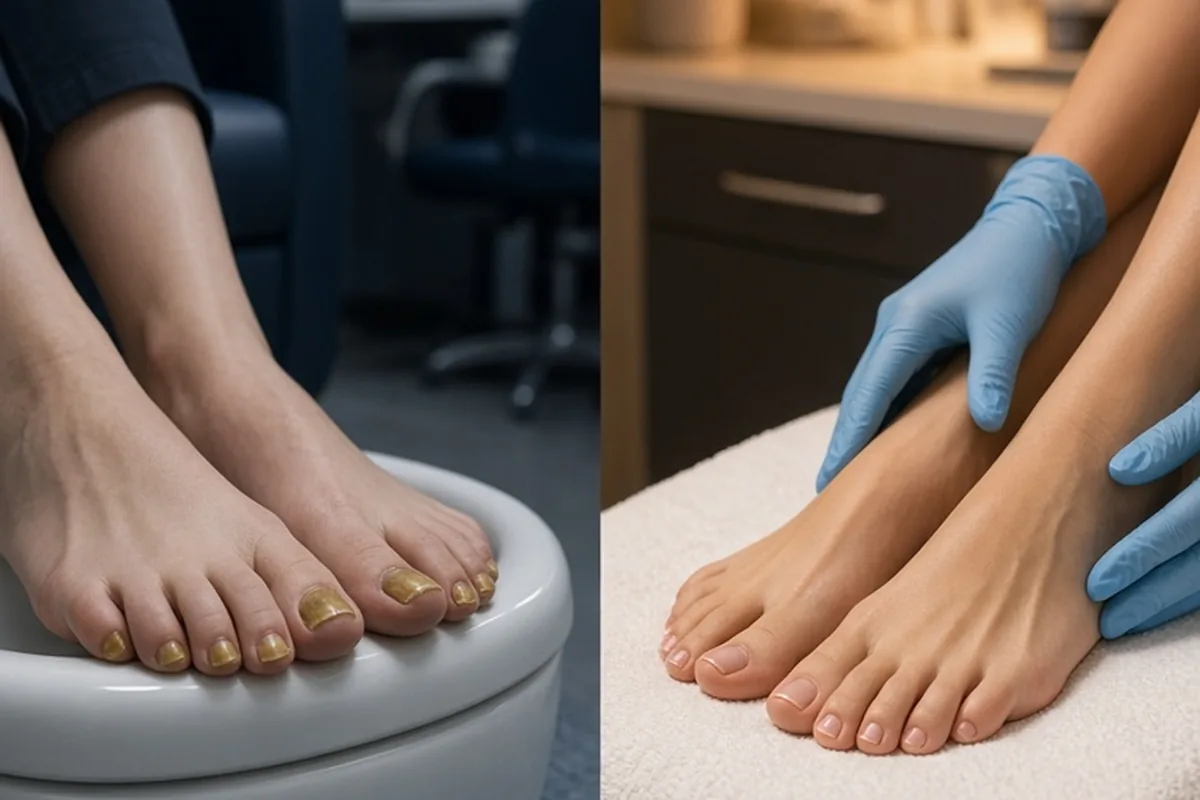
Most standard nail salons will decline to perform a pedicure if you have visible toenail fungus. State cosmetology boards legally prohibit nail technicians from servicing clients with contagious nail or skin conditions to prevent cross-contamination. While individual salon vigilance varies, technicians are trained to refuse service and recommend medical evaluation. Seeking a specialized medical pedicure or treating the infection first is the safest and most reliable approach.
Discovering discoloration, thickening, or brittleness in a toenail right before an appointment can leave you wondering whether to cancel your visit. Navigating salon policies, hygiene protocols, and alternative foot care options helps you make an informed decision without feeling embarrassed or putting your nail health at risk.
Why Cosmetology Regulations Restrict Servicing Fungal Nails
State boards of cosmetology establish strict sanitation and scope-of-practice rules that legally bind licensed nail technicians. These regulations explicitly state that nail technicians are beauty professionals, not medical practitioners. Consequently, technicians are prohibited from diagnosing medical conditions, treating infections, or performing cosmetic services on clients with evident contagious disorders, including onychomycosis (toenail fungus).
The primary reason for these strict mandates is public health protection. Fungal spores are resilient organisms that thrive in warm, moist environments like foot basins, jetted whirlpool tubs, and damp towels. If a technician uses non-disposable tools or an improperly disinfected basin on an infected nail, those microscopic spores can easily transfer to subsequent clients. Violating these rules can result in hefty fines, license suspension, or permanent closure for the salon.
Technicians are trained to inspect feet during the initial consultation and foot bath. If a technician spots signs of an active fungal infection, their professional obligation is to politely decline the service or refuse to work on the affected toes. While being turned away can feel uncomfortable, the refusal is rooted in compliance with public safety laws rather than personal judgment.
What Happens During an Assessment at a Standard Nail Salon
When you arrive at a conventional nail salon, the appointment typically begins with soaking your feet in warm water, followed by an inspection of the skin, cuticles, and nail plates. An experienced technician looks closely for warning signs such as yellow or brown discoloration, subungual hyperkeratosis (crumbly keratin buildup under the nail), unusual thickening, or nail plate separation.
If the technician identifies suspicious changes, salon responses generally follow one of three paths. Most reputable establishments will discreetly inform you that they cannot proceed with the pedicure and advise you to see a physician. In other instances, a technician may agree to perform a modified, waterless dry pedicure focused exclusively on non-affected toes, avoiding filing or buffing the problematic nail altogether to prevent dispersing fungal dust into the air.
Attempting to camouflage an active fungal infection with standard, dark nail polish prior to an appointment is strongly discouraged. Traditional polishes create an occlusive, non-breathable seal over the nail bed, trapping moisture beneath the lacquer and creating an ideal breeding ground that can accelerate fungal proliferation. Furthermore, technicians routinely remove old polish as the first step of a pedicure, making concealment ineffective.
Standard Pedicures Versus Medical Pedicures
For individuals dealing with persistent fungal infections or compromised foot health, a medical pedicure (often called a medi-pedi) provides a safe, clinical alternative to traditional aesthetic salons. Standard salons focus primarily on aesthetic pampering, utilizing shared foot baths and cosmetic products that are not designed to manage compromised nails. In contrast, medical pedicures bridge the gap between podiatry and cosmetic grooming.
Medical pedicures are performed by certified medical nail technicians or podiatric medical assistants under the direct supervision of a licensed podiatrist. These procedures take place in sterile medical environments using hospital-grade autoclaves to sterilize stainless steel instruments between every client. Most medical pedicures are entirely waterless, eliminating whirlpool basins to remove the primary vector for fungal and bacterial transmission.
During a clinical pedicure, the practitioner can safely debride (thin down) thickened fungal nails using specialized rotary burs equipped with vacuum suction to capture airborne debris. While a standard salon pedicure prioritizes massage and colorful lacquer, a medical pedicure focuses on restorative maintenance, gentle hygiene, and creating an optimal surface for topical antifungal treatments to penetrate effectively.
Safe At-Home Nail Grooming While Managing an Infection
If you cannot visit a salon during an active fungal flare-up, managing your grooming routine at home requires deliberate sanitary precautions to prevent spreading the organism to adjacent toes or fingernails. Dedicate a separate, specific set of grooming tools exclusively for any infected toes, and never share these implements with other household members.
Maintain clean tools by washing metal clippers and nippers with hot, soapy water after every use, followed by soaking them in 70 percent isopropyl alcohol for at least twenty minutes. Discard disposable items like emery boards, wooden cuticle sticks, and foam toe separators after a single use, as porous materials cannot be sanitized and can harbor microscopic fungal filaments indefinitely.
When trimming infected nails, cut straight across rather than rounding the edges, which reduces the likelihood of ingrown toenails developing alongside the fungal infection. Avoid aggressively pushing back or cutting your cuticles, as the cuticle serves as a vital natural barrier that prevents environmental pathogens from entering the nail matrix. After grooming, thoroughly wash your hands with soap and water before touching any other part of your body.
How to Vet Salon Hygiene Standards for Future Visits
Once an infection has resolved and your nail has fully grown out clear, selecting a salon with impeccable sanitation practices is essential to prevent reinfection. Knowing what hygiene standards to look for empowers you to choose establishments that prioritize client safety over speed and high turnover.
When evaluating a potential nail salon, pay close attention to how implements are handled between appointments. High-standard salons utilize medical-grade autoclaves (steam sterilizers) and unpack sterile instruments from sealed, color-changing indicator pouches directly in front of you. Salons that merely soak tools in liquid disinfectant trays may not achieve the level of sterilization required to eradicate durable fungal spores.
Observe the foot basins carefully. Pipeless foot baths with smooth, non-porous surfaces or single-use disposable plastic liners are significantly safer than traditional piped whirlpool tubs, which can harbor fungal biofilm inside internal plumbing lines. You can also bring your own clean, personal tool kit to appointments if the salon allows, providing an added layer of personal peace of mind.
Recognizing When You Need Medical Care Instead of Beauty Services
Distinguishing between cosmetic nail damage and a genuine microbial infection is crucial for choosing the right care path. Physical trauma, such as micro-injuries from tight running shoes, can cause bruising, localized thickening, or temporary lifting that mimics fungal symptoms. However, true onychomycosis is progressive and typically does not resolve on its own without targeted intervention.
You should consult a board-certified podiatrist or dermatologist if you notice progressive yellowing, crumbling texture along the free edge, foul odors emanating from under the nail, or spreading redness and scaling on the surrounding skin. Individuals with underlying systemic conditions, such as diabetes, neuropathy, or peripheral vascular disease, should never attempt self-treatment or visit commercial salons for questionable nails, as minor nail trauma can lead to serious secondary complications.
A medical professional can perform a simple diagnostic clipping or culture to identify the exact organism responsible, whether fungal, bacterial, or yeast-based. Professional diagnosis ensures you receive targeted oral or topical antifungal therapies rather than spending time and money on over-the-counter cosmetic products that cannot penetrate a thickened nail plate.
Illustrative Scenarios
Navigating Salon Etiquette and Medical Foot Care
A regular salon client noticed that their right big toenail was turning yellowish and noticeably thicker ahead of an upcoming family gathering. Reluctant to deal with potential embarrassment during an in-person salon visit, the client called the salon ahead of time to ask about their policy on compromised nails. The salon manager kindly explained that state licensing laws prevented their technicians from servicing nails with potential infections. Instead of concealing the issue with dark polish at home, the client scheduled an appointment with a podiatrist, who diagnosed a mild fungal infection and recommended a certified medical pedicure. The medical technician thinned the thickened nail safely in a sterile setting, allowing topical medication to work effectively while keeping the foot clean and presentable.
Key point: Proactive communication with your salon saves time and awkwardness, while choosing specialized clinical grooming over cosmetic concealment protects your long-term nail health.
Frequently asked questions
Can regular nail polish make a fungal toenail infection worse?
Yes. Standard commercial nail polish forms an airtight, occlusive barrier over the nail plate that traps moisture underneath. This warm, humid environment encourages fungal spores to multiply more rapidly while blocking topical treatments from reaching the nail bed.
How long after treating toenail fungus can I get a regular pedicure?
You should wait until the infected portion of the nail has completely grown out and been replaced by clear, healthy nail tissue. Because toenails grow slowly, this regrowth process typically takes between nine to eighteen months depending on your individual nail growth rate.
Will a salon perform a waterless pedicure if I have toenail fungus?
Most standard commercial salons will still decline service on an infected nail, even for dry or waterless pedicures, due to state licensing limits and the risk of airborne spore dispersal during filing. Certified medical nail technicians, however, routinely perform specialized waterless procedures tailored for fungal management.
Your next step
If you suspect you have toenail fungus, skip the standard beauty salon and schedule an evaluation with a podiatrist or certified medical nail technician to ensure safe grooming and appropriate treatment.