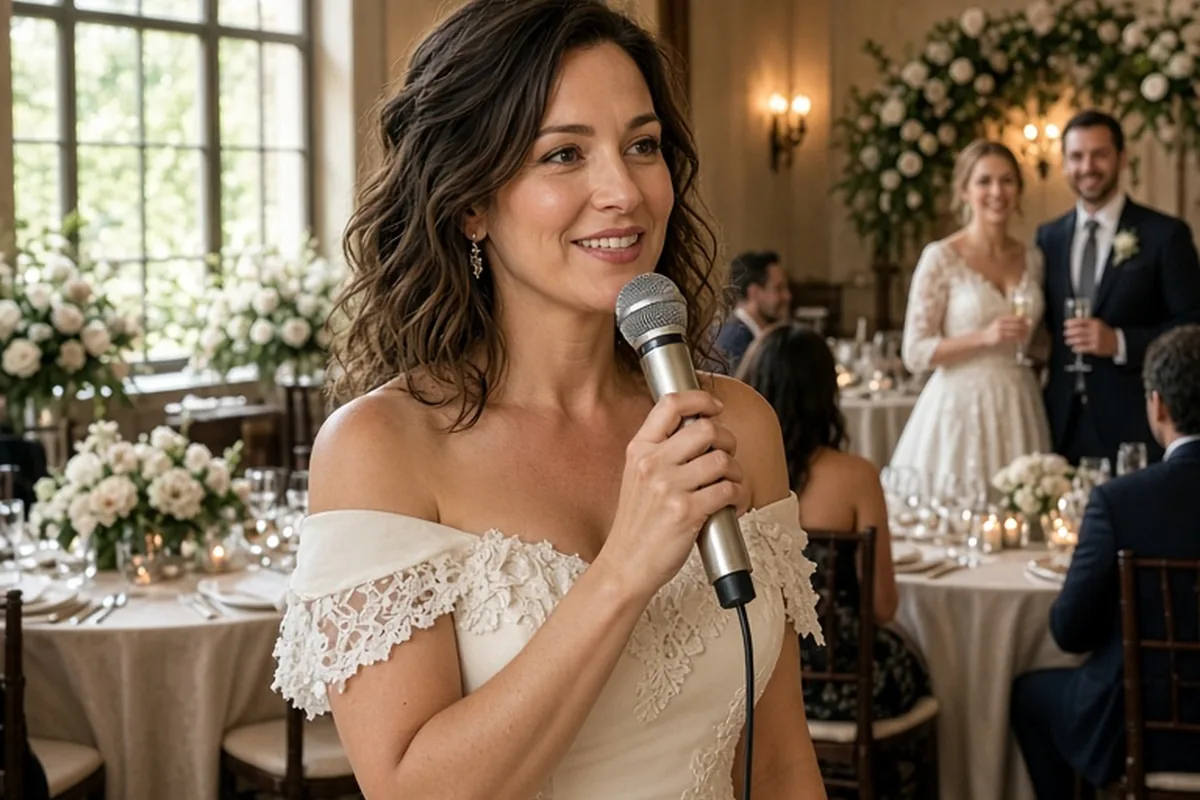
Crafting a maid of honor speech requires a clear structure: welcome the guests, share one or two meaningful stories about your bond with the bride, highlight how her partner complements her, and end with a sincere toast. Keep the total length between three and five minutes, avoid uncomfortable private jokes or past dating history, and balance light humor with genuine emotion so every guest feels included.
Standing up to speak before a crowded reception room can feel intimidating, even when you know the bride better than anyone else in the room. By breaking the writing process down into clear narrative stages and practicing the delivery in advance, you can create a tribute that honors your friendship and celebrates the couple with warmth, poise, and sincerity.
Structuring Your Maid of Honor Speech Arc from Opening to Toast
A compelling maid of honor speech follows a deliberate narrative progression that keeps guests engaged from the first sentence to the final glass raise. Rather than rambling chronologically through your entire history together, structure your speech around four core movements: the gracious opening, the bride-focused story, the pivot to her partner and their partnership, and the closing toast. This classic framework creates a satisfying emotional rhythm that feels both structured and conversational.
Begin with a brief self-introduction that clarifies your relationship to the bride for guests who might not know you, followed immediately by an engaging opening thought or an expression of gratitude toward the hosts. A strong opening might sound like: 'Good evening, everyone. For those I haven't met yet, I am Sarah, Maya's sister and lifelong co-conspirator. Looking around this room, it is breathtaking to see so much love gathered in one place to celebrate Maya and David.' Avoid starting with an apology about being nervous or a clichéd comment about public speaking, as these phrases draw attention away from the couple and introduce unnecessary tension into the room.
After establishing your connection, devote the middle third to a concrete story that showcases the bride's character, followed by a seamless transition into her relationship with her partner. Conclude with a blessing or wish for their shared future, instruct the room to raise their glasses, and deliver a clean, decisive final line. Aiming for 400 to 650 written words generally translates to three to five minutes of speaking time at a comfortable, measured conversational pace, which wedding planners and caterers consistently view as the ideal length for reception momentum.
Selecting Stories That Highlight Character Rather Than Inside Jokes
The most frequent pitfall in maid of honor speeches is relying on inside jokes, nicknames, and references that make sense only to a tiny circle of friends. When an audience of eighty or two hundred people listens to an inside joke, the majority feels excluded, and the emotional energy in the room drops quickly. Your goal is to choose memories that reveal who the bride is as a human being—her generosity, her dry sense of humor, her loyalty in difficult moments, or her quirky passions—in a way that anyone from her teenage cousin to her partner's grandparents can appreciate.
To find the right story, write down three distinct memories where the bride's core personality shone through. Consider moments when she showed up for you during a major challenge, a humorous travel mishap where her problem-solving took over, or an everyday interaction that captures her unique perspective on life. For instance, instead of summarizing that 'Maya has always been an organized person,' share a 45-second anecdote about how she created a color-coded emergency packing list for a weekend camping trip that saved the group when torrential rain struck. Specific details make the bride feel real, relatable, and deeply loved.
Apply a straightforward filter to every anecdote you consider: Does this story flatter the bride, even if it includes gentle humor? Does it require more than thirty seconds of contextual explanation to understand? If an anecdote requires explaining five background characters, a complicated timeline, or a situation that could be misinterpreted as irresponsible or petty, set it aside. Keep the focus on warmth and shared appreciation, ensuring the story functions as evidence of her wonderful character rather than an inside secret.
Bringing the Partner and the Relationship Into Focus
While your primary tie is typically to the bride, this is a wedding celebration, not a solo friendship tribute. A speech that spends four minutes discussing childhood memories and leaves only ten seconds at the end to say 'and David, you seem nice' feels incomplete. A truly memorable toast demonstrates how the partner has positively enriched the bride's life and celebrates the life they are constructing together.
Reflect on the period when the bride first started talking about her partner. What changes did you observe in her demeanor, her outlook, or her daily happiness? You might recall the first phone call where she mentioned their name, or the first time you met the partner in person and noticed how easily the two of them communicated. Wording this shift can sound natural and sincere: 'For years, Maya and I talked about the kind of partner she hoped to find—someone who matched her energy, shared her love of quiet Sunday mornings, and could handle her competitive streak during board games. The first weekend I met David, I watched them cook dinner together, trading easy banter without missing a beat, and I knew she had found her equal.'
If you do not know the partner well—perhaps because they live in another city or began dating recently—focus on observable reality. Speak about the genuine joy and security the partner brings to the bride, the way her face brightens when she talks about their plans, and the warmth with which the partner treats her family and friends. Welcoming the partner sincerely into the fold validates the commitment being celebrated and honors both sides of the aisle.
Calibrating Humor, Sentimentality, and Reception Boundaries
Humor adds life to a wedding speech, but tone calibration is critical. A maid of honor speech is an affectionate celebration, not a comedy club roast. Gentle teasing about the bride's harmless habits—such as her obsession with iced coffee or her inability to navigate without GPS—is charming because it reflects affectionate familiarity. In contrast, teasing that touches on sensitive insecurities, past relationship decisions, family arguments, or financial habits can cause visible discomfort.
Establish absolute boundaries around certain topics. Never mention past romantic partners, dating histories, previous engagements, or wild party stories involving intoxication. Even if a story feels harmless or funny to your immediate friend group, it rarely translates well across generations and can embarrass the bride or her new in-laws. If you find yourself wondering whether a particular line crosses the line, that uncertainty is your answer: edit it out or replace it with a safer alternative.
Balance your lighthearted observations with grounded sentimentality. A speech made entirely of jokes feels superficial, while a speech composed exclusively of tearful sentiment can become emotionally heavy for the room. The sweet spot is an intentional weave: open with warmth, add light smiles through a playful character anecdote, transition into sincere appreciation for the couple's bond, and conclude with an earnest, heartfelt blessing. Read your draft to a trusted friend who knows the bride and ask them specifically whether any line feels jarring, overly personal, or out of place.
Rehearsing Delivery, Timing, and Managing Stage Nerves
The difference between a nervous reading and a poised, heartfelt delivery comes down to deliberate rehearsal. Reading a speech silently in your head is deceptive because mental reading happens much faster than vocal speech. Print your speech in a clean, large font—at least 14 or 16 point—on physical cards or a sturdy folded paper rather than reading from a smartphone. A glowing screen can look impersonal in professional photography, lock your screen unexpectedly, or display distracting incoming notifications.
When practicing, speak out loud at roughly two-thirds of your everyday conversational speed, using a stopwatch to verify timing. Mark deliberate pauses in your text where you intend to take a breath, let a joke land, or look up at the couple. When people get nervous, their breathing becomes shallow and their tempo accelerates, turning a three-minute speech into an unintelligible ninety-second rush. Practicing slow, grounded breathing before taking the microphone helps regulate your vocal cords and steady your hands.
During the reception, hold the microphone approximately two to three inches from your mouth, angled slightly toward your lower lip rather than directly into your breath path. Keep your elbow bent and steady; moving the microphone around as you gesture will cause the sound levels to rise and fall unpredictably for the audio engineer and the room. Keep your eyes moving between three anchor points: the bride, her partner, and the general audience. Remember that the entire room wants you to succeed; guests are receptive, supportive, and eager to celebrate alongside you.
Navigating Complex Family Dynamics and Delicate Life Circumstances
Weddings frequently take place against complex personal backdrops, including deceased family members, parental divorces, strained relationships, or blended families. Deciding whether and how to acknowledge these realities requires sensitive discernment. A maid of honor speech should never be used as a platform to address past conflicts, settle grievances, or force emotional reconciliations that have not occurred naturally.
If a key figure in the bride's life has passed away—such as a parent or grandparent—a brief, gentle tribute can be deeply meaningful, provided the bride welcomes it. Ask her ahead of time during the planning process whether she prefers a spoken acknowledgment during the toasts or if she finds public mentions too overwhelming on an emotionally charged day. If included, keep the remembrance honoring and concise: 'I know Maya's mother, Helen, is present in spirit today, and she would be extraordinarily proud of the incredible woman Maya has become.' A sentence like this honors memory without casting a prolonged sorrowful mood over the celebration.
When family tensions exist, the safest and most gracious approach is to focus strictly on positive realities: the love between the couple, the commitment they are making, and the supportive community surrounding them. By anchoring your words in goodwill and avoiding pointed omissions or veiled references, you maintain a supportive, protective presence that allows the bride and groom to savor their celebration without distraction.
Frequently asked questions
How long should a maid of honor speech be?
A maid of honor speech should ideally last between three and five minutes. This corresponds to approximately 400 to 650 spoken words at a calm, deliberate pace, which keeps the audience engaged without slowing down the reception timeline.
Is it acceptable to read a maid of honor speech from a phone?
While technically acceptable, using printed note cards or a small sheet of heavy paper is strongly recommended. Phones often look casual or distracting in formal wedding photos, and screen dimming or unexpected notifications can disrupt your delivery.
What should I do if I start crying while giving the speech?
Pause, take a slow breath, and take a sip of water if a glass is nearby. Guests understand that weddings are emotional occasions, so giving yourself three to five seconds to regain your voice will feel natural and allow you to continue smoothly.
When is the best time to start writing the speech?
Starting three to six weeks before the wedding provides enough time to brainstorm, draft, and refine your ideas without last-minute pressure. This timeline also gives you ample opportunity to practice reading it out loud multiple times.
Your next step
Draft a simple bullet-point outline covering your opening line, one core story about the bride, a tribute to the couple, and your toast wording before writing full sentences.