Wedding invitations formally announce event details, confirm guest lists, and collect attendance counts. A standard planning timeline involves ordering stationery four to six months prior, mailing save-the-dates six to eight months ahead, and dispatching formal invitations six to ten weeks before the event. Clear wording must explicitly state the hosts, couple, date, location, ceremony time, response deadline, and designated invitees to ensure guests understand attendance details and dietary accommodations without confusion.
Coordinating event stationery requires balancing production schedules, postal regulations, and clear communication to ensure guests receive necessary details in a timely manner.
Wedding Invitation Suite Essentials and Optional Insert Cards
A standard physical stationery package centers on the main invitation card, which delivers the core logistical facts of the gathering. This main card provides the names of the hosts, the couple being celebrated, the date, the ceremony time, and the physical venue address. Keeping this primary card uncluttered preserves visual clarity and ensures guests can immediately locate essential schedule information without sorting through supplementary details.
Supplementary insert cards provide focused information that does not belong on the formal main card. The most common insert is the response card, which includes an attendance checkbox, meal selections if required by the caterer, and an unambiguous deadline. When using paper reply cards, an addressed and pre-stamped return envelope accompanies the card to minimize friction for guests. For modern events that manage responses online, a compact response card directing guests to a secure web address replaces the traditional return envelope.
Additional inserts accommodate complex event schedules, destination logistics, and lodging blocks. An accommodations card outlines group booking codes, hotel addresses, and cutoff dates for discounted rates. A weekend schedule card clarifies timing for supplementary gatherings such as welcome receptions, rehearsal dinners, or post-event brunches. Including details on separate cards allows hosts to distribute specific itinerary items only to the guests invited to those companion events, avoiding awkward social misunderstandings.
Timeline for Ordering, Proofreading, and Mailing Wedding Stationery
Developing a reliable production calendar prevents rushed printing fees and stressful logistical bottlenecks. The process begins approximately nine to twelve months before the event date by assembling an initial mailing list and gathering current physical addresses. For events requiring travel, save-the-date notices should be dispatched six to eight months in advance, or up to ten to twelve months ahead for destination celebrations where attendees must book flights and arrange extended time off work.
Stationery design and vendor selection typically conclude four to six months before the event. Custom printing techniques such as letterpress, foil stamping, edge painting, and bespoke calligraphy require extended production windows compared to flat digital printing. Factoring in several rounds of visual proofs, physical sample approvals, and assembly time protects the schedule from unforeseen printing revisions or shipping delays.
Formal invitation suites are generally mailed six to ten weeks before the event date. This window gives recipients sufficient opportunity to check their calendars, arrange transportation, and finalize personal arrangements while keeping the event top of mind. Establishing an RSVP deadline three to four weeks prior to the event gives the hosts adequate buffer time to follow up with non-responders before the caterer and venue require final guaranteed numbers.
Determining Guest Headcounts and Addressing Envelopes with Clarity
Precision in outer envelope addressing serves as the most effective tool for preventing unwanted plus-ones and unexpected family additions. Every individual invited to attend should be explicitly named on either the outer envelope or an included inner envelope. Addressing an envelope to 'The Miller Family' leaves ambiguity regarding whether infants, young children, or extended relatives are included. In contrast, listing 'Mr. John Miller and Ms. Sarah Miller' directly clarifies that the invitation extends solely to the named adults.
When offering a guest pass to a single attendee whose partner is unknown, write the recipient's name followed clearly by 'and Guest.' If the partner is known, naming both individuals on the envelope acknowledges their relationship with respect and provides clarity for seating charts. Single adult children living at their parents' residence should receive their own separate invitations to avoid confusion regarding household headcounts.
Inner envelopes, when utilized in traditional formal suites, reinforce specific attendance parameters by omitting formal postal titles and listing only first names or designated family members. For online RSVP systems, setting up digital forms that require respondents to search by their exact name and only select pre-assigned seats prevents guests from adding unallocated attendees during the digital submission process.
Wording Guidelines for Formal, Casual, and Host-Varied Events
Invitation wording establishes the tone of the celebration and signals the level of formality guests should expect. Traditional phrasing for events hosted by the bride's parents historically uses 'request the honour of your presence,' with 'honour' traditionally spelled with a 'u' to indicate a religious venue, while 'request the pleasure of your company' denotes a secular or non-religious location. Modern wording often adapts these standards to reflect contemporary family dynamics and collaborative hosting arrangements.
When both families contribute equally or the couple self-funds the gathering, inclusive phrasing such as 'Together with their families' or 'invite you to celebrate their marriage' offers a gracious and unified presentation. This approach eliminates the need for complex multi-line listings of divorced, remarried, or non-traditional family structures while honoring all contributing parties equally.
Time and date formatting should remain consistent with the chosen aesthetic. Formal suites traditionally spell out days, dates, months, years, and times completely, such as 'Saturday, the twelfth of October, two thousand twenty-four, at five o'clock in the afternoon.' Informal or contemporary suites often adopt numerals and abbreviated formatting to create a clean, modern aesthetic. Dress code notices, such as 'Black Tie,' 'Cocktail Attire,' or 'Casual Dress,' belong in the lower right-hand corner of the main card or on an information insert card.
Printed Stationery Versus Digital Wedding Invitations
Choosing between physical paper suites and electronic invitations depends on the event's formality, production budget, environmental priorities, and recipient demographics. Physical stationery remains the standard for formal, semi-formal, and black-tie gatherings. High-quality paper stocks, textured finishes, and tactile printing methods convey permanence and craftsmanship, providing a tangible keepsake for the couple and their families.
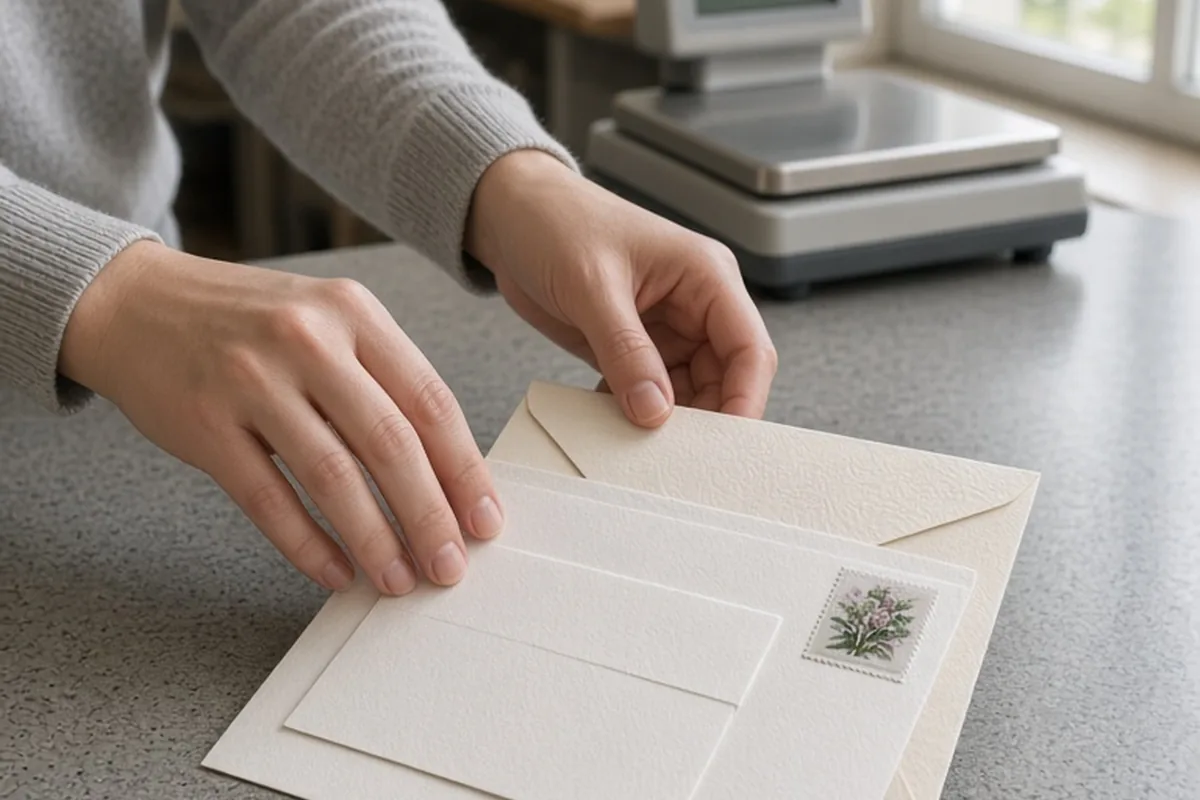
Paper suites require higher financial investments, including printing costs, custom packaging, calligraphy or address printing, and standard or extra-ounce postage. They also carry administrative responsibilities, such as weighing complete suites at a local post office to verify exact postage rates before purchasing stamps. Envelopes featuring wax seals, ribbon ties, or rigid inserts frequently require non-machinable surcharges or hand-canceling to prevent sorting machine damage.
Digital invitations offer practical benefits, including rapid delivery, lower production costs, simplified direct link tracking, and built-in reminder automation. They work exceptionally well for informal celebrations, micro-weddings, secondary weekend gatherings, or couples prioritizing minimal paper consumption. A hybrid approach provides a balanced alternative: physical save-the-dates and main invitations paired with digital response collection via a dedicated web link, streamlining data entry while preserving the tactile experience of traditional mail.
Managing Dietary Needs, Plus-Ones, and RSVP Follow-Ups
Collecting accurate attendee responses requires a structured method for recording meal preferences and identifying severe dietary restrictions. Caterers require precise quantities for each entrée option well in advance of the event date. Response cards should present concise meal options along with a designated blank space for guests to disclose medical allergies or specific nutritional limitations, such as celiac disease, nut allergies, or vegan diets.
Managing ambiguous responses requires prompt, polite, and direct communication. If a guest returns a card without indicating their name, cross-reference the return postmark or use a subtle numbering system penciled discreetly on the back of each reply card prior to mailing. If an attendee adds unauthorized plus-ones or names of uninvited family members, a brief, kind phone call resolves the discrepancy clearly without creating public tension.
Following up with guests who miss the designated response deadline is standard practice. Wait two to three days past the stated deadline to account for standard mail delivery delays before initiating contact. Reach out with a warm, single inquiry via telephone, text message, or email stating the necessity of providing final numbers to the caterer. This gives the recipient an opportunity to confirm their attendance without feeling reprimanded.
Budget Variables, Postage Weight, and Mailing Logistics
Mailing logistics represent a frequently underestimated component of stationery planning. The weight and dimensions of an invitation suite directly dictate required postage. Square envelopes, oversized dimensions, and envelopes exceeding one ounce require additional postage rates under United States Postal Service guidelines. Wax seals, ribbons, and rigid embellishments introduce uneven thickness, which triggers non-machinable surcharges because the pieces cannot pass through standard sorting machines.
To avoid postage errors, take a fully assembled sample suite—including all cards, envelopes, wax seals, and embellishments—to a local post office counter for precise weighing and measuring prior to purchasing stamps. Requesting 'hand-canceling' ensures that postal workers cancel the stamps manually with a rubber stamp rather than feeding the envelopes through automated sorting belts, significantly reducing the likelihood of envelope tears, smudges, or broken wax seals.
Ordering an excess quantity of stationery items protects against common administrative issues. Always order fifteen to twenty-five extra invitation sets, envelopes, and inserts beyond the final household count. This surplus accounts for addressing mistakes during calligraphy or printing, last-minute additions to the guest list, and archival keepsakes for the couple and their photographers to document during morning-of event preparation.
Frequently asked questions
How many total invitations should be ordered for a guest list of 150 people?
Order invitations based on the number of households rather than the individual headcount. A 150-person guest list typically represents 75 to 90 households when accounting for couples and families living together. Always add 15 to 20 surplus sets to cover addressing errors, keepsakes, and unexpected list additions.
When is the ideal time to set an RSVP deadline for a wedding?
Set the RSVP deadline three to four weeks before the event date. This schedule gives the couple sufficient time to contact non-responders, finalize seating arrangements, and deliver exact guest counts to caterers and venue coordinators ahead of their contractual deadlines.
How should an adults-only event be communicated politely on stationery?
Address the outer and inner envelopes specifically to the invited adults to make attendance clear. You can also add a simple note on the details card or wedding website stating, 'We have chosen to keep our celebration adults-only' or 'Please note this event is restricted to adults.'
Is it acceptable to include wedding gift registry details directly on the invitation card?
Traditional etiquette discourages printing gift registry details directly on the formal invitation card, as it can appear as a solicitation for gifts. Instead, direct guests to a wedding website on an enclosure card, where registry links and travel accommodations can be hosted together.
Your next step
Assemble one complete sample of your chosen invitation suite and take it to your local post office counter for exact weighing, sizing, and postage rate verification before purchasing your stamps.