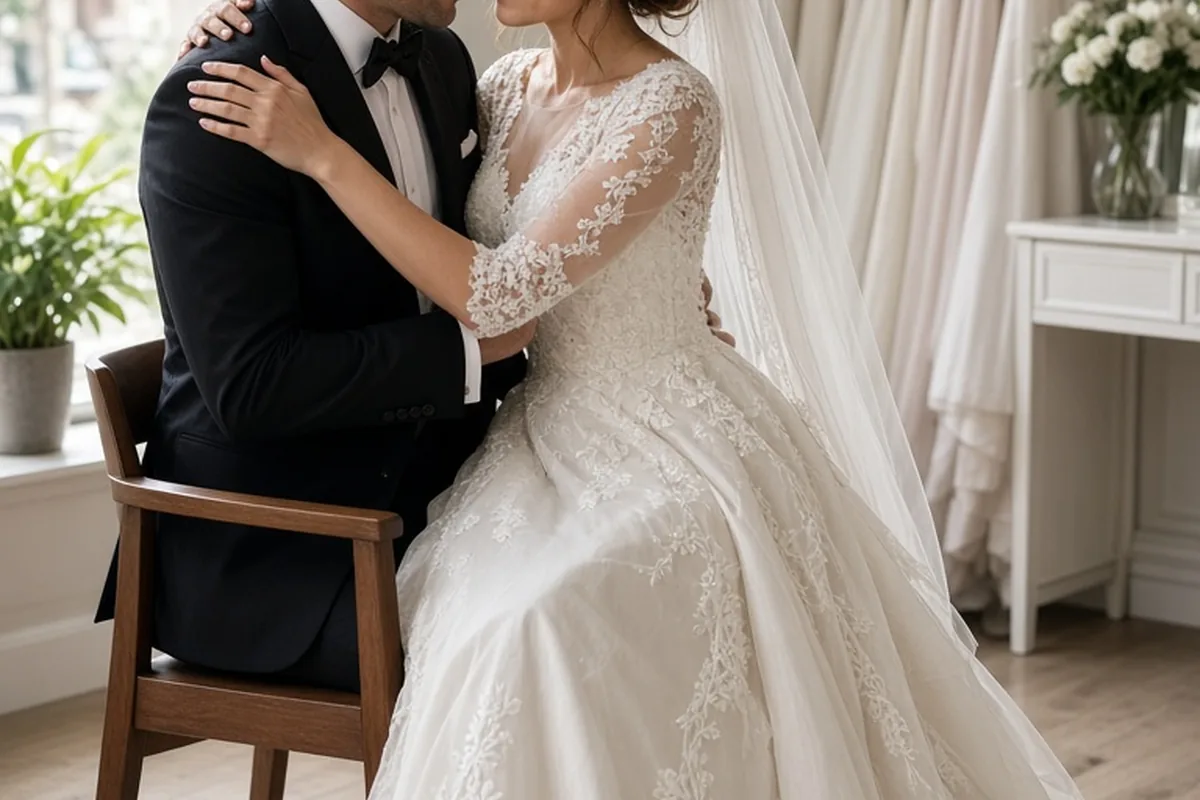
In wedding planning, the look refers to the complete visual presentation of the bride or couple, uniting attire, hair, makeup, jewelry, veil or headpiece, footwear, and bouquet into one cohesive aesthetic. Creating your look involves choosing garments that match your venue and climate, scheduling fittings around realistic alteration timelines, testing hair and makeup under photography lighting, and balancing personal comfort with personal expression rather than following temporary wedding trends.
Stepping into bridal styling often feels overwhelming because countless images, designer lookbooks, and social media boards present polished aesthetics without showing the practical decisions behind them. Defining your wedding look is less about matching an editorial ideal and more about assembling pieces that feel like an elevated, authentic reflection of who you already are.
Defining Your Bridal Aesthetic Without Getting Trapped by Trends
A successful wedding aesthetic starts by looking at your existing personal style rather than browsing bridal imagery from scratch. Open your closet and take inventory of what you gravitate toward for formal occasions or even daily wear. Notice whether you lean into clean lines, tailored architectural cuts, soft romantic draping, vintage detailing, or relaxed bohemian textures. When brides abandon their everyday design sensibilities entirely in favor of an unfamiliar trend, they often feel in disguise on their wedding day. Your wedding style works best when it serves as an intensified expression of the silhouettes, necklines, and fabrics you already love wearing.
To narrow your ideas into a workable concept, assemble a focused mood board containing no more than ten to fifteen images across fashion, architecture, floral palettes, and textures. Pay attention to common threads across those selections rather than collecting dozens of disparate gowns. Look for patterns in structure, surface texture, and mood. One person may favor heavy silk crepe with sharp tailoring and minimal embellishment, while another prefers layers of French lace, delicate floral embroidery, and flowing tulle. Identifying these consistent preferences gives you a clear vocabulary when you speak with bridal stylists, tailors, and beauty artists.
Matching Gown Silhouettes and Fabrics to Your Venue Environment
Your wedding venue and regional climate play decisive roles in how a gown looks and performs throughout the celebration. A multi-layered ballgown crafted from heavy satin or velvet looks striking in a historic ballroom, stone cathedral, or winter conservatory, where ambient temperatures are controlled and architectural proportions balance wide skirts. That identical gown can cause significant physical distress, overheating, and movement constraints during a midday summer celebration in an open garden or coastal marquee. Evaluating venue logistics early prevents aesthetic choices from working against practical realities.
Fabric selection directly shapes both garment movement and your physical comfort over eight to ten hours of wear. Lightweight silk chiffon, organza, georgette, and linen blends allow airflow and graceful movement in warm, humid outdoor settings, though they can wrinkle easily during seated dinners or transport. Heavier textiles like mikado, faille, duchess satin, and dense jacquard hold sculptural shape, resist creases, and photograph with crisp, clean contrast, but they add noticeable weight to your frame. Consider ground surfaces as well: delicate cathedral-length trains made of fine netting easily snag on grass, twigs, or rough cobblestones, whereas heavier woven fabrics hold up better against outdoor friction.
Navigating Bridal Fittings and Structural Tailoring Timelines
Exceptional fit transforms a garment from off-the-rack clothing into a tailored wedding look. Most made-to-order gowns arrive in standardized sizes based on your largest measurement, which means alterations are an anticipated part of the process rather than a correction of an error. The tailoring phase commonly spans three distinct fittings. The first appointment focuses on structural foundation work, pinning side seams, adjusting the bust line, and testing internal boning or waist stays. The second fitting refines the hemline, adjusts strap tension, and sets the bustle points. The final appointment serves as a press-and-pack review to verify that all closures, buttons, and hemlines lie flat and smooth.
To ensure alterations produce accurate results, bring your exact wedding undergarments and intended shoes to every fitting appointment. A change of even half an inch in heel height disrupts the hemline, causing skirts to either drag on the floor or sit noticeably high off the ground. Similarly, switching from a seamless bodysuit to a corset between fittings alters your torso length and bust apex. During fittings, test real-life movements rather than remaining completely still on a raised pedestal: sit in a standard armless chair, practice hugging a companion, lift both arms above your shoulders, and walk several paces to confirm the fabric moves smoothly without pulling or shifting uncomfortably.
Balancing Bridal Hair and Makeup for Natural Light and Flash Photography
Bridal beauty requires a delicate balance between looking fresh and natural in person while maintaining enough definition to read clearly on camera. Professional wedding photography, particularly when utilizing off-camera flash or direct sunlight, can wash out subtle cosmetic tones. Base products must be carefully color-matched to your neck and décolletage rather than just your face, especially when wearing open necklines such as sweetheart, strapless, or deep V-cuts. Matte or satin-finish foundations generally provide longer durability against sweat, humidity, and close contact than ultra-dewy formulations, which can read as excess shine under bright lighting.
Your hair design should interact intentionally with the neckline and back detail of your attire. High-neck collars, halter styles, and detailed illusion backs pair naturally with neat chignons, swept-up twists, or structured buns that showcase the garment's craftsmanship. Conversely, open-shoulder cuts, scoop necks, and minimalist slip dresses harmonize well with Hollywood waves, half-up styles, or polished blowouts. When scheduling your hair and makeup trial, wear an ivory or white top with a neckline similar to your gown, take photos in both natural window light and indoor ambient light, and keep the trial styling in place for several hours to evaluate how well the products hold up over time.
Curating Accessories, Veils, and Footwear to Anchor the Ensemble
Accessories should complement your gown rather than compete with it for visual dominance. A helpful styling guideline is to select one primary focal accessory and allow all supporting elements to play a quieter role. If you choose an elaborate cathedral veil with wide floral lace edging, pair it with refined stud earrings and a simple bracelet so the eye is not overwhelmed by competing focal points. If your gown is an unembellished crepe column dress, you can introduce high-impact accessories such as a tiered pearl necklace, sculptural statement earrings, or an embroidered bridal cape.
Footwear selection requires an honest appraisal of terrain, endurance, and comfort. While high stiletto heels look elegant in pre-ceremony portraits, they sink into grassy lawns and create muscle fatigue after hours of standing through photos, ceremonies, and first dances. Many brides opt for supportive block heels, kitten heels, or platforms with ankle straps, which provide height while distributing body weight across a wider base. If you plan to switch into flat sandals or designer sneakers for your evening reception, coordinate this decision with your tailor during your hemline fitting, as lowering your heel height by several inches can cause your skirt hem to drag along the dance floor.
Coordinating the Look Across Couples and Wedding Party Members
Cohesion across a couple or wedding party does not mean matching fabrics or colors identically; it means maintaining an equivalent level of formality and visual harmony. If one partner wears an ornate ballgown or a black-tie velvet tuxedo, the other partner's attire should reflect comparable structure and formality, whether through a tailored evening gown or a bespoke dinner suit. Disconnects often happen when one person dresses for a garden cocktail party while the other dresses for an ultra-formal white-tie gala. Aligning on formality level ensures portraiture looks balanced and intentional.
When coordinating attendants and wedding party members, focus on a unified color family and shared fabric weights rather than forcing every individual into identical silhouettes. Different body shapes, heights, and comfort levels rarely suit a single dress or suit pattern. Providing a cohesive palette of complementary tones along with guidelines on fabric texture, such as matte crepe or lustrous satin, allows participants to select cuts that flatter them while keeping the overall group appearance harmonious. Ensure boutonnieres, pocket squares, bouquets, and metals align in undertone with your primary styling elements to pull the full wedding aesthetic together.
Managing Day-of Practicalities, Bustles, and Touch-Up Logistics
Even the most thoroughly styled look requires practical day-of management to stay fresh and secure from ceremony to send-off. One critical task is mastering the dress bustle. Whether your tailor installs an over-bustle using exterior buttons or an under-bustle using numbered interior ties, assign two trusted friends, attendants, or your day-of coordinator to attend your final fitting appointment. Have them record a short smartphone video of the tailor pinning and tying the bustle points. Attempting to figure out an intricate system of hidden loops and buttons on wedding day can create unnecessary stress and delay dinner entrances.
Prepare a practical emergency styling kit kept accessible in your bridal suite or reception venue. Essential items include a handheld fabric steamer, transparent pre-cut fashion tape, safety pins in varied sizes, a sewing needle pre-threaded with matching ivory or black thread, blister patches, clear shoe grip inserts, oil-blotting sheets, and your exact lip color for touch-ups. Having these basic tools on hand allows you to quickly address loose threads, lipstick fading, or sudden makeup shine in seconds without taking you away from celebrating with your guests.
Frequently asked questions
When should I begin shopping for my wedding look?
Most bridal stylists suggest starting your search nine to twelve months before the wedding date. Made-to-order gowns typically require four to six months for production, followed by eight to ten weeks for standard alteration fittings. If your wedding timeline is shorter, sample sales, bridal consignment boutiques, and ready-to-wear designers offer immediate options.
How do I choose between an updo and wearing my hair down?
Base your decision on your gown's neckline, your venue's climate, and how your hair naturally behaves over time. Low open backs and high necklines generally look cleanest with updos, while strapless and sweetheart cuts pair effortlessly with hair worn down. If your ceremony is outdoors in high humidity or wind, an updo offers far greater durability throughout the day.
Should my veil match the exact shade of my wedding dress?
Your veil does not need to come from the same designer, but its undertone should coordinate with your gown. Pairing a stark bright white veil with a warm ivory or champagne dress can make the gown appear slightly discolored in natural sunlight, so always request fabric swatches or bring your gown sample to match veil tulle directly.
Can I switch into a second look for the reception?
A second outfit is a practical choice if your ceremony gown features heavy fabric, a restrictive corseted bodice, or a long train that prevents easy dancing. If you choose a reception change, select a shorter dress, tailored bridal suit, or lightweight slip that allows effortless movement, and plan a ten-minute window into your schedule to change comfortably.
Your next step
Schedule your hair and makeup trial on the same day as an alterations fitting so you can see your complete look assembled together in natural mirror lighting before the celebration.