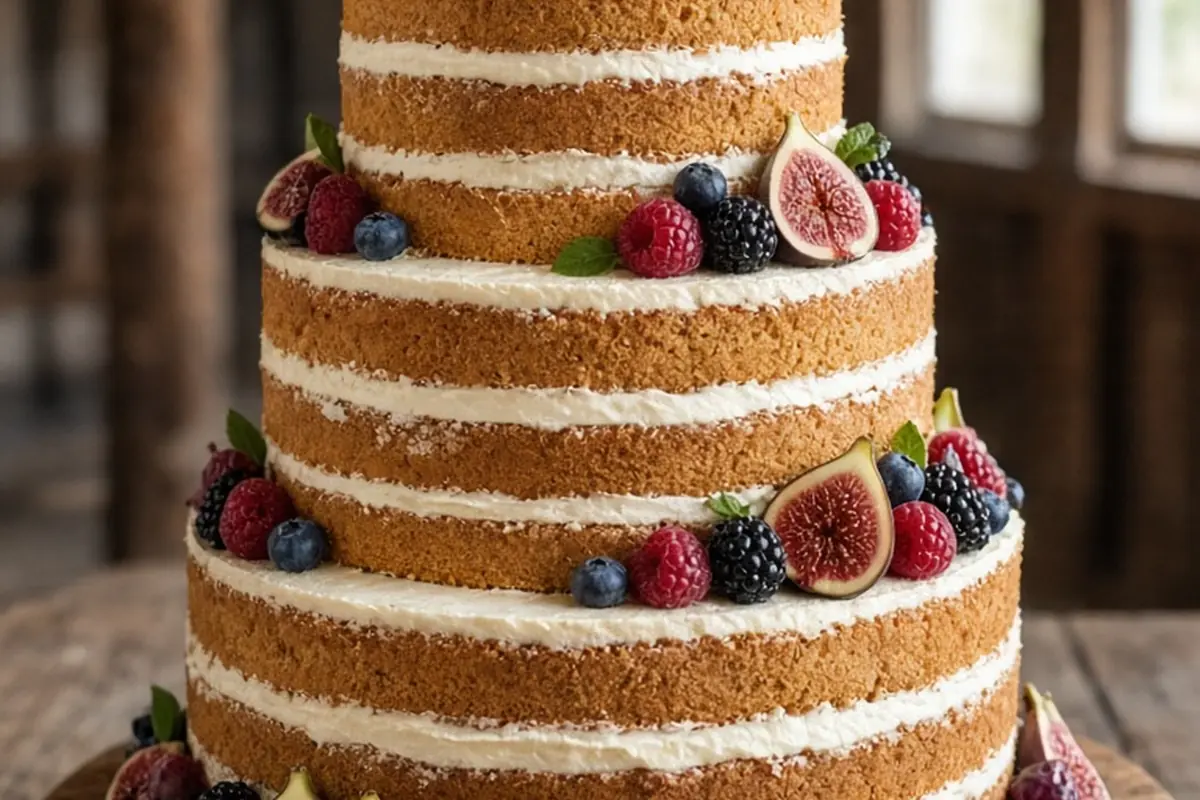
Naked wedding cakes celebrate natural textures by leaving sponge tiers exposed or lightly scraped with buttercream, creating an earthy, understated centerpiece. These designs achieve their organic beauty through fresh seasonal fruit, untreated floral garnishes, textured wood or ceramic stands, and rich flavor pairings. To maintain their fresh appearance and keep the exposed crumb tender, couples pair sturdy, oil- or butter-rich sponges with balanced crumb coatings, timing assembly close to the reception.
Couples seeking an organic alternative to thick fondant or formal royal icing increasingly turn to naked and semi-naked designs. Stripping away heavy exterior frosting highlights the color of the cake layers, the filling peeking between tiers, and seasonal botanicals that reflect the surrounding celebration.
Choosing Between Fully Naked, Semi-Naked, and Translucent Frosting Finishes
The naked cake aesthetic is not a single look, but a spectrum of exposed crumb coverage that sets the tone for your dessert table. A fully naked cake features completely bare exterior sides, leaving the baked edges of each sponge tier in full view with generous layers of filling visible between tiers. This option creates an intensely rustic, homestead feel that suits barn venues, orchard gatherings, or woodland receptions. Because there is zero exterior frosting to seal the crumb, the natural browning of the sponge walls becomes a defining decorative element, contrasting against lighter vanilla or darker chocolate layers.
A semi-naked cake, often referred to as a scraped or crumb-coated style, introduces a thin veil of buttercream across the perimeter. The baker applies a layer of frosting and then uses a bench scraper to remove the excess, allowing random patches of the sponge to show through while filling the minor crevices between layers. This technique softens the overall profile, lending a whisper of romantic white or ivory across the tiers. Beyond its visual charm, the light frosting layer provides an essential barrier that slows down air exposure, giving you more leeway during long reception displays.
For couples who prefer a more polished, ethereal look while preserving natural texture, a translucent or sheer scrape offers a balanced middle ground. The baker applies a slightly more generous coat than a standard crumb layer, leaving the cake pale and frosted while allowing the darker silhouette of the sponge beneath to subtly outline the tiers. This variation pairs exceptionally well with modern minimalist venues, industrial lofts, or seaside gatherings where a completely raw cake might feel too informal for the overall decor.
Selecting Naked Wedding Cake Sponge Flavors That Stay Moist Without Heavy Frosting
The chief culinary consideration for any cake with exposed sides is preventing the sponge from drying out before guests take their first bite. Standard light sponge cakes or delicate fatless Genoise recipes rely heavily on thick exterior frosting or fondant coverings to lock in interior moisture. Left bare to room-temperature air, those delicate recipes can lose their tenderness within a few hours. When planning an exposed design, focus on sponge recipes that naturally retain moisture through balanced fat and natural humectants.
Oil-based and rich butter cakes perform exceptionally well in exposed designs because their crumb structure holds moisture over extended periods. Classic favorites include spiced carrot cakes loaded with crushed pineapple or grated root vegetables, almond or olive oil citrus cakes, sour cream vanilla bean sponges, and rich chocolate buttermilk tiers. These recipes maintain a velvety mouthfeel even after sitting assembled on display throughout your dinner service, eliminating concerns over crumbly or dry slices.
Professional bakers also use simple syrup soaks to reinforce hydration throughout the assembly process. Prior to stacking, each sponge round can be gently brushed with an infused syrup made from sugar and water combined with orange blossom water, elderflower liqueur, espresso, or vanilla bean pod extracts. This technique introduces an internal reservoir of moisture and deepens the flavor profile of every tier without making the structure soggy or unstable.
Stabilizing Fillings and Retaining Rings Between Exposed Tiers
In a traditionally frosted wedding cake, an exterior layer hides any slight bulging, unevenness, or sauce dripping from the interior fillings. With naked cakes, the boundary between each tier is fully visible, meaning your filling technique must be structurally sound and visually clean. Soft fillings such as fresh curd, berry compote, or caramel can easily migrate outward under the physical weight of stacked tiers if they are not properly contained.
To achieve crisp, clean lines without unsightly leakage, bakers construct a sturdy buttercream dam around the outer perimeter of each layer. A thick ring of stiff meringue buttercream is piped roughly one-half inch from the sponge edge, creating an invisible reservoir. The softer preserves, ganache, or mousses sit safely inside this protective ring. As the upper tier settles onto the lower one, the outer buttercream compresses neatly flush with the edge, preventing loose fruit juices from staining the exterior crumb.
Choosing complementary colors between the filling and the sponge also elevates the visual appeal of the cut and exposed edges. A dark chocolate sponge paired with a pale white chocolate Swiss meringue dam creates dramatic graphic contrast, while a golden lemon sponge paired with raspberry compote peeking through pale vanilla cream offers vibrant, cheerful warmth. Discuss with your baker how the cross-section will look both before and after cutting so the visual balance remains consistent.
Designing With Food-Safe Fresh Florals, Wild Berries, and Organic Garnishes
Natural embellishments bring naked cakes to life, but placing fresh botanicals onto an edible food surface requires careful attention to food safety. Many popular floral varieties supplied by commercial florists—including hydrangeas, anemones, sweet peas, and eucalyptus—are naturally toxic when consumed or carry heavy systemic pesticides that should never touch baked goods. Never assume that a flower used in your bridal bouquet is automatically safe to pin onto an exposed dessert.
To safeguard your guests, source organic, pesticide-free blooms grown specifically for culinary display, or choose certified edible varieties such as garden roses, pansies, cornflowers, chamomile, and snapdragons. Even when using safe floral varieties, stems should never be driven directly into the bare sponge. Professional bakers wrap cut stems tightly with food-grade paraffin floral tape, insert them into plastic floral spikes, or slip them into trimmed food-safe straws embedded in the tiers, ensuring sap and plant moisture never enter the cake.
Fresh fruit provides another captivating garnish that emphasizes the effortless beauty of bare tiers. Bunches of red currants, halved black mission figs, wild blackberries, and sliced pomegranates introduce rich jewel tones and inviting textures. To prevent cut fruits from weeping juice onto the exposed sponge, pat sliced surfaces dry with clean kitchen paper before placement, brush delicate berries with a light confectioner's glaze, and apply the fruit garnishes as close to the reception start time as possible.
Managing Climate, Humidity, and Display Timelines at Outdoor Venues
Naked wedding cakes are particularly popular for garden weddings, farm venues, and open-air tents, but outdoor elements can quickly compromise both their structure and freshness. Exposed sponge edges dry out rapidly when subjected to warm cross-breezes, while direct sunlight will soften exterior buttercreams and cause delicate tiers to slide. Understanding how your venue's microclimate interacts with dairy and sugar is critical for maintaining an immaculate display.
Meringue-based buttercreams, such as Swiss or Italian meringue, provide significantly better heat resilience than traditional powdered sugar buttercreams because their emulsified structure remains stable at warmer room temperatures. However, even the sturdiest buttercream will fail if kept above moderate room temperatures for long stretches. If your reception takes place during warm summer months, plan to keep the cake in a reliable, temperature-controlled indoor room or commercial refrigerator until roughly two hours before you cut it.
Careful positioning on the cake table makes a tangible difference in longevity. Keep the display table tucked away from southern-facing windows, out of the direct path of drafty outdoor barn doors, and safely clear of industrial air-conditioning blowers that pull moisture directly out of exposed baked goods. A shaded, draft-free alcove protects the delicate crumb, prevents melting, and ensures your wedding photographs capture the cake in its prime state.
Selecting Display Stands and Tablescapes That Elevate Earthy Textures
The stand and surrounding table elements should mirror the unpretentious elegance of an exposed cake. A polished, heavily gilded baroque pedestal or mirror-topped riser can feel discordant alongside a raw-edged sponge. Instead, complementary materials like turned wood, matte ceramic stoneware, raw marble slabs, or brushed antique brass ground the dessert and reinforce its organic aesthetic.
Scale and proportion require careful evaluation during the stand selection process. Unlike traditionally frosted tiers that hide their baseboard beneath thick piping or ribbon, a naked cake requires a baseboard cut precisely flush to the bottom tier, or an attractive decorative cake board that integrates seamlessly into the overall stand design. Ensure your chosen stand provides a broad, completely level surface capable of bearing the considerable weight of a multi-tiered cake, which often ranges from fifteen to forty pounds depending on size and filling density.
Surrounding tablescape accents should frame the cake without overcrowding the surface. Loose trails of olive branches or Italian ruscus laid across a washed linen runner, clustered beeswax taper candles in varying heights, and subtle brass accents direct visual focus toward the dessert. Leaving ample breathing room around the pedestal keeps the presentation clean, allowing guests to appreciate the craftsmanship of the exposed layers from every angle.
Coordinating With Your Baker on Logistics, On-Site Assembly, and Cutting Times
Clear communication with your baker ensures that what arrives at your reception venue matches your aesthetic expectations and timeline. Because scrape levels and crumb transparency vary widely across bakeries, bring specific visual references to your initial consultation. Make sure to define whether you want a zero-frosting exterior, an organic scraped coat with visible sponge patches, or a pale sheer wash across the sides, and confirm that your tasting includes the exact moisture-rich sponge recipe planned for the big day.
Delivery logistics for naked cakes require special attention. Transporting an assembled, multi-tiered exposed cake over long distances can introduce structural stress, especially along unsealed edges. Experienced wedding cake bakers frequently prefer transporting chilled, dowelled tiers individually in secure bakery boxes, completing the final tier stacking, scrape touch-ups, and fresh floral placement directly on-site at your venue. Confirm in your contract whether your baker will handle the floral placement or if your florist needs to leave sanitized stems for the setup team.
Coordinate closely with your caterer and wedding planner regarding the exact timing of the cake cut. Because naked cakes begin to lose surface moisture once brought out of cold storage into ambient reception temperatures, schedule your formal cutting ceremony earlier in the evening—such as directly following dinner speeches—rather than letting the cake sit uncut until midnight. Your catering staff should have warm, clean cloths on hand to wipe serving knives between cuts, ensuring clean slices that highlight the beautiful layered interior on every guest's plate.
Frequently asked questions
Can a naked wedding cake dry out faster than a traditionally frosted cake?
Yes, exposed sponge layers lack the protective moisture barrier that a full coat of buttercream or fondant provides. Bakers prevent drying by using naturally moist, oil- or butter-rich recipes, brushing layers with flavored simple syrups, and keeping the cake chilled until two to three hours before serving.
Is it safe to place fresh flowers directly onto an exposed wedding cake?
Fresh flowers should never be placed directly onto cake surfaces without verification. Many florist blooms are toxic or treated with pesticides. Use organic, food-safe flowers and wrap stems in floral tape or insert them into food-grade plastic picks to prevent plant sap from contacting the edible sponge.
How far in advance can a naked wedding cake be assembled?
Most professional bakers assemble and crumb-coat naked tiers within twenty-four hours of the event to ensure maximum freshness. Final on-site stacking and the addition of fresh fruits or delicate botanical garnishes typically occur within two to four hours of reception doors opening.
What is the difference between a naked cake and a semi-naked cake?
A fully naked cake has no frosting on its exterior sides, leaving the outer crumb and filling layers completely visible. A semi-naked cake has a thin layer of buttercream applied and scraped back with a straight edge, creating an organic whitewashed appearance that partially reveals the sponge beneath.
Your next step
Schedule a tasting consultation with your baker to sample moisture-rich sponge recipes and agree on your preferred level of exterior scrape, from fully bare crumb to a translucent finish.