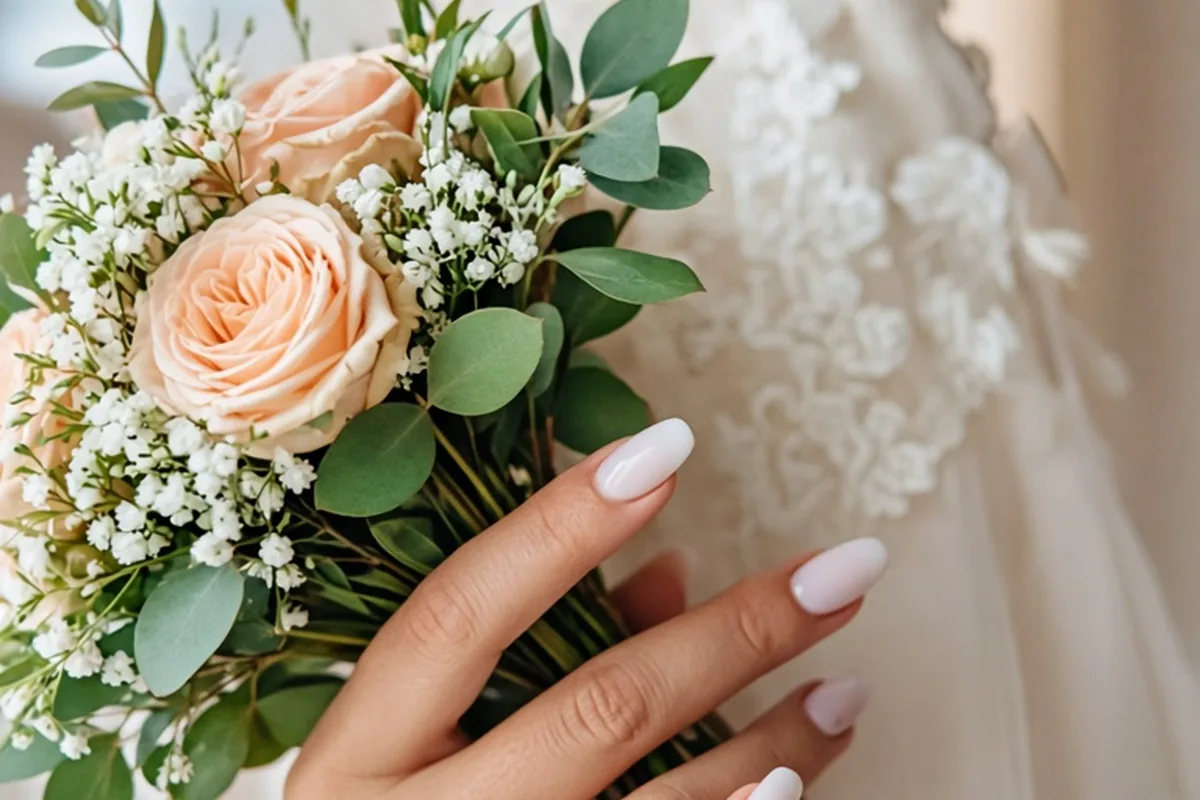
Acrylic nails for a wedding provide customizable length, structural strength, and chip-free durability across multi-day celebrations and ring photography. For the cleanest appearance, schedule your application appointment two to three days before the ceremony. Choosing modest lengths with soft almond, oval, or squoval shapes in neutral tones, milky whites, or soft French finishes ensures your manicure complements your attire while remaining comfortable for daily tasks.
Preparing your hands for close-up photographs, bouquet holding, and wedding ring exchanges requires balancing aesthetic appeal with practical functionality. Acrylic enhancements remain a reliable bridal standard because they create an even canvas across uneven natural nails, reinforce fragile nail beds, and maintain a high-gloss finish throughout rehearsals, the reception, and the honeymoon.
Scheduling Your Bridal Acrylic Appointments
Timing is a crucial factor when planning wedding acrylics. Booking your final appointment two to three days before the wedding provides the best balance between fresh, pristine cuticles and sufficient time for minor adjustments. If you get acrylics applied a week or more in advance, visible natural nail growth near the proximal nail fold can become apparent in high-resolution ring photos. Conversely, getting them applied the morning before a rehearsal dinner leaves little room to fix a chipped edge, an uneven shape, or an allergic sensitivity to monomer liquid or adhesives.
If you are new to acrylic enhancements, schedule a trial set four to six weeks prior to the wedding date. This trial allows you to test how the added length feels during daily routines, monitor your skin for potential product reactions, and assess how the chosen hue interacts with your skin tone under natural and artificial lighting. A trial also gives you an opportunity to evaluate your nail technician's precision, sanitization practices, and filing techniques well before your wedding week.
Selecting the Most Flattering Nail Shape and Length
The ideal nail shape should elongate the fingers while feeling natural enough that you can easily manage delicate dress fabrics, jewelry clasps, and contact lenses. Soft almond and oval shapes are universally flattering bridal selections because their tapered contours create a slender, lengthened appearance without harsh corners. Square or squoval profiles offer a classic, clean aesthetic that works particularly well with shorter lengths and traditional lace details.
While dramatic stiletto or extra-long coffin extensions make a bold statement, they present practical limitations during a wedding day. Long nails can easily catch on delicate tulle, snag fine veil netting, or complicate buttoning a gown's back closure. Selecting an active or medium length—where the extension extends only slightly past the fingertip—delivers visual polish while keeping button fastening, champagne flute holding, and makeup touch-ups effortless.
- Almond: Gently tapered with a rounded peak; elongates fingers and reduces edge snagging.
- Oval: Curved edges mimicking the natural cuticle line; durable and classic for ring shots.
- Squoval: Straight across the free edge with softened corners; combines square strength with oval comfort.
- Coffin or Ballerina: Tapered sides with a flat top; best suited for medium-to-long extensions seeking modern definition.
Choosing Bridal Colors, Textures, and Art
Bridal nail art is typically designed to harmonize with your dress, jewelry, and overall aesthetic rather than compete with them. Soft neutral shades—such as sheer pink, milky beige, pale ivory, and translucent alabaster—remain timeless staples that do not distract from your wedding band. A modern take on the traditional French manicure incorporates a blurred American French gradient or a micro-tip, which narrows the white smile line for a subtle, refined look.
For subtle dimension, many brides incorporate glazed chrome powders, pearl finishes, or minimal 3D accents. A sheer pearlescent dusting over a neutral base adds an iridescent glow that catches photographer lighting without looking overly glittery. If you prefer embellishments, keep them restrained: consider placement on a single accent finger, such as the ring finger, using flat-back crystals or delicate foil leafing that is thoroughly encapsulated in acrylic or clear gel topcoat to prevent snagging your gown.
Preparing Natural Nails and Cuticles for Application
The longevity and final look of acrylics depend heavily on the health of the underlying natural nail. In the two to three weeks leading up to your appointment, apply a jojoba-based cuticle oil daily to nourish the nail matrix and maintain flexible surrounding tissue. Hydrated cuticles are far less prone to hangnails, inflammation, or ragged edges that could detract from close-up photographs.
Avoid aggressive self-manicuring, trimming your cuticles deeply, or peeling off previous gel or dip overlays prior to your salon visit. Over-buffing or peeling thins the dorsal nail plate, which compromises acrylic adhesion and can cause heat spikes or sensitivity under curing lamps. Inform your technician if you have naturally thin, oily, or brittle nails so they can select the appropriate dehydrator, acid-free primer, and monomer formula tailored to your needs.
Day-of Maintenance and Handling Minor Emergencies
Even properly applied acrylics require mindful handling on a busy wedding day filled with dressing, styling, and greeting guests. Always use the pads of your fingers rather than the tips of your nails when opening car doors, zipping garment bags, or adjusting shoes. Keep a small emergency nail kit in your bridal suite containing a high-grit nail file, a compact bottle of brush-on nail adhesive, and a travel cuticle oil stick.
If an edge lifts or a tip cracks slightly during pre-ceremony preparations, avoid pulling or prying at the enhancement, which can tear the natural nail plate. Instead, gently buff down any sharp edge with a fine file so it does not snag your clothing, and apply a small drop of professional nail glue under the lifted area, pressing firmly for twenty seconds to secure it temporarily until professional repairs can be made.
Protecting Your Manicure Through the Honeymoon and Safe Removal
If you are heading directly to a warm-weather or active honeymoon, environmental elements like saltwater, hot tubs, sunscreen, and chlorinated pools can gradually degrade acrylic bonds or cause color yellowing. Rinse your hands with fresh water after swimming, reapply non-staining lotion, and avoid exposing bare acrylics directly to heavy bug sprays or chemical sunscreens that contain high concentrations of DEET or alcohol, which can soften topcoats.
When it is time to take your acrylics off, never rip, pop, or force them from your natural nails, as this strips essential layers of keratin. Schedule a professional soak-off appointment where the acrylic is gently dissolved in pure acetone and gently pushed away without scraping. If professional removal is inaccessible while traveling, soak your fingertips in warm acetone at home, gently filing down softened product in stages until the enhancements release naturally.
Illustrative Scenarios
Illustrative Scenario: Planning a Trial vs. Day-Of Application
A bride planning an outdoor summer wedding wanted long coffin acrylics with crystal accents. During a trial set four weeks prior, she discovered that the sharp corners repeatedly caught on her veil during fittings and that the length made it difficult to fasten the delicate pearl buttons on her dress. Working with her nail technician, she adjusted the final design to a medium almond shape with smooth encapsulated chrome art.
Key point: Scheduling a nail trial provides hands-on feedback about how extension length and shape interact with dress fabrics and daily tasks before the actual wedding.
Frequently asked questions
How far in advance should I get acrylic nails for my wedding?
Schedule your final acrylic appointment two to three days before the ceremony. This ensures the cuticles look clean and fresh while leaving adequate time to fix any unexpected issues before the festivities begin.
Should I choose acrylic, dip powder, or gel extensions for a wedding?
Acrylics are ideal if you want significant custom length, strong structural reinforcement, and precise shape sculpting. Gel extensions or dip powder can be great alternatives if you prefer a lighter, more flexible feel on shorter natural nails.
What is the best acrylic nail color for a wedding dress?
Sheer pinks, milky whites, warm nudes, and soft American French styles complement almost any gown shade without overpowering it. Bring a swatch or photo of your dress to the salon to match the undertones accurately.
Will acrylic nails damage my natural nails for the wedding?
Acrylics do not inherently ruin natural nails when applied by a licensed professional and removed gently using acetone soaking. Damage typically occurs from improper mechanical removal, over-filing the natural plate, or aggressively ripping off lifted tips.
Your next step
Book a bridal nail trial four to six weeks before your ceremony to test shapes, colors, and functional lengths, then reserve your final salon appointment for two to three days before the wedding.