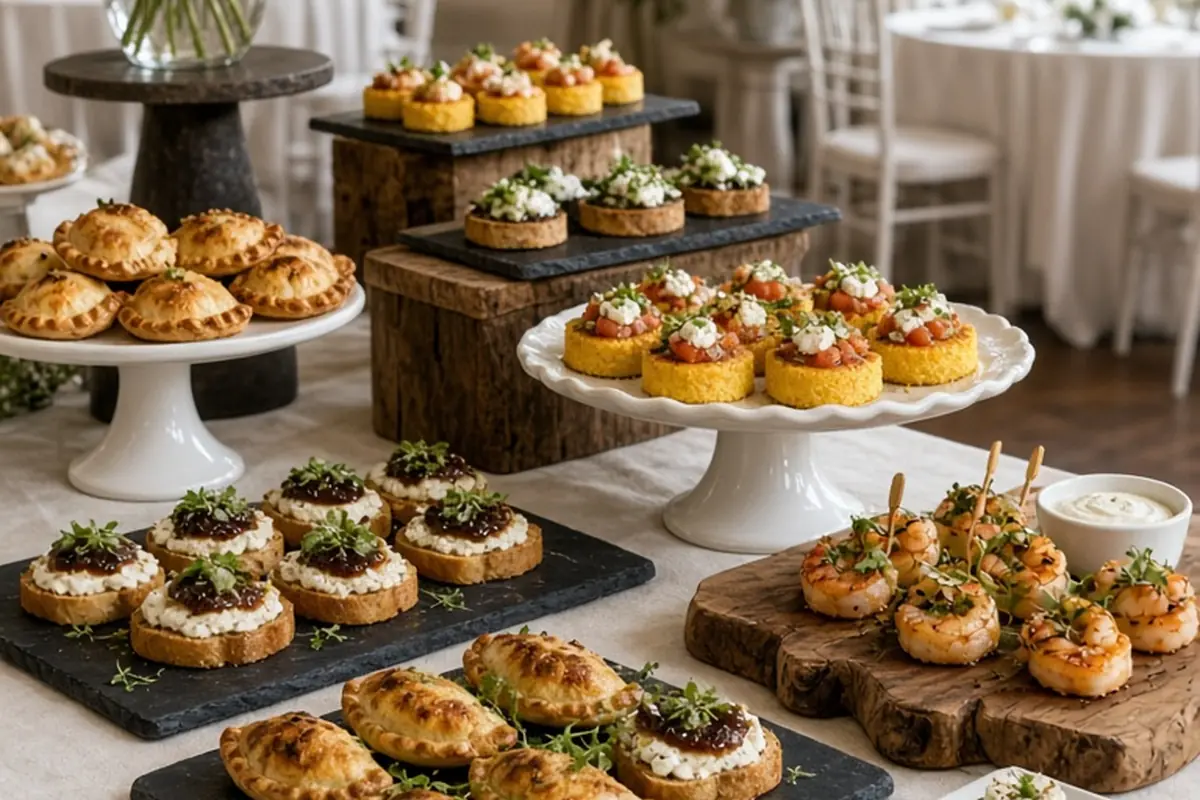
Affordable finger foods elevate wedding receptions by shifting budget away from expensive seated table service toward high-impact presentation, diverse flavors, and effortless social movement. Couples achieve a sophisticated dining experience without premium plated dinner costs by pairing economical ingredients like seasonal produce, braised meats, and rustic breads with upscale culinary techniques such as elegant garnishes, individual glassware, and cohesive color palettes. Guests enjoy immediate variety, interactive grazing, and sustained energy without feeling restricted by a traditional multi-course schedule.
Modern couples increasingly move away from rigid formal banquets in favor of dynamic cocktail-style gatherings where guests can mingle freely while enjoying elevated, bite-sized dishes that deliver exceptional taste and visual appeal.
Designing an Appetizer Menu That Feels Generous and Cohesive
A successful finger food reception depends on thoughtful menu curation rather than an endless array of disjointed options. When planning small bites, the goal is to create a complete sensory meal distributed across multiple small plates. Balancing rich proteins, bright acidic notes, crunchy elements, and creamy textures ensures guests feel fully satisfied. A menu focused entirely on deep-fried items or heavy breaded pastries can leave guests feeling sluggish, while a selection comprised only of raw vegetables and light cheeses fails to provide the substance expected at an evening celebration.
To achieve culinary balance, structure the menu around complementary temperature and flavor categories. Pair warm, savory options like miniature braised beef empanadas or warm goat cheese crostini with chilled, refreshing bites such as cucumber cups filled with whipped feta and fresh dill. Incorporating contrasting textures—such as the crisp snap of a crostini paired with smooth roasted garlic puree—mimics the complexity of fine dining. Furthermore, planning naturally inclusive items that cater to common dietary requirements, such as gluten-free polenta bites or dairy-free vegetable skewers, simplifies the kitchen workflow and ensures every attendee enjoys a cohesive dining experience without ordering costly individualized specialty plates.
Transforming Everyday Pantry Ingredients into High-End Wedding Bites
Elevating affordable finger foods requires focusing on technique and flavor concentration rather than purchasing expensive luxury proteins like lobster tail or filet mignon. Humble foundation ingredients such as slow-cooked pork shoulder, seasonal squashes, eggs, puff pastry, and legumes can be converted into refined hors d'oeuvres through careful braising, emulsifying, and seasoning. Slow braising a cut of pork shoulder with aromatic spices and serving a single shredded spoonful atop a crisp polenta round delivers deep, complex flavor at a fraction of the cost of tenderloin medallions.
Puff pastry sheets serve as another cost-effective culinary vehicle for creating visually impressive reception food. Cutting pastry dough into delicate two-inch squares allows hosts to feature toppings like caramelized yellow onions, wild mushrooms sautéed with fresh thyme, and a light dusting of aged gruyère. Similarly, miniature soup shooters—such as chilled tomato gazpacho garnished with micro basil or velvety roasted butternut squash soup drizzled with sage-infused brown butter—convey luxury and culinary precision while relying almost entirely on low-cost produce, stocks, and pantry aromatics.
Presentation Strategies That Make Budget Finger Foods Look Luxurious
In the culinary world, visual styling often dictates a guest's perception of value long before the first bite is tasted. Inexpensive appetizers instantly feel upscale when served with thoughtful attention to spacing, vessel choice, and architectural height. Rather than arranging meatballs or stuffed mushrooms in dense, crowded rows on plain silver chafing trays, display them on dark slate slabs, raw edge wooden carving boards, or crisp white ceramic platters. Introducing height variation through tiered risers, upside-down wooden crates draped in linen, or pedestal stands transforms a simple food table into an alluring landscape.
Individualized serving vessels also elevate the dining experience while maintaining strict portion control and hygienic handling. Clear glass espresso cups, mini ceramic tasting spoons, bamboo boats, and compostable palm leaf cones make modest portions look like deliberate works of culinary art. A single seared shrimp placed atop an individual bamboo fork alongside a dollop of zesty remoulade looks significantly more refined than a pile of chilled shrimp on a tray of melting ice. Adding delicate, intentional garnishes—such as microgreens, edible flower petals, a sprinkle of smoked sea salt, or a streak of balsamic glaze—signals careful craftsmanship to guests.
Serving Formats: Passed Trays Versus Stationary Grazing Tables
Choosing between passed hors d'oeuvres and stationary grazing displays influences both the ambiance of the reception and the bottom line of the catering invoice. Passed trays offer an aura of exclusivity and personalized hospitality, allowing servers to circulate among guests with freshly heated items. This method prevents chaotic lines and ensures that delicate, temperature-sensitive finger foods are consumed at their culinary peak. However, passed service requires a higher staff-to-guest ratio to ensure smooth circulation, which increases labor costs on the catering bill.
Stationary grazing tables and central food stations, conversely, reduce labor demands by allowing guests to serve themselves at their own pace. A lavish charcuterie and artisan bread station—anchored by cost-effective elements like house-marinated olives, dried fruits, spreads, seasonal vegetables, and rustic sourdough loaves alongside select cheeses—serves as an impressive visual centerpiece. The primary limitation of stationary setups is traffic congestion and food temperature management over extended periods. A hybrid model frequently delivers the best outcome: deploy high-impact stationary tables for ambient-temperature grazing during initial arrival, paired with a limited rotation of passed warm bites during peak reception hours.
Calculating Portions and Timing to Keep Guests Satisfied
A common pitfall of finger food receptions is underestimating the volume of food required, leaving guests hungry during the evening party. When small bites are scheduled merely as a prelude to a formal dinner during a standard one-hour cocktail window, estimating four to six bites per person is generally sufficient. However, if the reception relies entirely on finger foods in lieu of a seated meal, portion planning must expand significantly. For a full-meal replacement reception spanning two to three hours, aim for twelve to sixteen substantial pieces per adult guest.
Timing the release of specific food profiles ensures guests remain satiated throughout the event without depleting supplies early in the night. Begin the reception with lighter, palate-opening options such as vegetable tartlets, fresh crostini, and chilled skewers while guests acquire their first drinks. Progress into heartier, protein-centric options—such as sliders, warm meatballs, savory pastries, and filled skewers—during the middle hour of the event when appetite peaks. Conclude the service window with sweet bite-sized miniatures, such as fruit tarts, brownie bites, or churro bites with dipping sauces, signaling the transition to dancing and evening celebrations.
Managing Catering Contracts, Rentals, and Hidden Service Fees
While finger foods substantially lower raw ingredient costs compared to whole cuts of steak or seafood, administrative fees and logistical expenses can quickly erase those savings if left unexamined. Catering contracts typically include line items beyond food preparation, including service staffing hours, production fees, dishwashing charges, and delivery surcharges. When reviewing proposals, verify whether the quoted per-person rate includes serving staff, bar tending, setup, and cleanup, or if labor is billed separately on an hourly basis.
Rental equipment represents another significant cost variable that changes based on reception style. Full-service seated dinners demand extensive inventories of dinner plates, salad plates, multiple flatware pieces, water goblets, and wine glasses. Finger food receptions substantially reduce dishware rental needs, especially if you opt for stylish bamboo tasting boats, decorative cocktail napkins, and compostable wooden picks. When speaking with caterers and venue coordinators, ask directly about kitchen staging requirements, on-site oven access fees, and policies regarding vendor-provided trash removal, ensuring that all logistical overhead is accounted for in the initial quote.
Self-Catering and Hybrid Logistics: Where DIY Works and Where It Fails
Couples exploring budget-friendly finger food options often consider self-catering or relying on family help to assemble the reception menu. While making food independently can offer direct savings on paper, it introduces severe logistical liabilities regarding food safety, temperature maintenance, and wedding day stress. Perishable items containing dairy, mayonnaise, or animal proteins must remain strictly out of the danger zone to prevent foodborne illness, which is exceedingly difficult to manage in venues without commercial refrigeration and industrial warming cabinets.
A hybrid catering strategy provides a practical compromise that preserves budget savings without risking food safety or personal sanity. Under this arrangement, couples hire a licensed caterer, private chef, or trusted local restaurant to supply the hot, cooked protein dishes and manage on-site heating logistics. Meanwhile, the couple and their planning team source shelf-stable items, rustic bread displays, dry charcuterie components, and dessert platters from wholesale clubs or local bakeries. This divides the workload safely, keeping complex hot-holding tasks in professional hands while cutting costs on appetizers that require minimal kitchen intervention.
Frequently asked questions
Can affordable finger foods completely replace a traditional dinner at a wedding?
Yes, finger foods can comfortably replace a full dinner if planned with adequate volume and substance. To ensure guests are satisfied, provide twelve to sixteen varied pieces per person across the event, emphasizing protein-rich options, complex carbohydrates, and hearty warm dishes alongside lighter items.
How do you keep hot finger foods warm without an industrial venue kitchen?
Professional caterers rely on portable insulated food warmers, chafing dishes powered by sterno fuel, and electric warming trays. If self-managing parts of the meal, stick primarily to items that taste excellent at ambient room temperature, such as glazed tarts, aged cheeses, cured meats, and baked savory pastries.
What is the best way to notify guests that only small bites will be served?
State the reception style clearly on your wedding invitations and wedding website using direct phrasing such as 'Cocktail and Hors d'oeuvres Reception to Follow' or 'Join Us for Drinks and Heavy Bites.' Setting clear expectations allows guests to plan their meals and arrival times accordingly.
Your next step
Draft a balanced appetizer list containing two warm savory bites, two chilled produce items, and two substantial protein options, then request itemized labor and rental quotes from three local caterers to compare against your total food budget.