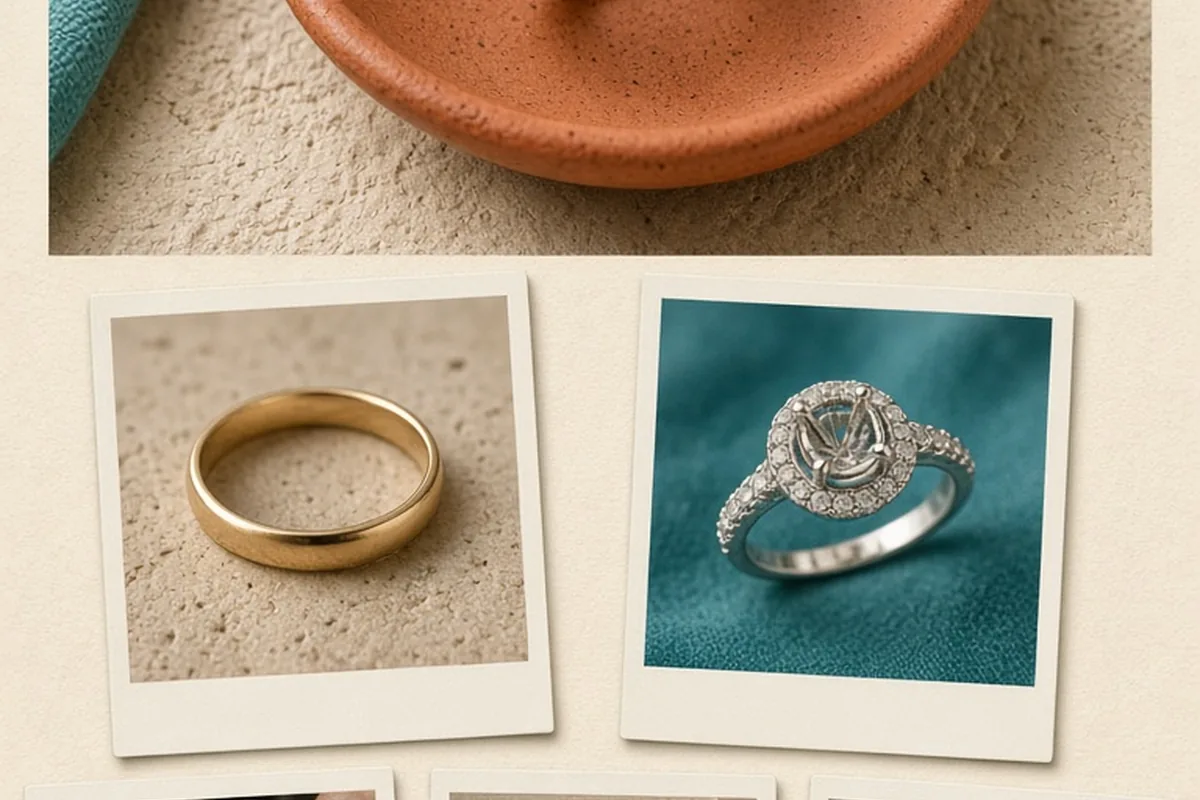
An engagement ring setting is the metal mounting that secures the center gemstone. Its standalone cost depends primarily on the precious metal selected, structural complexity, the presence of accent diamonds, and the bench jeweler labor required for assembly. Plain solitaire bands sit at the budget-friendly end of the spectrum, while intricate multi-stone, halo, or custom-designed mountings require significantly higher material and labor investments.
When shopping for bridal jewelry, separating the cost of the loose center stone from the cost of the setting helps you budget effectively and select the right combination of durability, aesthetic appeal, and craftsmanship.
How Jewelers Price an Engagement Ring Setting Separately from the Center Stone
Jewelry retailers frequently quote complete engagement ring prices as a single package, which can obscure how much value is tied to the gemstone versus the metal framework. The setting, often referred to in the trade as a mounting or semi-mount, represents the structural foundation of the piece. When you purchase a setting independently, you are paying for three distinct elements: the raw market weight of the precious metal, the manufacturing method used to cast or fabricate the frame, and the specialized artisan labor required to seat and secure any secondary accent stones.
Understanding this breakdown allows buyers to allocate their overall engagement budget intentionally. A plain four-prong solitaire requires relatively straightforward metal casting and minimal bench time, leaving a larger portion of the budget available for the center diamond or gemstone. Conversely, a micro-pave setting with dozens of miniature accent stones demands extensive microscopic hand-setting by an experienced bench jeweler, which significantly raises the mounting price relative to the overall ring cost regardless of the center gem size.
Precious Metal Choices That Shift the Total Mounting Price
The choice of metal is one of the most direct influences on the base cost of any engagement ring setting. Platinum stands as the premium option due to its natural density, rarity, and high purity level, usually ninety-five percent pure in fine jewelry applications. Because platinum is denser than gold alloys, an identical ring design will weigh significantly more in platinum, directly increasing material costs. Platinum also requires specialized bench tools and higher melting temperatures, which can increase casting and repair fees.
Gold remains the traditional and versatile alternative, available in yellow, white, and rose formulations across different karat purities. Fourteen-karat gold contains fifty-eight point three percent pure gold mixed with durable alloy metals such as copper, silver, or zinc, making it a resilient and cost-effective standard for daily wear. Eighteen-karat gold contains seventy-five percent pure gold, providing richer color saturation but commanding a higher material cost while remaining slightly softer. White gold settings also require periodic rhodium electroplating to maintain their bright white mirror finish, introducing a recurring maintenance consideration over the lifetime of the ring.
Comparing Solitaire, Halo, Pave, and Three-Stone Setting Complexity
The architecture of the setting dictates both its visual presence and the technical labor needed to build it. Classic solitaire mountings feature a solid band with prongs, a bezel, or a tension mount holding a single center stone. Because solitaires lack accent gems, their pricing reflects only the raw metal weight and fundamental casting labor, making them the most economical style to produce and the easiest to resize or modify later.
As designs incorporate secondary stones, mounting costs increase substantially. Halo settings encircle the main gemstone with a perimeter of smaller diamonds to create the illusion of a larger center, requiring precise multi-prong metalwork. Pave and channel settings embed rows of miniature diamonds along the shank, demanding hours of meticulous hand-drilling, bead-raising, and gem positioning under magnification. Three-stone settings, which feature two matching side stones flanking the center, require tailored basket construction and balanced proportions to secure gems of varying dimensions, placing them higher on the labor and material pricing spectrum.
Hidden Bench Fees, Custom Modifications, and Stone-Setting Labor
When purchasing an engagement ring mounting, the price tag on the display case may not cover all necessary craftsmanship expenses. Many jewelers itemize bench fees separately, particularly the stone-setting labor charged to mount your loose center stone into the finished prongs or bezel. If you supply your own gemstone—such as a family heirloom or a stone purchased from an online wholesaler—the jeweler may assess an outside stone-setting fee to cover the time, precision tooling, and liability associated with handling an unmounted gem.
Custom design alterations also contribute to setting expenses. Modifying a stock mounting to accommodate an unusual fancy-shape center stone, adding intricate vintage hand-engraving, incorporating milgrain detailing, or requesting a custom ring size outside the standard production range can incur custom fabrication surcharges. Requesting an itemized written estimate that explicitly details the mounting, setting labor, resizing allowances, and warranty coverage ensures there are no unexpected charges during final ring assembly.
Evaluating Ready-Made Semi-Mounts Versus Fully Custom CAD Ring Settings
Buyers seeking an engagement ring setting generally choose between catalog semi-mounts and bespoke custom designs. Semi-mounts are pre-manufactured ring frames that come complete with all accent stones already seated, leaving only the center head open to receive your chosen gemstone. Because manufacturers produce semi-mounts in standardized production batches, they offer consistent quality control and lower overhead, providing substantial value for shoppers who find a design that matches their preferences.
Fully custom settings begin with computer-aided design software and three-dimensional wax resin printing, enabling you to build a one-of-a-kind mounting from concept to finished casting. While custom work provides complete freedom over band profiles, prong orientations, and decorative elements, it introduces dedicated design fees, specialized mold creation expenses, and extended production timelines. For intricate concepts that cannot be accommodated by standard factory mountings, custom CAD fabrication remains the most precise method to ensure structurally sound, balanced proportions.
Questions to Ask Your Jeweler Before Purchasing an Engagement Ring Mounting
Before finalizing a mounting purchase, clarifying specific technical policies with your jeweler will protect your investment and ensure long-term wearability. Inquire whether the setting is cast as a single solid piece or assembled from multiple modular components, such as a separate head soldered to a pre-cast shank. Integrated cast heads often provide superior structural rigidity, while modular heads allow for easier center-stone swapping or future prong repairs.
Additionally, verify the quality grading of any accent stones included in the setting, ensuring their color and clarity harmoniously match the standards of your center gem. Ask about the jeweler's long-term service policies, including complimentary prong retipping, ultrasonic cleaning, rhodium replating, and sizing tolerances. Clarifying whether the retailer provides structural warranties against accent stone loss during routine daily wear will help you select a dependable jeweler who stands behind their bench craftsmanship.
Frequently asked questions
Can I buy an engagement ring setting without buying the center diamond from the same jeweler?
Yes, most independent jewelers and many larger retailers sell semi-mount settings independently. You can bring an heirloom diamond, a lab-grown gemstone, or a stone sourced from an online vendor to be mounted by their bench jeweler, though you should expect a standard setting fee.
How does ring size affect the overall price of an engagement ring setting?
Standard ring settings are typically manufactured in stock sample sizes between six and seven for women. Ordering a significantly larger or smaller ring size may increase the price slightly due to the additional raw metal required or the need to cast a completely customized mold to maintain proper stone spacing.
Is platinum more expensive to repair and resize than white gold?
Platinum settings generally cost more to resize or repair because platinum requires specialized high-heat torches, dedicated platinum soldering alloys, and distinct polishing wheels. White gold is simpler to solder and manipulate, though it does require periodic rhodium replating following any structural heat work.
Your next step
Request itemized quotes from at least two local jewelers that separate the mounting metal, accent stone labor, and center stone setting fees before finalizing your engagement ring purchase.