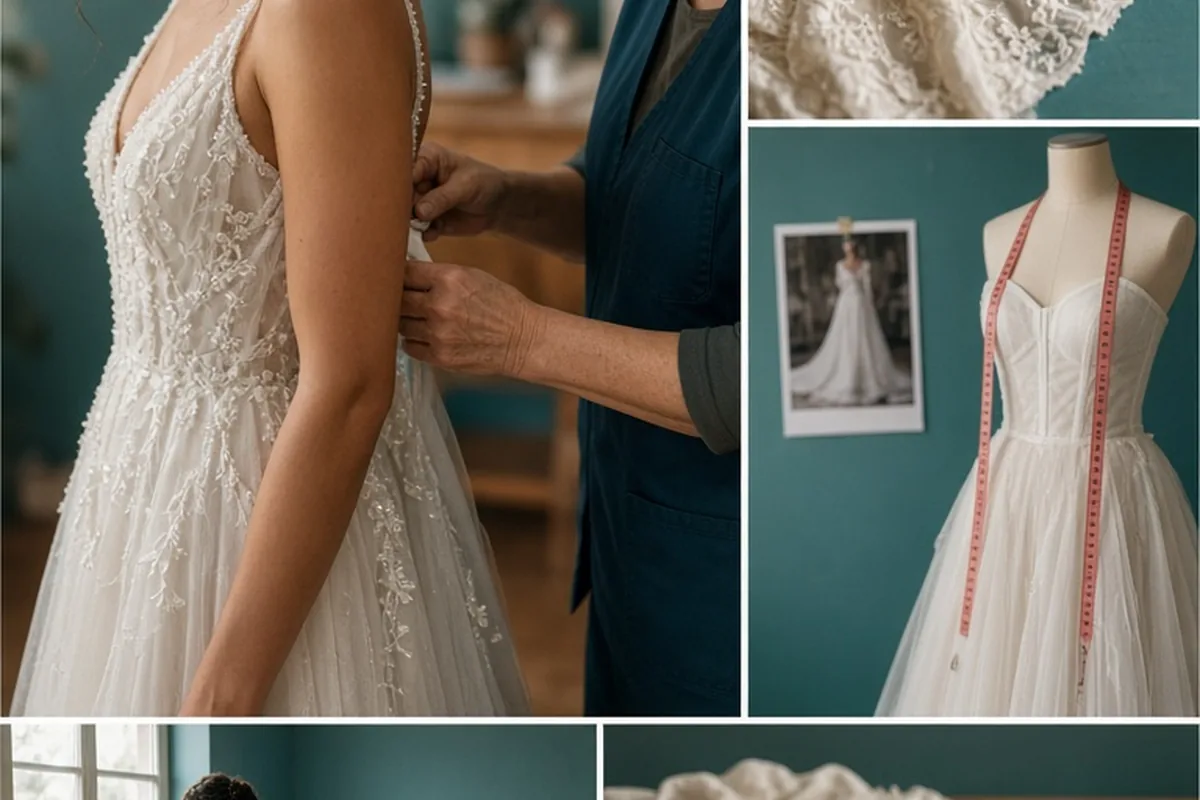
Wedding dress alteration costs depend on garment construction, fabric sensitivity, and the specific structural modifications required rather than a single standardized flat fee. Bridal tailors typically bill through tiered package rates, hourly labor fees, or itemized à la carte pricing for distinct services like multi-layer hemming, bodice reshaping, and custom bustle creation. To establish an accurate budget, schedule an in-person consultation where a tailor can directly assess internal seam allowances, support boning, and delicate embellishments.
Purchasing a wedding gown is rarely the final step in achieving a flawless fit on your wedding day. Bridal wear is designed to be customized, manufactured to standard industry proportions that require professional sculpting to match your unique height, posture, and body contours.
How Bridal Tailors Structure Wedding Dress Alterations Billing
Bridal salons and independent seamstresses typically utilize one of three common billing structures: flat-rate alteration packages, hourly labor rates, or à la carte line-item pricing. In-house bridal boutique departments frequently lean toward standardized packages covering basic fit adjustments such as shortening the hem, adjusting the side seams, and setting a standard bustle. While packages provide upfront cost predictability, they may bundle services you do not need or exclude intricate structural work like resizing sleeves or re-sculpting deep necklines.
Independent bridal tailors and couture specialists more commonly employ à la carte pricing or bill by recorded bench hours. Under an itemized structure, every modification is priced according to its unique mechanical difficulty and time investment. A simple side-seam adjustment on a clean crepe dress carries a different rate than taking in a bodice lined with steel boning, cups, and hand-placed appliqué. Hourly rates reflect the artisan's technical experience and geographic overhead, meaning labor in major metropolitan centers generally commands higher baseline fees than in smaller regional markets.
Before committing to a provider, clarify whether your initial consultation fee applies toward the final balance or acts as a non-refundable assessment charge. Additionally, ask how design changes requested midway through fittings are handled. Professional alteration studios typically require an initial deposit before unpicking seams, with the remaining balance due upon final try-on and garment collection.
Core Tailoring Services and What Drives Their Labor Complexity
The standard wedding gown requires several foundational adjustments to ensure proper support and ease of movement throughout a full day of wear. The most frequent adjustment is bodice tailoring, which includes taking in or letting out side seams, adjusting the princess seams, and refining the bust fit. If a gown relies on internal support structures such as corsetry, plastic or metal boning channels, or built-in bra cups, the seamstress must completely disassemble the lining, alter the structural foundation, reposition the cups, and rebuild the exterior layer cleanly.
Hemming a bridal gown involves significantly more labor than shortening standard evening wear. Most formal gowns feature multiple layers, including a face fabric, crinoline or petticoat tulle, horsehair braid stiffener along the edge, and one or more inner lining layers. Shortening a full ballgown requires marking, cutting, pressing, and re-stitching each individual layer separately to ensure the skirt maintains its original drape and volume. When a hem features a continuous border of scalloped lace or heavy beading, the tailor must meticulously unpick the lace motifs by hand, shorten the underlying base fabric, and hand-stitch the border back into position at the new length.
Strap and shoulder adjustments complete the foundational fit by raising the waistline to your natural torso position and eliminating gaping at the armholes or neckline. When shortening straps on an illusion bodice or an off-the-shoulder design, tailors must navigate delicate illusion mesh without creating visible bunching or pulling, which demands exceptional micro-stitching skills.
Designing and Constructing the Bustle System
A bustle lifts and secures the gown's train after the ceremony, allowing you to walk, dance, and mingle during the reception without tripping or having fabric dragged along the floor. Because no wedding dress comes pre-bustled from the manufacturer, this mechanism is entirely custom-engineered during your alteration appointments to suit your gown's weight, silhouette, and movement.
The complexity of the bustle directly dictates the labor involved. An over-bustle, often called an American bustle, secures the exterior train up to the waistline or hip using decorative buttons, hooks, or discreet loops. An under-bustle, or French bustle, folds the excess train fabric underneath itself using a numbered or color-coded ribbon-and-loop system tucked into the underside of the skirt. Heavy satin trains, long cathedral-length skirts, or multi-layered tulle gowns often require multi-point systems with five, seven, or even nine distinct anchor points to distribute the skirt's physical weight evenly across the waistline.
If a bustle is built with too few connection points, the strain of walking can rip the delicate fabric, pop delicate loops, or tear lace panels. Tailors must reinforce the interior stress points with hidden twill tape or structural stay tape on the reverse side of the fabric to ensure the fasteners hold securely through hours of dancing.
Fabric, Beading, and Structural Details That Increase Shop Labor
The specific materials and decorative treatments of your wedding gown serve as major variables in determining total bench time. Clean, unembellished fabrics like mikado, structured taffeta, or medium-weight crepe allow for relatively direct seam work, though they show needle punctures and require precise pressing to avoid seam impressions. In contrast, fluid silk chiffon, satin charmeuse, and sheer illusion tulle demand extreme care, slower machine speeds, and specialized micro-fine needles to prevent snagging, puckering, or runs.
Heavily beaded gowns, metallic embroidery, and three-dimensional floral appliqués substantially increase alteration time. Tailors cannot simply run a sewing machine needle through crystal beads, pearls, or sequins without shattering the beads, snapping the needle, or damaging the fabric weave. Instead, the seamstress must carefully clip and remove individual beads along the proposed seam line, secure the remaining loose thread ends by hand, stitch the new structural seam, and hand-apply the beads over the finished seam to conceal the line of alteration.
Gowns with integrated horsehair braid hems, raw-edge tiers, or deep plunge necklines with illusion mesh also require customized tailoring techniques. Replacing or shortening a horsehair hem requires unpicking the stiffening band, trimming the excess fabric, and re-attaching the braid with invisible slip-stitching to preserve the skirt's architectural flare.
Managing Sample Sales, Vintage Restorations, and Major Resizing Challenges
Purchasing an off-the-rack sample gown or inheriting a vintage family heirloom can offer considerable savings on the initial retail tag, but major size adjustments require advanced reconstruction that shifts your total project budget. Taking a dress down by one to two sizes is standard practice, but reducing a gown by more than two full sizes often involves completely deconstructing the bodice, re-cutting the armholes, resetting the zipper or button placket, and reshaping the neckline to maintain balanced visual proportions.
Letting a gown out presents distinct physical limitations based on the garment's internal seam allowance. Most mass-manufactured bridal gowns contain modest interior allowances, typically allowing for an expansion of only one-half to one full size. If a gown lacks sufficient internal fabric to accommodate your measurements, a skilled tailor must install matching side gussets, source complementary lace to mask additions, or replace a zip closure with an adjustable lace-up corset back.
Vintage gowns introduce additional technical variables, including aged stitching, fragile silk threads, oxidized metal zippers, and yellowed lace. A vintage alteration project often requires pre-treatment cleaning, reinforcing brittle seams with stabilizing organza, and sourcing period-appropriate replacement notions before standard sizing alterations can even begin.
Fitting Schedules, Milestones, and Rush Turnaround Considerations
A standard bridal alteration process typically spans three to four distinct fitting appointments spread over an eight to twelve-week period. Scheduling your first fitting two to three months before the wedding provides sufficient breathing room for complex handwork, deconstruction, and reassembly without requiring expedited bench time.
The first fitting is the foundational session where the tailor pins the structural lines, establishes the hemline height, and maps out the bustle placement. The second fitting, usually scheduled three to four weeks later, allows you to evaluate the initial structural adjustments, test the pinned hem against your footwear, and inspect the bustle configuration before final finishes are stitched. The third and often final appointment serves as a quality-check fitting where you try on the fully finished gown, practice walking and sitting, and ensure that undergarments remain completely hidden.
Booking alterations on a compressed timeline—such as requesting a complete multi-layer overhaul within two to four weeks—frequently incurs rush fees. Rush fees compensate tailoring studios for overtime hours, weekend bench work, and prioritizing your garment ahead of scheduled client workflows. Starting the fitting process within the standard seasonal timeline prevents these avoidable scheduling surcharges.
Practical Questions to Ask Before Handing Over Your Gown
Before leaving your gown with a bridal tailor or salon alterations department, conduct a thorough intake conversation to ensure clear mutual expectations. Request an itemized written breakdown of every proposed modification rather than accepting an unitemized verbal estimate. This document should detail the individual labor charges for the bodice, hem, bustle points, cup insertions, and any custom design modifications so you understand exactly what you are paying for.
Clarify operational policies regarding garment storage, insurance coverage, and pressing services. Ask whether the final quote includes a professional final steaming or pressing service before pickup, which is essential for removing wrinkles introduced during fittings and storage. Verify how the studio handles gown security while in their possession and whether they have dedicated climate-controlled storage.
Finally, bring the exact undergarments, shapewear, and wedding shoes you plan to wear on the wedding day to every single fitting. Changing your heel height by even half an inch or switching from a seamless bodysuit to a structured bustier between appointments will alter your posture and waistline placement, requiring the tailor to undo completed work and adjust seams a second time at your expense.
Frequently asked questions
When should I schedule my first wedding dress alteration fitting?
Plan to book your initial fitting roughly eight to twelve weeks before your wedding date. This timeline allows for two to three sequential fittings with ample bench time between sessions for intricate hand-sewing, pressing, and final adjustments without requiring rush turnaround fees.
What items do I need to bring to every alteration appointment?
You must bring the exact shoes you will wear on the wedding day, as well as your planned undergarments, bust cups, or shapewear. Minor variations in heel height or bra padding directly change the gown's hemline drop and bodice fit, which can invalidate previous pin placements.
Can a wedding dress be altered if it is too small?
Yes, provided the gown has sufficient interior seam allowance to let out. If the existing seam margins are too narrow, an experienced bridal seamstress can expand the fit by installing discreet side panels, adding matching fabric gussets, or converting a zippered back into a lace-up corset closure.
Is a custom bustle included when purchasing a wedding gown?
No, wedding dresses do not come from the designer with a pre-installed bustle. Because bustle placement depends on your specific height, shoe heel height, and train draping preference, the bustle must be custom-measured and constructed by your seamstress during your alteration fittings.
Your next step
Locate two or three experienced independent bridal tailors in your area, review their portfolios of completed gown alterations, and book an in-person consultation with your dress, exact wedding shoes, and foundation garments to obtain an accurate, itemized estimate.