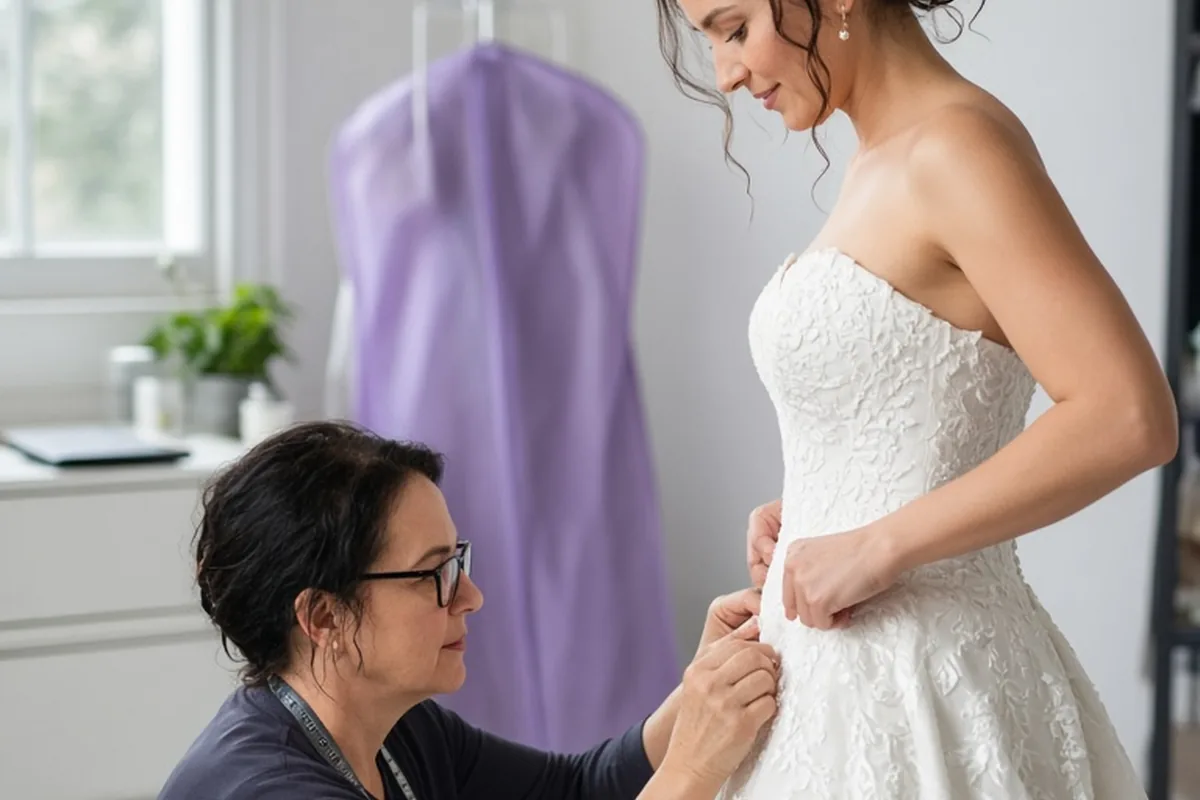
Wedding dress sizing and alterations do not carry a single universal price because tailors bill based on garment construction, fabric delicacy, and the exact scope of tailoring required. Most bridal specialists charge either an itemized fee per adjustment or a flat alterations package. Because published regional averages vary significantly and change across seasons, obtaining an itemized estimate during an in-person fitting with your actual gown, undergarments, and shoes is the only reliable way to know your exact total.
Bridal sizing rarely mirrors everyday ready-to-wear clothing sizes, meaning almost every wedding gown requires professional tailoring to fit the wearer properly. Understanding how seamstresses evaluate gowns, calculate labor, and structure invoices helps you budget realistically and avoid unexpected fees before your celebration.
How Bridal Boutiques and Independent Tailors Structure Sizing Bills
When you bring a wedding dress in for sizing, professional shops generally use one of two primary billing methods: flat-rate packages or itemized pricing. In-house bridal boutique alterations departments frequently offer tiered packages. These packages bundle standard tasks, such as shortening the hemline, bringing in or letting out the side seams along the bodice, and adding a basic bustle. While packages offer price predictability, they may bundle tasks your specific gown does not need, or conversely, exclude advanced work such as reshaping structural cups or altering intricate illusion necklines.
Independent bridal seamstresses and private tailoring ateliers typically prefer itemized billing, charging separately for each individual task. Under an itemized structure, you pay specifically for what your dress requires, such as a designated charge to narrow the torso, another to adjust the shoulder straps, and a distinct charge per point on your bustle. Itemized quotes allow you to decline elective cosmetic tweaks to keep expenses manageable, though highly complex gowns with extensive structural issues can quickly add up across dozens of individual line items. Requesting a line-by-line price sheet before pinning begins ensures clarity regardless of the pricing model used.
The Specific Alterations That Dictate Your Final Tailoring Expense
Wedding dress sizing involves distinct anatomical zones, each requiring different degrees of labor and technical skill. Adjusting the bodice side seams is often the primary sizing requirement, allowing the dress to anchor firmly against your ribs and bust. When a dress must be taken in by multiple sizes, a seamstress cannot simply pinch the side seams without distorting the bust cups and back closure. They must dismantle the bodice, recut individual panels proportionally, reposition the internal stays, and reassemble the lining, which turns a basic adjustment into substantial reconstruction.
Hemming the skirt is another core alteration that varies widely in labor depending on skirt volume and design. A clean, single-layer crepe sheath can be trimmed and hand-stitched relatively quickly. By contrast, a full ballgown with horsehair braid support, multiple tiers of stiff petticoat crinoline, and delicate outer tulle layers requires every single layer to be measured, cut, and finished individually. Additionally, creating the bustle—which pins the train up for the reception—is priced by complexity and the weight of the train, with multi-point French, Austrian, or American bustles requiring extensive hand placement of buttons, loops, or hidden ribbons.
Fabric Complexity, Internal Boning, and Decorative Elements That Increase Labor
The materials and embellishments on your gown directly influence the total time a seamstress must spend on each adjustment. Gowns featuring hand-sewn beads, pearls, crystals, or metallic embroidery cannot simply run through a sewing machine. The tailor must manually remove individual beads along every seam line and stitch path to prevent needle breakage and fabric shredding, then meticulously hand-sew those embellishments back into place once the structural seams are secure. This labor-intensive process substantially increases the billable hours for even modest fit adjustments.
Lace appliques and scalloped borders present similar technical hurdles. Shortening a gown with an intricate lace border often requires unpicking the entire scalloped hem by hand, trimming the base fabric beneath, and re-stitching the border into position so the pattern remains visually balanced. Similarly, gowns built with heavy internal corsetry, molded bust cups, or exposed boning channels require complete deconstruction to resize properly. When evaluating gowns, remember that architectural complexity and surface ornamentation inherently increase the baseline cost of any sizing work.
Ordering the Closest Tag Size Versus Relying on Extensive Sizing Adjustments
Bridal sizing charts typically follow European or vintage sizing scales, which run noticeably smaller than standard modern streetwear. When ordering your gown, boutique stylists measure your bust, natural waist, and fullest hip measurement, then cross-reference those figures against the designer's proprietary size matrix. If your measurements span across two or three different sizes on the chart, standard protocol dictates ordering the size that accommodates your largest measurement. Alterations can reliably take in excess fabric, whereas letting a tight dress out is restricted by the seam allowances provided by the designer.
Relying on major sizing adjustments to fix a poorly matched tag size creates unnecessary risk and expense. Taking a gown down by more than two full sizes often compromises the overall proportions, shifting armscyes, neckline curves, and dart placements out of their intended balance. While expanding a dress is occasionally possible, some manufacturers leave minimal seam allowance inside the lining, leaving no margin for expansion without inserting supplementary panels or converting a zip closure into a lace-up corset back. Measuring accurately and ordering deliberately based on your largest dimension protects both the garment silhouette and your alterations budget.
Scheduling Your Fittings to Prevent Rushed Labor Surcharges
Timing plays a critical role in controlling alterations expenses and avoiding expedited labor penalties. Most professional alterations shops recommend scheduling an initial consultation and fitting between two and three months before your wedding date. This timeline allows ample room for a standard sequence of three fittings: the first for primary silhouette and structural pinning, the second to refine the hemline and bustle placement, and the final session for minor adjustments and final pressing. Spacing appointments over several weeks gives the tailor sufficient working time between clients.
Waiting until four to six weeks before the event frequently triggers rush fees, particularly during peak wedding seasons when tailoring studios operate at full capacity. Furthermore, leaving sizing work until the last minute increases stress if your weight fluctuates, if ordered accessories arrive late, or if complex decorative restitching takes longer than expected. Booking your tailoring appointments several months in advance secures your place on the shop schedule and prevents premium rush surcharges from driving up your final bill.
Questions to Ask Before Leaving Your Gown With an Alterations Specialist
Before committing your dress to a tailor, you need complete clarity regarding their credentials, billing policies, and insurance coverage. Ask specifically how long the specialist has handled bridal garments, as tailoring wedding gowns requires distinct techniques compared to standard men's suiting or casual dress alterations. Inquire whether they carry commercial liability insurance that covers the full replacement value of the dress in the unlikely event of loss, accidental damage, or workshop emergencies while in their custody.
You should also clarify what happens if your body changes between your first fitting and your pickup date. Inquire whether minor adjustments following the primary alterations are covered under the initial quote or billed as supplementary appointments. Finally, confirm whether professional steaming, pressing, and protective garment packaging are built into the quote or added as separate line items at collection. Securing these written answers alongside a detailed receipt protects your investment and sets clear expectations for both parties.
Frequently asked questions
What items do I need to bring to a wedding dress sizing appointment?
You must bring the exact shoes you plan to wear on your wedding day so the seamstress can pin the hem to the precise millimeter. You also need the exact undergarments, shapewear, and bust cups you intend to use, as changes in bra padding or waist compression alter how the bodice sits on your frame.
Can a wedding dress be altered if it is too small?
Yes, but options depend on the internal construction of the gown. If the designer left sufficient fabric within the interior seam allowances, a tailor can let the bodice or skirt out by an inch or two. If internal seam allowance is absent, the tailor may need to install matching side gusset panels or convert a zippered back into a lace-up corset closure.
Why are wedding dress alterations billed separately from the dress purchase?
Bridal gowns are manufactured to generic production patterns rather than custom body measurements. Because every client has unique proportions and styling preferences, tailoring requires dedicated, skilled artisan labor that boutique purchase contracts exclude from the initial wholesale garment price.
How many fittings are usually required for complete dress sizing?
Most brides require three separate fittings over an eight-to-twelve-week span. The first appointment pins structural bodice seams, the second establishes the finished hem and bustle configuration, and the third serves as a final quality inspection to verify comfort and mobility before pickup.
Your next step
Locate three reputable independent bridal alterations specialists in your local area, call each to confirm their lead times and consultation fee policies, and book your initial consultation at least three months prior to your wedding date.