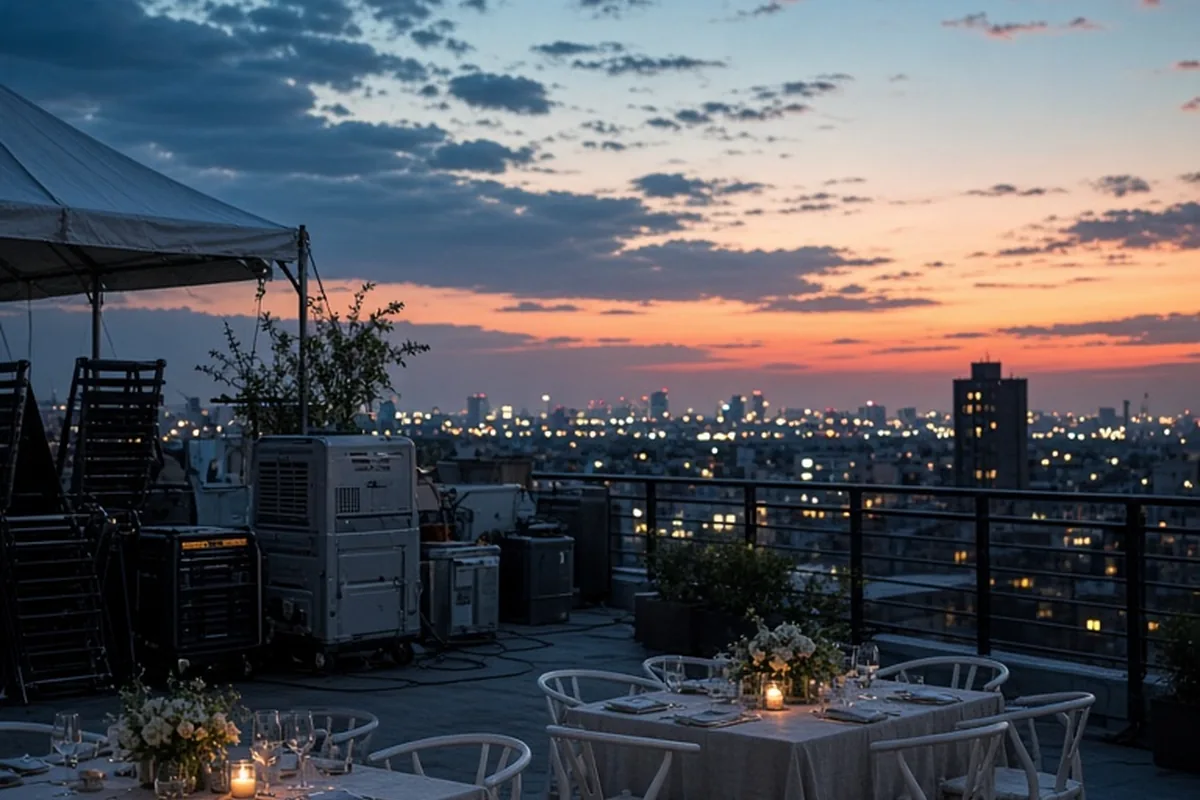
A wedding without a traditional venue eliminates fixed hall rental fees, but the total expense depends entirely on what infrastructure you must bring in. Instead of paying a bundled venue rate, your budget shifts toward individual line items: tenting, tables, chairs, portable restrooms, mobile catering, electrical generators, municipal permits, and specialized setup labor. Depending on guest count and site readiness, raw-space weddings can match or occasionally exceed traditional venue costs once all necessary operational elements are assembled.
Choosing to host a wedding on private land, at a family home, or in an open public park is often perceived as an immediate money-saving strategy. While bypassing a commercial venue fee eliminates a substantial single line item, raw and non-traditional sites fundamentally transform you into a temporary general contractor who must source every fork, lightbulb, and sanitation facility from scratch.
Private Property and Backyard Wedding Rental Infrastructure Costs
When an event space does not provide dedicated banquet furniture, the fundamental physical environment must be rented piece by piece from commercial event supply companies. A primary expense is shelter: if an outdoor property lacks an indoor reception hall capable of holding your full guest roster, a commercial tent becomes mandatory rather than optional. Tent pricing is governed by square footage, frame engineering, sidewall requirements, anchoring methods, and whether the tent must be secured into grass with stakes or onto asphalt with engineered water or concrete ballast weights. Beyond the canopy overhead, subflooring and finished dance floors represent significant secondary line items. Uneven lawns or sloped ground require leveling stages or interlocking subfloor panels so guests can walk safely and tables remain level.
Furnishing that footprint introduces a complex schedule of individual rental rentals that venues typically bundle into their standard packages. You must price dining tables, cocktail tables, ceremony seating, reception dining chairs, linens, napkins, flatware, glassware, and dinner plates. Rental firms also bill for delivery logistics, distance surcharges, weekend after-hours drop-off and pickup, and optional setup labor where their crews unfold and place the furniture according to your floor plan. If your site requires multiple delivery runs due to tight residential access roads or low overhead branches, transport surcharges quickly increase the final rental invoice.
Off-Premise Food Catering and Mobile Bar Staffing Expenses
Traditional venues generally feature certified commercial kitchens equipped with commercial convection ovens, walk-in coolers, industrial dishwashers, and dedicated food preparation surfaces. When you marry without a traditional venue, off-premise caterers must construct a temporary field kitchen or operate out of self-contained mobile food units. If standard drop-off barbecue or buffet equipment is not appropriate for your vision, full-service caterers will require a secondary catering tent equipped with propane warming ovens, prep tables, handwashing stations, and insulated transport boxes. The labor hours needed to pack, haul, prepare, serve, and strike a field kitchen are significantly higher than the staffing hours required inside an established banquet hall.
Beverage service follows a similar operational pattern. While you gain the financial advantage of purchasing your own beer, wine, and spirits at retail or wholesale prices without venue-imposed markups or corkage penalties, you take on new administrative and staffing expenses. You must hire licensed, TIPS-certified bartenders to mitigate personal liability, rent bar stations, purchase ice in bulk, supply chilling coolers, buy mixers and garnishes, and lease glassware. Off-premise caterers and independent bar services also calculate their staffing ratios more conservatively for non-traditional sites, meaning you will often pay for more servers and utility staff per guest than an in-house venue team would require.
Temporary Power Generators, Lighting Rigs, and Portable Restroom Trailers
Residential and open-space electrical systems are not engineered to withstand the simultaneous power draw of high-wattage DJ or live band sound systems, catering warming units, specialty lighting rigs, and portable sanitation pumps. Relying on standard household wall outlets frequently trips circuit breakers and can cause power failures during key moments. Consequently, raw-space events require the rental of commercial, whisper-quiet tow-behind generators alongside heavy-duty spider boxes, distribution panels, and cable crossover ramps to protect guests from tripping hazards. An event electrician or rental specialist will assess the total wattage and amperage demands across all vendors to size the generator properly.
Sanitation is an equally critical operational requirement that directly influences guest comfort. A standard domestic septic tank or residential plumbing system cannot handle dozens or hundreds of guests over a continuous five- to eight-hour window without risking severe plumbing backups or field damage. Modern luxury restroom trailers feature flushing porcelain toilets, running hot water, vanity mirrors, interior climate control, and self-contained waste tanks. These units require dedicated level placement, accessible drive paths for towing vehicles, a steady hose connection or filled onboard freshwater tank, and dedicated electrical circuits. Illuminating the pathways between the tent, parking areas, and restroom trailers also demands specialized string lighting, landscape uplighting, or pole fixtures to ensure safety after dark.
Permit Fees, Municipal Zoning Filings, and Event Liability Insurance
Hosting a private gathering beyond standard domestic scale triggers municipal oversight in almost every city, county, or township. Local governments maintain specific zoning restrictions regarding amplified sound curfews, structural tent dimensions, temporary occupancy limits, and residential street parking. A commercial wedding venue pays for annual licenses and commercial inspections as part of its ongoing overhead, but hosting on raw property requires you to secure individual municipal permits directly. Depending on local ordinances, you may need a temporary special event permit, an open-flame permit for catering, a noise exemption permit, and formal authorization from local fire marshals for commercial tent installations.
Insurance coverage is another mandatory layer of protection when a dedicated venue policy is absent. Homeowners insurance policies routinely exclude commercial activities, large third-party gatherings, and alcohol-related liability claims. As the host, you will need to purchase a standalone private event liability policy that includes host liquor liability and property damage coverage. Furthermore, municipal park authorities or property owners will require you to add them as an additional insured party on the policy with specific coverage minimums before granting access to public acreage or leased private grounds.
Professional Coordination and Logistical Setup Labor Fees
At a traditional banquet hall or resort, a dedicated venue manager or banquet captain oversees facility operations, manages vendor deliveries, monitors trash disposal, and maintains the physical premises. When planning a wedding without a venue, these operational duties fall onto the couple unless specialized professional management is contracted. Day-of or month-of wedding coordinators operating in non-traditional spaces generally charge higher professional service fees than they would for traditional ballroom events. Their workload involves managing separate arrival windows for ten or more independent rental, power, floral, and culinary vendors rather than coordinating with an established in-house team.
Labor costs also expand across pre-event preparation and post-event cleanup. Setting up a complete temporary venue takes multiple days: tent installation crews arrive several days early, rental deliveries arrive the day before, and floral designers set up on the wedding morning. Following the reception, everything brought onto the site must be dismantled, packed, and carted away, often under strict municipal or private property time limits. You will need dedicated hands to bus tables, empty waste receptacles into commercial dumpsters, sort recyclables, clean spills, pack leftover catering items, and perform complete environmental remediation so the land is restored to its original condition.
Decor, Sound Systems, and Inclement Weather Contingency Surcharges
A traditional venue interior provides architectural character, finished walls, interior climate control, built-in drapery, and integrated ambient lighting. In contrast, a blank lawn, warehouse bay, or clear-top tent presents a blank canvas that requires decorative framing to feel celebratory and intimate. Ceiling drapery, hanging floral installations, perimeter pipe-and-drape masking, and specialized stage facades involve significant material and rigging fees. Acoustic treatment is another variable: open-air fields disperse sound quickly, while industrial metal buildings create intense echoes, necessitating specialized audio speakers and equalization equipment from your musical entertainment provider.
Weather contingencies also represent a crucial financial factor in your planning. In cold months or damp climates, enclosed tents require industrial indirect-fired heaters with dedicated ducted venting to circulate warm air safely without releasing exhaust fumes into the guest area. In summer heat, industrial evaporative coolers or portable commercial air conditioning units with tent skirts are necessary to keep the interior tolerable. Because weather is unpredictable, wedding hosts must often place non-refundable deposits on heaters, tent sidewalls, and drainage pumps weeks in advance simply to reserve the gear, regardless of whether the final forecast requires their deployment.
Building an Accurate Line-Item Budget Before Booking Independent Vendors
Because prices for raw-space elements fluctuate widely by region, season, guest count, and site topography, the only reliable way to calculate your total cost is to establish an exhaustive line-item spreadsheet before executing vendor agreements. Begin by scheduling a comprehensive on-site walk-through with an experienced rental company project manager and an off-premise caterer. These professionals can identify hidden logistical challenges that couples easily miss, such as steep delivery grades, low utility wires, insufficient soil depth for standard tent stakes, and inadequate water hookups.
When soliciting quotes, insist that all service providers provide itemized line items rather than vague package pricing. Require rental companies to specify fuel surcharges, damage waivers, setup fees, and strike time windows. Ask your caterer whether their per-person pricing covers kitchen rental gear, service ware, trash removal, and post-event cleanup labor. Once all itemized quotes are in hand, establish a separate cash contingency reserve of fifteen to twenty percent of the overall budget to absorb unanticipated site remediation, emergency utility runs, or last-minute weather mitigation rentals.
Frequently asked questions
Is having a wedding without a venue cheaper than booking a traditional hall?
Not necessarily. While you avoid a single upfront venue fee, the cumulative cost of renting a tent, flooring, commercial power, portable restrooms, tables, chairs, and field kitchen gear frequently equals or exceeds the cost of a bundled all-inclusive banquet space.
Can I use standard home restrooms for an outdoor wedding of 100 guests?
Relying on residential plumbing for large gatherings is strongly discouraged because residential septic tanks and single-drain lines cannot safely handle the intense volume of continuous use. Renting an engineered luxury restroom trailer prevents plumbing failures and preserves your home sanitation system.
What happens if a private property wedding violates local noise curfews?
Municipalities enforce strict amplified sound curfews, often beginning at ten or eleven in the evening in residential zones. Violations can result in municipal fines, immediate visits from law enforcement, or an order to shut down the music and end the reception immediately.
Your next step
Schedule a professional site inspection with a reputable local event rental company to identify all necessary electrical, sanitation, and shelter requirements before signing vendor contracts.