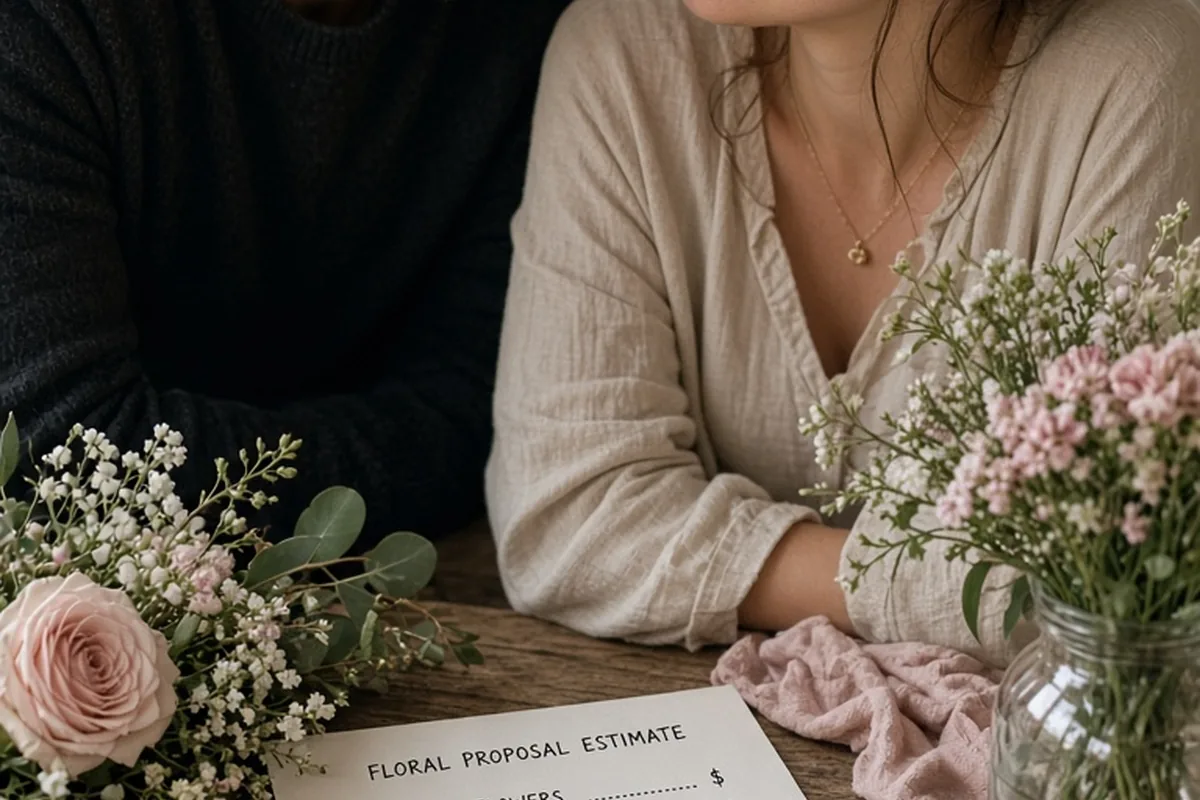
Wedding flower costs vary widely based on guest count, stem selection, arrangement scale, and labor requirements rather than a single fixed national rate. A floral invoice typically divides expenses across personal flowers, ceremony focal points, reception centerpieces, and design production fees like delivery, setup, and teardown. Because wholesale flower market prices fluctuate seasonally and labor markets differ regionally, couples determine their realistic expenditure by requesting itemized line-item proposals from local independent florists.
Planning an event floral design requires navigating an industry where quotes reflect both perishable agricultural commodities and skilled artistic labor. Understanding the distinct elements that compose a floral proposal allows couples to balance aesthetic vision with overall event finances without relying on arbitrary rules of thumb.
The Core Anatomy of a Professional Wedding Floral Invoice
A formal floral estimate reflects far more than the simple retail cost of cut stems arranged in water. When a floral studio builds a custom proposal, the total price is divided into distinct operational tiers: wholesale botanical sourcing, non-perishable design mechanics, skilled artisan labor, and event-day logistics. Perishable botanicals undergo a multi-day conditioning process that begins well before the wedding date. Stems must be unpackaged, trimmed, hydrated in temperature-controlled coolers, and brought to peak bloom at the precise hour of your ceremony.
Beyond the flowers themselves, every arrangement depends on structural mechanics and decorative vessels. High-quality vessels, pedestals, floral foam alternatives such as chicken wire or reusable pin frogs, waterproof tape, and internal water reservoirs all factor into the base materials fee. Florists also apply standard commercial markups to raw botanical wholesale prices to absorb wholesale waste, damaged blooms, freight transit losses, and studio overhead. When evaluating an estimate, looking at the arrangement breakdown reveals whether the quote emphasizes raw stem volume or technical construction complexity.
Personal Flowers Versus Reception Decor: How Budgets Distribute
Event floral investments naturally segment into personal flowers, ceremony decor, and reception styling. Personal flowers encompass the items carried or worn by the couple, the wedding party, and immediate family members. These include the primary bouquet, attendant bouquets, boutonnieres, pocket squares, corsages, and floral hair accessories. Because personal flowers appear in close-up portrait photography throughout the day, florists generally reserve their most pristine, delicate, and high-value blooms for these pieces, applying intricate wirework and premium ribbon wraps.
Ceremony and reception floral arrangements introduce questions of scale and architecture. Ceremony decor frequently focuses on a visual focal point, such as a floral arch, chuppah, ground meadow semi-circle, or pair of statement urns framing the altar area. In contrast, reception expenses are heavily dictated by your guest count and table configurations. Long banquet tables demand continuous runners, repeating groupings of bud vases, or elevated bridge structures, whereas round tables require central compotes or candelabras. Because reception decor requires duplicating designs across dozens of dining tables, the dining room often accounts for the largest proportion of total floral stems.
Flower Selection, Seasonality, and Global Supply Realities
The specific flower varieties requested by a client dramatically alter the bottom line of an estimate. High-petal-count garden varieties, imported Dutch botanicals, and delicate specialty stems carry premium wholesale charges due to fragile transit requirements and limited growing seasons. For example, popular choices like garden roses, peonies, ranunculus, and sweet peas require gentle refrigeration, specialized packing boxes, and air freighting from international growers. In contrast, hardy agricultural staples like standard carnations, spray roses, chrysanthemums, and delphinium tolerate shipping well and offer dense visual volume at lower wholesale acquisition points.
Seasonality plays an equally significant operational role. While global distribution networks can deliver out-of-season stems to almost any region, sourcing blooms outside their natural regional harvest window involves higher import fees, custom brokerage costs, and elevated risk of transit spoilage. Selecting blooms that align with your wedding month and regional agricultural calendar helps avoid out-of-season premiums while ensuring blooms arrive in optimal vigor. Consulting with a florist early about which local varieties thrive during your chosen season provides natural protection against unexpected wholesale price spikes.
Hidden Logistics: Setup Windows, Room Flips, and Late-Night Strike Fees
Many couples are surprised to discover that on-site labor and logistics constitute a substantial portion of a professional floral bill. Unlike physical products delivered in a box, wedding flowers require an active production team on site during the hours leading up to the celebration. Large installations, such as foliage arches, floral walls, or suspended chandeliers, must be built directly on location within strict venue access windows. If a venue only permits two hours for vendor setup, the florist must deploy a larger crew of floral assistants to assemble, hydrate, and detail the displays safely within the deadline.
Logistical costs expand further when events involve room flips or end-of-night cleanout mandates. If your ceremony and reception share the same physical space, floral staff must remain on site during cocktail hour to rapidly transition altar arrangements, aisle meadows, and candles onto reception tables. After the event concludes, venues almost universally require total breakdown, known as strike, often mandating that the space be cleared within one hour after the music ends. This requires late-night crew dispatch, transport vans, proper disposal or composting of spent botanicals, and retrieval of rented hard goods and urns.
Strategic Design Approaches to Maximize Visual Impact
Creating an impressive visual impact does not require packing every square inch of a venue with dense floral arrangements. Professional designers often recommend an approach centered on primary focal moments rather than spreading resources uniformly across an entire venue. Concentrating design elements in spaces where guests spend prolonged periods or where photography concentrates—such as the ceremony backdrop, the sweetheart table, and the welcome entry—delivers dramatic visual resonance without escalating stem counts across low-traffic corners.
Another practical method involves intentionally repurposing ceremony elements into the reception floor plan. Freestanding altar meadows can be moved during the cocktail hour to frame the perimeter of the head table, the front of the band stage, or the cake display. Ceremony urn arrangements can be repositioned at the reception hall entrance to welcome guests into the dining room. Additionally, alternating between tall floral centerpieces and low candle groupings with scattered bud vases creates dynamic visual texture across a dining room while moderating the aggregate stem volume required for the room.
Vetting Floral Design Proposals and Contract Terms
Before signing a contract or submitting a non-refundable retainer, couples should review proposal line items to ensure clarity regarding deliverables and substitutions. A thorough floral proposal should define the quantity, approximate dimensions, general color palette, and key botanicals planned for each arrangement type. It should also state whether vessels and display stands are rented or purchased outright. If vessels are rented, clarify who is responsible for vessel damage, loss fees, and end-of-night packing.
Botanical substitution clauses represent a critical component of every floral agreement. Because weather events, crop failures, or international air freight disruptions can abruptly cut off access to specific flower crops, reputable floral designers include clauses granting them artistic license to substitute comparable varieties of equal or greater value and aesthetic tone. Verify the studio's payment schedule, cancellation and postponement terms, weather contingency protocols for outdoor setups, and minimum spend requirements during peak wedding months before executing your agreement.
Illustrative Scenarios
Balancing Full Installations with Strategic Repurposing
An illustrative couple planned an outdoor garden ceremony followed by an indoor ballroom dinner with fourteen dining tables. Initially, their mood board requested elevated, continuous floral arches for the ceremony alongside tall, overflowing centerpieces for every dining table, which resulted in preliminary proposals that far exceeded their intended financial envelope. Rather than abandoning professional design, they worked with their florist to convert the heavy built-in arch into two freestanding floral pillars mounted on portable bases. They also adjusted their reception design to feature lush floral arrangements on six central tables while styling the remaining eight tables with groupings of taper candles, cut glass hurricanes, and delicate bud vases. During cocktail hour, the floral team relocated the two ceremony pillars to frame the newlyweds' sweetheart table in the ballroom.
Key point: Shifting from fixed architectural installations to mobile, multi-use ceremony pieces and alternating between floral and candlelight centerpieces allows couples to achieve a luxurious visual atmosphere while managing production labor and wholesale stem volume.
Frequently asked questions
How far in advance should I book an event florist?
Most independent floral studios accept bookings eight to twelve months before the event date, particularly for peak weekend dates in spring and autumn. Booking early secures your date on the designer's production calendar, although specific stem sourcing details and final table counts are typically finalized four to six weeks prior to the wedding.
Are silk or faux flowers cheaper than fresh cut flowers?
High-end rental silk botanicals can occasionally reduce costs for large structural installations, but purchasing premium faux stems outright rarely yields significant savings. Quality artificial flowers require skilled hand assembly, shaping, and warehousing labor comparable to fresh cut arrangements, meaning total costs remain driven by production hours.
Can I assemble my own wedding flowers to lower costs?
Sourcing and assembling your own florals reduces professional service fees, but it introduces significant logistical risk, cold-storage requirements, and intense physical work during the forty-eight hours immediately preceding the ceremony. Beginners often experience high stem loss from improper hydration or bruising, which can erase anticipated material savings.
Why do florist proposals include a separate labor and service percentage?
The service fee covers essential non-botanical overhead including stem processing, refrigeration maintenance, mechanical construction, multi-vehicle transport, on-site installation labor, and late-night breakdown. It reflects the staff hours required to execute your event safely within strict venue timelines rather than an arbitrary markup.
Your next step
Compile your estimated guest count, confirmed table shapes, and a focused three-image design board, then schedule consultations with three local independent florists to request itemized proposals tailored to your venue's specific setup rules.