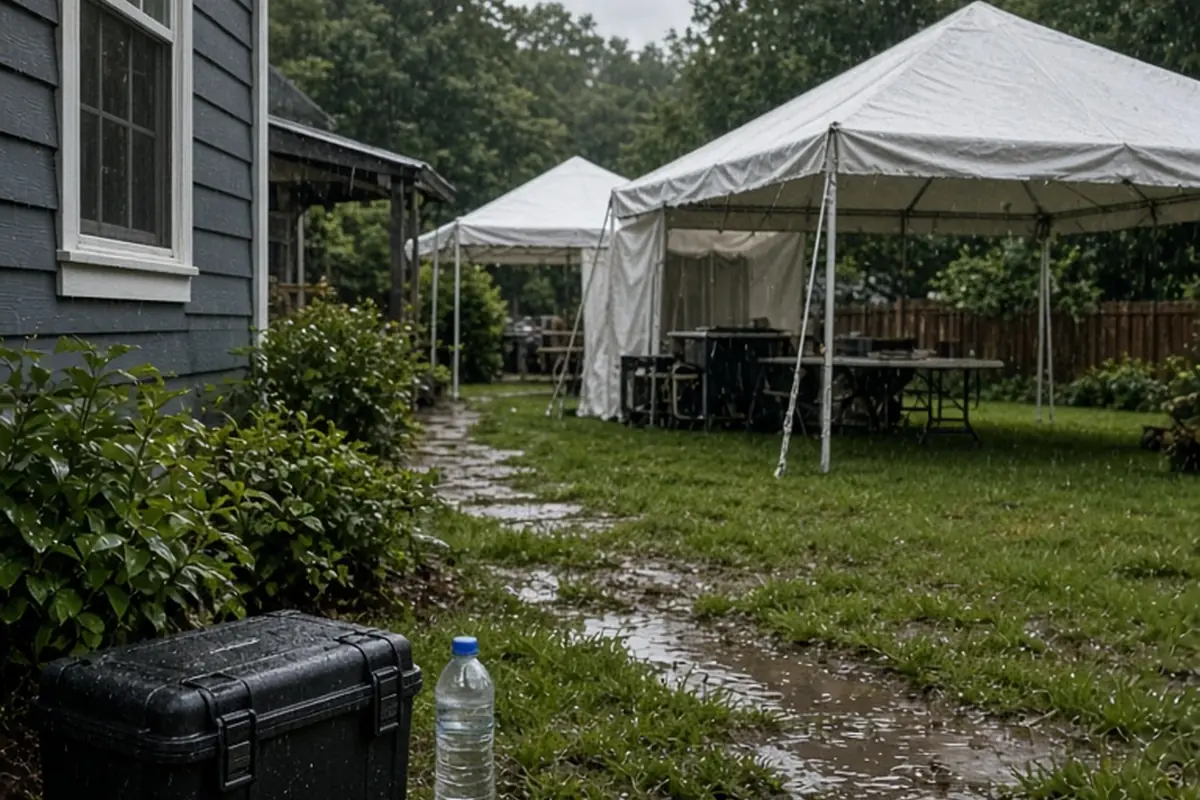
A backyard wedding rain plan checklist secures your event against severe weather through five critical steps: reserving a properly sized tent with sidewalls early; installing raised subflooring over turf prone to pooling; establishing protected electrical pathways with commercial generators; creating covered transitions for guest arrival and catering staff; and setting clear vendor weather decision deadlines forty-eight to twenty-four hours before setup begins.
Private residential properties provide an intimate atmosphere, but private lawns lack the commercial drainage, covered walkways, and electrical redundancies standard at traditional wedding venues. Implementing a structured contingency plan transforms potential property hazards into a controlled, comfortable celebration regardless of sudden rainfall.
Evaluating Property Topography and Reserving the Right Backyard Tent Structure
The foundation of any residential weather plan begins with reserving the correct tent style and footprint several months in advance. Pole tents rely on center support poles and tensioned guy wires driven into turf, requiring an extra five to eight feet of perimeter clearance around the perimeter. If your backyard features underground sprinkler lines, fiber-optic cables, or concrete patios, a freestanding frame tent or clearspan structure is necessary because it can be weighted with water barrels or concrete ballast where staking is prohibited. Always contact your local underground utility marking service by calling 811 before any company drives heavy metal stakes into residential ground.
Tent sizing for fair weather often underestimates the square footage needed when rainfall forces the ceremony, cocktail hour, dinner, and dance floor under a single continuous canopy. When calculating your footprint, account for perimeter sidewalls, which restrict movement and eliminate the ability for guests to spill out onto the surrounding lawn. Plan for solid or clear cathedral-window sidewalls with secure track closures rather than loose ties that flap in moderate winds. If you plan to connect multiple tents for catering, restrooms, and main seating, specify commercial vinyl rain gutters between the structures to prevent heavy waterfalls from spilling directly into guest walkways.
Subflooring, Mud Mitigation, and Drainage Management for Saturated Lawns
Residential lawns quickly turn into thick mud once dozens of guests walk across wet, saturated soil. Standard sod cannot absorb high volumes of stormwater when foot traffic compresses the ground, which leads to ruined formal footwear, stained gown hems, and slipping hazards. Walk the property during a downpour months before the wedding to map the natural grade, identifying low-elevation basins where water pools and identifying where roof runoff exits downspouts.
Depending on your lawn conditions and budget, select a ground protection system that isolates guests from damp earth. Interlocking polypropylene event matting provides a basic protective barrier over reasonably level turf, while elevated plywood subflooring or engineered wood planking built on stringers elevates the entire floor several inches above pooling water. For severe slopes or persistently wet ground, rental companies can install steel-beam leveling systems. Keep straw, wood mulch, rubber pathway runners, and heavy-duty doormats on standby near perimeter entries to absorb moisture before it reaches the main dance floor.
Electrical Distribution, Power Drops, and Wet-Weather Safety Standards
Backyard events place substantial electrical demands on private homes, and wet weather amplifies the risk of tripped breakers and electrical shocks. Catering warming ovens, commercial coffee makers, live band amplifiers, DJ sound boards, and high-wattage perimeter lighting should never share circuits with residential household wiring. Rain entering an overloaded outdoor outlet will trip the home's main panel, plunging the entire event into darkness and cutting off power to essential appliances.
Hire a certified event production team or licensed electrician to supply a towable, whisper-quiet commercial diesel generator equipped with Ground Fault Circuit Interrupter (GFCI) distribution boxes. Ensure all secondary distribution lines use heavy-gauge, water-resistant outdoor cabling, with junctions elevated off the bare ground inside weatherproof enclosure boxes. Run cables through heavy-duty rubber cable ramps to prevent guests from tripping and to protect insulation from vehicle tires or pooling water. Position the generator downwind and away from tent air intakes to prevent exhaust fumes from blowing into enclosed spaces.
Guest Entry Flow, Covered Walkways, and Luxury Restroom Trailer Access
The guest experience during a rainstorm depends heavily on the transition zones between arrival points and the main tent. If parking occurs on an unpaved pasture or lawn, saturated ground will cause passenger vehicles to get stuck. Arrange a paved drop-off zone near the driveway, or contract an off-site shuttle service from a nearby paved lot so guests arrive dry. Station an umbrella valet team at the vehicle drop-off area equipped with large, sturdy golf umbrellas to escort attendees directly to the sheltered reception space.
Restroom logistics require equal attention. Standard residential septic systems cannot handle the load of a large guest list, making self-contained luxury restroom trailers essential. Position these trailers on solid, level ground such as a driveway apron or reinforced gravel pad so service pump trucks can access them regardless of ground saturation. Install enclosed marquee walkway tents connecting the main tent directly to the restroom trailer doors, preventing guests from navigating dark, slippery grass or juggling umbrellas between dinner courses.
Catering Staging Tents, Heated Food Transport, and Water Supply Protection
Catering teams working on residential properties face distinct challenges when rain compromises their cooking and plating areas. Standard catering contracts require a separate, fully enclosed staging tent of at least ten by ten or twenty by twenty feet equipped with solid sidewalls, dedicated lighting, and raised subflooring. Chefs cannot safely operate commercial carving stations, portable propane burners, or plating lines on slick, uneven grass or under leaking pop-up canopies.
Designate a fully covered, hard-surface pathway between the prep tent and the main dining tent. Service staff carrying heavy trays of hot food cannot safely navigate open lawns in rain, and cold raindrops falling on plated entrees quickly ruins food presentation and temperature. Ensure the catering zone includes secure access to potable water with backflow prevention and a dedicated greywater containment tank, as dumping cooking grease or wash water onto rain-soaked residential soil violates environmental standards and damages landscaping.
Establishing Vendor Weather Triggers and Decision Deadlines
A weather contingency plan fails if the decision to execute it is made too late. Every vendor contract contains specific operational limits regarding precipitation and moisture exposure. String quartets, DJs, and sound engineers will refuse to set up sensitive acoustic instruments or electronic equipment if blowing rain breaches the tent perimeter. Photographers need pre-planned indoor or covered outdoor locations with adequate natural light to execute family portraits without risking delicate camera bodies and lenses.
Establish an explicit decision timeline with your wedding coordinator, tent rental provider, and caterer. Set a preliminary review milestone seventy-two hours prior to setup to evaluate local barometric forecasts and secure rental holds on extra sidewalls, heaters, or subflooring. Make the binding call forty-eight to twenty-four hours before installation begins, which allows rental crews sufficient time to adjust their transport logistics and install flooring before the ground absorbs pre-event precipitation. Designate your planner or a trusted point person to deliver this call so you do not spend the morning of your wedding negotiating rental additions.
Managing Interior Humidity, Sound Acoustics, and Rainy-Day Photography Transitions
Enclosing a tent with sidewalls drastically changes its internal microclimate and acoustic properties. High humidity from saturated ground combined with body heat from guests causes condensation to form on the interior vinyl ceiling, which can drip onto tables. Combat this by renting indirect-fired tent heaters placed outside the structure that pump dry, heated air through flexible ducting under the sidewalls, or run low-profile industrial air circulators to keep air moving without creating disruptive drafts.
Rain hitting a taut vinyl canopy generates substantial ambient noise that easily drowns out spoken words during the ceremony and reception toasts. Upgrade your sound system to include directional lapel microphones for the officiant and couple, and position satellite speakers throughout the dining space so guests in the back can hear clearly without forcing the main speakers to uncomfortably loud volumes. For photography, prepare clear bubble umbrellas and identify deep porch overhangs or wide tent openings that offer soft, flattering ambient light while keeping formal attire completely dry.
Frequently asked questions
How far in advance should we put a deposit on a weather-contingency tent?
Reserve your contingency tent structure and primary sidewalls four to six months in advance. Many rental companies require a non-refundable deposit to hold the equipment in their warehouse, as regional inventory quickly sells out during peak wedding seasons when rainy weekend forecasts emerge.
What should we do if heavy rain makes parking on the residential lawn impossible?
Secure a backup agreement with a nearby church, school, or commercial lot that offers paved parking. Hire a private shuttle or valet service to transport guests from the paved lot directly to the backyard drop-off point to prevent cars from getting stuck in saturated turf.
Do clear-top tents work well in rainy conditions?
Clear-top tents look stunning during rainstorms as water sheets across the transparent vinyl, but they act like greenhouses if the sun comes out, trapping intense heat. If you choose a clear-top tent, ensure your rental company includes a high-capacity climate control system to manage rapid shifts in temperature and humidity.
Who makes the final operational call to execute the rain plan?
Designate your professional wedding coordinator or a specific family representative as the final decision-maker. This person reviews the weather radar with the tent company and key vendors at the pre-agreed forty-eight or twenty-four-hour deadline, protecting the couple from high-stress logistics right before the wedding.
Your next step
Walk your residential property during or immediately after a heavy rainstorm to map water pooling spots, soil softness, and natural runoff paths before finalizing your tent layout and vendor delivery schedule.