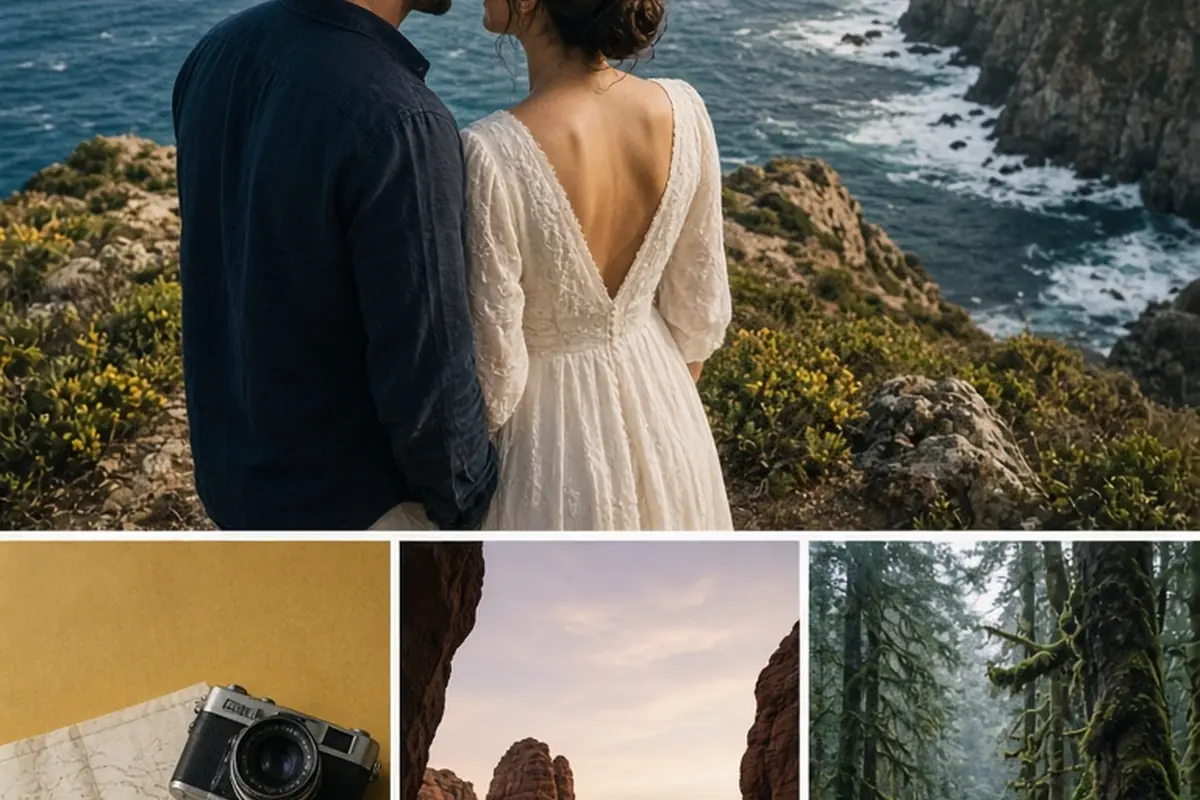
The best places to elope combine dramatic natural scenery, manageable legal logistics, and sufficient privacy for an intimate ceremony. Top United States locations include Big Sur for rugged coastal cliffs, Sedona for red rock canyons, and Olympic National Park for diverse mountain and rainforest backdrops. Internationally, the Scottish Highlands and the Italian Dolomites lead for open landscapes and alpine views. Choosing the right spot depends on your physical comfort, travel accessibility, local permitting rules, and regional weather patterns.
Couples increasingly choose elopements to trade the complex production of a conventional wedding for a personal, experiential celebration. Whether exchanging vows on a wind-swept cliffside or inside a quiet alpine valley, the destination you select establishes the logistical foundation, seasonal timing, and emotional atmosphere for your entire ceremony.
Top Mountain Ranges and National Parks for Adventure Elopements
United States national parks offer some of the most expansive natural backdrops for couples seeking an outdoor ceremony. Colorado's Rocky Mountain National Park provides accessible high-elevation alpine lakes and jagged granite peaks, with designated wedding sites like 3M Curve and Sprague Lake catering specifically to small gatherings. Further north, Grand Teton National Park in Wyoming delivers sheer vertical relief rising directly from valley sage flats. Both destinations offer distinct seasonal personalities: late June through August yields vibrant wildflowers and clear trails, while September introduces golden aspen foliage alongside crisp, dropping temperatures.
For couples drawn to deep canyons and ancient geology, Zion National Park in Utah and Yosemite National Park in California present monumental scale. Yosemite Valley boasts towering granite icons like El Capitan and Half Dome, alongside mist-filled waterfalls that peak in late spring. Zion offers towering red Navajo sandstone walls and intimate canyon alcoves. The trade-off for this dramatic scale is high visitor traffic. Securing seclusion in these flagship parks requires couples to schedule ceremonies at dawn or during the shoulder seasons of late autumn and early spring, while navigating rigorous park-specific permit windows.
Coastal Bluffs and Oceanfront Sanctuaries
Coastal landscapes provide dynamic movement, crashing surf, and shifting light that create an immediate sense of scale. California's Big Sur coastline remains one of the world's premier coastal elopement corridors, where ancient coastal redwoods meet precipitous ocean bluffs along Highway 1. Locations such as Glen Oaks and nearby state reserves allow couples to stand among old-growth trees in the morning and exchange vows on an ocean overlook by sunset. Farther north, the southern Oregon Coast features moody sea stacks, secluded sea coves, and dramatic headlands like Samuel H. Boardman State Scenic Corridor, where public beach access is protected by state law.
For tropical settings with rugged topography, the Hawaiian island of Kauai stands apart from more developed resort islands. The sheer cliffs of the Napali Coast and the sweeping crimson gorges of Waimea Canyon provide diverse, striking environments within a relatively compact island. Island elopements require careful attention to local micro-climates; the north shore of Kauai receives substantially more rainfall than the sunny southern beaches of Poipu. When choosing a coastal environment, couples must prepare for maritime wind, sudden marine layers of fog, and changing tide charts that directly affect shoreline accessibility and safety.
European Alpine Peaks and Historic Open Landscapes
International elopements allow couples to combine their wedding vows with an immersive travel experience. The Scottish Highlands, particularly the Isle of Skye and the Glencoe valley, offer brooding, cinematic topography marked by rolling green glens, ancient ruined castles, and sheer basalt ridges like the Quiraing. Scotland's open-access laws and forward-thinking marriage regulations permit couples to marry almost anywhere outdoors, provided a registered celebrant conducts the service. However, couples must prepare for rapidly shifting weather, persistent rain showers, and cool winds, which demand sturdy footwear and layered wedding attire.
In continental Europe, the Italian Dolomites and the Swiss Alps deliver alpine scenery supported by extensive mountain infrastructure. In regions like Cortina d'Ampezzo or Val Gardena in Northern Italy, modern cable cars and funiculars transport couples to high-altitude plateaus and pristine mountain huts without requiring hours of technical mountaineering. This setup lets couples capture dramatic panoramic summit views while staying close to refined dining and boutique accommodations. Navigating official marriage paperwork abroad can prove time-consuming, leading many couples to complete their legal filing at home before holding a symbolic, vow-focused ceremony overseas.
Desert Canyons and Warm Weather Basins
Arid destinations provide warm terracotta palettes, reliable sunshine, and striking rock formations that appeal to couples seeking dry, clear weather. Sedona, Arizona, is world-renowned for its vivid red sandstone buttresses, vortex sites, and accessible trailheads like Cathedral Rock and Bell Rock. The ambient light reflecting off desert stone during the final hour before sunset creates exceptional warmth for photography. Similarly, Moab, Utah, offers dramatic desert architecture, flanked by Arches National Park, Canyonlands National Park, and thousands of acres of public land along the Colorado River corridor.
Desert ceremonies demand specific logistical precautions regarding heat, hydration, and terrain conservation. Midsummer temperatures in the American Southwest regularly exceed safe levels for outdoor formal gatherings, making October through April the optimal window for comfortable ceremonies. Couples and their vendors must also respect delicate biological soil crusts, which take decades to regenerate once trampled. Off-road access often requires renting four-wheel-drive vehicles to reach remote canyon viewpoints, adding a practical consideration to day-of transportation.
Navigating Public Land Permits, Legal Jurisdictions, and Rules
Holding a ceremony in a pristine natural setting requires navigating administrative rules that protect public lands and ensure orderly use. Most national parks, national forests, state parks, and conservation areas require a Special Use Permit for wedding ceremonies, regardless of whether guest count is limited to just two people. These permits outline where you can stand, how many vehicles may park, whether chairs or arches are allowed, and what acoustic instruments, if any, can be played. Application deadlines vary widely; some national parks accept permits up to a year ahead, while others only review requests within a sixty-day window.
Legal marriage requirements differ dramatically across local jurisdictions. A handful of United States jurisdictions, including Colorado and Washington, D.C., allow self-solemnization, meaning a couple can legally sign their own marriage license without an ordained officiant or witnesses present. In contrast, other states mandate an authorized officiant and two adult witnesses. For destination elopements, research whether the local county clerk requires an in-person appointment during standard business days prior to your ceremony, and account for mandatory waiting periods between license issuance and the marriage ceremony.
Budget Variables and the True Costs of Remote Elopements
While eloping circumvents large catering bills, ballroom rentals, and guest entertainment costs, it introduces specialized line items that couples must budget carefully. Primary expenses include high-end destination photography, travel and lodging accommodations, specialized beauty vendors willing to travel on-site, and land-use permit fees. Experienced elopement photographers often serve dual roles as location scouts, permit advisors, and timeline planners, which is reflected in their professional rates. Additionally, floral designers must construct travel-ready bouquets that will not wilt under direct sun or break apart in high winds.
Dynamic travel markets and seasonal demand directly affect overall elopement costs. Commercial flight fares, specialty rental vehicles, and boutique lodging in gateway towns experience sharp price hikes during peak summer and fall foliage months. Permit fees set by administrative agencies are subject to periodic regulatory updates. When requesting vendor estimates, ask whether travel stipends, lodging reimbursements, park entrance fees, and commercial liability coverage are included in the baseline quote or billed separately. Securing written agreements early ensures cost predictability.
A Strategic Framework for Choosing Your Elopement Destination
Selecting the ideal elopement spot begins with assessing your collective tolerance for physical adventure, environmental exposure, and travel logistics. If you thrive on hiking into backcountry wilderness and do not mind dirt on your hemline, remote national park trails or rugged mountain passes suit your goals. If you prefer high scenery paired with straightforward access, consider state parks with drive-up overlooks, private cliffside rental villas, or alpine locations accessible via public gondolas.
Next, weigh your privacy needs against destination fame. World-famous locations like Lake Louise in Banff or Horseshoe Bend in Arizona attract heavy crowds, tour buses, and casual onlookers throughout normal daylight hours. If privacy is paramount, explore adjacent national forests, state-managed recreation areas, or lesser-known regional parks that feature comparable geological formations without the high visitor volume. Selecting a midweek date—such as a Tuesday or Wednesday—further minimizes foot traffic and broadens vendor availability across all destinations.
Frequently asked questions
Do we need an officiant and witnesses to elope outdoors?
Officiant and witness requirements depend strictly on the state or country where you obtain your marriage license. States like Colorado permit self-solemnization, allowing couples to legalise their union without an officiant or witnesses, while most other states require an ordained officiant and up to two witnesses. Many couples choose to file legal paperwork at their local courthouse beforehand, which frees them to conduct a purely symbolic outdoor ceremony anywhere in the world.
How far in advance should we apply for outdoor ceremony permits?
You should research permit requirements four to eight months before your intended wedding date. While some state parks can process applications in a few weeks, high-demand national parks like Yosemite or Rocky Mountain have strict permit caps and review calendars that open several months in advance. Always consult the specific park's official Special Use Permit coordinator to verify current processing timelines.
Can we set up an arch, chairs, and flowers at a public land ceremony site?
Most national and state parks strictly limit or prohibit external decor to protect native soil, wildlife, and natural viewsheds. Arches, freestanding structures, carpets, amplified sound, and standard guest chairs are commonly barred on federal lands, though exceptions exist for accessibility needs. Handheld floral bouquets and native arrangements that do not shed non-native seeds are generally accepted under Leave No Trace standards.
What is the best way to handle unpredictable outdoor weather during an elopement?
Handling outdoor weather requires planning dual timelines and wearing functional attire. Choose moisture-wicking undergarments, pack insulated jackets, and select footwear with aggressive tread beneath formal wear. Work with your photographer to establish backup locations—such as lower-elevation tree canopies, sheltered canyon walls, or covered scenic pavilions—if severe rain, high winds, or mountain blizzards develop.
Your next step
Narrow your vision to two distinct landscape types, check the Special Use Permit portals for those specific public lands, and consult a regional adventure wedding photographer to confirm local permit rules and optimal seasonal windows before booking your travel.