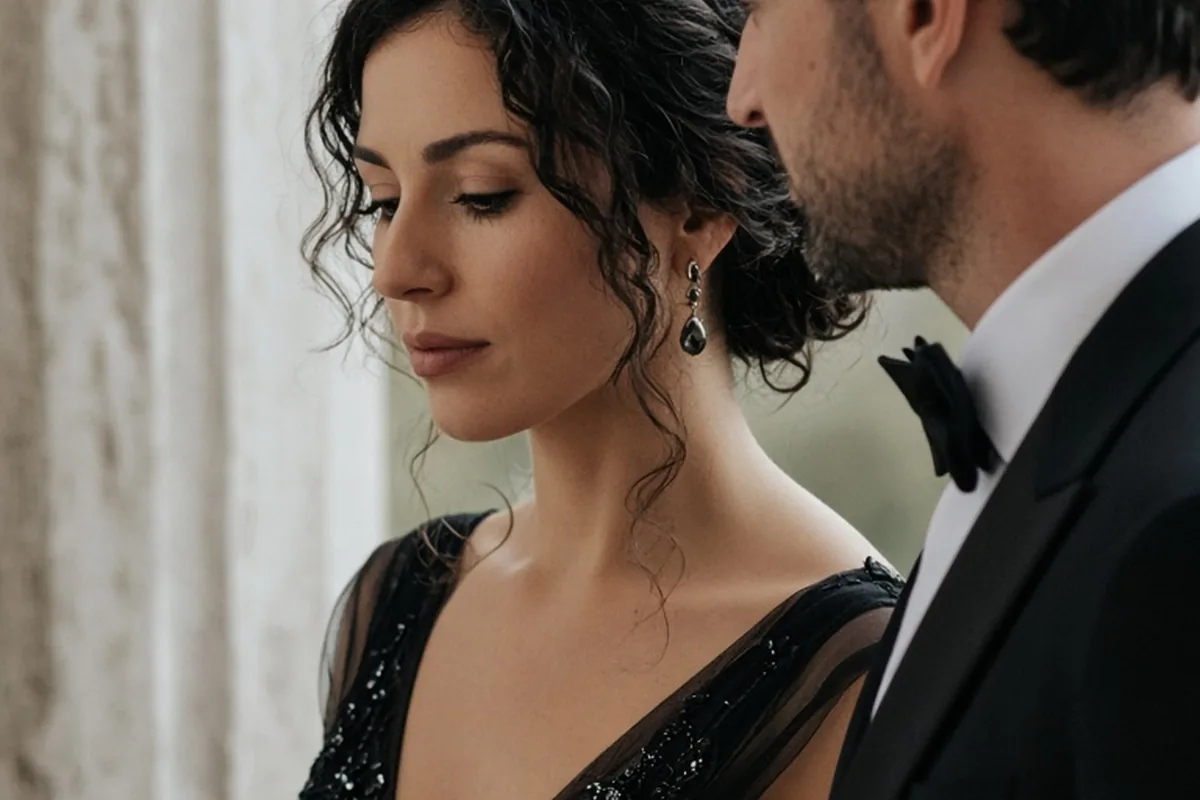
A black tie wedding guest outfit requires formal eveningwear. Women typically wear a floor-length gown, an ultra-formal evening jumpsuit, or an upscale tailored tuxedo. Men wear a traditional black or midnight blue tuxedo with a white dress shirt, black silk bow tie, cufflinks, and black patent leather shoes or formal loafers. High-end fabrics, sophisticated tailoring, and refined accessories are required to match the host's highest level of social formality.
Receiving a wedding invitation marked with a black tie dress code sets a clear expectation of timeless elegance. Navigating the specific etiquette helps you feel confident, celebrate the couple gracefully, and avoid underdressing for one of the most formal social occasions.
The Core Rules for Women's Floor-Length Gowns and Formal Silhouettes
The cornerstone of a traditional black tie dress code for women is a full-length gown. The hemline should brush the top of your shoes or sit just above the floor so that your ankles remain mostly covered when standing still. While tea-length or midi cocktail dresses occasionally appear at less strict formal events, choosing anything shorter than ankle-length for a true black tie reception carries a significant risk of appearing underdressed. High-low hemlines can work only if the rear drape reaches the floor and the fabric carries substantial weight and sheen.
Silhouettes can vary widely depending on personal preference and body proportions. Classic A-line cuts, sleek column gowns, structural trumpet silhouettes, and flowing empire waists all fit the black tie aesthetic provided the garment is crafted with exceptional construction. Look for dresses with internal boning, lined skirts, and thoughtful seamwork that holds its shape throughout an evening of sitting, dining, and dancing. If you choose a dress with a slit, ensure it remains modest enough for a ceremonial setting without requiring constant manual adjustment.
Necklines offer another opportunity to express personal style within formal parameters. Off-the-shoulder cuts, high-neck halters, asymmetric one-shoulder drapes, and classic sweetheart necklines all integrate naturally into formal ballroom settings. When selecting deeper V-necklines or backless silhouettes, verify that appropriate undergarments can be seamlessly integrated into the garment so that lines remain clean under indoor lighting.
Men's Tuxedo Anatomy: Jackets, Lapels, Trousers, and Bow Ties
A black tie invitation for men specifically calls for a tuxedo rather than a standard dark business suit. The fundamental distinction between a suit and a tuxedo lies in the satin or grosgrain facing on the jacket lapels, buttons, pocket trim, and the side stripe running down the outer seam of the trousers. The jacket should be single-breasted with one button or double-breasted with a classic button configuration, rendered in deep black or midnight navy wool. Midnight blue is an authentic alternative that often appears richer and darker under artificial evening lights than standard black.
Lapel style defines the jacket's character. A peak lapel points upward toward the shoulder, broadening the chest and offering a traditional, authoritative appearance. A shawl collar provides a continuous, rounded curve of satin that delivers a softer, vintage mid-century elegance. Notch lapels, while common on contemporary rental tuxedos, are technically derived from business suits and are considered less formal by classic tailoring standards.
The rest of the ensemble requires meticulous coordination. The shirt must be crisp white with either a pleated or pique bib front, fastened with black or metallic studs rather than standard plastic buttons, and secured with French cuffs. Your bow tie must be black, ideally self-tied rather than pre-tied, and matched in fabric finish to your jacket lapels. A traditional cummerbund or low-cut evening waistcoat covers the waistband of the trousers, which should never feature belt loops or be worn with an everyday leather belt.
Gender-Neutral and Tailored Eveningwear Alternatives
Guests seeking gender-neutral or non-traditional eveningwear can easily meet black tie standards through sophisticated, structured tailoring. A bespoke or sharply fitted dinner suit featuring satin-faced peak lapels, wide-leg tuxedo trousers, and an immaculate silk blouse or bib-front shirt creates a striking, elevated silhouette that honors the formality of the venue. The key to making tailored suiting work for any guest is ensuring the textile quality matches evening standards, utilizing fabrics such as heavy silk crepe, velvet, or fine barathea wool.
An evening jumpsuit serves as an exceptional contemporary alternative to a gown. To meet black tie criteria, the jumpsuit must feature an architectural cut, wide or straight-leg trousers that drape cleanly to the floor, and luxurious fabrications. Matte crepe, metallic jacquard, or structured satin jumpsuits paired with dramatic elements like attached capes, asymmetric drapery, or subtle crystal hardware deliver full parity with traditional floor-length dresses.
Footwear and accessories for alternative formalwear should follow evening dress codes. Pair tailored suits and jumpsuits with pointed-toe satin pumps, velvet slippers, patent leather oxfords, or minimalist metallic evening sandals. Keep jewelry intentional, choosing structural cuff bracelets, delicate diamond drops, or geometric collar necklaces that anchor the neckline without clashing with the lapels.
Color Palettes, Patterns, and White-Adjacent Pitfalls to Avoid
Navigating color requires balancing personal expression with traditional wedding etiquette. Jewel tones remain the most universally flattering and appropriate choices for evening events: deep emerald green, sapphire blue, rich ruby, plum, and warm amethyst naturally complement the dim, warm lighting of formal evening receptions. Classic black is widely accepted and celebrated for modern black tie weddings, providing a timeless backdrop for fine jewelry and sharp tailoring.
Equally important is knowing which colors to avoid entirely. Any shade approaching white, ivory, cream, eggshell, champagne, or very pale silver must be avoided to ensure the couple remains the sole visual focus of the event. Extremely light pastels such as pale blush, powder blue, or butter yellow can easily wash out under photographic flash and appear white in reception photographs, creating accidental etiquette blunders.
Patterns should be approached with restraint. While small-scale jacquards, subtle tone-on-tone brocades, and refined midnight-hued florals woven directly into evening fabrics can work beautifully, large casual prints, daytime sundress florals, and high-contrast geometric prints disrupt the visual cohesion of a formal ballroom. If you select a patterned piece, ensure the ground color is dark or rich and the fabric has an unmistakable evening sheen.
Fabric Selection and Seasonal Adaptations for Every Climate
The choice of fabric dictates both the visual weight and comfort of your black tie ensemble across different seasons. For autumn and winter weddings, heavy-weight fabrics such as silk velvet, duchess satin, brocade, and structured mikado provide thermal warmth while exuding dramatic formal polish. Men can opt for heavier wool barathea or a tailored velvet dinner jacket in deep burgundy, bottle green, or midnight navy, provided the trousers remain classic black formal wool.
For spring and summer celebrations, eveningwear must remain formal while managing higher temperatures and humidity. Lightweight silk chiffon, georgette, faille, and lightweight crepe allow effortless movement and airflow without compromising on structure or elegance. Avoid casual warm-weather textiles such as linen, cotton poplin, seersucker, or raw jersey, as these fabrics wrinkle easily and lack the necessary evening polish.
Outerwear requires equal foresight when transitioning between outdoor arrival areas and indoor reception halls. Women should coordinate their gowns with formal wrap options such as a tailored evening coat, a structured silk capelet, or a refined faux-fur stole for cold evenings. Men should wear a classic dark wool or cashmere overcoat over their tuxedo rather than everyday down jackets or casual raincoats.
Footwear, Evening Bags, and Jewelry Coordination
Accessories serve as the finishing touches that pull a black tie outfit together into a cohesive, polished statement. Footwear must balance aesthetic refinement with practical stamina for multiple hours of standing and dancing. For women, open-toe evening sandals, pointed satin pumps, or embellished block-heel shoes in metallic tones or classic black work best. Adding cushioned inserts or testing shoe height prior to the wedding prevents mid-reception discomfort.
For men, traditional footwear choices are clearly defined. Black patent leather oxfords or plain-toe derby shoes represent the traditional gold standard. Alternatively, polished black calfskin dress shoes buffed to a high shine, or formal velvet evening slippers featuring a grosgrain ribbon or minimal embroidery, provide a distinguished, sartorial finish. Everyday matte brogues with decorative perforations should be avoided, as their heritage is daytime country wear rather than formal eveningwear.
Bags must be petite and structured. Daytime totes, crossbody shoulder bags with casual webbing straps, and large slouchy leather purses are incompatible with eveningwear. Choose a rigid metal minaudière, an envelope clutch in satin or velvet, or a delicate chain-strap micro-bag that holds only essentials like identification, lipstick, and a phone. Jewelry should focus on balance: if wearing a dramatic statement necklace, choose discreet stud earrings; if wearing ornate chandelier earrings, leave the neckline bare.
Renting Versus Buying Your Black Tie Ensemble
Deciding whether to rent or purchase a black tie outfit comes down to your long-term social calendar, budget flexibility, and fit requirements. Purchasing a timeless black tuxedo or a classic floor-length gown in a neutral jewel tone makes practical sense if you anticipate attending multiple formal charity galas, opera performances, or black tie weddings over the next three to five years. Owning your outfit allows you to invest in precision alterations, ensuring the shoulder seams, sleeve lengths, and trouser breaks fit your body flawlessly.
Rental services offer an economical, low-commitment avenue for guests who attend formal events infrequently or prefer not to repeat statement gowns across shared social circles. Modern rental platforms provide access to high-end designer pieces at a fraction of their retail cost. However, rental garments cannot undergo permanent tailoring, which means you must carefully review size charts, customer review photos, and backup size options to guarantee a proper fit on the day of the event.
If you decide to purchase, factor the timeline for tailoring into your preparation schedule. Altering hem lengths, adjusting jacket waists, and tapering trouser legs typically requires one to three weeks at a trusted tailor. When renting, schedule the garment to arrive two days before the wedding so you have adequate time to steam out shipping creases, select appropriate undergarments, and confirm your shoe height coordinates with the factory hemline.
Frequently asked questions
Can a woman wear a black dress to a black tie wedding?
Yes, wearing black to a black tie wedding is completely acceptable and common in modern formal etiquette. Ensure the dress is floor-length and styled with elevated evening jewelry, refined shoes, and a chic clutch to maintain a celebratory, elegant look.
Is a dark navy business suit acceptable if I do not own a tuxedo?
A standard dark suit does not technically fulfill a strict black tie dress code because it lacks satin lapel facings and coordinating tuxedo details. If you cannot obtain a tuxedo, wear your darkest charcoal or midnight suit with a crisp white shirt, conservative dark silk tie, and high-shine black dress shoes, but consider renting a proper tuxedo if possible.
What is the difference between black tie and black tie optional?
A black tie dress code strictly requires floor-length gowns and formal tuxedos. Black tie optional signals that the hosts encourage full formalwear, but guests who do not own a tuxedo may wear a dark suit, conservative tie, or an upscale formal midi-to-maxi dress without feeling out of place.
Can I wear open-toed shoes to a black tie wedding?
Yes, women can wear elegant open-toed evening sandals featuring metallic finishes, satin straps, or delicate crystal embellishments. However, casual cork wedges, flat beach sandals, and chunky daytime platforms are inappropriate for black tie settings.
Your next step
Review your wedding invitation details today, check your wardrobe or rental availability at least four weeks in advance, and schedule any necessary garment alterations early.