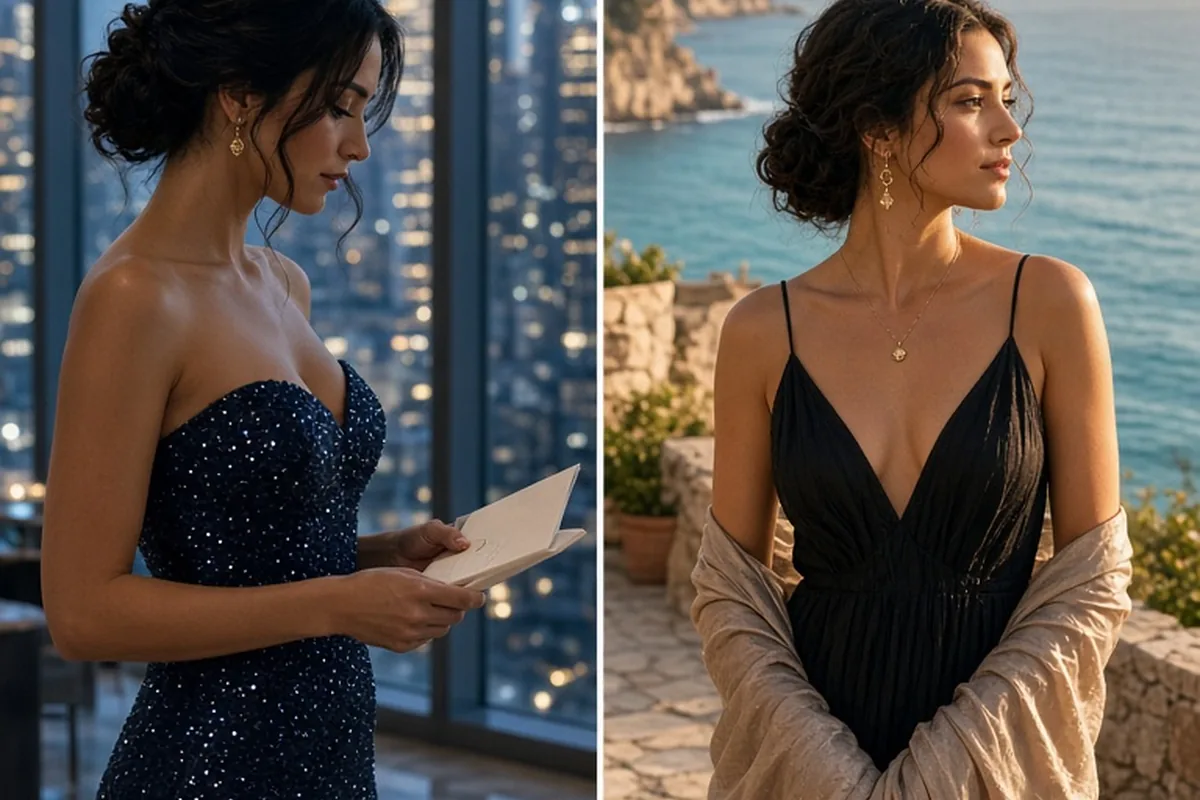
A black tie wedding guest outfit centers on a formal floor-length evening gown, a traditional tuxedo, or an impeccably tailored dark formal suit with a bow tie. However, your specific venue location determines fabric weight, footwear choices, color palettes, and layering pieces. While urban ballrooms call for structured silks and classic patent leather, coastal resorts require breathable crepes and block heels, European estates demand stone-friendly footwear and rich textures, and alpine venues necessitate wool-crepe, velvet, and structured outerwear.
Receiving a wedding invitation with a black tie dress code establishes a clear standard of formal elegance, yet the setting where the celebration unfolds introduces crucial practical variables. A ballroom on a metropolitan rooftop creates entirely different physical demands than a stone terrace overlooking the Mediterranean or a tented lawn in wine country. Navigating these differences requires honoring timeless sartorial rules while adapting materials, silhouettes, and footwear to match climate, terrain, and local ambiance.
Black Tie Wedding Guest Outfits for Urban Ballrooms and City Clubs
Metropolitan venues such as historic luxury hotels, private city clubs, and modern museum atriums represent the most traditional environment for black tie attire. In these settings, adherence to classic formalwear standards is paramount. For tuxedo wearers, this means a single-breasted dinner jacket with satin or grosgrain peak lapels or a shawl collar, accompanied by matching black trousers with a single side stripe, a white pique or pleated formal shirt with studs, black cuff links, and a self-tied black silk bow tie. Black patent leather oxford shoes or polished leather opera pumps provide the standard foundation.
For guests choosing evening gowns, urban ballrooms allow for architectural silhouettes, heavyweight fabrics, and dramatic floor-skimming hems. Structured fabrics like silk mikado, heavy crepe, taffeta, and duchess satin hold their shape beautifully in climate-controlled indoor environments. Deep jewel tones, classic black, navy, charcoal, and rich metallics complement the polished stone, crystal chandeliers, and grand architecture typical of city landmarks. Fine jewelry, a sleek hard-shell clutch, and classic stiletto heels or slender formal pumps complete the ensemble effortlessly, as flat indoor floors present no terrain challenges.
Coastal Resorts and Tropical Destination Black Tie Attire
When black tie events take place in warm, humid coastal settings such as the Caribbean, Hawaii, Florida, or the Amalfi Coast, maintaining formal rigor while staying comfortable requires strategic fabric selection. Heavy wools and stiff synthetic brocades can quickly become stifling under high heat and humidity. Instead, choose tailored tuxedos constructed from tropical-weight wool, high-twist fresco wool, or refined silk-wool blends that allow airflow without losing their sharp drape. In tropical destination weddings where the invitation specifies warm-weather black tie, an ivory dinner jacket paired with black tuxedo trousers, a formal shirt, and a black bow tie serves as a classic, climate-appropriate alternative.
For gowns, lightweight yet luxurious textiles like silk chiffon, airy georgette, organza, or high-grade lightweight silk crepe provide effortless movement in coastal breezes while maintaining the floor-length requirement. Saturated jewel tones, vibrant ocean-inspired shades, and elegant botanical-inspired prints on elevated fabrics can feel refreshing against a seaside backdrop, though neon tones and casual cotton prints should always be avoided. Footwear must account for potential boardwalks, stone paths, or deck surfaces; refined metallic block heels, dressy platform sandals, or formal wedges with delicate straps offer stability without compromising elegance.
European Castles, Historic Villas, and Country Estates
Historic European estates, French châteaux, and Italian villas present an atmosphere steeped in romance and grandeur, but they often present practical challenges like uneven cobblestones, gravel paths, and unheated stone halls. Dressing for these venues calls for Old World refinement blended with functional foresight. Tuxedo wearers can lean into timeless tailoring, incorporating understated luxury elements like cummerbunds, refined onyx studs, or dark midnight-blue dinner suits that read exceptionally well in historic architectural settings.
Gown selections for historic villas often feature romantic, fluid silhouettes or heritage-inspired detailing, such as delicate lace overlays, jacquards, rich brocades, or subtle metallic threading. Because centuries-old stone structures can remain cool even during summer evenings, packing an elegant outer layer is essential. A tailored evening jacket, cashmere-silk wrap, or structured capelet prevents chill without disrupting the formal line of the gown. For navigating ancient courtyards and gravel drives, stiletto heels can be hazardous; opt for supportive wider heels, dressy block-heel sandals, or discreet heel protectors designed to prevent sinking into gravel and catching between flagstones.
Mountain Lodges, Alpine Chalets, and Winter Destinations
Winter weddings held at alpine ski resorts, mountain lodges, or cold-climate estates demand formalwear that provides warmth while upholding black tie sophistication. In sub-freezing temperatures, the fabric weight of your outfit serves as the primary barrier against the elements. Tuxedos crafted from heavier wool flannel, barathea wool, or deep velvet provide substantial thermal comfort while exuding luxury. A black, midnight navy, or dark forest green velvet dinner jacket paired with classic black tuxedo trousers is an especially fitting choice for alpine evening receptions.
For floor-length dresses, long sleeves, higher necklines, and insulating fabrics such as heavy velvet, wool-crepe, brocade, and lined double-faced silk offer superior warmth. Consider incorporating discreet thermal base layers beneath wide-leg formal jumpsuits or voluminous ball skirts if spending any time outdoors for ceremonies or photos. Outerwear cannot be an afterthought; standard casual winter coats will detract from the overall aesthetic. Invest in a tailored full-length wool or cashmere overcoat, an elegant faux-fur stole, or a heavy formal evening cape. Closed-toe formal footwear, such as embellished satin pumps or sleek formal dress boots worn under floor-length hems, protects against cold floors and icy entryways.
Garden Lawns, Vineyards, and Tented Outdoor Settings
Vineyards, private gardens, and manicured outdoor lawns blend natural beauty with black tie elegance, usually under expansive sailcloth tents or clear-span structures. The key to mastering outdoor formalwear is managing exposure to natural elements like wind, sunlight, soft turf, and fluctuating temperatures between late afternoon and evening. Tuxedos should remain formal, with lightweight to mid-weight wools functioning best. Dark sunglasses with classic, discreet frames are permissible during open-air ceremonies, but they should be removed once moving into reception spaces.
When choosing a gown for an outdoor lawn or vineyard, avoid silhouettes with excessively long trains that will sweep across grass, dirt, or damp soil. A tailored floor-length column gown or an A-line silhouette with a hem tailored exactly to skim just above the ground line will prevent staining and tripping. Solid pastel, botanical, or rich earthy jewel tones harmonize beautifully with natural surroundings, provided the fabric remains undeniably formal, such as silk faille or structured organza. Footwear is the most critical logistical consideration: thin stilettos will sink instantly into grass and turf. Choose elegant formal platforms, block-heeled formal sandals, or dedicated heel caps to maintain balance and avoid damaging the venue grounds.
Selecting Footwear and Outerwear Based on Terrain and Climate
Footwear and outerwear are frequently the elements that reveal whether a guest prepared properly for a venue's unique physical setting. While a black tie invitation establishes the required degree of formality, the terrain dictates construction. On soft grass, gravel, historic stones, or seaside decking, traditional stilettos pose safety hazards and risk ruining delicate shoe fabrics like satin or suede. Investing in high-end leather or metallic block heels, tailored formal mules, or specialized clear heel stoppers preserves both your posture and your shoes.
Similarly, outerwear must be considered an integral component of your formal look rather than a functional afterthought left in the cloakroom. For men, a tailored charcoal, navy, or black single-breasted cashmere overcoat should be long enough to completely cover the dinner jacket hem. For women, matching wraps, tailored satin-lined evening coats, wool-cashmere capes, or structured boleros ensure seamless transitions between outdoor ceremony spaces, cocktail terraces, and indoor dining rooms without clashing with the gown's silhouette.
Regional Etiquette, Color Norms, and Cultural Considerations
Regional interpretations of black tie etiquette can subtly influence what feels most appropriate for a guest to wear. On the East Coast of the United States and in major European capitals, black tie leans strictly traditional, favoring subdued palettes, classic tailoring, and minimal deviation from conventional formalwear codes. Black, navy, emerald, burgundy, and deep metallic tones dominate, and tuxedos almost universally feature black bow ties and traditional formal shirts.
In contrast, destination markets like Miami, Southern California, and tropical international resorts frequently welcome more expressive styling. Guests often incorporate brighter hues, creative textures, and bolder jewelry while maintaining the formal floor-length requirement. Regardless of the region, certain universal rules remain unchanged: white, off-white, cream, and bridal pastels that photograph as white should always be avoided, and hemlines should consistently reach the floor unless the invitation specifically notes 'black tie optional' or 'creative black tie'.
Frequently asked questions
Can I wear a midi-length dress to a black tie wedding if the location is outdoors?
Traditional black tie etiquette strictly calls for a floor-length gown regardless of whether the venue is indoors or outdoors. If the wedding is outdoors, opt for a floor-length dress tailored to skim just above the grass rather than switching to a shorter midi dress, unless the invitation specifically states black tie optional.
Are dark suits acceptable instead of a tuxedo for black tie destination weddings?
A classic black tie dress code calls for a formal tuxedo with satin lapels and a bow tie. While some guests may substitute an impeccably tailored dark charcoal or midnight-navy suit in a pinch, a tuxedo remains the proper standard unless the hosts explicitly state that dark suits are acceptable.
What type of shoes should I wear to a black tie wedding on grass or cobblestones?
Choose formal block-heeled sandals, metallic dress platforms, or evening wedges made of refined materials like leather, metallic finishes, or embellished fabrics. Alternatively, attach discreet plastic heel protectors to standard heels to avoid sinking into the lawn or wedging between stones.
Is it acceptable to wear an ivory dinner jacket to an urban black tie wedding?
Ivory dinner jackets are traditionally reserved for warm-weather climates, tropical destinations, outdoor summer country club events, or cruises. For urban ballrooms and metropolitan winter venues, a classic black or midnight-blue tuxedo is the standard and expected choice.
Your next step
Check your wedding invitation for specific venue details and surface conditions, then schedule your tailoring appointments early so your hemline and footwear match the physical environment perfectly.