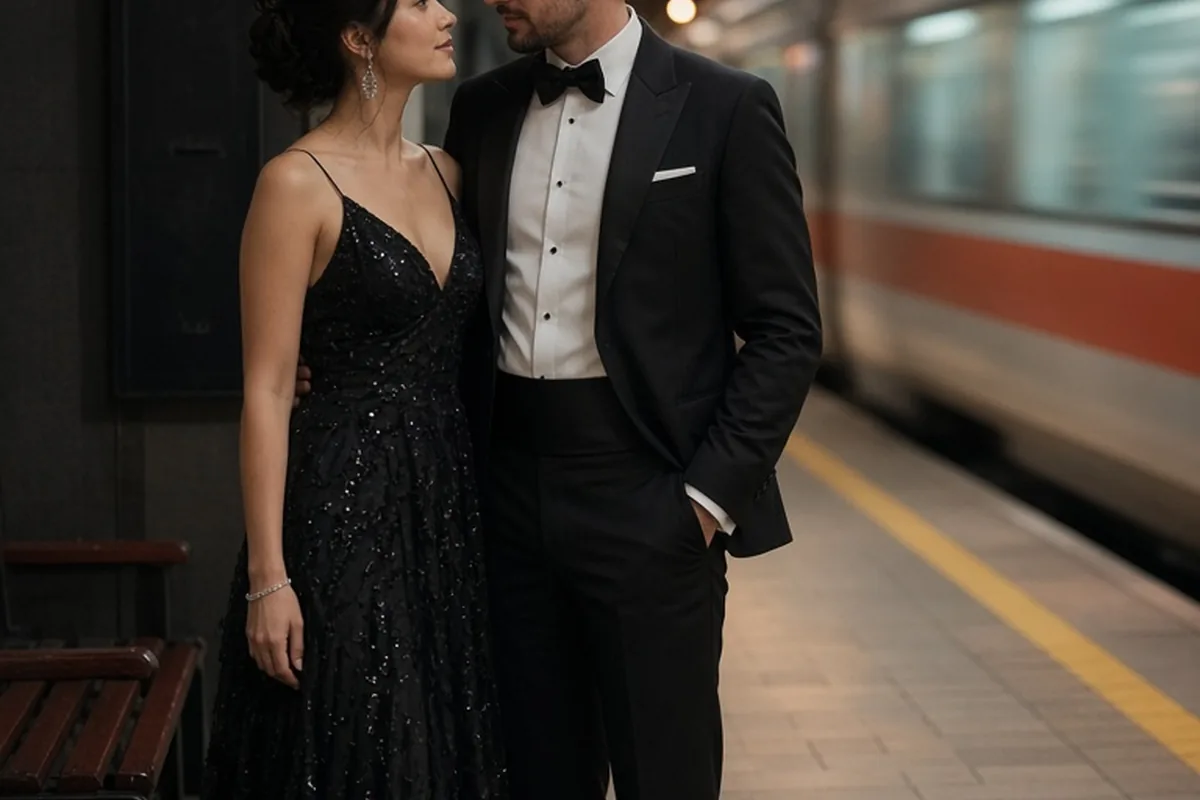
A black tie wedding guest outfit checklist requires formal evening wear: either a floor-length evening gown or a formal dinner jacket or tuxedo. Gown wearers need a hem skimming the floor, refined evening jewelry, a dressy clutch, supportive undergarments, and formal heels or flats. Tuxedo wearers need a black or midnight blue jacket with satin or grosgrain lapels, matching trousers with an exterior side braid, a white pique or pleated formal shirt, black silk bow tie, cufflinks, studs, and patent leather shoes.
Receiving a wedding invitation marked black tie indicates an elevated evening celebration with clear sartorial expectations. Navigating these traditional standards requires balancing personal comfort, climate realities, and established etiquette so you arrive appropriately attired without outshining the couple or feeling underdressed.
The Black Tie Gown Checklist: Silhouette, Fabric, and Hemline
The primary benchmark for feminine black tie attire is a floor-length gown. While tea-length or mid-calf cocktail dresses occasionally appear in less rigorous interpretations, a full-length silhouette ensures you meet the host couple's standard without second-guessing. Look for hemlines that graze the top of your shoes, resting approximately one-half inch to one inch above the ground when standing naturally. A hem that drags on the ground collects dirt and creates a tripping hazard during cocktail hour and dancing, while an excessively high hem risks shifting the silhouette toward semi-formal evening wear.
Fabric selection defines formal luxury just as much as cut. Structured textiles such as heavyweight silk crepe, dupioni, mikado, velvet, and structured jacquard provide clean architectural lines that photograph well under low reception lighting. Fluid fabrics like silk chiffon, georgette, and high-grade satin offer movement for seated dinners and dancing, though satin requires careful garment steaming to prevent visible wrinkles during transit. Avoid cotton blends, casual linens, light day jerseys, and sheer beach-appropriate sundress fabrics, which lack the body and sheen required for black tie venues.
Color choices remain broad, with jewel tones like emerald, sapphire, deep plum, and ruby serving as timeless staples alongside navy, slate, metallic bronze, and formal black. The primary rule is avoiding white, ivory, cream, or pale champagne shades that resemble bridal colors in photography, unless the hosts explicitly request an all-white guest dress code. Rich patterns like tonal brocades can work beautifully, provided the print feels regal rather than tropical or casual.
The Classic Tuxedo Checklist: Jackets, Trousers, and Facing Details
A black tie suit checklist centers on the tuxedo, also known as a dinner jacket ensemble, rather than a business suit. A standard dark lounge suit, even in charcoal or black wool, lacks the specific details that define black tie. The core jacket should be constructed from fine worsted wool or a wool-mohair blend in deep black or midnight blue, which often appears richer than black under artificial indoor lighting. The jacket lapels must feature satin or grosgrain silk facing, typically cut in a peak lapel or shawl collar silhouette. Notch lapels are common in modern off-the-rack rental garments, but peak lapels and shawl collars represent the classical standard.
Tuxedo trousers match the jacket fabric precisely and carry distinctive construction elements that set them apart from standard trousers. They feature a single stripe of silk braid down the outer seam of each leg, matching the silk used on the jacket lapels. These trousers are designed without belt loops, as belts disrupt the flat front of a dinner suit; instead, they feature interior buttons for formal braces or subtle side-tab adjusters. The trouser hem should have a clean, subtle break over your dress shoes without stacking multiple folds of fabric around the ankles.
Jacket closures generally feature a single button covered in matching silk. Double-breasted dinner jackets are equally appropriate and should remain buttoned when standing. Venting is another subtle detail: unvented dinner jackets present the cleanest, most formal drape across the hips, though double side vents provide ease of movement and access to trouser pockets without lifting the jacket hem excessively.
Formal Shirts, Neckwear, and Waist Coverings
A proper black tie shirt is crafted from crisp white cotton featuring either a bib front with vertical pleats or a textured pique panel. The front placket should accommodate removable formal shirt studs rather than sewn plastic buttons, paired with French cuffs that fold back and fasten securely with cufflinks. Collars are traditionally a classic turndown collar, which accommodates a bow tie neatly against the neck; wing collars are technically reserved for white tie morning and tailcoat dress, though they frequently appear in modern black tie selections.
The tie must be a genuine black silk bow tie that matches the texture of your lapel facing, whether satin or grosgrain. Pre-tied bow ties often look stiff and symmetrical, whereas a hand-tied bow tie delivers natural proportion and character. Neckties, regardless of whether they are black silk or designer satin, do not meet black tie standards and belong in cocktail or semi-formal settings. The scale of the bow tie should align with your facial proportions and the width of your jacket lapels.
A waist covering bridges the visual gap between your trouser waistband and the bottom of your shirt front. You can choose between a low-cut black evening waistcoat or a black silk cummerbund. When wearing a cummerbund, the pleats must face upward, honoring the historic function of catching small ticket stubs or theater tokens. If you wear a double-breasted tuxedo, a waist covering is unnecessary because the jacket remains buttoned throughout the evening.
Footwear and Hosiery for Extended Standing and Dancing
Shoes anchor the entire silhouette and must withstand several hours of standing during ceremonies, cocktail receptions, and dance sets. For tuxedo wearers, the most traditional choice is a black patent leather oxford or court pump featuring a grosgrain bow. Highly buffed, mirror-shined black calfskin dress oxfords with a plain toe are also widely accepted if patent leather is unavailable. Loafers, wingtips, brogues, and rubber-soled hybrid dress shoes dilute the formality and should be avoided.
Pair tuxedo shoes with thin, fine black silk or mercerized cotton over-the-calf socks. Over-the-calf length is critical because it prevents bare leg skin from showing when you cross your legs while seated at dinner tables. Ankle socks or patterned novelty socks undermine the sleek line of tailored black tie trousers.
For guests wearing gowns, evening footwear can range from strappy metallic sandals and pointed-toe satin pumps to embellished dress flats. When selecting shoe height, balance aesthetics with stability: outdoor garden ceremonies or historic venues with stone floors often make slim stilettos precarious. Block evening heels or high-end metallic flats preserve comfort without sacrificing elegance. Always finalize your gown alterations wearing the exact pair of shoes you plan to wear to ensure an accurate hemline.
Accessories, Jewelry, Clutches, and Undergarments
Accessories for black tie events should complement your attire rather than overwhelm it. For jewelry, focus on one or two statement elements rather than wearing a full matching set. If your gown features high necklines or elaborate crystal embroidery, pair it with refined drop earrings and a minimalist cuff bracelet. Conversely, an open neckline or strapless silhouette provides an ideal backdrop for a sculptural collar necklace or chandelier earrings.
Your evening bag should be compact and structured. Day totes, shoulder bags with casual leather straps, and oversized cross-body bags disrupt formal tailoring. Opt for a hard-shell minaudiere, an envelope satin clutch, or an embellished metal frame purse. It needs only enough interior capacity to hold essentials: your phone, identification, house key, breath mints, and small touch-up cosmetics.
Foundational undergarments require testing well before the wedding day. Form-fitting gowns require seamless shapewear, backless adhesive bras, or sewn-in soft cups that support without visible bra straps or waistband lines showing through silk fabrics. For tuxedo wearers, a thin white undershirt with a deep V-neck ensures your undershirt collar remains invisible beneath the formal shirt front while absorbing moisture throughout the night.
Weather Layers, Wrap Options, and Grooming Preparation
Black tie weddings occur in every season, making outer layers a functional necessity. Casual parkas, puffer coats, trench coats, or denim jackets compromise your formal appearance during arrivals and departures. Women should consider formal wraps made of cashmere, silk organza, faux fur stoles, or tailored evening capes that drape cleanly over the gown's shoulders. Men should select a tailored black, charcoal, or dark navy wool or cashmere overcoat with clean lapels that fully covers the length of the dinner jacket.
Grooming standards reflect the high formality of the evening. Hair should be neat and styled, whether worn in an intricate updo, smooth blowout, or well-barbered taper. Facial hair should be freshly trimmed and shaped. Avoid overly potent colognes or perfumes; in tightly packed dining rooms and dance floors, light application ensures your fragrance remains personal rather than intrusive to neighboring table guests.
Complete a full dress rehearsal at home at least four days before the wedding. Put on every component simultaneously, from undergarments and cufflinks to shoes and jewelry. Check your mobility by sitting in a straight-backed chair, walking up a flight of stairs, and raising your arms. This rehearsal exposes loose buttons, tight waistbands, or static cling issues early enough to visit a tailor or purchase static spray.
Frequently asked questions
Can a woman wear a chic pantsuit or jumpsuit to a black tie wedding?
Yes, provided the garment is exceptionally formal and tailored from luxurious fabrics such as silk, velvet, or crepe. Look for architectural tailoring, flowing wide-leg trousers, and elevated design details like satin lapels or subtle beading to ensure it matches the formality of a traditional gown.
What is the difference between black tie and black tie optional?
Black tie requires a tuxedo or a floor-length gown without exception. Black tie optional welcomes traditional black tie attire but generously accommodates guests who do not own a tuxedo by allowing a well-tailored dark charcoal or navy suit paired with a white shirt and conservative silk tie, or an upscale ankle-length formal dress.
Can you wear a dark navy or midnight blue tuxedo instead of black?
Yes, midnight blue is a historically rooted and widely celebrated alternative to black. Under warm evening lighting and camera flash, midnight blue appears deeper and richer than jet black, provided the lapels and trouser stripes are faced in black silk for crisp contrast.
Are wristwatches permitted with formal black tie attire?
Traditionally, timepieces were omitted from black tie because checking the hour was considered discourteous to hosts. Modern etiquette permits a discreet dress watch with a thin gold or platinum case and a black leather strap, but sports watches, metal dive watches, and digital smartwatches should be left at home.
Your next step
Try on your complete black tie outfit—including shoes, undergarments, and jewelry—at least one week in advance so you can address hem adjustments or missing cufflinks before the event.