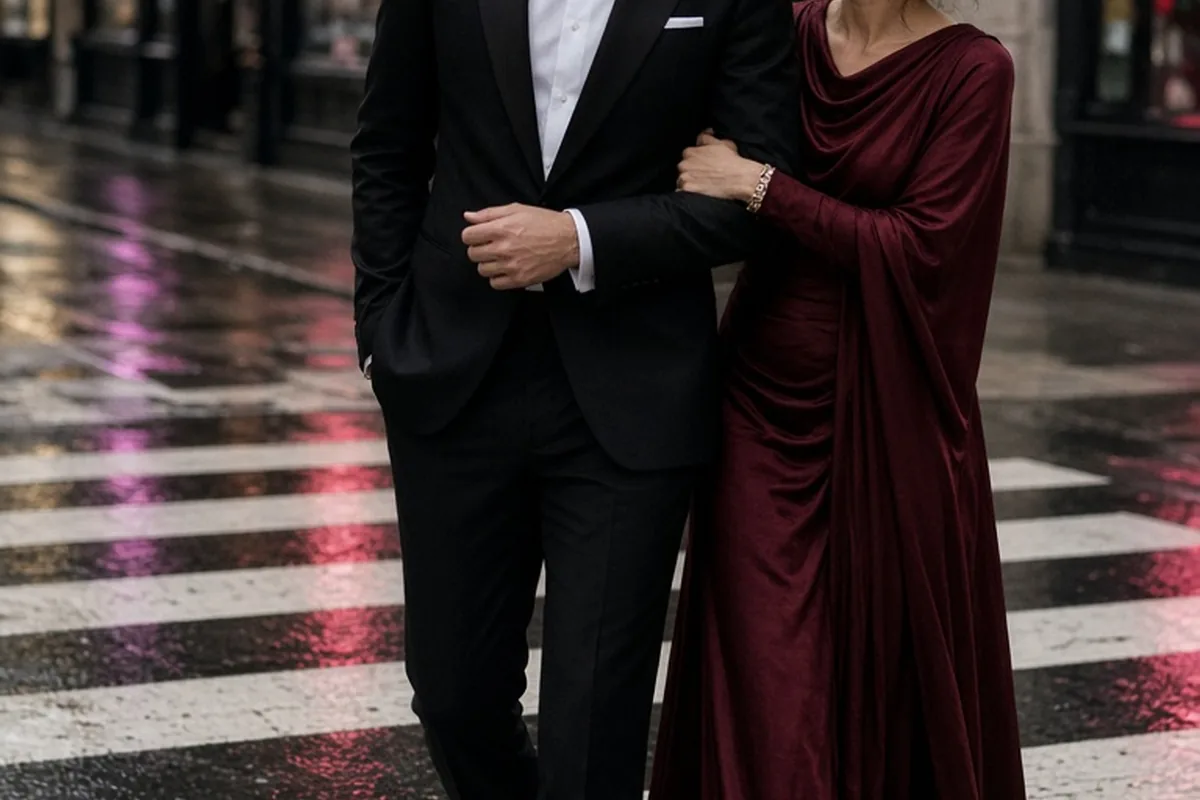
For an intimate 50-guest black-tie wedding, standard formal dress codes remain strictly in effect: wear a classic black or midnight-blue tuxedo with a black bow tie, or an elegant floor-length evening gown. With a smaller guest list, every attendee is more visible to the hosts, fellow guests, and photographers. Prioritize precise tailoring, refined heavyweight fabrics like crepe, velvet, or silk faille, and polished accessories that match the elevated ambiance of an exclusive private venue.
Attending a micro-wedding or boutique celebration with a black-tie dress code presents a unique styling balance. While the 50-guest headcount creates a close-knit, personal atmosphere, the formal designation signals that the couple expects high-end sophistication, making proper garment construction, refined silhouettes, and venue awareness essential.
Why Guest Count Changes the Dynamics of a Black-Tie Dress Code
A black-tie wedding with 50 guests alters the social dynamic compared to a grand ballroom gala with hundreds of attendees. In larger settings, minor dress code deviations or less structured garments might blend into a crowded room. At an intimate gathering, however, the couple interacts directly with nearly every person throughout the evening, and guests frequently appear in candid moments, group portraits, and dinner table photography.
Because an intimate black-tie event is typically hosted in distinct luxury environments—such as private historic estates, boutique hotel courtyards, upscale dining clubs, or chartered yachts—the atmosphere is curated and intentional. Choosing high-quality garments that align with the formal expectation honors the couple's investment in an elevated experience while ensuring you feel poised in close quarters where every detail is perceptible.
Floor-Length Gowns and Elevated Silhouettes for Intimate Celebrations
When selecting a gown for a 50-person black-tie wedding, a true floor-length hemline is standard. Midi dresses, cocktail lengths, and casual sundresses fall short of traditional black-tie requirements and will feel out of place in a small, formal crowd. Look for streamlined silhouettes such as column cuts, gentle A-lines, slip dresses crafted from substantial silk or satin, or structured mermaid gowns that allow effortless movement in private dining rooms.
Fabric selection defines the sophistication of the outfit. Heavy silk crepe, structured mikado, devore velvet, pleated georgette, and matte satin drape cleanly and maintain their form during long seated dinners. Jewel tones like emerald, sapphire, rich plum, and deep ruby, as well as classic black, navy, or warm metallic bronze, work exceptionally well. Avoid stark white, cream, ivory, champagne, and blush tones that can easily mirror the bridal gown, particularly in small groups where color distinctions are obvious.
Tuxedos, Lapel Styles, and Classic Tailoring for a 50-Person Guest List
For guests wearing traditional menswear, a black-tie invitation requires a tuxedo rather than a standard business suit. The foundation consists of a single-breasted or double-breasted jacket with satin or grosgrain silk facings on the lapels. Peak lapels offer a sharp, broad-shouldered classic look, while shawl collars provide a softer, vintage elegance well-suited to intimate estate or dinner-club settings. Midnight blue is an equally formal alternative to deep black, often appearing richer under indoor evening lighting.
Pair the jacket with matching formal trousers featuring a single grosgrain or satin side stripe down the outer seam. A formal white shirt—featuring a pleated, pique, or marcella bib front—should be fastened with black or mother-of-pearl shirt studs and matching cufflinks. Complete the ensemble with a hand-tied black silk bow tie that matches the texture of your lapel facing, a black silk cummerbund or low-cut waistcoat to cover the waistband, and polished patent leather oxford shoes or formal velvet slippers.
Evaluating Venue and Floor Logistics in Small Luxury Spaces
Intimate 50-person black-tie weddings frequently take place in non-traditional luxury venues, which introduces practical physical logistics. Historic townhouses, garden conservatories, mountain chalets, and private club lounges often feature architectural elements like winding staircases, polished parquet, flagstone terraces, or antique area rugs. Footwear choices must account for these surfaces without sacrificing formality.
Select heels or dress shoes that provide stability during cocktail hours and standing conversations. Block-heel formal sandals, secure d'Orsay pumps, or supportive patent leather dress shoes allow you to navigate varying floor textures gracefully. Additionally, verify whether the venue includes stairs between dining and reception areas, as a gown with an excessively long trailing hem may catch on historic floorboards or narrow steps when moving through close spaces.
Selecting Intentional Jewelry, Outerwear, and Accessories
In a smaller gathering, accessories are viewed at conversation distance, making thoughtful, uncluttered choices the most effective. Instead of heavy or distracting statement sets, select one or two focal points, such as diamond or pearl drop earrings paired with a tennis bracelet, or a refined signet ring and tasteful cufflinks. A small, structured evening clutch made of satin, metal, or velvet keeps your hands free and holds essentials without adding bulk at dinner.
Outerwear is an integral part of formal guest styling that is often overlooked until the event day. Arriving in a casual parka, utility jacket, or day coat undermines the polished look of your black-tie attire upon arrival. Choose a tailored wool overcoat, a cashmere wrap coat, a structured velvet cape, or a silk-lined evening shawl that complements the length and color palette of your primary outfit.
Common Dress Code Pitfalls to Avoid at an Intimate Black-Tie Event
The most frequent misstep at a smaller black-tie wedding is assuming the low guest count relaxes the formal requirement. Treating a 50-guest black-tie event as cocktail attire—such as wearing a dark charcoal business suit with a regular necktie or a knee-length party dress—creates an immediate visual disconnect with the rest of the room. Unless the invitation explicitly states black-tie optional or creative black-tie, adhere to the traditional standard.
Another pitfall involves overly voluminous ballgowns or oversized decorative trains. While appropriate for vast hotel ballrooms, massive crinoline skirts can prove awkward when navigating closely spaced dinner tables, narrow bistro-style corridors, or compact dance floors typical of private dining venues. Focus on luxurious texture, clean lines, and tailored precision rather than sheer garment volume.
Practical Timeline for Sourcing, Renting, and Tailoring Your Attire
Achieving a custom, refined fit requires adequate preparation time before the wedding date. Begin sourcing your gown or tuxedo at least six to eight weeks in advance. Whether purchasing a new garment, renting a formal set, or pulling a classic piece from your wardrobe, professional tailoring is the single factor that elevates an outfit from standard to striking.
Schedule an initial alterations appointment four weeks before the event with the exact shoes and undergarments you plan to wear. Gown hemlines should skim the top of your shoe instep without dragging, while tuxedo trousers should have a clean break or no break over the shoe. Pick up the finalized garments one week before the wedding to try them on for a final inspection, leaving time to steam delicate fabrics and assemble matching accessories without last-minute rush.
Frequently asked questions
Can I wear a dark suit instead of a tuxedo to a 50-person black-tie wedding?
If the invitation specifies black tie without the word optional, a tuxedo is expected. In a small group of 50 people, the difference between standard suiting fabric and a tuxedo with silk facings is noticeably apparent, so renting or buying a tuxedo ensures you match the host's level of formality.
Are ankle-length or high-low dresses acceptable for black tie?
A dress that hits the floor is the traditional standard for black tie. While an ankle-skimming dress in a remarkably formal fabric like structured jacquard or embellished silk can occasionally work, true floor-length styles remain the safest and most appropriate choice.
What colors should women avoid wearing as guests at an intimate wedding?
Avoid any shades of white, ivory, cream, champagne, pale blush, or light pastels that could photograph as white. In an intimate room of 50 guests, preserving visual distinction between the guests and the bride is especially important.
Can I wear a velvet dinner jacket for an intimate black-tie evening?
Yes, a tailored velvet dinner jacket in rich tones such as bottle green, burgundy, or midnight navy paired with formal black trousers is an acceptable and stylish variation for evening receptions, particularly during autumn or winter celebrations.
Your next step
Review your invitation's venue details today to determine whether your floor-length gown or tuxedo requires specific shoe modifications or dedicated layering before scheduling your initial tailoring appointment.