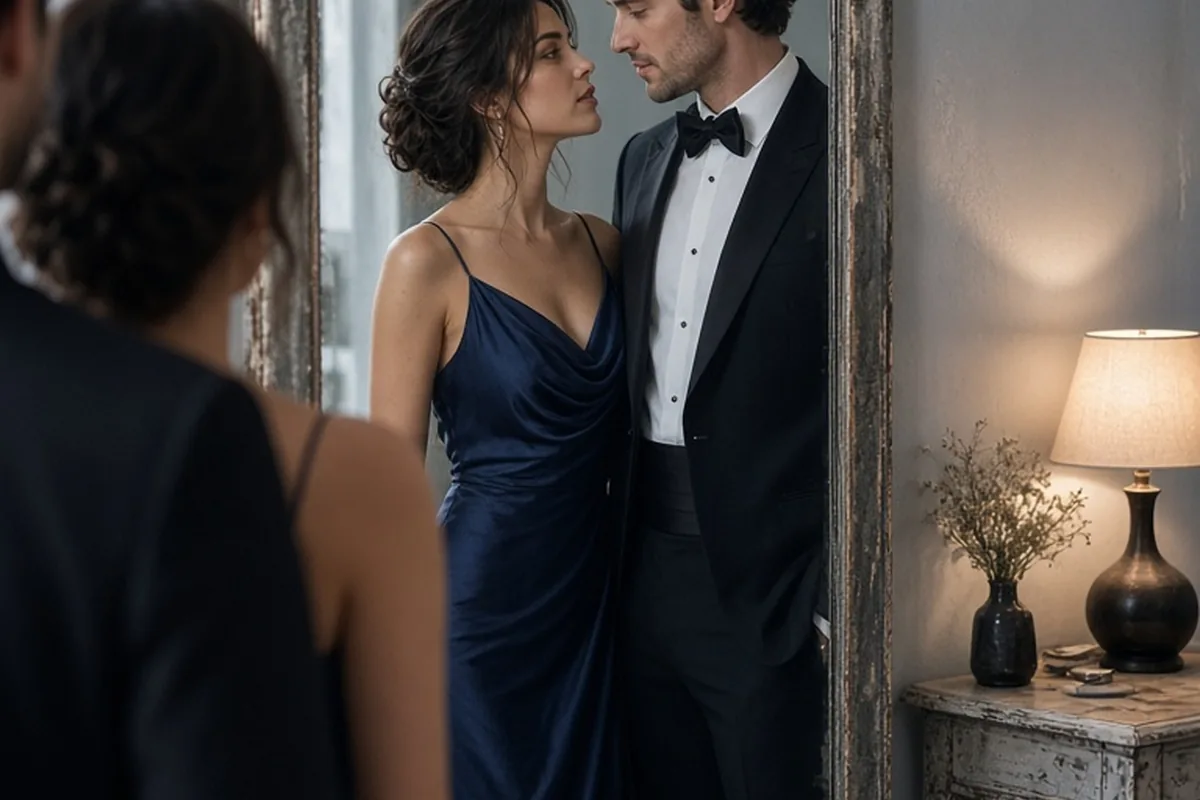
Couples attending a black tie wedding should wear formal evening attire: traditionally, a floor-length evening gown, an elevated dressy pantsuit, or a classic tuxedo with a black bow tie, cummerbund or vest, and patent leather shoes. The goal is visual harmony without matching exact colors or fabrics. Couples should complement each other through balanced formality, aligned tone, and deliberate tailoring, avoiding identical novelty accessories or daytime cocktail silhouettes.
Receiving a black tie wedding invitation brings both excitement and specific wardrobe expectations. For couples, navigating this formal dress code requires balancing two separate silhouettes so you look polished together in photographs and at the reception without appearing overly matched or underdressed.
Decoding the Black Tie Standard for Modern Couples
Black tie remains one of the most clearly defined dress codes in modern social etiquette, yet guest interpretations often waver when invitations arrive. At its foundation, black tie denotes a high-level evening celebration starting after six o'clock, requiring traditional formalwear. For one partner, this baseline standard means a tailored tuxedo rather than a standard dark business suit. For the other, it indicates a full-length evening gown or an exquisitely structured formal pantsuit rather than a knee-length cocktail dress or casual sundress.
Couples frequently encounter hybrid terms on modern stationery, such as 'black tie optional' or 'creative black tie.' In a black tie optional setting, the hosts encourage traditional tuxedos and floor-length gowns while permitting very dark, tailored charcoal or midnight suits with dark silk neckties as an alternative. Creative black tie invites unique textures like velvet dinner jackets or distinct jewel-toned gowns while preserving floor-skimming hems and structured tailoring. When an invitation specifies pure black tie without qualifiers, couples should assume full traditional formality is expected across the entire event.
Evening Gown and Dress Decisions: Lengths, Fabrics, and Silhouettes
When choosing an evening gown for a black tie wedding, floor-length silhouettes are the standard benchmark. While a structured ankle-grazing tea-length gown made of heavy, opulent fabric can occasionally pass in less traditional settings, a hemline that touches the top of the shoe remains the safest choice. Fabrics dictate the formal level just as much as cut; materials such as silk crepe, velvet, structured mikado, heavy satin, and delicate chiffon convey the weight and luxury appropriate for evening galas. Lightweight jersey, daytime linen, eyelet cotton, or unlined polyester knits generally fail to meet the visual weight of a black tie room.
Design elements like necklines, back cutouts, and leg slits require careful balancing against the venue context. A deep neckline or high leg slit works best when paired with an otherwise modest, structured silhouette to maintain an air of formal sophistication. High-end tailored jumpsuits or tuxedo-inspired evening suits for women are also completely appropriate for black tie, provided they feature evening-ready textiles such as silk lapels, structured brocade, or fluid crepe paired with statement fine jewelry. Avoid white, ivory, cream, and champagne shades to ensure the couple hosting the celebration remains the clear focal point.
Tuxedo and Formal Menswear Essentials: Lapels, Collars, and Shoes
A proper tuxedo differs fundamentally from an everyday dark business suit through distinct construction details. Traditional tuxedos feature satin or grosgrain facing on the lapels, matching fabric buttons, and a continuous silk or grosgrain stripe down the outer side seam of the trousers. Peak lapels offer a sharp, broad-shouldered classic silhouette, while shawl collars present a softer, mid-century formal elegance. Notch lapels, while common in contemporary rental collections, are derived from business suits and are generally viewed as less strictly traditional for true black tie occasions.
Finishing the tuxedo requires attention to the shirt, waist, and footwear. The formal evening shirt should feature either a pleated bib or a pique front, accompanied by a fold-down or classic wing collar and French cuffs secured with refined cufflinks. The shirt front typically fastens with black or mother-of-pearl studs rather than standard plastic buttons. A waist covering—either a low-cut formal evening waistcoat or a black pleated silk cummerbund worn with the pleats facing upward—bridges the gap between shirt and waistband. Footwear must consist of high-gloss black patent leather oxfords, formal patent pumps with grosgrain bows, or well-maintained black velvet slippers.
Coordinating Outfits as a Couple Without Looking Overmatched
A common dilemma for couples is determining how closely their outfits should mirror each other. The primary rule of couple coordination at a formal event is harmonization rather than direct matching. Selecting a pocket square, cummerbund, or bow tie made from the exact same swatch of satin as a partner's emerald, burgundy, or navy gown produces a costume-like aesthetic reminiscent of a high school prom. High-formality dressing relies on understated contrast and mutual refinement rather than uniform color blocks.
Instead of matching colors directly, coordinate through overall tone, formality level, and metal accents. If one partner selects an ornate, heavily beaded jewel-toned dress, the other partner's classic, unembellished black tuxedo provides the ideal visual counterweight. If both partners wear suits or tuxedos, they can coordinate by choosing complementary tones—such as one in classic black and the other in deep midnight blue or rich plum velvet—while keeping shirt collars and footwear classic. Harmonizing jewelry metals, such as pairing gold cufflinks with gold earrings and bracelet stacks, creates subtle visual cohesion without looking staged.
Solving Weather, Venue Terrain, and Outerwear Dilemmas
Formal events frequently present logistical hurdles when ceremonies take place on historic estates, coastal lawns, or during cold winter months. Outerwear must match the elegance of what lies beneath; casual puffy parkas, denim jackets, and sporty trench coats detract immediately from an evening look. For cold weather, opt for a full-length tailored wool or cashmere overcoat in black, charcoal, or navy, or an elegant faux-fur wrap, tailored cape, or heavy velvet shawl that complements gown proportions.
Footwear logistics require foresight, particularly when transitioning across historic cobblestones, gravel paths, or lush grass during cocktail hours. For heel wearers, selecting a sturdy block heel, an architectural wedge, or using discreet clear heel stoppers prevents sinking into turf and protects delicate satin or leather heels from permanent damage. Carrying a slim pair of foldable flats or switching into clean formal footwear inside the venue allows couples to navigate uneven arrival pathways comfortably without compromising reception etiquette.
Renting Versus Purchasing: Fitting Timelines and Alteration Realities
Deciding whether to rent or purchase black tie attire depends on how frequently a couple expects to attend formal functions and how precise they need the fit to be. Off-the-rack rental services offer convenience and lower immediate upfront costs, but rental garments rarely offer the tailored silhouette that elevates black tie attire. Rental trousers and jacket sleeves often fit generally rather than precisely, as rental companies do not allow permanent alterations to hem lengths, waist taper, or sleeve proportions.
Purchasing formalwear allows for customized tailoring, which is often the true differentiator between an average outfit and a striking one. A reasonably priced suit or gown tailored specifically to your measurements will consistently look more refined than an expensive designer garment that fits poorly. If choosing to purchase, secure garments at least six to eight weeks before the wedding to allow time for professional alterations, including sleeve adjustments, trouser breaks, waist suppression, and hem adjustments tailored to your exact event shoes.
Undergarment Strategy, Bags, and All-Night Practical Logistics
Sustaining comfort and confidence through a six-hour formal event requires practical planning behind the scenes. Evening gowns often feature structured bodices, open backs, or fine silk fabrics that reveal foundation lines. Investing in seamless, skin-toned undergarments, specialized backless adhesive support, or built-in cups during alteration appointments prevents wardrobe adjustments throughout the evening. Test all shapewear and undergarments together with your shoes and gown during the final fitting to confirm freedom of movement for sitting and dancing.
Bag space is minimal in black tie settings, where compact clutches or small structured minaudières are customary. Because an evening clutch holds little more than a phone, lipstick, identification, and a compact mirror, couples should distribute shared essentials strategically. The partner wearing a tuxedo jacket can carry slim items like room keys, breath mints, and credit cards in interior jacket pockets. Avoid bulky key fobs or overfilled wallets that disrupt the clean line of tailored jacket chests and trouser pockets.
Frequently asked questions
Can a woman wear a dark floral or patterned gown to a black tie wedding?
Yes, women can wear patterned or floral gowns provided the fabric and silhouette remain elevated and formal. Rich jacquards, dark-ground brocades, and subtle watercolor prints on silk or organza work beautifully for black tie, whereas casual day prints like gingham or light cotton sundress florals are inappropriate.
Is a regular black business suit acceptable if I do not own a tuxedo?
For a strict black tie event, a tuxedo is expected. However, if obtaining a tuxedo is not possible, a tailored solid black or deep charcoal suit worn with a crisp white shirt, conservative dark silk tie, and high-shine black dress shoes is the most respectful alternative.
Should a man wear a watch with a tuxedo at a formal wedding?
Traditional black tie etiquette discouraged wristwatches to signal that guests were not tracking time during an intimate social event. In modern settings, a slim, elegant dress watch with a black leather strap and simple dial is acceptable, while bulky sports watches and rubber smartwatches should be avoided.
Can two women or two men coordinate without wearing identical outfits?
Yes, same-gender couples can achieve an elegant, unified presence by varying textures, shades, or silhouettes within the same formal framework. For example, two women might wear gowns in complementary jewel tones, while two men might choose classic black tuxedos with subtle distinctions in lapel style or cufflinks.
Your next step
Review the wedding invitation details and venue setting today, then schedule any necessary rental bookings or tailoring appointments at least six weeks in advance to ensure properly fitted formalwear.