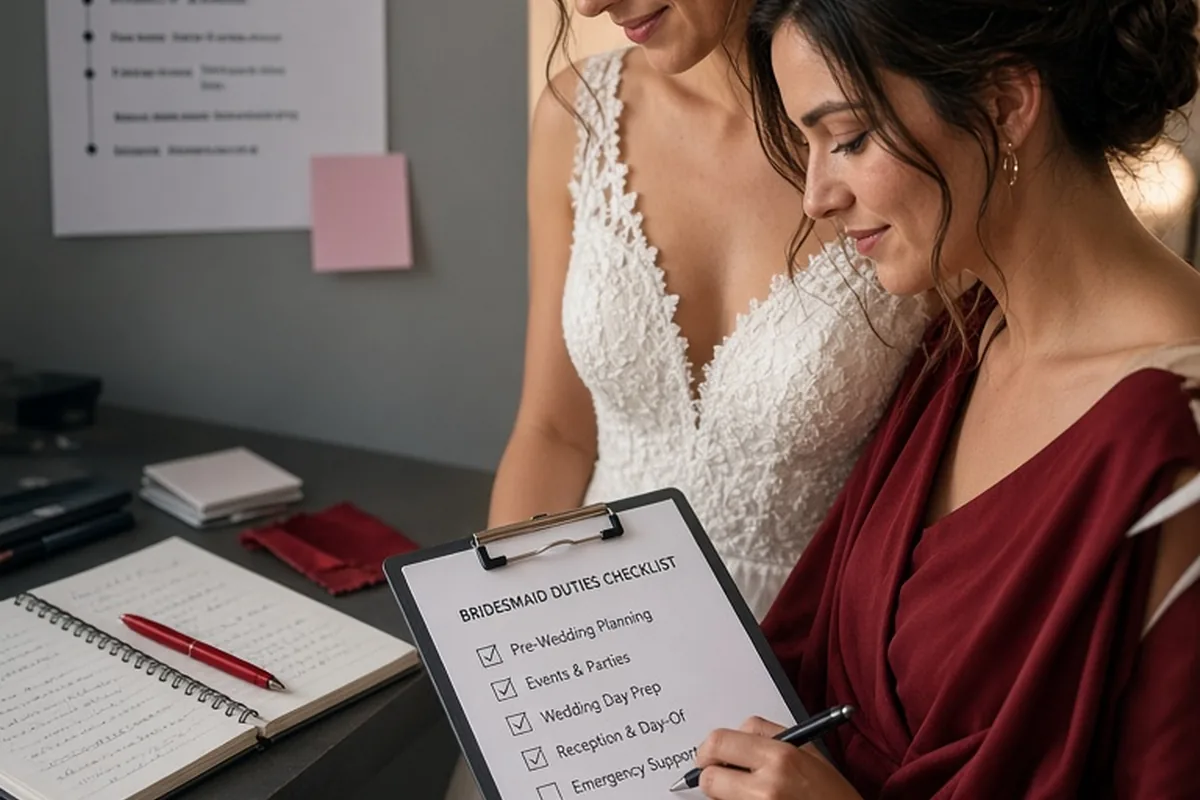
A complete bridesmaid duties checklist covers practical support across four phases: pre-wedding planning, events, wedding day preparation, and the reception. Core responsibilities include purchasing your attire, attending fittings, co-planning the bridal shower and bachelorette party, assisting with setup or guest management, and keeping the bride organized and calm throughout the celebration.
Standing by a close friend or family member on their wedding day is a meaningful honor, but it also requires thoughtful organization, clear communication, and dependable teamwork. Understanding expectations early prevents misunderstandings and ensures everyone enjoys the celebration.
Establishing Financial Boundaries and Early Commitments
The earliest phase of your role involves defining your capacity and setting honest expectations with the couple and the rest of the bridal party. Being a bridesmaid carries personal costs, including attire, alterations, travel, lodging, gifts, and celebration expenses. Before agreeing to optional activities or booking non-refundable arrangements, review your personal budget carefully. Initiating a transparent conversation with the bride about estimated expenses allows both of you to plan realistically without financial resentment later in the timeline.
Communication with the maid of honor and fellow attendants should begin promptly after the bridal party is finalized. Establish a shared digital space, such as a group chat or collaborative document, to track key calendar dates, shared expenses, and contact information. When group discussions about events begin, speak up early regarding budget comfort levels so that the group can choose venues, dining, and activities that accommodate everyone rather than creating awkward financial strain.
- Review your individual budget for attire, travel, gifts, and pre-wedding events before committing to optional extras.
- Exchange contact information with the maid of honor and the rest of the bridal party promptly.
- Establish an open channel to discuss group contributions transparently before booking venues or reservations.
Co-Hosting the Bridal Shower and Bachelorette Party
Pre-wedding parties require shared labor and clear delegation among the bridal party to ensure events run smoothly without overburdening any single person. The maid of honor typically leads these gatherings, but bridesmaids are expected to contribute by brainstorming concepts, tracking RSVPs, assembling favors, or managing games and decor. When planning, keep the bride's personal preferences at the center of the agenda rather than following generic party trends that might make her uncomfortable.
Financial management for these events requires strict organization and mutual agreement before deposits are placed. For example, if the group decides to rent a vacation home for a weekend trip, one bridesmaid might handle the booking while everyone reimburses their portion immediately. Always calculate a modest buffer for shared groceries, tips, and transportation. A common pitfall is assuming everyone has identical spending flexibility, so using anonymous polls for budget caps can protect friendships while planning memorable celebrations.
- Offer specific assistance to the maid of honor, such as designing invitations, organizing games, or coordinating catering.
- Collect and settle group payments promptly to prevent one attendant from carrying collective credit balances.
- Focus event themes and activities around the bride's stated interests, comfort level, and energy.
Managing Attire, Fittings, and Styling Requirements
Securing your wedding attire within the designated timeframe is one of the most time-sensitive items on your checklist. Once the couple selects a dress style, color palette, or designer, order your garments as early as possible. Made-to-order bridesmaid dresses frequently require three to six months for manufacturing and shipping, and leaving this task to the last minute risks rush fees or delivery delays that cause unnecessary panic.
Factor alterations into your timeline and budget, as formalwear almost always requires tailoring for a secure, comfortable fit. Schedule your initial fitting roughly four to six weeks before the wedding date, bringing the exact undergarments, shoes, and accessories you plan to wear. Keep all styling guidelines provided by the couple in mind, including nail polish shades, jewelry metals, and hair preferences, so the overall party aesthetic remains cohesive on camera.
- Order your dress immediately following the bride's selection to avoid production and shipping delays.
- Book seamstress appointments four to six weeks before the wedding with your intended shoes and undergarments.
- Confirm required accessories, footwear styles, and beauty preferences well ahead of the rehearsal.
Supporting Wedding Rehearsal and Eve Preparations
The rehearsal and rehearsal dinner mark the official start of wedding weekend responsibilities. Arrive on time for the ceremony walkthrough, listening carefully to the officiant or wedding coordinator regarding pacing, spacing, bouquet holding, and exit cues. This practice session ensures everyone moves confidently during the actual processional and recessional, minimizing confusion on the wedding day.
During the evening before the wedding, help finalize lingering logistical tasks so the couple can rest. This might involve steaming dresses, packing day-of emergency kits, organizing tips into labeled envelopes, or loading decorative items into designated vehicles. Encourage an early bedtime for the bridal suite, ensuring everyone is hydrated, well-rested, and prepared for an early morning call time.
- Arrive punctually at the rehearsal venue and pay close attention to processional timing and positioning.
- Assist with steaming formalwear, packing emergency supplies, and organizing items needed for the morning suite.
- Help create a calm, restful environment the night before by limiting late-night disruptions.
Executing Morning-of Coordination and Emergency Preparedness
On the morning of the wedding, your main responsibility is maintaining an organized, stress-free atmosphere in the getting-ready suite. Follow the hair and makeup schedule strictly so that beauty artists stay on track and the photographer can capture getting-ready portraits without schedule compression. Ensure that the bride eats breakfast and drinks water consistently throughout the morning, as excitement and nerves often cause people to skip meals.
Assemble a comprehensive bridesmaid emergency kit to handle unexpected hiccups discreetly. Having essential supplies within arm's reach prevents minor issues—like a broken zipper, static cling, or a minor headache—from turning into major delays. Act as a protective buffer between the bride and outside inquiries from vendors or guests by directing routine questions to the wedding coordinator or maid of honor.
- Stick precisely to the beauty timeline to keep the master wedding schedule running on time.
- Stock a practical emergency kit with safety pins, fashion tape, stain remover, pain relievers, and sewing supplies.
- Manage minor logistical questions from guests or family to allow the bride to focus on preparing.
Fulfilling Ceremony, Reception, and Post-Event Roles
During the ceremony and reception, your role shifts toward active participation and celebratory energy. Stand attentively during the vows, hold the bride's bouquet if requested, and help adjust her train or veil before photos begin. At the reception, engage enthusiastically by participating in the grand entrance, joining the dance floor early to encourage other guests, and assisting with greeting family members.
As the event winds down, pitch in with end-of-night responsibilities before leaving the venue. While the couple says their goodbyes or departs for their honeymoon suite, bridesmaids should help gather personal belongings, collect cards and gifts for safe transport, and ensure the bridal suite is cleared of clothing and trash according to venue rules. Fulfilling these final duties ensures the couple leaves without administrative stress.
- Assist with dress bustling, veil adjustments, and bouquet handling throughout photography sessions.
- Help set an energetic, welcoming tone on the dance floor and participate in formal reception traditions.
- Pack up personal belongings, bridal suite items, and safely transfer gifts to designated vehicles.
Frequently asked questions
What expenses are bridesmaids typically expected to pay for?
Bridesmaids generally cover their dress, alterations, shoes, and personal travel or lodging for the wedding weekend. They also typically split the costs of hosting the bridal shower and bachelorette party, along with buying a wedding gift. If the couple requires professional hair and makeup rather than making it optional, the couple often pays for those services.
How should a bridesmaid handle a disagreement over party planning budgets?
Address budget concerns directly and privately with the maid of honor as soon as cost discussions begin. Suggesting alternative venues, low-cost activities, or tiered participation options allows you to set healthy financial boundaries without causing tension among the entire group. Clear, early honesty is far better than withdrawing or expressing frustration later.
What items should be in a bridesmaid emergency kit on the wedding day?
A well-stocked kit should contain fashion tape, safety pins, a mini sewing kit, stain remover wipes, blister bandages, and pain relievers. You should also include mints, blotting papers, clear nail polish, hairpins, and a portable phone charger. Having these tools readily available solves common wardrobe and beauty issues in seconds.
Your next step
Reach out to the bride and maid of honor this week to confirm key dates, clarify budget expectations, and establish your specific assigned tasks on the shared planning checklist.