Budget-friendly wedding decorations focus on high-impact focal points rather than decorating every empty surface. You can create an elegant aesthetic without overspending by prioritizing strategic lighting like warm fairy lights and clustered pillar candles, building lush displays from bulk greenery and seasonal foliage instead of expensive blooms, repurposing ceremony arches and bouquets for the reception, and selecting venues with strong architectural character that require minimal additional styling.
Wedding decor sets the atmosphere for your celebration, but styling a large ceremony and reception space can quickly consume a significant portion of your total wedding budget. By shifting focus toward scale, lighting, and versatile materials rather than intricate table-by-table details, you can produce a cohesive, elevated aesthetic while keeping your spending manageable.
Prioritizing Your Venue's Built-In Strengths Before Buying Decor
The most effective way to manage wedding decoration expenses happens before you purchase a single candle or floral stem: selecting a venue that already possesses strong visual character. Spaces such as public botanical conservatories, historic libraries, rustic barns, art galleries, and manicured public parks come with established backdrops, distinctive architectural trim, or lush natural landscapes that do the heavy decorative lifting for you. When a room already looks finished, your decor budget only needs to cover personal accents, directional signage, and intimate table settings rather than wall-to-wall transformations.
Conversely, blank industrial spaces or standard hotel conference rooms often demand extensive drapery, supplemental uplighting, and large floral installations just to soften commercial carpet or blank drywall. If you have already booked a minimalist or neutral venue, avoid trying to cover every surface. Instead, identify the two or three primary sightlines where guests will naturally direct their attention throughout the event: the ceremony altar, the main sweetheart or head table, and the bar or dessert station. Directing your resources specifically into these high-traffic focal points creates a memorable visual impression without requiring thousands of dollars in wall coverings and perimeter dressings.
Before drafting a decor shopping list, request a comprehensive inventory list from your venue coordinator. Many venues maintain stockpiles of neutral centerpieces, wooden easels, glass hurricanes, votive holders, outdoor string lights, and display tables left behind by previous couples or included in standard rental packages. Knowing exactly what is on hand prevents accidental duplicate spending and lets you build your design concept around items you can use for free.
Low-Cost Ceremony Backdrops and Altar Focal Points
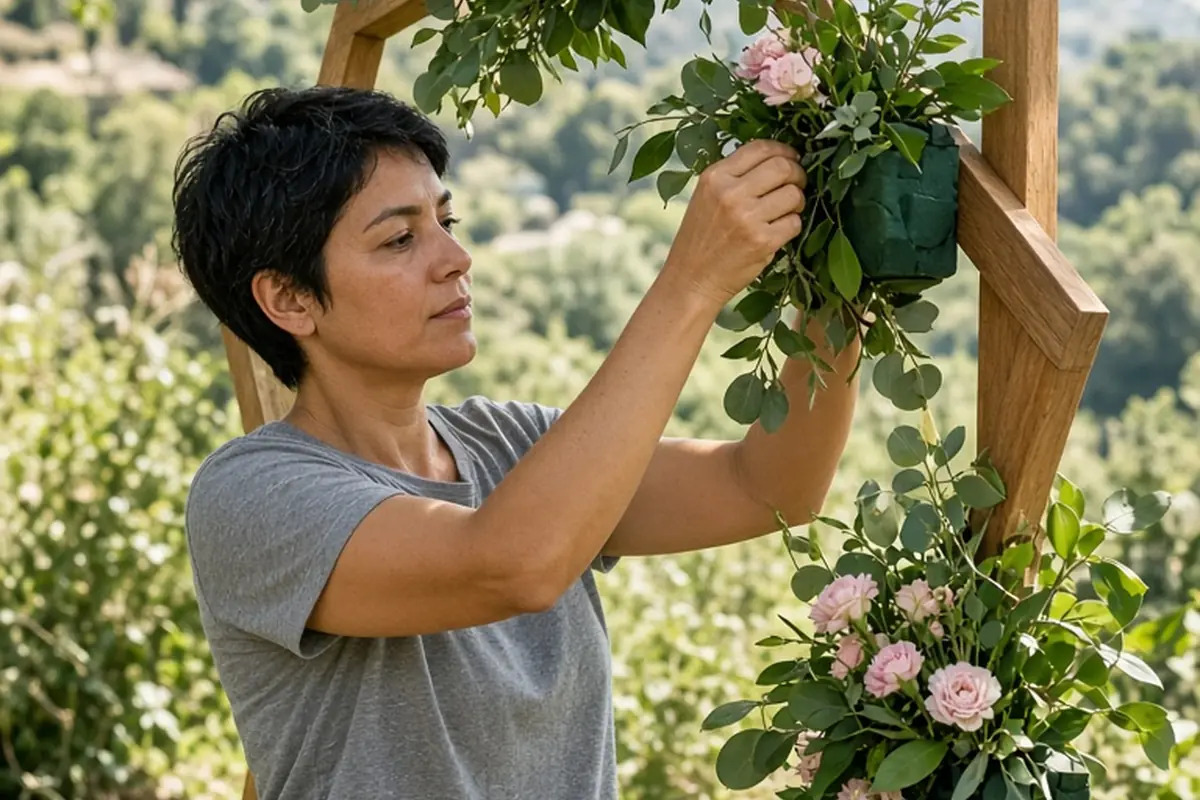
The ceremony backdrop serves as the frame for your vows and appears in your most meaningful wedding photographs, making it a critical area for intentional design. Traditional freestanding floral arches built entirely from fresh roses or hydrangeas require skilled florist labor and extensive floral counts that drive up costs. You can achieve a striking alternative by using a simple wooden geometric frame, copper pipe stand, or metal crescent arch accented with asymmetrical greenery clusters rather than full-coverage blooms.
To build an asymmetrical arch economically, use hardy foliage such as Italian ruscus, silver dollar eucalyptus, lemon leaf, or locally foraged branches as the base structure. Wire these greens securely into damp floral foam cages attached to the frame at one corner and halfway down the opposite upright pole. Within those green clusters, insert small clusters of focal blooms such as standard carnations, spray roses, or dahlias in your chosen color palette. This approach gives the visual impact of an intentional floral installation while using a fraction of the stems required for a solid floral perimeter.
For couples celebrating outdoors, natural framing often eliminates the need for a built structure entirely. Position your ceremony in front of a mature willow tree, an exposed stone retaining wall, or a scenic hillside. Hanging sheer fabric panels, ribbon ribbons, or warm Edison bulb pendants from sturdy low-hanging tree branches creates an enchanting, organic frame with minimal hardware and labor.
Transforming Wedding Reception Tables on a Modest Budget
Reception tables occupy the largest physical footprint in your venue, making them a prime area where decor costs can multiply quickly across ten, twenty, or thirty separate tables. A classic pitfall is assuming every table requires an identical tall, fully wired floral arrangement. Tall centerpieces necessitate heavy glass or metal risers, complex mechanics, and massive stem counts to avoid looking sparse, significantly increasing your floral quote.
A budget-conscious approach uses low-profile tablescapes that combine varied textures, negative space, and warm candlelight. For long banquet-style tables, create continuous greenery garlands by layering loose stems of salal, olive branch, or seeded eucalyptus directly down the center runner. Intersperse these leaves with glass cylinder vases holding floating candles or pillar candles of varying heights. The reflective glass and flickering flame catch the eye, while the flat-laid greenery provides organic depth without the high construction labor of elevated arrangements.
For standard round tables, group items in odd numbers to create balanced visual interest. A simple trio consisting of one textured stoneware bud vase holding two or three fresh seasonal stems, one ribbed glass votive, and one pillar candle resting on a wooden slice or ceramic tile creates a modern, intimate setting. Alternating table designs across your floor plan—giving half the tables candle-heavy clusters and the other half modest floral compotes—adds dynamic dimension to the room while cutting your overall floral stem count by thirty to fifty percent.
Warm Lighting Techniques to Elevate Affordable Decor Elements
Lighting is widely considered by event designers to be the single most transformative element of interior styling, often compensating for modest tabletop decor by creating a romantic, cohesive ambiance throughout the entire space. Dimming harsh overhead venue lighting and replacing it with layered, warm-temperature illumination instantly softens the room and masks architectural flaws. Warm white light in the 2200K to 2700K color range enhances floral colors and provides a flattering glow for guest photos.
Bistro-style outdoor string lights (often called market or cafe lights) are an economical way to lower high ceilings in cavernous banquet halls, warehouses, or outdoor tents. Strung in clean parallel rows or a radiating canopy pattern from a central pole, string lights establish an intimate ceiling line and emit sufficient ambient light for dining. You can source commercial-grade string lights through local event rental companies or purchase them in bulk for outdoor installations, ensuring you verify venue mounting anchor rules beforehand.
Candles represent another accessible lighting tool that delivers high visual return for minimal cost. Bulk-purchased glass cylinder vases paired with unscented white pillar candles or floating discs provide continuous illumination for six to eight hours. When using real flame, always verify your venue's specific fire regulations, as many historical buildings and museum venues require open flames to be fully enclosed in glass hurricanes where the flame sits at least one to two inches below the rim of the vessel.
Strategic Greenery, Dried Elements, and In-Season Floral Alternatives
Fresh cut flowers are traditionally priced based on seasonality, fragility, transit distance, and wholesale availability. If you choose out-of-season blooms like peonies in autumn or ranunculus in late summer, sourcing and shipping premiums will elevate your floral budget. Working closely with local growers or wholesale flower markets to choose varieties that thrive naturally during your wedding month dramatically decreases per-stem pricing.
Incorporating dried botanicals and preserved grasses offers another cost-effective strategy. Elements like pampas grass, bleached ruscus, bunny tails, dried palm spears, and seeded pods provide structural volume and sculptural silhouette without wilting in hot weather or requiring water tubes. Because dried elements do not spoil, you can purchase, assemble, and store your centerpieces months ahead of the event date, eliminating the stressful crunch of last-minute floral assembly during wedding week.
Potted living plants present a sustainable, budget-friendly alternative to cut arrangements. Groupings of potted ferns, aromatic herbs such as rosemary and lavender, small citrus topiaries, or flowering orchids in neutral terra cotta or ceramic pots create lush, organic table centerpieces. After the celebration concludes, living plants can be gifted directly to wedding party members, planted in your home garden as living keepsakes, or donated to local senior centers.
Repurposing Ceremony Pieces Throughout the Reception Timeline
One of the easiest ways to stretch your wedding decor investment is to design pieces that serve dual purposes across your event schedule. Ceremony decor is typically enjoyed by guests for only thirty to forty-five minutes before the crowd migrates to cocktails and dinner. Leaving expensive aisle markers, altar arrangements, or welcome displays in an empty ceremony room represents unused potential.
Plan your decor layout with an intentional transition schedule. The bridesmaids' bouquets can immediately double as head table or cake table decor when you place small water-filled glass vases along the table edge before guests enter the dining room. As the bridal party finishes formal post-ceremony portraits, their attendants simply set their bouquets directly into the waiting vases, instantly completing the head table styling without purchasing dedicated centerpieces.
Similarly, freestanding ceremony floral urns or ground meadows that flanked the vow exchange can be relocated during the cocktail hour to frame the reception sweetheart table, DJ booth, or photo backdrop. If your ceremony features floral markers tied to aisle chairs, have your wedding coordinator or designated helpers untie them and relocate them to the reception bar front or lounge area. Assigning specific, named individuals to handle these designated transitions ensures pieces move seamlessly while guests are preoccupied with drinks and appetizers.
Managing Rentals, Secondhand Sourcing, and Setup Labor Logistics
Executing wedding decorations on a budget requires a clear-eyed balance between financial savings and the realistic logistics of setup and breakdown. Sourcing items secondhand through local wedding resale groups, marketplace platforms, and estate sales is an excellent method for acquiring matching taper candle holders, table numbers, card boxes, and easels at a steep discount compared to retail pricing. However, accumulating hundreds of delicate items requires dedicated storage space and careful transportation planning on the wedding weekend.
Before committing to do-it-yourself decor projects, evaluate the labor requirements against your timeline. Assembling elaborate floral arrangements or hanging complex ceiling installations on the morning of the wedding can introduce immense personal stress and create timing bottlenecks for hair, makeup, and photography. Focus DIY efforts on non-perishable components that can be completed weeks in advance, such as printed menus, framed welcome signage, and pre-packed centerpiece boxes clearly labeled by table number.
Rental items like specialty linens, chargers, and glassware often provide a higher visual payoff per dollar spent than custom-built props. Upgrading from standard white polyester venue tablecloths to a textured linen blend or rich velvet runner completely transforms the tactile experience of dinner without requiring you to wash, iron, and resell fabric afterward. When requesting rental quotes, confirm delivery, setup, and late-night breakdown fees, as these operational labor charges can sometimes exceed the rental item prices if not accounted for early in your planning.
Frequently asked questions
What is the cheapest way to decorate wedding reception tables?
The most economical table decoration method pairs loose greenery stems like eucalyptus or salal with clusters of varying-height pillar or floating candles in simple glass cylinders. This combination provides rich texture and romantic evening illumination without requiring high stem counts or expensive floral mechanics.
How can I make an inexpensive wedding look luxurious?
Focus on lowering the overhead room lights and introducing warm, layered lighting like fairy string lights and abundant candlelight. Keep your color palette cohesive with two or three neutral tones, use textured table runners, and concentrate floral statements in two primary photo areas rather than scattering small items everywhere.
Can I assemble my own wedding flowers to save money?
Yes, DIY wedding flowers can lower floral costs if you stick to simple arrangements like single-variety bud vases, potted plants, or loose greenery runners. Avoid attempting complex wired structures like full cascading bouquets or large arch installations on your own, as these require professional mechanics and intensive same-day labor.
Where is the best place to find secondhand wedding decor?
Local wedding resale groups on social media platforms, online community marketplaces, and estate sales offer gently used centerpieces, candle holders, and signage at deep discounts. Check for items being sold in complete sets of 10 to 20 matching units to maintain visual consistency across all reception tables.
Your next step
Request a complete inventory of decor items and lighting hardware already included by your venue before purchasing any supplies.