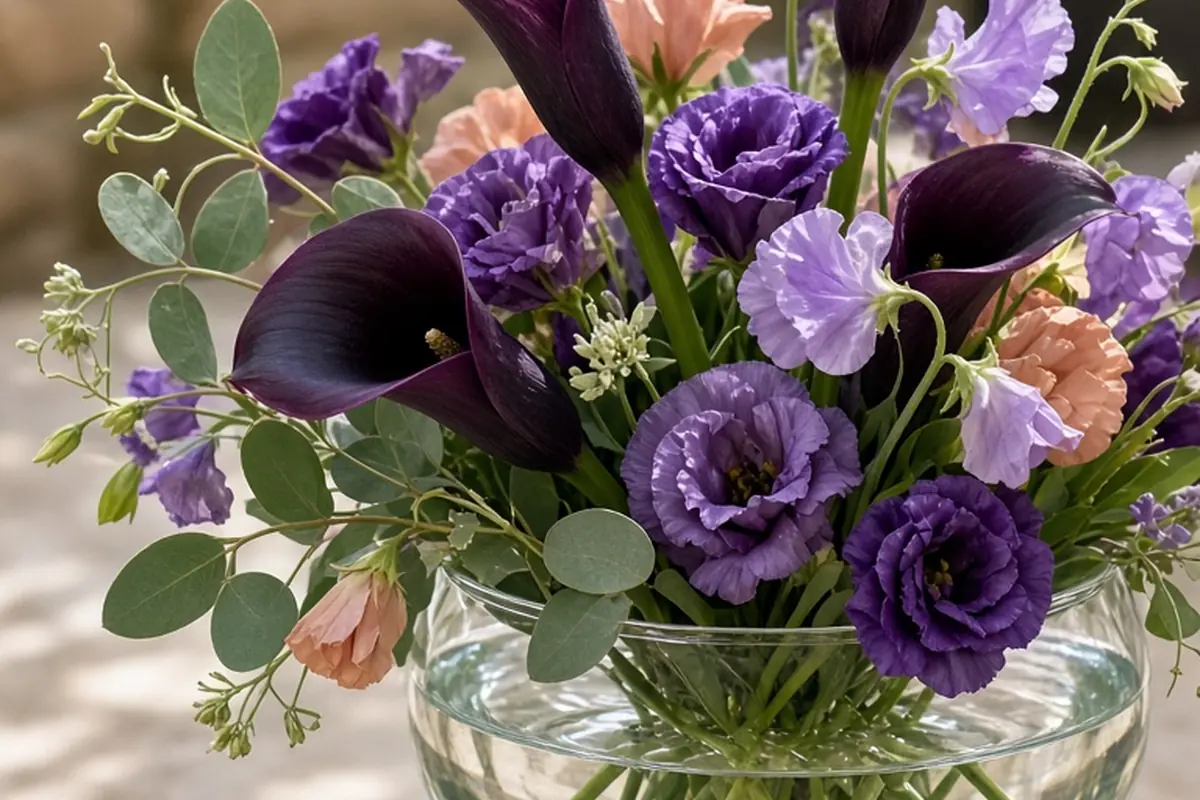
To create captivating purple centerpieces for a summer wedding, combine heat-tolerant flowers in layered shades—such as deep plum calla lilies, violet lisianthus, and airy lavender sweet peas—with warm-weather accents like peach, cream, or soft sage. Use deep water vessels rather than exposed foam to keep stems hydrated through the afternoon heat, and alternate low compote bowls with elevated stands to maintain clear guest sightlines.
Purple brings an unmistakable sense of luxury and depth to wedding decor, yet designing with it during the warmer months requires a thoughtful approach. Summer light can either wash out delicate pastels or make dark jewel tones appear overly heavy if they are not balanced correctly against the rest of the tablescape.
Selecting Summer-Resistant Purple Blooms That Hold Up in Heat
Summer temperatures present unique challenges for fresh floral arrangements, especially for outdoor ceremonies and tented receptions where ambient heat accelerates wilting. Certain purple flowers naturally withstand high temperatures and direct sunlight far better than others. Lisianthus is an exceptional primary flower for warm-weather centerpieces because its rose-like petals are structurally durable, and its stems continue to draw water reliably even when room temperatures climb. Similarly, purple calla lilies, vanda orchids, and allium offer sleek, architectural silhouettes that resist drooping, making them dependable anchors for midday and evening events alike.
Conversely, popular cool-season favorites like purple garden hydrangeas, lilac branches, and delphinium demand extreme caution in midsummer. Hydrangeas lose moisture rapidly through their broad petals and can wilt dramatically within hours if placed in drafty outdoor areas or direct sunlight. If you love the soft, fluffy texture of hydrangeas or lilacs, consider using them sparingly as secondary accents placed low in water reservoirs, or swap them for purple carnations, ruffled double lisianthus, or spray roses in dusty mauve tones. These alternatives provide the same textural density without the sudden moisture collapse.
Textural filler flowers also play a crucial role in giving purple arrangements an organic, seasonal feel. Sea holly (eryngium) contributes a steel-blue-purple hue and a thistle-like texture that is practically impervious to heat. Globe amaranth, statice, and fresh lavender sprigs introduce fragrant, tactile interest while holding their form throughout an eight-hour reception. When selecting your floral ingredients, always ask your floral designer which purple varieties are sourced from field-grown summer crops, as locally harvested seasonal blooms are already acclimated to regional summer temperatures.
Balancing Purple Palettes with Fresh Warm-Weather Accent Colors
One common misstep in summer floral design is treating purple as a solitary, monochrome statement or pairing it exclusively with heavy fall shades like burgundy and dark bronze. To keep purple arrangements feeling bright, vibrant, and aligned with summer, you need intentional companion colors that introduce contrast and lightness. Pairing mid-tone violet and royal purple with soft buttery yellows, ripe melon, or warm apricot creates a classic complementary contrast that feels fresh and sun-drenched rather than formal or moody.
If your vision leans toward romantic garden elegance, build an analogous palette using varying values of purple blended with soft pinks, dusty rose, and creamy neutrals. Layering deep blackberry tones alongside lilac, mauve, and soft blush creates depth without stark visual breaks. The darker blooms act as anchor points that draw the eye into the center of the arrangement, while the pale lavender and blush blooms reflect ambient light outward, keeping the table feeling open and airy.
Greenery selection also directly dictates how modern or traditional your purple centerpieces will appear. Cool-toned foliage, such as silver dollar eucalyptus or dusty miller, enhances the icy, regal qualities of purple but can sometimes look wintery if overused. For a distinctly summer aesthetic, opt for warm, vibrant greens like Italian ruscus, olive branches, salal, or broad-leafed hosta foliage. The yellow-green undertones in these leaves provide an earthy, natural counterbalance that mirrors a flourishing midsummer garden.
Designing Purple Centerpieces Across Different Summer Wedding Venues
The architectural style and ambient lighting of your reception space should guide the shape, scale, and vessel choice of your centerpieces. In an open-air garden or rustic vineyard setting, loose, compote-style arrangements allow purple florals to mimic natural growth habits. Footed ceramic or stone urns filled with spilling clematis vines, sweet peas, and ruffled garden roses create an effortlessly gathered aesthetic that complements outdoor lawns, exposed wood tables, and wooden cross-back chairs.
For an urban loft, art museum, or modern industrial venue, structure and negative space become more important than abundance. In these environments, consider grouped mono-botanical arrangements rather than mixed garden bouquets. Clustered clear glass cylinders containing only purple calla lilies, submerged purple dendrobium orchids, or tight groupings of violet allium create bold, graphic focal points. The simplicity of single-flower groupings showcases the purity of the purple pigment while keeping table settings clean, crisp, and uncluttered.
Ballroom settings with high ceilings require centerpieces that command presence without fading into dark interior corners. Because indoor ballroom lighting often tilts warm or dim during evening hours, deep purple blooms can read as black or muddy if not highlighted properly. In these venues, integrate reflective elements into your centerpiece base—such as polished brass compotes, mirrored risers, or mercury glass—and intersperse bright lavender and crisp white blooms to catch pin-spot lighting and maintain dimensional visibility.
Mechanics and Hydration Strategies for High-Temperature Receptions
Behind every resilient summer centerpiece lies a solid mechanical foundation designed to maximize water intake. While traditional floral foam has historically been used to hold stems in place, it tends to dry out quickly in high heat and can restrict water uptake for thirsty summer stems. Foam-free mechanics, such as coated floral netting (chicken wire) combined with heavy brass pin frogs (kenzan), allow flowers to sit directly in large reservoirs of fresh, cool water, dramatically extending their vase life through a warm afternoon.
Vessel selection directly influences stem longevity during a heatwave. Shallow trays or narrow-necked vases hold minimal water volume, which heats up quickly in warm outdoor air and accelerates bacterial growth. Opt instead for wide, deep compote bowls or ceramic vases that hold at least several cups of water. Water acts as a thermal buffer; a larger body of water stays cooler longer, helping maintain stem turgidity and preventing the premature petal droop commonly seen in delicate summer cut flowers.
Day-of execution and setup timing are equally critical factors that need clear communication between your wedding planner, venue coordinator, and florist. Centerpieces should remain in air-conditioned storage or refrigerated transit for as long as possible on the wedding morning. If your reception takes place under a tent or in an outdoor pavilion, arrangements should not be set on tables until all table linens, place settings, and cross-breezes are established, ideally no earlier than two hours before guest arrival. Misting finished arrangements with specialized floral finishing sprays creates a protective moisture barrier that slows transpiration in the summer breeze.
Incorporating Non-Floral Elements: Fruit, Glassware, and Candlelight
A captivating centerpiece extends beyond cut flowers to encompass the tactile elements surrounding the arrangement. Fresh summer fruits offer an artistic, cost-effective way to extend purple tones across long banquet tables. Halved dark mission figs, clusters of concord grapes, ripe black plums, and blackberries nestled along table runners or scattered around vase bases provide an opulent, still-life painting aesthetic that feels inherently abundant and seasonal.
Tableware and glassware offer another avenue to layer purple accents without overcrowding the floral vessels. Amethyst-tinted water goblets or smoked-lavender wine glasses introduce colored glass that catches outdoor daylight beautifully. When paired with neutral, breathable table linens like raw flax, oatmeal linen, or sheer ivory gauze, these colored glass accents tie the floral palette into the overall place setting without requiring additional flower stems.
Candlelight requires specific adjustments when designing for warm weather. In outdoor or tented summer spaces, open taper candles often warp in the afternoon sun and blow out in evening breezes, creating wax drips across table linens. Instead, encase rich plum or mauve taper candles in tall glass hurricane sleeves, or rely on heavy glass votives and ribbed glass pillars. The glass protects the flame from outdoor drafts while reflecting warm, amber light through the purple petals as daylight fades into dusk.
Managing Centerpiece Heights for Guest Conversation and Room Scale
A successful centerpiece must never hinder the primary social function of a wedding reception: conversation across the dinner table. When designing centerpieces, adhere strictly to the traditional height boundaries by keeping arrangements either under 14 inches or elevating them above 24 inches from the tabletop. Centerpieces that sit between 15 and 22 inches fall directly into the natural eye line of seated guests, forcing them to lean around branches and stems to speak with dinner companions.
Low, sprawling compote arrangements measuring between 8 and 12 inches high work exceptionally well for intimate, conversational round tables or narrow rectangular farm tables. These lower vessels allow guests to see over the arrangement comfortably while enjoying the fragrance and detailed textures of smaller purple blooms like freesia, sweet peas, and spray roses. Because these arrangements sit low, their footprint can spread horizontally across the table surface to create an impression of fullness.
For grand spaces where low arrangements might look diminutive, elevated floral stands offer height without blocking sightlines. Modern open-frame metal stands in matte black, antique brass, or brushed gold lift the floral mass well above eye level. Guests look through the slender vertical posts of the stand across the table, while the elevated canopy of purple delphinium, trailing amaranthus, and cascading clematis fills the upper vertical volume of the room. Mixing elevated arrangements on one-third of the tables with low compotes on the remaining tables adds dynamic visual rhythm to the venue without inflating the floral budget unnecessarily.
Sourcing Realities and Budget Questions for Peak-Season Summer Florals
Summer is peak wedding season, which means floral wholesale markets experience high demand, fluctuating availability, and variable pricing depending on regional growing conditions. When planning purple centerpieces, it is important to understand which stems represent luxury investments versus practical budget extenders. Premium blooms like imported vanda orchids, garden roses, and out-of-season anemones carry a higher cost per stem, whereas seasonal summer lisianthus, asters, gladiolus, and standard carnations provide exceptional color coverage at a moderate cost.
To maximize your floral budget, focus your highest-impact stems where guests spend the most time observing details. You might place richer, flower-dense compotes featuring delicate purple sweet peas and ruffled garden roses on the head table or immediate family tables, while utilizing looser, greenery-forward arrangements with accents of purple sea holly and spray roses on perimeter guest tables. This layered approach ensures that high-traffic areas feel luxurious without requiring uniform, premium stem counts across twenty or thirty separate tables.
When consulting with prospective florists, clear verification questions will protect both your budget and your peace of mind. Ask florists how they handle heat protocols during transit and whether their quote includes on-site hydration checks before the reception begins. Request clear substitution clauses in your contract outlining what alternative purple varieties they will select if a heatwave or crop shortage affects your preferred blooms. Having these contingency plans in writing ensures that your color palette remains consistent regardless of summer market volatility.
Frequently asked questions
Which purple flowers wilt fastest in summer heat?
Garden hydrangeas, lilacs, delphinium, and sweet peas are especially vulnerable to rapid moisture loss in warm weather. If you want these varieties, ensure they are placed in deep water reservoirs and positioned away from direct sunlight and outdoor drafts.
How do I keep dark purple centerpieces from looking too dark in an evening reception?
Blend deep purple stems with mid-tone lilacs, dusty pinks, or warm peach accents to create reflective contrast. You can also incorporate amber candlelight, clear glassware, and metallic vessels to bounce light into the petals.
Can I use floral foam for outdoor summer centerpieces?
While floral foam can hold stems firmly, it dries out quickly under summer heat and direct breezes, making chicken wire or water pin frogs a safer choice. Foam-free mechanics allow stems to drink freely from a continuous reservoir of cool water.
What table linen colors work best with purple summer floral arrangements?
Neutral tones such as warm oatmeal, soft ivory, and textured raw flax allow purple hues to stand out without visual competition. For a fresh contrast, soft sage or buttercup yellow linens highlight the floral colors while maintaining a summer garden ambiance.
Your next step
Review your venue layout to determine where heat or direct sun might hit the tables, then consult your florist to finalize a foam-free, water-based centerpiece plan featuring heat-tolerant purple blooms.