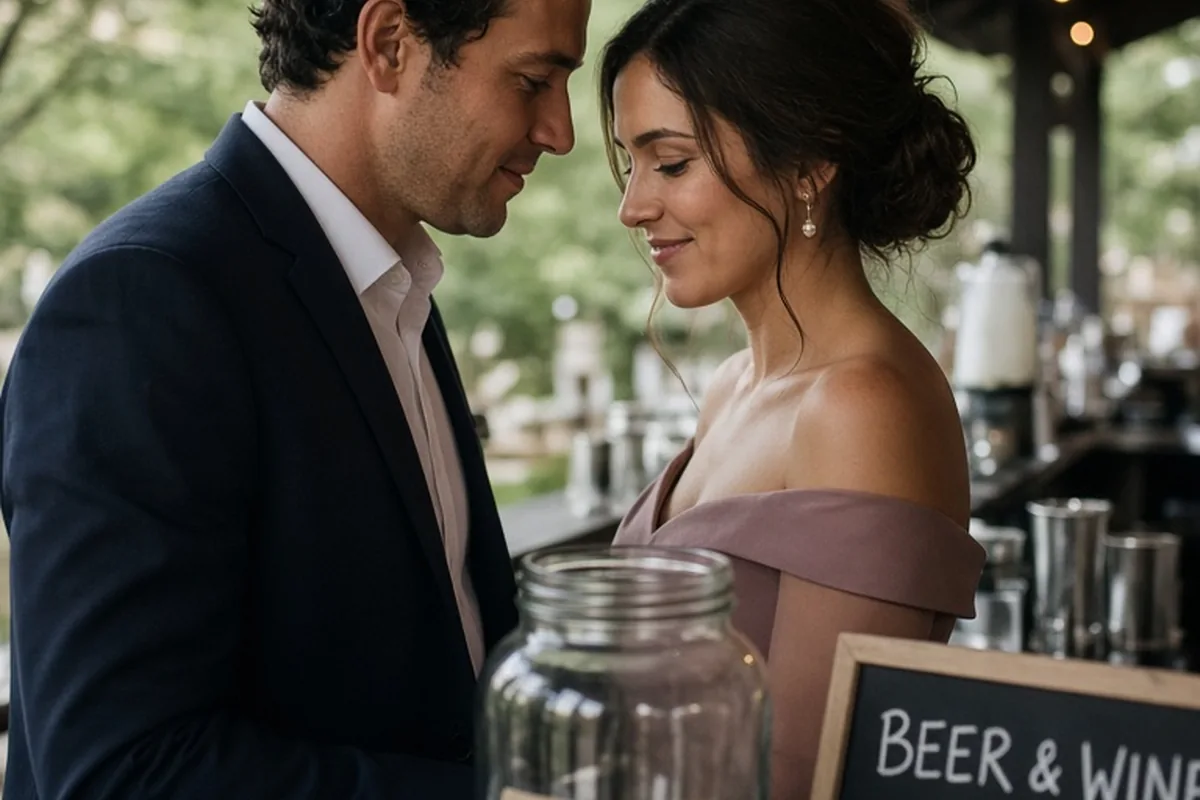
An open bar provides complimentary drinks to guests for the duration of the reception, paid entirely by the hosts, while a cash bar requires guests to purchase their own beverages. Open bars offer seamless hospitality and a celebratory atmosphere but represent a significant budget line item. Cash bars eliminate host alcohol expenses but shift costs onto attendees. Many couples choose hybrid models, such as host-paid beer and wine with a cash option for premium liquor.
Deciding how to serve alcohol at a wedding reception touches on budget limits, guest comfort, regional etiquette, and venue contract rules. Navigating the choice between a fully hosted bar, a guest-paid bar, or a middle-ground approach requires evaluating your guest list's preferences against the itemized costs of caterers and venues.
How Open Bars and Cash Bars Differ in Guest Experience and Hosting Logistics
An open bar establishes an environment of unrestricted hospitality where attendees can order beer, wine, cocktails, and non-alcoholic drinks without taking out a wallet. From the guest perspective, this creates a relaxed, festive atmosphere reminiscent of being hosted at a private dinner party. It eliminates transaction friction, keeping lines moving quickly and encouraging socializing. However, open bars also come with logistical considerations, such as managing beverage waste when guests misplace partially full glasses and order replacements, or deciding how to handle top-shelf spirits versus standard house brands.
A cash bar shifts the financial responsibility for alcohol directly to the wedding guests. While this approach dramatically reduces the couple's reception invoice, it introduces practical hurdles that can impact the flow of the evening. Modern guests rarely carry physical cash, meaning the bar must be equipped with reliable card readers, steady cellular or wireless connections, and staff trained to process individual tabs quickly. Slower transaction speeds can lead to congestion around the bar area, keeping guests waiting in line rather than participating in speeches, dinner, or dancing.
The Core Financial Mechanics of Wedding Beverage Contracts
Wedding beverage billing generally follows one of three commercial structures: flat-rate per-person packages, consumption-based tabs, or cash bar service agreements. Flat-rate open bar packages charge a fixed price for every adult guest over the legal drinking age across a set number of hours. This model provides budget certainty, as your total invoice remains identical regardless of whether attendees consume one drink or several. Consumption-based billing, by contrast, tallies the exact number of bottles opened, kegs tapped, or individual mixed drinks poured throughout the night, with the couple paying the final itemized tab at the end of the event.
Opting for a cash bar does not always mean beverage service is completely free for the hosts. Most catering companies and venues charge mandatory setup fees, glassware rental costs, and hourly wages for professional bartenders regardless of who buys the drinks. Furthermore, many venues enforce a minimum beverage revenue guarantee on cash bars; if your guests do not purchase enough alcohol to reach that required financial threshold, the couple is contractually obligated to pay the difference. When evaluating quotes, look beyond the base drink pricing to check for administrative service fees, local sales taxes, and mandatory staff gratuities.
Middle-Ground Alternatives: Limited, Consumption, and Timed Hybrid Bars
Couples seeking a balance between hospitality and cost control often choose hybrid bar formats rather than an all-or-nothing approach. A limited open bar serving only beer, wine, and perhaps one or two signature cocktails provides a generous guest experience while cutting out the high cost and unpredictable consumption of a full liquor bar. Guests enjoy complimentary service all evening, while the hosts avoid paying top-tier liquor package pricing.
Another effective compromise is a timed or capped bar. In a timed model, the couple hosts a full open bar during the cocktail hour and through dinner, then transitions to a cash bar for the final hours of late-night dancing. Alternatively, a dollar-capped tab allows you to pre-fund a specific allowance with the venue; once that pre-set total is reached, the bartenders convert to cash service for remaining orders. To execute these hybrid options successfully, work with your caterer on seamless transition procedures so staff can handle payment shifts smoothly without disrupting service.
Venue Policies, Licensing Restrictions, and Liability Concerns
Your wedding venue's physical setup and legal licensing will heavily dictate what bar formats are permissible. Venues holding comprehensive on-premise liquor licenses typically prohibit outside alcohol completely and require all beverages to be sourced through their exclusive vendor list or internal food and beverage department. In these locations, attempting an unapproved service style or bringing your own bottles violates the contract and can jeopardize your security deposit.
If your venue permits you to supply your own alcohol (a BYO arrangement), you can often save money by purchasing wine and spirits at retail or wholesale stores. However, BYO formats usually require hiring a licensed, insured bartending service and paying a per-bottle corkage fee to cover chilling, opening, and glassware handling. Host liquor liability is another critical factor: event hosts may still face legal exposure if an over-served guest causes an accident after leaving the reception. Professional bartenders provide an essential risk-management buffer by monitoring patron sobriety, checking IDs, and regulating service responsibly.
Communicating Bar Details Politely on Wedding Websites and Menus
Clear communication helps guests plan their transportation, budget, and expectations before arriving at the venue. If you are providing a full open bar, you do not need to make explicit announcements on invitations, as complimentary refreshments are standard in many hosting traditions. However, if you are organizing a cash bar, a hybrid setup, or an alcohol-free reception, notifying guests in advance is essential etiquette. Arriving at a remote venue without cash or cards because bar charges were unexpected creates immediate discomfort for attendees.
The most natural place to share these details is on your wedding website FAQ page and on an enclosed details card sent with formal invitations. Use clear, welcoming language that accurately outlines the format. For a limited bar, write: 'Beer, wine, and non-alcoholic beverages will be hosted, with a cash bar available for mixed drinks.' For a complete cash bar, state: 'A cash and credit card bar will be available during the reception.' Transparent wording allows guests to prepare payment methods or arrange rideshare services without feeling caught off guard.
Estimating Drink Consumption Patterns and Building an Accurate Beverage Budget
Accurately projecting how much your guests will drink helps determine whether a per-person flat rate or a consumption-based tab will be more economical. Consumption patterns depend heavily on the day of the week, the time of day, and the overall timeline. A Sunday afternoon reception or a daytime garden party typically sees significantly lighter alcohol consumption than a Saturday evening dinner followed by hours of dancing. Similarly, guest lists with many families, children, or non-drinking guests will yield lower alcohol volume than an event attended primarily by young adult peers.
When gathering quotes, ask caterers for an itemized breakdown of what is included in their standard bar tiers. Clarify whether non-alcoholic beverages (such as sodas, specialty mocktails, sparkling water, and coffee) are bundled into the adult drink package or billed under a lower non-drinker rate. Request written clarification on policies regarding unopened bottles in consumption models, corkage charges for specialty wines, and the precise ratio of bartenders to guests to ensure your budget reflects true total operational costs.
Step-by-Step Decision Checklist for Selecting Your Reception Bar Style
To select the best bar format for your wedding, begin by reviewing your venue contract for mandatory vendor clauses, corkage rules, and minimum spend requirements. Next, evaluate your total catering and beverage budget to determine the absolute ceiling you can allocate toward drinks without compromising essentials like food quality, guest seating, or transportation. If your numbers show that a full open bar is unaffordable, explore limiting the menu to beer, wine, and signature drinks before committing to a full cash bar.
Once you select a direction, coordinate the operational details with your venue coordinator or bar vendor at least thirty days before the wedding date. Confirm staffing levels—typically one bartender per 50 to 75 guests for open bars, or one per 40 to 50 guests for cash bars to manage payment processing—and establish clear start and cut-off times. Finally, update your wedding website so your guests arrive informed, comfortable, and ready to celebrate.
Frequently asked questions
Is having a cash bar considered rude at a wedding?
Perceptions of cash bars vary widely by region, culture, and family tradition. While some social circles view fully hosted refreshments as a core hosting duty, others consider cash bars completely acceptable. Providing advance notice on your wedding website prevents awkward surprises and lets guests plan accordingly.
How do costs differ between an open bar and a cash bar?
An open bar requires the couple to pay for all alcohol consumed, either via a fixed per-person hourly package or an itemized consumption bill at the end of the event. A cash bar transfers beverage costs to the guests, though couples often still pay staffing wages, bar setup fees, glassware rentals, and any unmet venue minimums.
Can you switch from an open bar to a cash bar during the reception?
Yes, many couples host an open bar during cocktail hour and dinner, then transition to a cash bar for the late-night dancing portion. If you choose this format, inform your caterer in advance to ensure a smooth transition and post clear signage at the bar so guests understand the change in service.
How many bartenders are needed for an open bar versus a cash bar?
Open bars generally require one bartender for every 50 to 75 guests to keep drink service running smoothly. Cash bars often need a higher staffing ratio—roughly one bartender for every 40 to 50 guests—because collecting payments, running card transactions, and making change adds extra time to every order.
Your next step
Request itemized quotes from your venue or caterer for both a flat-rate beer-and-wine package and a consumption-based tab to compare real line-item costs against your guest count.