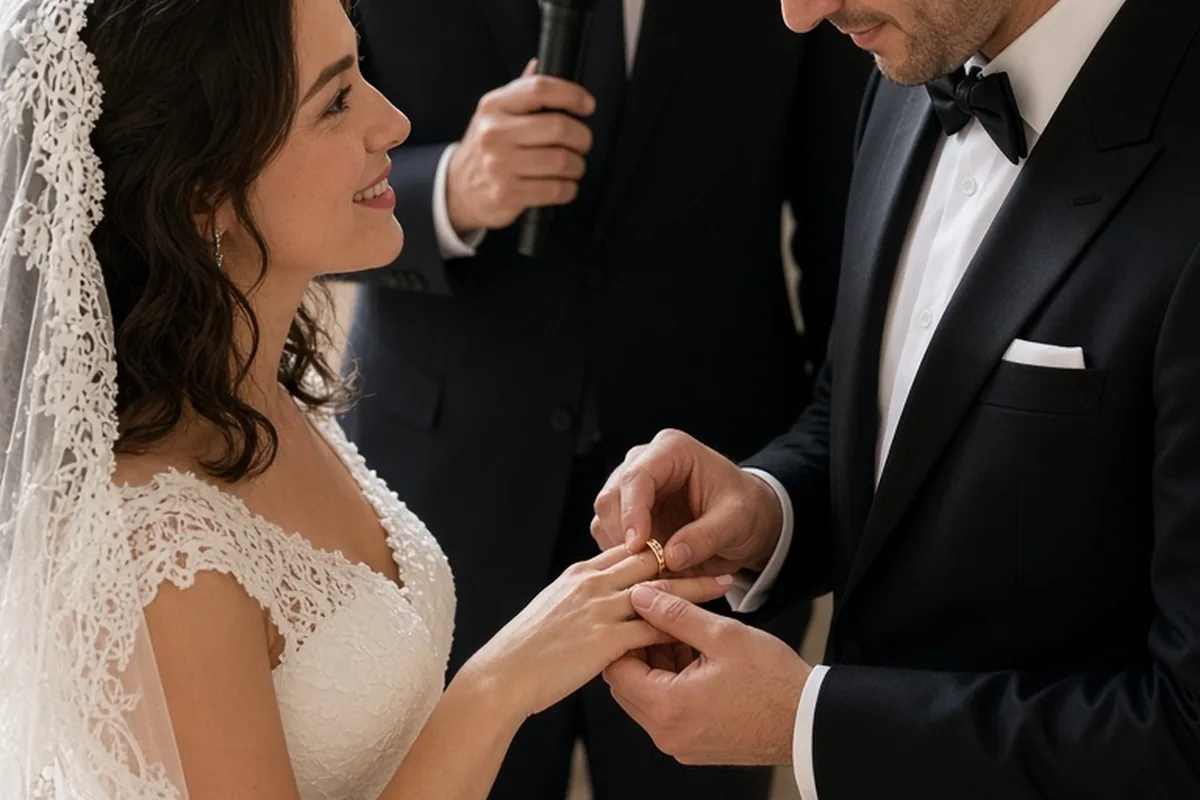
A wedding ceremony is the foundational moment where two people make a public commitment and satisfy the legal or spiritual requirements of marriage. Planning a ceremony requires selecting an officiant, determining whether the tone will be civil, secular, or religious, building a clear order of service, and managing logistical details like microphones and legal paperwork. A typical modern ceremony lasts between twenty and thirty minutes, giving space for personal vows and meaningful rituals while keeping guests comfortable and engaged.
While wedding receptions often consume the majority of planning budgets and attention, the ceremony remains the central reason everyone gathers. Crafting a service that honors your relationship requires balancing legal necessities, personal values, and practical guest comfort so the event feels intentional rather than routine.
Deciding Between Civil, Religious, and Secular Wedding Ceremony Formats
The first structural decision you will face is determining the governing framework of your ceremony. A civil ceremony focuses strictly on the legal contract and secular celebration, often conducted by a justice of the peace, municipal clerk, or professional civil celebrant. These services tend to be streamlined, lasting between ten and twenty minutes, and allow complete flexibility regarding music, readings, and personal declarations because there are no ecclesiastical canons or denominational rubrics to satisfy.
Religious ceremonies follow specific liturgical guidelines established by a house of worship or faith tradition. If you choose a sanctuary or religious leader, you will often need to navigate premarital counseling requirements, approved scripture passages, and restrictions on outside music or non-traditional vows. When couples come from different faith backgrounds, an interfaith ceremony can weave elements from both heritages, though this requires early coordination between the celebrants to establish a respectful, cohesive tone rather than a disjointed collection of rituals.
Secular or humanist ceremonies provide a third path, focusing purely on human connection, mutual ethics, and community support without invoking spiritual doctrine. This format suits couples who want a rich, ceremonial atmosphere with formal pacing, poetry, and symbolic rituals without participating in religious rites. Clarifying which of these three paths fits your shared outlook early prevents miscommunication with families and gives your officiant a clear thematic boundary from day one.
Building the Wedding Ceremony Order of Service Step by Step
A well-structured wedding ceremony follows a natural emotional arc that moves from quiet anticipation to solemn commitment and joyful conclusion. Designing the timeline begins with the prelude, typically fifteen to thirty minutes of ambient music played while ushers seat arriving guests. The processional follows, establishing the visual transition as grandparents, parents, the wedding party, and the partners make their entrance down the aisle. Whether partners walk alone, with one parent, with both parents, or together down the aisle is entirely a matter of comfort and personal meaning.
Once everyone reaches the altar or staging area, the officiant delivers the opening words and address. This section introduces the gathering, shares reflections on love or partnership, and sets the stage for the formal exchange. Next come any selected readings, poetry, or musical interludes, which offer guests a moment of reflection before the ceremony pivots toward the core commitments. In secular ceremonies, this often transitions directly into the declarations of intent, commonly recognized as the formal agreement where both people affirm their desire to marry.
The emotional apex occurs during the exchange of vows and wedding rings. Partners speak their promises directly to each other, followed by placing rings on each other's hands as outward symbols of those words. Finally, the officiant delivers the legal pronouncement, announces the traditional celebratory kiss, and introduces the newly married couple to the gathering. The recessional music then begins, prompting the couple and wedding party to exit back down the aisle, signaling the transition to the reception.
Choosing an Officiant: Professional Celebrant Versus a Friend or Family Member
Selecting the person who leads your ceremony directly impacts the atmosphere and confidence of the room. A professional officiant brings poise, vocal projection, microphone technique, and deep experience with crowd management. They understand how to steady a nervous couple, when to step out of the camera frame during the kiss, and how to keep a ceremony moving smoothly if an unexpected disruption occurs. Furthermore, professional celebrants possess detailed knowledge of state and county marriage licensing rules, reducing the risk of administrative errors on your legal documents.
Inviting a close friend or relative to officiate adds undeniable personal warmth and shared history to the platform. A loved one can recount genuine stories from your relationship that an outside hire could never know firsthand. However, public speaking anxiety can overwhelm an inexperienced speaker, leading to rushed delivery, monotone pacing, or dropped notes. If you select a friend, verify that their online ordination satisfies the specific statutory requirements of the jurisdiction where your ceremony occurs, as state laws vary significantly regarding who holds legal authority to solemnize a marriage.
To help a first-time friend officiant succeed, establish clear boundaries regarding script length, humor, and rehearsal time. Ask them to write out their full remarks at least one month before the wedding so you can review the tone together. Schedule dedicated rehearsal time with the sound system so they can practice speaking at a deliberate, conversational pace while holding a microphone at the proper distance from their mouth.
Writing Personal Wedding Vows That Balance Depth and Comfort
Writing your own wedding vows offers an opportunity to articulate what makes your relationship enduring, but the blank page frequently induces performance anxiety. A strong set of vows generally runs between two hundred and three hundred and fifty words, taking about one to two minutes to speak aloud. Aiming for this length prevents the service from dragging while giving you ample space to express gratitude, recall a defining moment of growth, and state concrete commitments for your shared future.
To ensure stylistic balance between both partners, agree on basic parameters in advance without spoiling the exact wording. Decide together whether your tone will be lighthearted, deeply earnest, or a mixture of both, and set an agreed word-count target so one partner does not deliver a ten-minute monologue while the other shares three sentences. Focus your promises on tangible daily actions, such as navigating conflict with patience, celebrating each other's independence, and sharing life's burdens, rather than relying exclusively on abstract romantic ideals.
When preparing your final copy, print your vows on clean cardstock or write them in small vow booklets rather than reading directly from a smartphone screen. A phone screen often reflects glare into photography lenses, turns off mid-sentence due to auto-lock, and visually detracts from the solemnity of the moment. Hand a backup printout to your officiant or maid of honor prior to the processional so that a misplaced booklet never causes unnecessary stress at the altar.
Incorporating Readings, Music, and Symbolic Unity Traditions
Readings and musical selections give voice to friends and family members who are not part of the active bridal party. When selecting readers, look for friends who speak clearly and feel comfortable addressing a crowd. Choose literature, philosophy, or personal letters that reflect how you actually view commitment rather than defaulting to ubiquitous anthology pieces out of habit. Two well-chosen readings lasting one to two minutes each provide ideal pacing without overburdening the schedule.
Symbolic rituals, such as unity candle lighting, sand blending, wine box sealing, or Celtic handfasting, offer tangible demonstrations of two lives joining. While these traditions can provide memorable visual focal points, they are entirely optional. If you choose to include a unity rite, ensure the physical setup is foolproof: outdoor unity candles frequently blow out in light breezes, requiring hurricane glass enclosures, and elaborate pouring vessels can spill on formal attire if not positioned on a stable table.
Live ceremony music, whether performed by a string quartet, acoustic guitarist, or harpist, elevates the emotional resonance of key transitions. Unlike recorded tracks, live musicians can stretch or abbreviate an arrangement dynamically based on how quickly the wedding party moves down the aisle. If you use recorded audio instead, designate a dedicated sound technician or trusted friend to fade tracks smoothly rather than allowing songs to cut off abruptly when an entrance finishes.
Managing Audio, Sightlines, and Physical Logistics for Guest Comfort
Technical execution often determines whether guests feel deeply engaged or disconnected during a ceremony. In outdoor environments or rooms seating more than fifty people, unamplified voices dissipate rapidly, leaving guests in the back rows unable to hear vows or readings. A wireless lapel microphone clipped to the officiant or groom, paired with an omnidirectional handheld microphone for vows and readings, ensures clean sound projection without requiring intrusive microphone stands to dominate your photographs.
Sightlines and physical layout require equal consideration. Arrange seating rows with sufficient width in the central aisle so that two people in structured dresses or wide suits can walk comfortably without brushing against guests' knees or chairs. If hosting an outdoor ceremony, check the angle of the sun during your exact ceremony hour: neither the couple nor the guests should have to stare directly into blinding light, and adequate shade or water stations should be available in warm weather.
Consider establishing an explicit photography policy before the processional begins. Unplugged ceremonies, where guests are politely asked to silence phones and keep devices tucked away during the service, allow attendees to remain present while preventing arm-extended phones from blocking your professional photographer's view. Having your officiant make a warm, thirty-second announcement right before the processional begins proves far more effective than relying solely on a small chalkboard sign at the entrance.
Completing Legal Marriage License Formalities Accurately
A wedding ceremony carries immense emotional weight, but without proper execution of the legal paperwork, the marriage is not recognized by the state. You must apply for your marriage license at the designated local government office, such as a county clerk or city hall, within the mandatory window established by your jurisdiction. Many jurisdictions impose waiting periods between application and validity, ranging from twenty-four hours to several days, while also capping the license validity at thirty to ninety days before expiration.
Verify in advance which identification documents, certified birth records, or dissolution paperwork from prior marriages your licensing agency requires. In addition, confirm the statutory witness requirements for the location where the ceremony physically takes place. Some states require two adult witnesses to sign the document immediately following the ceremony, while others require only one, and a few jurisdictions require no witnesses beyond the ordained officiant.
Assign a reliable person, often the officiant or wedding planner, the specific responsibility of safeguarding the signed license on the wedding day. Once signatures are collected after the recessional, the officiant must return the original signed document to the issuing clerk within the legally mandated post-ceremony window, which is frequently ten to thirty days. Ordering certified copies in advance during your initial application saves substantial administrative legwork when changing names or updating insurance policies later.
Frequently asked questions
How long should a standard wedding ceremony last?
Most contemporary secular and civil wedding ceremonies last between twenty and thirty minutes, which allows ample time for processional walks, personal vows, one or two readings, and ring exchanges without losing guest attention. Traditional religious services, especially full Catholic nuptial masses or elaborate cultural ceremonies, typically range from forty-five to seventy-five minutes.
Can we write our own vows for a religious wedding ceremony?
That depends on your specific faith institution and officiant. Some conservative denominations require canonical, standardized vows to ensure doctrinal conformity, though many clergy will allow couples to share personal remarks either right before the traditional exchange or during the reception toasts. Always confirm your house of worship's rules before drafting custom vows.
What is the difference between a declaration of intent and wedding vows?
The declaration of intent is the formal question where you publicly state your voluntary agreement to enter into marriage, often answered with 'I do' or 'I will.' Vows are the personal promises you make directly to your partner detailing the terms and spirit of how you intend to love, support, and honor each other throughout your lives.
Do our ceremony witnesses have to be members of the wedding party?
No, legal witnesses do not have to be bridesmaids, groomsmen, or honor attendants. In jurisdictions requiring witnesses, any individuals who meet the legal age requirement (typically eighteen years old) and observe the signing can serve as legal witnesses, making it a wonderful way to honor beloved mentors, grandparents, or close friends.
Your next step
Sit down with your partner this week to agree on your desired ceremony duration, select whether you want a civil, secular, or religious framework, and draft an initial list of potential officiants.