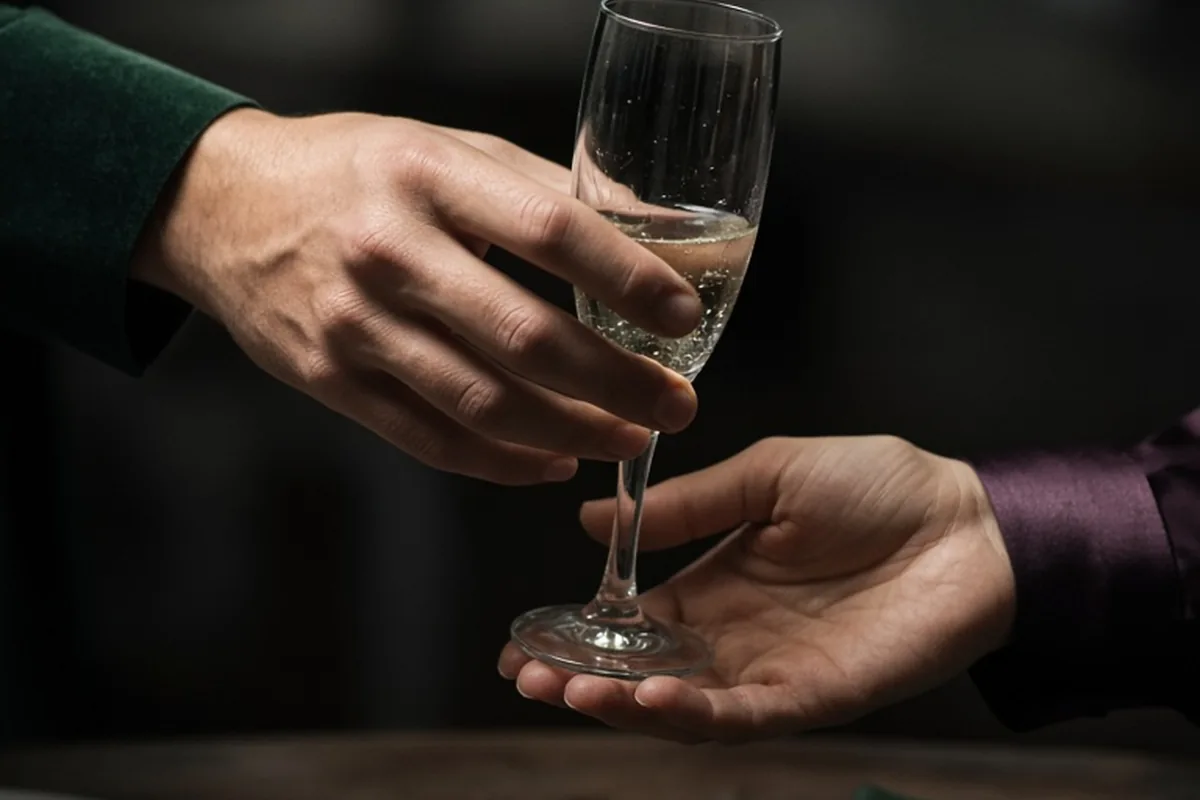
A wedding champagne toast is typically billed either as a flat per-guest fee through your venue or caterer, or by the bottle plus corkage, pouring labor, and glassware rentals. Total costs vary widely depending on whether you pour authentic French Champagne or regional sparkling wines like Prosecco or Cava, whether servers provide a full glass or a three-ounce splash, and how your caterer applies mandatory service charges.
The celebratory toast remains a classic reception tradition, yet it is often one of the most overlooked line items in an event beverage contract. Evaluating your options early helps prevent paying premium rates for wine that guests frequently leave untouched on dinner tables.
How Venues and Caterers Bill for Champagne Toasts
Event venues and catering companies generally approach sparkling wine service through one of two primary commercial models: a bundled per-person charge or an itemized consumption structure. When a venue quotes a flat per-head rate for a toast, that figure covers the wine, chilling, glassware management, and the coordinated labor required to distribute hundreds of glasses simultaneously just before speeches begin. This convenience comes at a premium, as caterers build profit margins and staffing buffers into flat rates regardless of how many guests actually partake in the toast.
Alternatively, venues operating under itemized beverage billing charge by each bottle uncorked during the reception. In this model, couples pay wholesale or marked-up retail pricing for the sparkling wine itself, accompanied by dedicated labor fees for banquet servers. Some properties also permit couples to source their own bottles from independent wine distributors or retail shops, assessing a fixed corkage fee per bottle opened on-site. Understanding which framework your contract utilizes is the critical first step in forecasting realistic beverage expenses.
- Per-person flat packages bundle product, labor, and stemware into one predictable charge but charge for non-drinkers and minors unless explicitly exempted.
- Per-bottle consumption billing charges only for bottles actually opened by bar staff, requiring strict bottle-tally oversight at reception close.
- Client-sourced bottles introduce separate corkage fees, transport responsibilities, chilling logistics, and delivery coordination that must be factored into the overall budget.
Authentic Champagne Compared to Regional Sparkling Wines
The specific sparkling wine selected dictates the largest portion of your overall expenditure. Legally, only sparkling wine produced in the Champagne region of France using strict traditional methods can carry the label Champagne. Because of land values, rigorous aging standards, import duties, and global brand prestige, genuine Champagne commands a premium price floor. Pouring authentic French Champagne across an entire banquet room dramatically inflates a beverage tab, frequently without guests discerning the difference during an acoustic speech.
Readily available alternatives provide identical celebration value at a fraction of the product cost. Spanish Cava is crafted using the same bottle-fermentation technique as French Champagne, delivering fine bubbles and complex dry flavor profiles without import premiums. Italian Prosecco, produced via tank fermentation, yields a fruitier, more approachable profile that appeals broadly to mixed crowds. Domestic sparkling wines from American growing regions, along with French Cremant produced outside Champagne, offer balance, refinement, and professional presentation while maintaining reasonable line-item economics.
- French Champagne represents the highest cost tier and carries prestige, dry minerality, and strict production pedigree suitable for formal luxury receptions.
- Spanish Cava delivers traditional method effervescence, balanced acidity, and food-friendly dryness at accessible pricing points.
- Italian Prosecco offers lighter, fruit-forward floral notes produced through the Charmat method, making it approachable for casual toasts.
- Domestic sparkling and French Cremant provide high culinary quality and traditional sparkling production without Champagne appellation surcharges.
Hidden Service Fees, Corkage, and Glassware Expenses
The bottle retail price represents only a baseline component of the true cost of a reception toast. Venues frequently attach secondary costs that substantially alter the final invoice. Corkage fees are the most common variable when couples bring their own wine; venues assess this fee to compensate for lost beverage revenue, glass washing, bottle handling, recycling, and table service. Depending on the venue tier and geographical market, corkage alone can exceed the retail shelf price of an affordable sparkling wine.
Glassware logistics generate additional indirect costs that appear across rental invoices. A dedicated toast demands specialized stemware, typically traditional flutes, modern white wine stems, or shallow coupe glasses. If your standard catering package only provides a single water glass and an all-purpose wine glass per place setting, renting an additional dedicated champagne flute for every seat introduces rental rates, delivery drop charges, wash fees, and breakage deposits. Furthermore, caterers apply mandatory service charges and local sales taxes on top of all beverage labor and rental totals.
The Logistics of Alcohol Waste and Unfinished Flutes
The standard wedding toast creates one of the highest waste ratios in event food and beverage service. When catering staff pre-pours sparkling wine and sets flutes at every empty chair before dinner, the wine sits warming and slowly losing effervescence while guests arrive, find their seats, and socialize. By the time speeches commence, warm, flat sparkling wine sits before guests who may prefer beer, mixed spirits, or non-alcoholic choices, resulting in untouched glasses cleared directly into bus tubs.
In addition to product waste, pre-poured table service creates logistical bottlenecks in reception service. Waitstaff must coordinate pouring between thirty and sixty minutes prior to toasts, drawing labor away from cocktail hour cleanup or plated dinner prep. Because guests frequently take only a ceremonial sip before resuming consumption of their preferred beverage from the open bar, couples regularly pay full per-bottle or per-person rates for hundreds of ounces of discarded sparkling wine.
- Pre-poured flutes warm rapidly to room temperature, dramatically diminishing the flavor profile and carbonation quality of expensive sparkling wines.
- Full-room pours overlook personal guest preferences, forcing beer, spirit, or non-drinker attendees to receive stemware they will not consume.
- Bus staff spend significant reception labor clearing half-full glasses rather than focusing on rapid dinner table service and guest comfort.
Calculating Bottle Requirements and Standard Pour Volumes
Accurate planning requires understanding standard commercial bottle yields rather than estimating based on drinking glasses. A standard wine bottle holds 750 milliliters, equal to approximately 25.4 fluid ounces. A standard restaurant serving of wine measures five ounces, yielding five full glasses per bottle. However, celebratory toasts do not require standard drink pours; a ceremonial splash pour measures two to three ounces, allowing a single 750-milliliter bottle to supply eight to ten toast glasses.
When purchasing bottles under consumption or BYOB arrangements, couples must reconcile guest counts against intended pour sizes. For a gathering of 150 attendees receiving a dedicated three-ounce toast splash, catering staff require approximately 15 to 19 standard bottles, rather than the 30 bottles required for standard dinner-sized pours. Planners must also account for vendor meals, minors, designated drivers, and non-drinking attendees, who should be subtracted from alcoholic bottle counts and provided sparkling cider or infused water alternatives.
- One standard 750-milliliter bottle yields five standard five-ounce pours or eight to ten three-ounce ceremonial toast splashes.
- Deduct known non-drinkers, minors, and staff members from the sparkling wine order to avoid purchasing unnecessary alcohol inventory.
- Always add a ten percent buffer for foaming loss, bottle breakage, server over-pours, and unexpected extra guests.
Cost-Effective Toast Alternatives for Wedding Receptions
Modern event planning increasingly embraces alternatives that preserve the emotional significance of the speech while eliminating unnecessary service expenses. The most straightforward approach is the open bar toast, where the emcee simply invites guests to raise whatever drink they currently have in hand. This eliminates dedicated glassware rentals, cuts wine product requirements entirely, prevents table clutter, and ensures every guest toasts with a beverage they actively enjoy.
Another balanced compromise involves restricting dedicated sparkling wine pours to the wedding party and immediate family tables. Under this tiered approach, the head table and parents receive chilled vintage Champagne or high-end sparkling wine in fine crystal stemware, while general reception tables raise their existing bar beverages. Alternatively, couples can reallocate sparkling wine from dinner to cocktail hour, greeting arriving guests with tray-passed flutes at the venue entrance where sparkling wine is genuinely consumed and appreciated.
- Toast-in-hand approaches utilize current bar drinks, eliminating extra stemware rentals, poured waste, and extra wine line items entirely.
- Head-table-only sparkling service allows couples to invest in higher-quality French Champagne for key participants without multiplying expenses across all guests.
- Tray-passed sparkling wine at reception entrance serves as an engaging arrival cocktail, ensuring high consumption rates compared to dinner-table pours.
Questions to Ask Your Caterer Before Signing the Contract
Clarifying beverage mechanics during the contract negotiation phase protects your budget from unexpected day-of add-ons and administrative surcharges. Begin by asking whether the quoted beverage package includes a sparkling toast automatically or if it represents an à la carte upgrade. If the venue offers a sparkling pour, verify the exact producer, vintage, and regional appellation being served so you can determine if the per-person rate matches fair commercial value.
For venues that permit outside wine sourcing, request clear written terms regarding handling, corkage, and return logistics. Clarify whether corkage fees cover table service, chilling labor, and glassware, or if stemware cleaning incurs separate fees. Finally, confirm the caterer’s policy on unopened bottles: establish whether staff will return unopened, unchilled cases to you at the conclusion of the evening, and ensure staff agree not to uncork excess backup bottles preemptively.
- Is the toast included in the standard bar package, and what exact brand, style, and appellation does the caterer plan to serve?
- Can we opt out of the champagne toast entirely in exchange for a credit, upgraded cocktail spirits, or extended bar operating hours?
- If bringing our own sparkling wine, what is the exact corkage fee per bottle, and does it include chilling, opening, and flute rentals?
- What is the protocol for remaining inventory, and will catering staff verify bottle counts with our designated coordinator prior to departure?
Illustrative Scenarios
Splash Pour Versus Full-Flute Beverage Budgeting
An illustrative planning scenario highlights how service style alters procurement. A couple hosting 160 guests evaluated their beverage quote, which originally specified 32 bottles of sparkling wine to provide full five-ounce pours at every seat. By instructing the banquet captain to pour three-ounce ceremonial splashes and removing twenty confirmed non-drinking guests from the calculation, their requirement dropped to 16 bottles. They redirected the savings into two premium bottles of vintage Champagne reserved exclusively for the head table toast.
Key point: Specifying a two-to-three-ounce splash pour rather than a standard full glass halves the necessary sparkling bottle count without diminishing the celebratory moment.
Frequently asked questions
How many glasses of champagne can you get from one standard bottle?
A standard 750-milliliter bottle yields five full five-ounce restaurant servings. When poured specifically for a wedding toast splash, servers pour two to three ounces per guest, yielding eight to ten toast servings per bottle.
Is it considered rude not to serve champagne for wedding speeches?
No, it is standard modern etiquette to invite guests to raise whatever drink they are currently enjoying. Most guests prefer toasting with their choice of wine, beer, cocktail, or non-alcoholic beverage rather than warm, pre-poured sparkling wine.
Can venues charge corkage on non-alcoholic sparkling cider?
Yes, venues frequently apply standard service or handling fees to outside non-alcoholic bottles. This charge covers chilling, uncorking, glassware use, and table distribution, so always confirm non-alcoholic corkage policies in advance.
What is the most economical sparkling wine for large receptions?
Spanish Cava and French Cremant generally offer the greatest value for formal events. Both utilize traditional bottle-fermentation methods similar to French Champagne, providing fine carbonation and crisp flavors without the regional brand markup.
Your next step
Review your catering contract to determine whether sparkling wine is billed per person or per bottle, and request a two-ounce splash pour or toast-in-hand option to prevent unnecessary alcohol and rental costs.