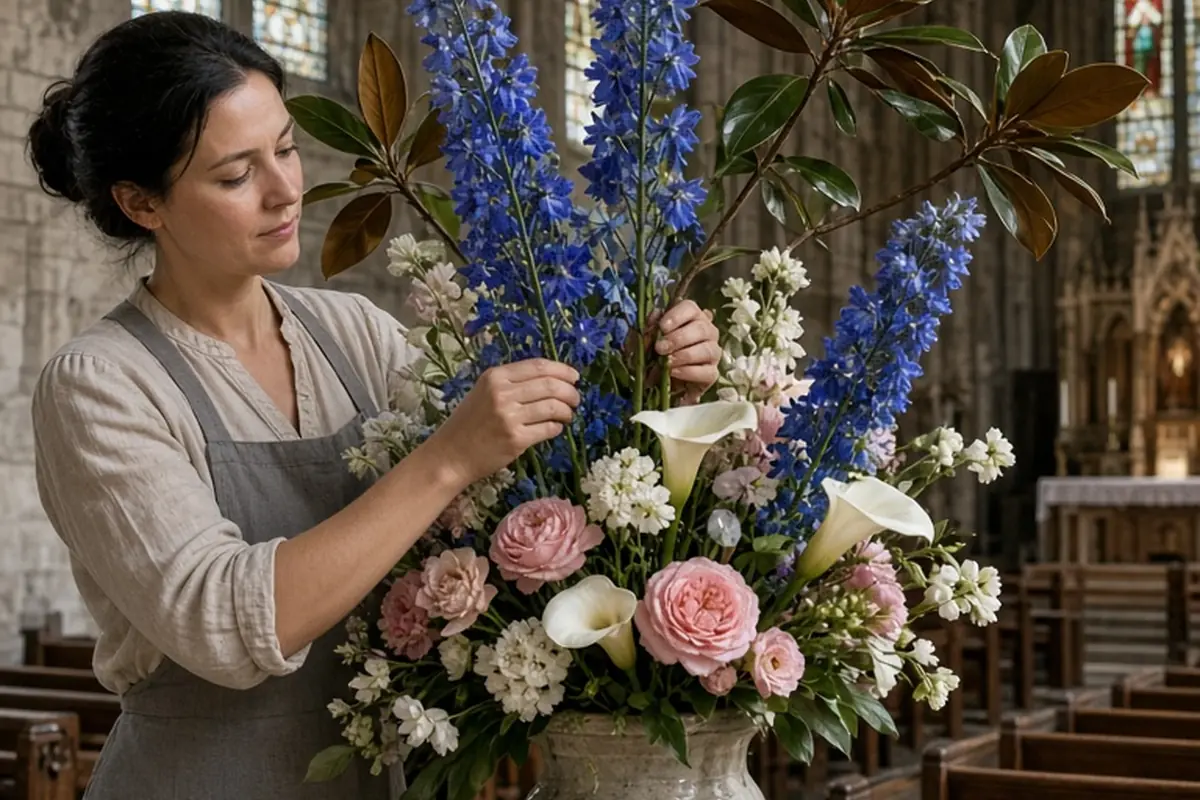
To choose wedding flowers for a church altar, start by reviewing the parish guidelines on floral placement, attachment methods, and liturgical calendar restrictions. Select arrangements scaled to the sanctuary ceiling height and distance from the pews, using robust greenery and hardy blooms like garden roses, calla lilies, or delphiniums anchored in stable, deep-water vessels. Frame rather than block sacred furnishings, ensure visibility from the back rows, and plan logistical timing for setup and post-ceremony transport.
Decorating a church altar requires a thoughtful balance between honoring sacred architecture and expressing personal wedding style. Unlike open outdoor venues or modern event halls, historic and contemporary worship spaces carry built-in focal points, strict heritage rules, and cavernous sightlines that dictate floral design.
Navigating Sacred Space Rules and Parish Floral Guidelines
Before selecting flower varieties or color schemes, the first necessary step is securing the specific floral policies of the worship space. Many historic churches, cathedrals, and community chapels maintain rigorous guidelines regarding what can be brought into the chancel or presbytery. Certain denominations prohibit placing arrangements directly on the consecrated altar table, reserving that surface exclusively for sacramental items like the chalice, paten, or sacred texts. In these traditions, floral displays must sit on freestanding pedestals, side credences, or the floor flanking the steps.
Parish rules frequently govern mechanical attachments and post-ceremony protocols as well. Churches often prohibit adhesives, nails, floral wire, or heavy clamps on hand-carved wood railings, stone altars, or delicate plaster columns. Furthermore, liturgical seasons can dictate permitted colors; for example, Lent or Advent may impose restrictions on floral abundance or require coordination with purple or violet church paraments. Confirm whether the parish requires couples to leave their main altar arrangements behind as a donation for the Sunday service, as this expectation directly impacts your floral budget and repurposing plans.
Scaling Floral Volume to Sanctuary Proportions and Pew Sightlines
A common misstep in church floral design is underestimating the sheer volume needed to make an impact in a vaulted room. An arrangement that looks enormous in a florist studio or on a standard dining table often disappears entirely when set against a three-story reredos, towering stained glass window, or wide marble sanctuary. Effective altar floral design relies on structural scale, height, and negative space rather than delicate, compact cluster styling. The goal is to create visual presence that carries clearly to guests seated in the back pews without obstructing the officiant or the couple.
To achieve adequate scale, florists rely on vertical branch work, tall flowering stems, and wide foliage collars. Incorporating line flowers such as larkspur, eremurus, gladioli, and tall delphiniums allows an installation to command vertical space without requiring hundreds of expensive focal heads. Dense greenery bases built from varieties like salal, ruscus, and broad magnolia leaves establish an expansive background silhouette, while medium-to-large focal flowers like hydrangea, open roses, and disbud chrysanthemums provide substantive blocks of color that read clearly from fifty paces away.
Selecting Resilient Blooms for Microclimates in Stone and Wood Churches
Sanctuaries present unique microclimates that test floral resilience. Historic stone churches frequently stay cool and humid near the floor while trapping drafts or hot, stagnant air under vaulted rafters. Modern chapels with massive glass walls can generate intense heat pockets around the altar from direct morning or afternoon sunlight. Additionally, burning altar candles produce localized convective heat that will rapidly wilt nearby petals, especially tender varieties like hydrangeas, sweet peas, gardenias, or soft poppies.
Prioritize long-lasting, heat-tolerant botanicals capable of maintaining cellular turgidity throughout a long ceremony setup. Hardy focal choices include standard garden roses, calla lilies, carnations, ranunculus, and cymbidium or dendrobium orchids. These blossoms possess thick, waxy petals and sturdy cellular walls that resist rapid dehydration. If you choose temperamental stems like hydrangeas or garden roses for their sheer visual mass, ensure your floral designer conditions them through deep hydration baths, stems split at the base, and specialized floral sealants applied well before delivery.
Comparing Altar Placement Styles: Urns, Pedestals, and Communion Rails
Selecting the right physical configuration depends on the architectural boundary between the congregation and the chancel. One of the most traditional formats is a pair of balanced floral urns set atop wooden, wrought-iron, or fluted stone pedestals. Placed to the left and right of the altar steps, pedestals elevate the floral line above the seated congregation and visually frame the couple during their vows. This approach keeps the consecrated altar surface completely untouched while establishing clean symmetry against the architectural backdrop.
An increasingly favored alternative is grounding the arrangement using low, weighted statement vessels or continuous ground meadows along the sanctuary steps or around the communion rail. Low crescent-shaped arrangements or urns placed directly on stone floor steps create an intimate foreground frame without blocking background altarpieces, ornate wood screens, or historic mosaics. Meanwhile, decorating the communion rail with anchored floral swags works beautifully in historic sanctuaries, drawing the eye across the horizontal span of the chancel while maintaining clear sightlines to the altar table behind it.
Harmonizing Floral Colors with Church Architecture and Stained Glass
Color choice for church altar arrangements requires assessing the existing permanent finishes of the interior. Many sacred spaces feature vibrant stained glass, dark oak paneling, gold leaf gilding, or rich red carpeting. If the sanctuary features warm, red-toned timber and deep jewel-toned stained glass, an all-blush or muted pastel floral design may appear washed out or grey under interior lighting. Conversely, introducing bright neon accents can clash violently with historic sanctuary vestments and painted retablos.
High-contrast palettes generally perform best in dimly lit or warmly finished worship spaces. Clean whites, creams, ivory tones, and rich greens project visual light, reflecting ambient illumination back toward the nave. If you prefer color, select saturated, intentional hues that complement the sanctuary's existing palette: deep emeralds, rich burgundies, crisp yellows, or royal blues. When working in sanctuaries characterized by white limestone or neutral modern plaster, softer palettes such as peach, blush, butter yellow, and sage can stand out naturally without demanding stark contrast.
Structural Mechanics, Weight Distribution, and Hydration Engineering
Altar installations require dependable structural engineering to prevent tipping, water leakage, or premature wilting. Freestanding pedestals must have wide, heavily weighted bases, especially when positioned in high-traffic procession paths where bridal trains, bridal party dresses, or moving clergy robes might catch a vessel edge. Vessels placed on tall stands should feature low centers of gravity, often weighted with lead plates, pea gravel, or sandbags hidden behind draping foliage to ensure complete stability.
Water security is equally vital. Historic wood altar credences and antique marble floors sustain catastrophic damage from moisture rings, overflow, or slow capillary leaks. All altar arrangements should utilize leak-proof plastic or zinc liners equipped with non-slip cork or rubber pads beneath their bases. Designers working with traditional mechanics must rely on sturdy wire netting and deep water reservoirs rather than small plastic foam blocks, ensuring that tall woody branches have both mechanical leverage and continuous hydration across several hours of pre-ceremony setup.
Planning Delivery Timelines and Reception Repurposing Logistics
Executing altar floral arrangements demands precise logistical timing coordinated between the church administrator and the floral team. Active churches frequently hold morning services, rehearsals, funerals, or confessions preceding a wedding ceremony, which can compress the setup window to a single hour or forty-five minutes. Delivering finished, fully assembled urns on stable transport stands is far safer and more reliable than attempting complex on-site floral construction in a tight sanctuary window.
If you intend to repurpose your altar flowers at the reception—such as flanking the sweetheart table, framing the band stage, or decorating the entrance hall—you must establish a dedicated transport plan. Ceremony teardown must happen quickly to vacate the church for evening masses or subsequent weddings. Task your floral team or a dedicated day-of coordinator with handling the breakdown, rather than relying on wedding party members. Confirm that the vessels can be lifted cleanly without spilling reservoir water, and ensure the transport vehicle has adequate vertical clearance to accommodate tall floral urns intact.
Frequently asked questions
Can wedding flowers be set directly on the church altar table?
This depends entirely on the denomination and the individual church rector. Many Catholic, Episcopal, and Orthodox traditions prohibit placing non-sacramental items directly on the altar, requiring flowers to be positioned on pedestals, the chancel floor, or adjacent credence tables. Always consult your parish coordinator before ordering tabletop arrangements.
Are couples required to leave their altar flowers at the church?
Some religious institutions request or require that main altar arrangements remain behind as an offering for Sunday congregational services. Other churches allow couples to relocate all arrangements to their reception immediately following the ceremony. Review the facility contract or wedding agreement early so your florist can plan floral mechanics and vessel rentals accordingly.
How tall should floral arrangements on church pedestals be?
Arrangements typically need to stand between three and four feet above the pedestal surface, bringing the total combined height of pedestal and floral work to six or seven feet. This proportion ensures the blooms rise above the shoulders of standing attendants and remain visible to guests seated in distant pews.
What flower colors show up best in dark church sanctuaries?
White, ivory, cream, and champagne blooms paired with bright, glossy foliage reflect the most ambient light in dimly lit church interiors. Dark burgundy or deep purple blooms can recede into wood-paneled or shadowed stone backgrounds unless framed closely by light-colored petals or abundant greenery.
Your next step
Contact your church's wedding coordinator to request the official floral guideline sheet and liturgical calendar notes, then share those specifications directly with your florist before finalizing arrangement sizing.