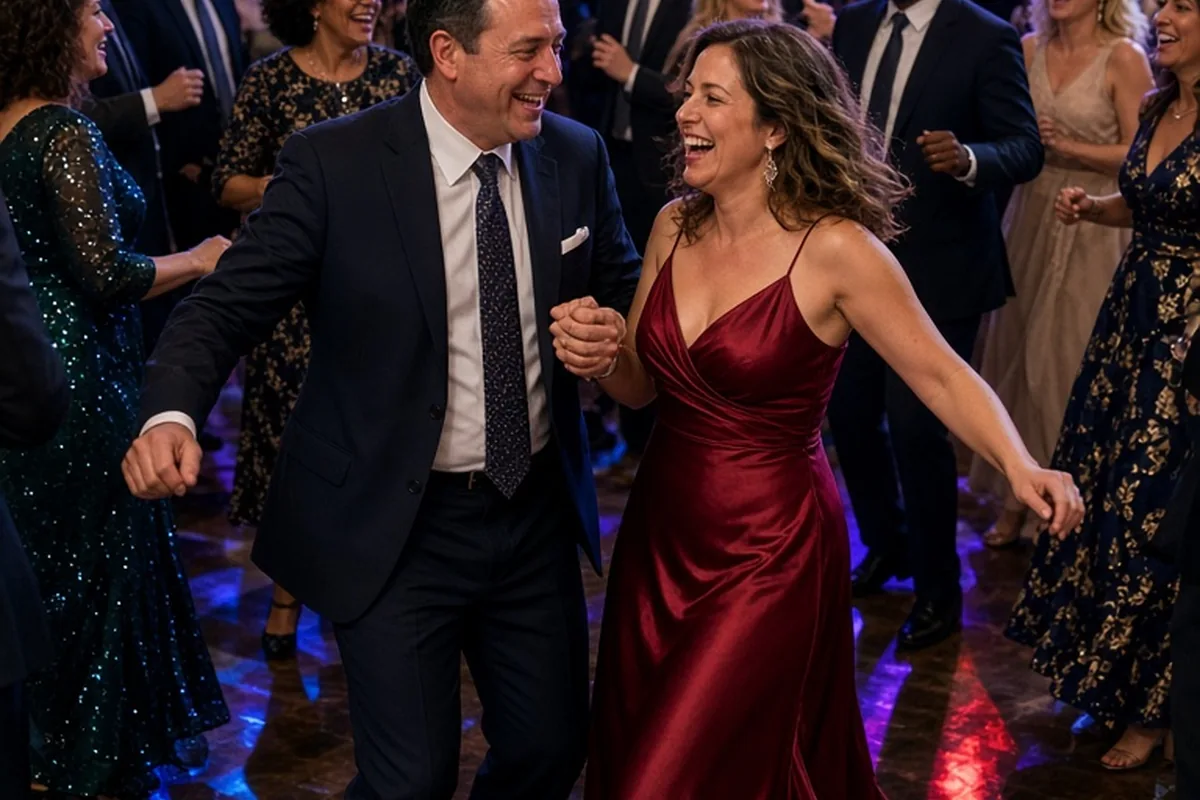
To energize a wedding reception with classic rock, choose high-tempo, universally recognized anthems that bridge generations, such as Queen's Don't Stop Me Now, The Rolling Stones' Start Me Up, and Bon Jovi's Livin' on a Prayer. Schedule driving tracks right after formal formalities conclude, alternate guitar-heavy riffs with singable choruses, and instruct your DJ to trim extended instrumental solos to preserve unbroken dance floor momentum.
Music sets the emotional tone and physical pacing of an entire wedding evening, and few musical genres unite a diverse crowd as reliably as classic rock. When programmed with careful attention to tempo and familiarity, timeless guitar riffs and stadium-sized vocal hooks bring grandparents, parents, and younger guests together in shared celebration.
Grand Entrances and Kickoff Anthems That Set an Immediate Upbeat Tone
The grand entrance marks the psychological transition from the solemn, romantic elegance of the ceremony into an uninhibited evening of celebration. Selecting a high-energy classic rock song for this moment announces your arrival with genuine excitement rather than polite applause. Anthems with recognizable opening hooks, such as Start Me Up by The Rolling Stones or You Shook Me All Night Long by AC/DC, generate instant energy from the first note. The immediate percussion and driving rhythm signal to your guests that this reception is designed for fun and active participation.
When planning this entrance, coordinate specific timing with your emcee and sound technician. Many classic rock cuts feature lengthy instrumental introductions or slow builds that can create awkward dead air while the wedding party waits outside the doors. Have your DJ cue the track at the most recognizable riff or right as the main beat drops, typically fifteen to thirty seconds into the song. David Bowie's Modern Love or Stevie Wonder's funk-rock crossover Sir Duke work exceptionally well for couples who prefer upbeat rhythm and infectious joy over heavy distortion, offering an immediate spark that lifts the room before dinner begins.
High-Energy Classic Rock Tracks to Pack the Dance Floor Across Generations
Once dinner plates are cleared and the formal dances conclude, the dance floor requires an undeniable catalyst to draw people away from their tables. The primary advantage of classic rock during peak dancing hours is cross-generational familiarity. While modern radio hits may alienate older family members and standard wedding standards can feel dated to younger friends, late 1960s through 1980s rock creates common ground. A track like Twist and Shout by The Beatles or Old Time Rock and Roll by Bob Seger provides an effortless, low-pressure entry point that encourages guests of all ages to step onto the floor together.
To sustain that momentum, shift toward driving tempos and arena-scale choruses that invite dynamic movement. Queen's Don't Stop Me Now delivers an accelerating tempo that naturally elevates physical energy, while Sweet Child O' Mine by Guns N' Roses offers one of the most recognizable guitar intros in modern music history. When the opening notes of a song like Pour Some Sugar on Me by Def Leppard ring out, the rhythm is heavy and steady enough to maintain hip-hop-level movement while satisfying rock enthusiasts. The key is prioritizing rhythm-section clarity over dark or brooding arrangements.
Pacing these tracks requires reading physical cues from your guests. If older attendees begin to clear out after three intense, fast-paced tracks, a transition into Motown-infused rock like The Doobie Brothers' Long Train Runnin' maintains a danceable pulse while easing the sheer volume. Conversely, if the crowd responds enthusiastically to heavy guitars, lean into Joan Jett and the Blackhearts' I Love Rock 'n Roll or The Romantics' What I Like About You to preserve high-voltage dancing throughout the core party set.
Classic Rock Sing-Alongs That Keep Guests Engaged Without Killing Momentum
Vocal participation is one of the most powerful tools for uniting a wedding crowd. When an entire room sings the same lyrics together, it transforms passive spectators into active participants. Classic rock is uniquely rich in anthemic, narrative choruses that people know by heart, even if they cannot remember the verse lyrics. Tracks such as Livin' on a Prayer by Bon Jovi, Don't Stop Believin' by Journey, and Brown Eyed Girl by Van Morrison consistently create spontaneous group circles where guests lock arms and sing outward toward the couple.
However, sing-along tracks come with an operational risk: tempo drop. Many beloved rock anthems, such as American Pie by Don McLean or Tiny Dancer by Elton John, are mid-tempo narrative ballads. If placed too early in a peak dance set, they can cause dancers to stop moving, drop their arms, and stand in place, effectively draining the dance floor's physical energy. To prevent this stagnation, reserve slower sing-alongs for deliberate transition points, or select tracks like Dexys Midnight Runners' Come On Eileen and John Mellencamp's Jack & Diane that maintain an aggressive, danceable backbeat beneath the vocal hook.
Timing sing-along anthems strategically also preserves vocal stamina and emotional impact. Dropping your biggest sing-along during the first twenty minutes of open dancing burns through peak enthusiasm before the majority of guests have settled onto the floor. Place these collective vocal moments roughly forty-five minutes into a set or directly following a high-energy dance burst, giving guests an outlet for communal joy while allowing their feet a brief respite from rapid footwork.
Mid-Tempo Grooves and Southern Rock Cuts for Cocktail Hour or Dinner Transitions
High-energy classic rock does not belong solely on the midnight dance floor; sophisticated, groove-oriented selections can elevate cocktail hour and dinner without overpowering conversation. Songs from this era possess acoustic warmth, analog instrumentation, and rich harmonies that establish a relaxed, celebratory atmosphere. Cuts like Fleetwood Mac's You Make Loving Fun, The Allman Brothers Band's Ramblin' Man, and Creedence Clearwater Revival's Proud Mary provide a rolling, rhythmic baseline that keeps heads nodding without requiring guests to shout over their meals.
During transitions—such as the period when dinner concludes and guests begin mingling near the bar—moderately paced southern rock and rhythm-and-blues tracks bridge the gap naturally. Selections like Joe Cocker's Feelin' Alright, Steely Dan's Peg, or Tom Petty's Runnin' Down a Dream introduce noticeable rhythmic drive. This subtle sonic escalation conditions guests for dancing well before the emcee makes a formal announcement, turning what is often an awkward lull into a seamless progression of escalating energy.
Vetting Lyrics, Tempos, and Live Band Arrangements Before the Big Night
A common pitfall when building a classic rock wedding playlist is selecting tracks based on their melodic hook while ignoring lyrical subject matter. Many iconic rock songs revolve around heartbreak, infidelity, stalking, or bitter breakups. The Police's Every Breath You Take is frequently mistaken for a romantic dedication despite its controlling tone, while The Rolling Stones' You Can't Always Get What You Want carries an ironic resignation that rarely fits a wedding celebration. Taking twenty minutes to review the lyrics of your candidate tracks ensures your reception reflects genuine celebration rather than unintended cynicism.
Track duration represents another critical logistical detail. In the 1970s and 1980s, rock bands frequently recorded extended album cuts featuring three-minute drum solos, meandering guitar jams, or false endings. An eight-minute version of Lynyrd Skynyrd's Free Bird or Meat Loaf's Paradise by the Dashboard Light will exhaust casual dancers and create confusion on the floor. Always specify radio edits or provide your DJ with exact start and end timestamps so that songs enter at the peak groove and fade out before instrumental self-indulgence derails the party.
If you are hiring a live cover band rather than a DJ, assess their arrangement capabilities and vocal ranges directly. Classic rock vocals, particularly from artists like Robert Plant, Freddie Mercury, or Steve Perry, demand exceptional vocal dexterity. A band that attempts complex anthems outside their natural range can deliver strained, pitchy performances that deflate the room. Ask prospective bands for unedited video recordings of their classic rock medleys to verify that their horn section, lead guitar tone, and vocal arrangements match the vitality of the original recordings.
Collaborating With Your DJ to Blend Classic Rock Seamlessly With Modern Sets
Modern wedding entertainment rarely relies on a single genre for an entire evening. Most successful receptions blend classic rock with 1990s hip-hop, 2000s pop, and contemporary hits. However, blending live-drum rock recordings with digitally quantized modern dance music presents a technical hurdle for DJs. Unlike electronic tracks that adhere to rigid, computerized beat grids, classic rock tracks drift naturally in tempo because human drummers fluctuate throughout a performance. A skilled DJ must navigate these transitions using creative mixing techniques rather than simple computerized beat-matching.
Discuss transition methods with your DJ during your planning meetings. Experienced wedding DJs frequently use hard cuts on vocal drops, quick scratch transitions, or word-play transitions to hop between eras. For example, transitioning from Queen's Another One Bites the Dust into a modern bassline works naturally because the funk-inspired rhythm matches contemporary tempos. Provide your DJ with a prioritized 'Must Play' list of six to eight rock essentials alongside a broader 'Play If Energy Fits' category, giving them the artistic latitude to insert rock bangers precisely when the dance floor demands an injection of organic instrumental punch.
Late-Night Power Anthems and Climactic Send-Off Finales
As the reception enters its final half-hour, the remaining crowd typically consists of your closest friends and dedicated family members who are ready for an uninhibited, sweat-drenched finale. This is the optimal window for cathartic, theatrical rock anthems that might feel too heavy or chaotic earlier in the evening. Queen's Bohemian Rhapsody, when queued to the operatic build and hard-rock crescendo, produces electric communal memories. Similarly, closing stretches featuring KISS's Rock and Roll All Nite or Bruce Springsteen's Born to Run give guests a final burst of physical release.
For your official final song or grand exit, consider classic rock tracks that balance triumphant joy with warm resolution. Tom Petty's American Girl or The Beatles' All You Need Is Love send guests into the evening on an emotional high note. Instruct your venue coordinator and lighting team to bring house lights up gradually or coordinate sparkler exits right as the final guitar chords sustain, leaving your guests with the lingering sensation of having attended a world-class, unforgettable concert.
Frequently asked questions
How many classic rock songs should we include on a modern wedding playlist?
A balanced reception generally incorporates four to eight classic rock tracks during open dancing, comprising roughly fifteen to twenty percent of the total dance set. This frequency keeps older guests engaged and injects live instrumental energy without alienating attendees who prefer hip-hop, pop, or electronic dance music.
Can classic rock work for formal moments like first dances or parent dances?
Yes, classic rock offers outstanding options for parent and first dances when you choose slower, melodic ballads with sincere lyrics. Songs such as Fleetwood Mac's Songbird, Eric Clapton's Wonderful Tonight, or The Beatles' In My Life provide deep sentimentality paired with timeless musicality.
What should we do if our favorite classic rock songs have lengthy guitar solos?
Instruct your DJ to use radio edits or create custom quick-mix edits with designated cut points. Trimming extended instrumental bridges down to thirty seconds ensures guests enjoy the iconic melody and chorus without feeling bored on the dance floor while waiting for the vocals to return.
Are older rock tracks loud enough to compete with modern pop production?
Older vinyl-era recordings often have lower master output levels and less low-end bass than modern digital masters. Professional wedding DJs solve this by playing remastered audio tracks and adjusting their mixer's gain and equalization to ensure classic tracks match contemporary songs in punch and presence.
Your next step
Review your reception music list today to flag five high-tempo classic rock anthems, and send your DJ their specific radio-edit timestamps to prevent drawn-out instrumental solos on the dance floor.