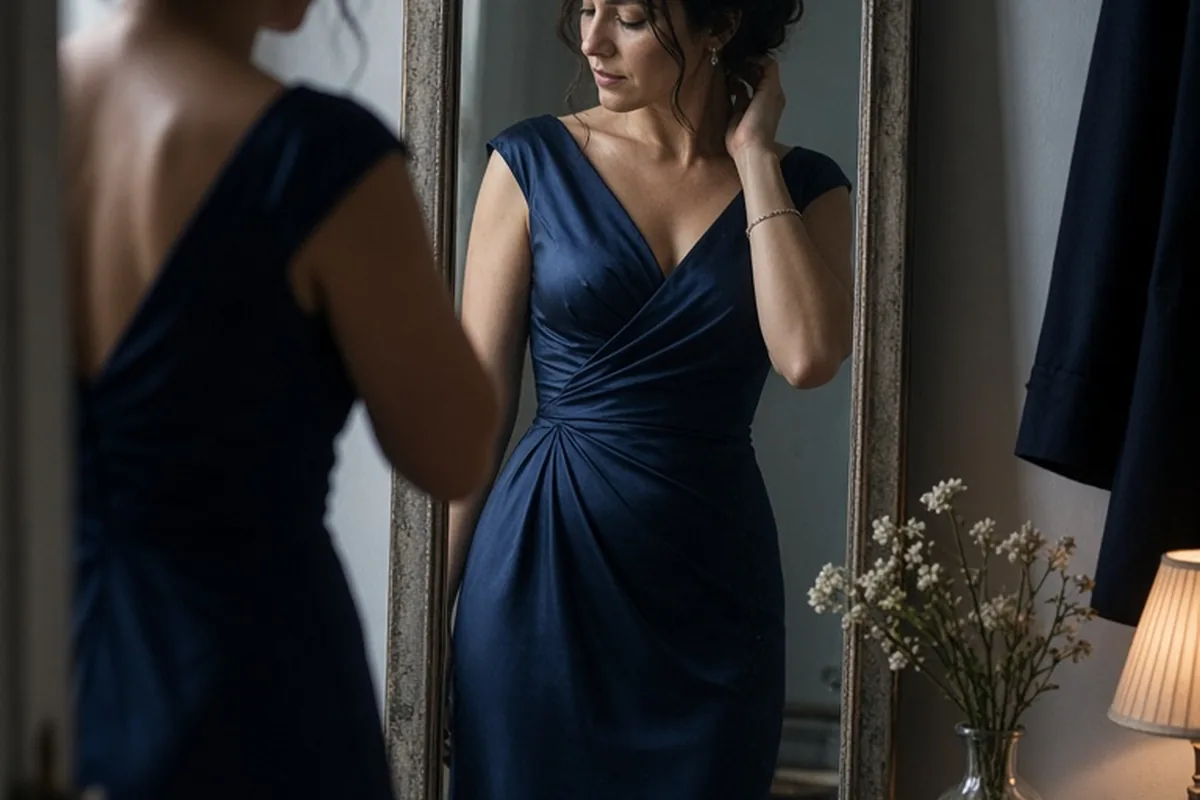
A cocktail attire wedding guest cost breakdown includes the primary garment, alterations, formal footwear, supportive foundation pieces, and finishing accessories such as jewelry, ties, or evening bags. Your overall expense depends primarily on your sourcing method: shopping your existing wardrobe, utilizing rental platforms, purchasing off-the-rack retail pieces, or investing in custom garments. Additional recurring line items include pre-event pressing or dry cleaning, grooming, and rush shipping fees.
Navigating a cocktail dress code requires striking a balance between refined party wear and comfortable formality without overspending. Because cocktail attire bridges the gap between relaxed daytime semi-formal wear and strict black-tie expectations, guests have considerable latitude to tailor their budget to their personal financial priorities.
Primary Garment Options: Buying Off-the-Rack, Renting, or Re-wearing
The focal point of your budget will almost always be the base garment itself, which generally takes the form of a tailored suit, a midi or knee-length cocktail dress, an elevated jumpsuit, or a coordinated separates ensemble. If you choose to purchase an off-the-rack outfit, the price varies dramatically based on fabric composition, brand positioning, and construction quality. Synthetic blends such as polyester crepe or rayon offer approachable entry-level retail options, while natural fibers like silk, high-twist wool, velvet, and structured jacquard command higher prices due to their durability, drape, and breathability.
Renting represents a practical middle ground for guests who prefer high-end designer aesthetics without paying full retail price for a garment they may only wear once. Single-event rental platforms typically charge a fraction of the retail price for a four-to-eight-day rental window, often bundling minor damage insurance and return shipping into the upfront fee. However, rental models carry structural trade-offs: you cannot alter the garment to fit your specific body measurements, and late return fees or significant fabric tears can incur steep penalties. Re-wearing an outfit already in your closet eliminates the primary garment cost entirely, freeing up funds for targeted accessories or professional tailoring that revitalizes the look.
Tailoring and Alteration Fees for Cocktail Wedding Attire
Alterations are one of the most frequently underestimated line items in an event budget, yet proper fit is what fundamentally separates an average outfit from polished cocktail attire. Off-the-rack garments are manufactured to generic standardized proportions, meaning that sleeves, pant hems, dress lengths, and waistlines rarely align perfectly with individual body shapes. Factoring alteration costs into your initial garment purchasing decision prevents unexpected financial strain as the wedding date approaches.
Standard alterations include shortening trouser or dress hems, taking in or letting out jacket side seams, tapering pant legs, adjusting sleeve lengths at the cuff, and taking up dress straps or shoulders. Complex modifications—such as adjusting a fully lined bodice, reworking intricate lace or beadwork, narrowing broad jacket shoulders, or moving delicate zippers—require significantly more labor and skill, leading to higher quotes from independent tailors. To obtain an accurate estimate, bring the exact shoes and undergarments you plan to wear to your fitting, and always request an itemized quote before authorizing the tailor to begin work.
Footwear and Foundation Garments That Impact Your Total Spend
Footwear for cocktail weddings must balance visual elegance with practical endurance for standing ceremonies, cocktail hours, and dancing. Men's formal footwear typically includes leather or suede oxfords, derbies, monk straps, or clean loafers, while women's options range from block heels and strappy sandals to pointed-toe flats and refined slingbacks. Purchasing brand-new dress shoes can represent a significant expenditure, particularly if you select genuine leather uppers and Goodyear-welted soles that require breaking in before the celebration.
Foundation garments represent another necessary expense that guests often omit from initial planning. Achieving a smooth, comfortable fit under cocktail attire often requires specialty undergarments such as seamless briefs, backless or strapless bras, plunge corsetry, smoothing shapewear shorts, or high-grade dress socks and hosiery. Investing in well-made foundation pieces not only prevents wardrobe malfunctions during movement but also protects delicate garment linings from perspiration and friction.
Accessorizing a Cocktail Wedding Look Without Overspending
Accessories serve as the stylistic bridge that transforms foundational garments into event-ready cocktail attire. For masculine tailoring, this category encompasses silk or knit neckties, matching or complementary pocket squares, dress belts, cufflinks, collar stays, and formal dress watches. For feminine and non-binary styling, finishing elements include statement or fine jewelry, hairpieces, clutches or micro-bags, and evening wraps or shawls designed for temperature fluctuations between indoor reception spaces and outdoor cocktail lawns.
To manage accessory costs effectively, prioritize versatile pieces that transition seamlessly into everyday professional or social wardrobes. A classic white linen pocket square, a reversible leather dress belt, or minimalist gold and silver jewelry can be deployed across dozens of future occasions. When specialized accessories are required—such as a specific clutch color or bold novelty cufflinks—borrowing from friends or sourcing pre-owned vintage pieces through secondary marketplaces offers an economical route to an elevated appearance.
Hidden Grooming, Maintenance, and Logistics Expenses
Beyond the tangible items you wear, preparing for a wedding introduces secondary maintenance and logistics fees that quietly inflate your overall guest budget. Professional dry cleaning and pressing are often essential before the event to remove transit wrinkles, warehouse odors, or storage creases, and again after the event to eliminate food stains, dance-floor dust, or beverage spills. Delicate fabrics such as silk, organza, and fine wool require specialized solvent handling that costs more than standard laundering.
Personal grooming also carries direct financial implications if you choose professional services over at-home preparation. Salon hair styling, blowouts, professional makeup application, beard trims, and manicures add up quickly when booked during peak wedding weekend hours. Additionally, last-minute expedited shipping charges for online dress orders, emergency fashion tape, blister-prevention pads, and parking or rideshare transit to multiple shopping fittings should all be accounted for in your total financial outline.
Cost-Per-Wear Decision Criteria: When to Splurge Versus Save
Evaluating potential purchases through the framework of cost-per-wear helps guests allocate their money wisely across different components of the cocktail ensemble. Cost-per-wear is calculated by dividing the total purchase and maintenance price of an item by the estimated number of times you will realistically wear it over its lifespan. Under this model, spending more on a classic, well-constructed navy suit or a timeless black cocktail dress is often financially superior to purchasing an inexpensive, highly trendy garment that you will only wear once.
Use strict criteria to determine where to invest and where to cut back. Allocate higher spending toward timeless foundational pieces that fit versatile dress codes, comfortable shoes made from durable materials, and expert tailoring that enhances your silhouette. Conversely, minimize spending on hyper-specific seasonal trend pieces, novelty accessories, one-off evening clutches, and fast-fashion garments with delicate stitching that deteriorates after a single wash or cleaning cycle.
Timeline Strategy to Eliminate Rush Fees and Emergency Costs
Strategic timing is one of the most effective tools for keeping cocktail wedding guest expenses under control. Last-minute shopping forces consumers into premium express shipping tiers, leaves no time for comparison shopping, and limits availability to whatever full-price inventory remains on local retail racks. Furthermore, tailors frequently apply rush surcharges of twenty-five to fifty percent on alteration jobs requested with less than a week's turnaround time.
Begin evaluating your wardrobe six to eight weeks prior to the wedding date to determine whether you will re-wear, rent, or buy. Complete your garment purchases at least four weeks before the event, allowing a two-week window for primary fittings and secondary adjustments with your tailor. This schedule provides ample buffer to test the complete ensemble—including foundation wear and footwear—in your home, ensuring comfort and resolving any styling gaps well before the wedding day.
Frequently asked questions
Is renting cocktail attire always cheaper than buying an outfit?
Renting is generally more affordable for one-time access to high-end designer garments, but it is not universally the most cost-effective path. If you attend multiple formal events each year, purchasing a versatile off-the-rack suit or classic dress yields a substantially lower cost-per-wear over time.
How do I estimate tailoring costs before purchasing a cocktail dress or suit?
Inspect the garment construction for complex elements like lining, boning, delicate beading, or functional cuff buttonholes, all of which increase labor time. Contact a local tailor with photos of the garment and details on needed adjustments to request an initial price estimate before committing to the purchase.
Can I wear business professional attire to a cocktail wedding to save money?
Yes, standard business suits and tailored sheath dresses can often be repurposed for cocktail weddings with minor styling shifts. Swap conservative office accessories for a pocket square, dressier footwear, statement jewelry, and an evening clutch to elevate the look to cocktail standards.
What is the single most overlooked expense in a wedding guest outfit budget?
Specialized foundation garments and post-event dry cleaning are the most frequently forgotten expenses. Undergarments required for specific dress cuts, along with professional garment care before and after the event, can add substantial unexpected costs to your final total.
Your next step
Inspect your closet today to identify which cocktail pieces you already own, then list only the specific items or alterations you need before setting your shopping budget.