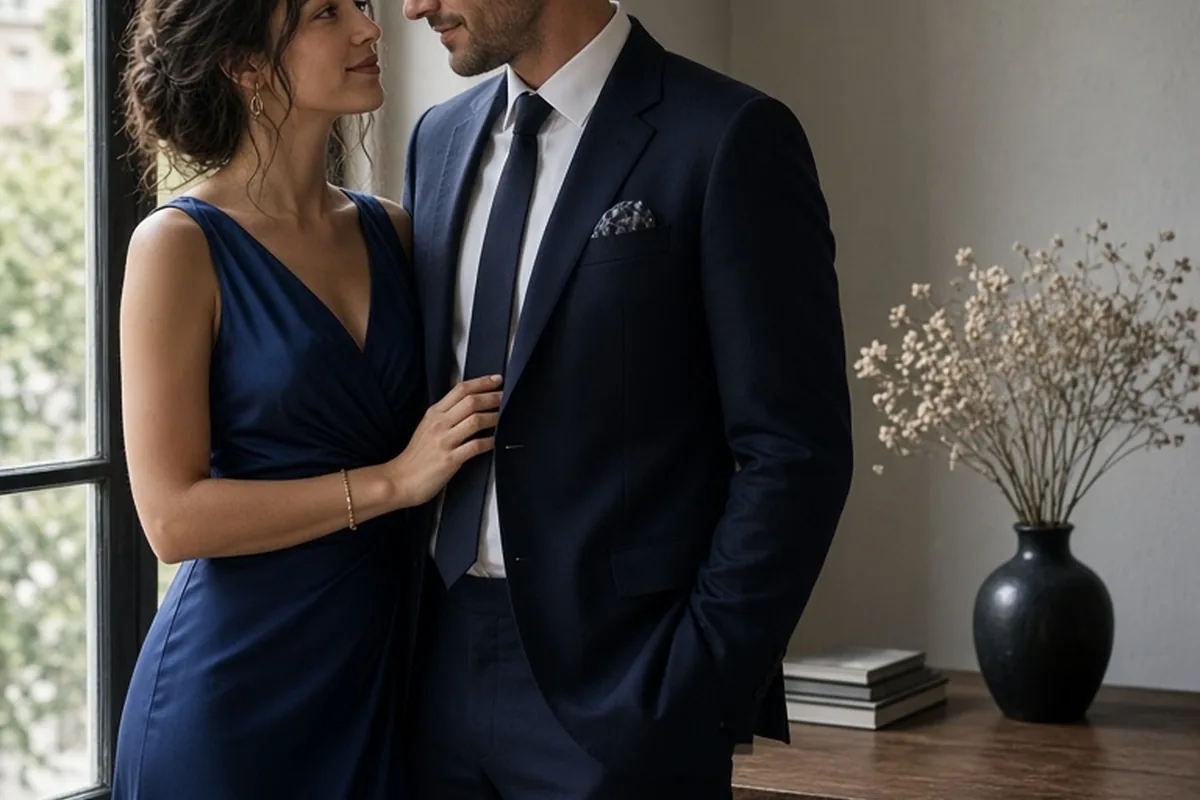
Cocktail attire for a 100-guest wedding calls for polished, semi-formal style that balances celebration with sophistication. For women, this typically means a knee-length, midi, or tailored jumpsuit in rich fabrics like satin, crepe, or lace. For men, a tailored suit with a dress shirt, leather dress shoes, and a tie or pocket square fits the standard. In an intimate 100-person setting, high-quality tailoring and thoughtfully chosen accessories ensure you look festive without upstaging the couple.
A guest list of roughly 100 people represents a distinct middle ground in modern weddings. It is intimate enough that nearly every attendee will interact directly with the couple and appear in group photographs, yet formal enough to warrant intentional, elevated dressing. Navigating a cocktail dress code within this setting requires understanding how venue, season, and social ambiance intersect.
Decoding Cocktail Attire for Mid-Sized Wedding Celebrations
Cocktail attire exists to bridge the gap between relaxed daytime semi-formal wear and rigid black-tie traditions. In a gathering of 100 guests, the visual atmosphere is cohesive and noticeable. Unlike a massive 300-person reception where understated or slightly off-theme outfits might blend into a crowded ballroom, a mid-sized event puts individual style choices on display. The goal is to look celebratory, sharp, and respectful of the occasion without wearing an overly elaborate floor-length ballgown or a full tuxedo.
The standard for cocktail dressing centers on structured garments, refined textiles, and curated styling. While casual gatherings permit sundresses, polo shirts, or chinos, cocktail events expect tailored silhouettes. You should aim for elevated finishes, such as pressed trousers, smooth linings, clean hems, and intentional accessories. Understanding this baseline prevents both underdressing, which can feel dismissive of the hosts' planning, and overdressing, which can create unnecessary visual competition with the wedding party.
Women's Cocktail Styling: Hemlines, Fabrics, and Silhouettes
For women, the quintessential cocktail outfit revolves around the midi dress, a sophisticated knee-length design, or an architectural jumpsuit. Midi hemlines that fall between the lower calf and just below the knee are universally appropriate for cocktail receptions because they offer movement and elegance without touching the floor. A tailored pantsuit or jumpsuit made from structured crepe, silk-blend fabric, or velvet also provides a modern, chic alternative to traditional dresses.
Fabric choice heavily influences the formality of an outfit. Lightweight jersey, plain cotton, and casual knitwear read too casual for cocktail standards. Instead, look for materials with visual depth and structure, such as satin, jacquard, organza, crepe, and corded lace. Necklines can range from classic boat necks and asymmetrical cuts to soft cowl necks, provided they remain secure and comfortable for an evening that involves seated dining and dancing.
Color selection offers plenty of creative freedom, but traditional wedding etiquette remains essential. White, ivory, cream, champagne, and very pale pastels that photograph as white should always be avoided. Rich jewel tones like emerald, sapphire, plum, and ruby work exceptionally well for evening events, while floral prints on darker or vibrant backgrounds bring energy to afternoon-into-evening schedules.
Men's Tailoring and Suit Options for a 100-Person Event
For men, cocktail attire centers on a well-fitted two-piece suit. Black-tie calls for a dinner jacket with satin lapels, but cocktail attire allows for a wider, more versatile palette. Charcoal grey, deep navy, slate blue, and rich earth tones such as forest green or warm tobacco brown are exemplary choices. The suit jacket and trousers should match in fabric and tone; mismatched blazers and trousers typically veer closer to smart casual or semi-formal territory.
Under the suit jacket, a crisp, long-sleeved dress shirt is standard. Classic white or light blue shirts provide a dependable foundation, though subtle micro-patterns or muted tones can work if the rest of the ensemble remains understated. A necktie or bow tie is customary for cocktail events, particularly when the reception starts after 5:00 PM. If the wedding takes place in a warm climate or an outdoor garden, hosts may accept an open collar, but carrying a tie or finishing the look with a silk pocket square maintains the required level of refinement.
Footwear should be cleanly polished leather or high-end suede. Classic oxford shoes, derbies, monk straps, or tailored dress loafers in black, deep brown, or oxblood complement cocktail tailoring. Athletic shoes, casual boat shoes, and open-toed sandals should be kept out of the wardrobe entirely for this dress code.
Adapting Cocktail Looks to Common 100-Guest Wedding Venues
Weddings designed for around 100 guests frequently take place in specialized spaces rather than cavernous hotel convention halls. Common locations include historic boutique estates, urban loft spaces, vineyard terraces, art galleries, and private dining rooms. The physical environment of the venue should directly inform practical decisions regarding footwear, fabric weight, and outerwear.
Outdoor settings like garden lawns or stone courtyards require thoughtful shoe selection. Ultra-thin stiletto heels can sink into soft turf or catch in uneven pavers, creating safety hazards and damaging footwear. Block heels, wedge profiles, or dress shoes with rubber-injected soles provide stability while maintaining an elegant aesthetic. For historic or climate-controlled indoor spaces like museums or restored mansions, sleek leather soles and delicate heels function without issue.
Venue flow also affects comfort. A 100-person wedding often transitions seamlessly from an outdoor cocktail hour on a patio to an indoor seated dinner. Bringing a tailored layer—such as a cropped blazer, a structured shawl, a velvet capelet, or a tailored overcoat—ensures you remain comfortable through shifting microclimates without compromising the polish of your outfit.
Seasonal Color Palettes and Fabric Weights
Seasonal context plays a major role in refining your cocktail ensemble. In spring and summer, breathable fabrics like lightweight tropical wool, silk blends, linen-silk weaves, and chiffon help manage heat while retaining structure. Color palettes often feature soft dusty rose, sage green, cornflower blue, lavender, and vibrant botanical prints. For daytime ceremonies transitioning into evening cocktail hours, lighter suit shades like medium grey or tan can be appropriate when paired with crisp formal accessories.
Fall and winter cocktail events call for heavier textures and deeper pigments. Fabrics such as velvet, heavy silk twill, brocade, and wool flannel add warmth and rich visual interest. Color palettes naturally shift toward deep burgundy, navy, blackened teal, burnt orange, and metallic accents like bronze or pewter. Layering becomes an integral part of the look; investing in a tailored wool dress coat or a clean trench coat prevents casual winter outerwear from detracting from your cocktail outfit during arrivals and departures.
Accessories, Jewelry, and Grooming for Intimate Photography
Because a 100-person guest list means a higher probability of appearing in candid photos and formal group shots, accessories and grooming deserve careful attention. Accessories should enhance your outfit without overwhelming it. For jewelry, focus on one or two statement pieces—such as drop earrings or a sculptural cuff—paired with delicate accents, rather than wearing multiple oversized items that compete for attention.
Bags should be compact and formal. Clutches, structured mini bags with chain straps, or envelope pouches keep hands free for socializing and toasts without the bulk of daily work bags or casual totes. For men, a subtle wristwatch with a leather or metal band, simple cufflinks, and a neatly folded linen or silk pocket square provide the finishing touches that pull a tailored suit together.
Grooming should be clean and intentional. Polished footwear, freshly pressed fabrics, tidy hair styling, and subtle fragrance contribute to the overall impression of respect and refinement. Keeping emergency essentials—such as fashion tape, a compact mirror, breath mints, and safety pins—tucked into a small clutch or pocket ensures you stay put-together throughout the entire celebration.
Resolving Ambiguous Dress Codes and Avoiding Guest Faux Pas
Invitations occasionally pair cocktail attire with vague modifiers, such as 'coastal cocktail,' 'festive cocktail,' or 'cocktail casual.' When faced with these hybrid terms, always default toward standard cocktail attire as your baseline, then incorporate the theme subtly through color, pattern, or accessories rather than dropping the garment's structure. For instance, 'coastal cocktail' suggests lighter colors and breezy textures like silk or tropical wool, not beachwear or casual sandals.
Common mistakes at cocktail weddings usually stem from misjudging formality or boundaries. Wearing neon shades that dominate group photos, choosing bodycon party dresses designed for nightlife clubs, or wearing unhemmed trousers detracts from the shared aesthetic of the wedding. When in doubt, consult the couple's wedding website for venue imagery and schedule clues, or confer with other guests to calibrate your outfit against the overall tone of the event.
Frequently asked questions
Can I wear a floor-length maxi dress to a cocktail attire wedding?
A floor-length dress is generally reserved for black-tie or white-tie dress codes, but a relaxed maxi dress in a dressy fabric can work if the silhouette is simple and not overly voluminous. However, knee-length or midi hemlines remain the truest and safest choices for cocktail events.
Is it acceptable for men to skip the tie at a cocktail attire wedding?
While a tie is traditional, going without one can be acceptable if the wedding is during the daytime, in a very warm climate, or held in a relaxed venue. If you choose not to wear a tie, ensure your suit is impeccably tailored, your shirt collar is crisp and structured, and you include a pocket square to maintain formality.
Can I wear black to a cocktail wedding with 100 guests?
Yes, wearing black is widely accepted at modern cocktail weddings, particularly for evening receptions. To ensure the outfit feels celebratory rather than somber, choose elevated fabrics like lace, crepe, or satin, and add metallic jewelry or colorful accessories.
Your next step
Review your wedding invitation and the venue setting today to select a tailored midi dress, suit, or jumpsuit that balances structured elegance with comfortable footwear for the event.